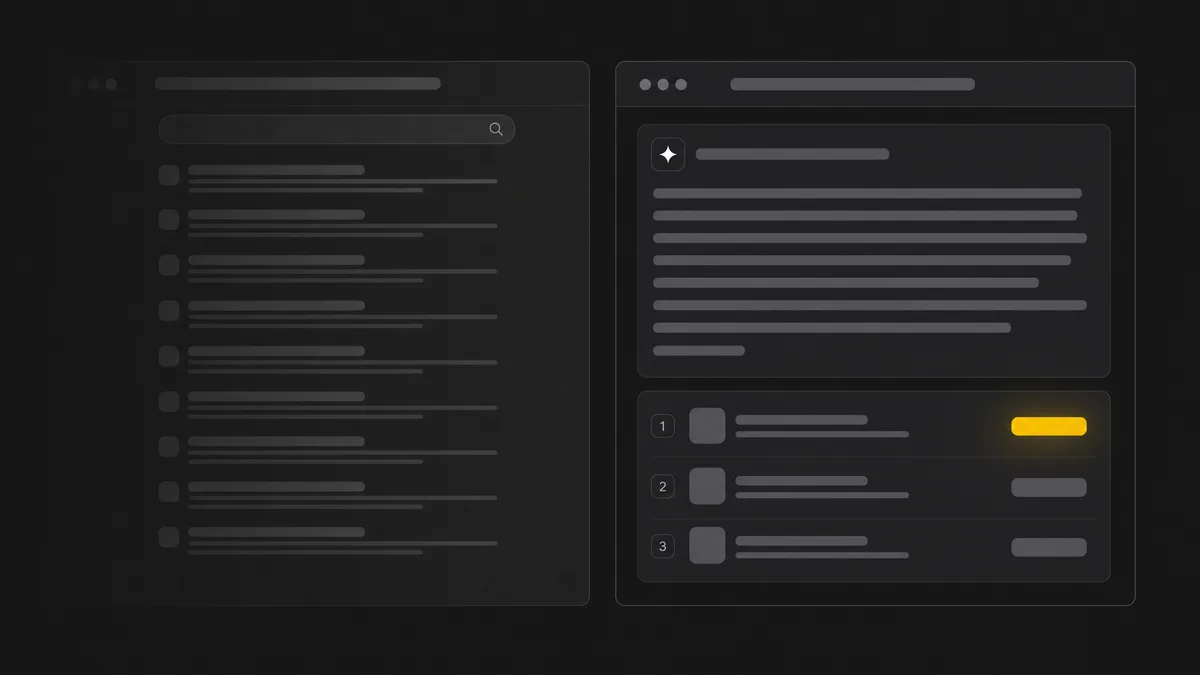
Most agencies calling themselves AI SEO agencies haven't fundamentally changed what they do. They've changed what they call it.
That is worth sitting with for a second. Because something genuinely is changing in how people find businesses online, and the label "AI SEO agency" has become a way for a lot of agencies to ride that wave without actually doing the harder work the wave requires.
The gap between a rebranded traditional SEO agency and one genuinely equipped to address AI search visibility is significant. It is also invisible from the outside, which is why so many pitches feel confusing.
You have probably noticed the mixed signals yourself. One agency told you AI SEO is completely different from anything you are currently doing. Another said it is basically the same thing with a bit more technology involved.
They cannot both be right.
This article gives you the straight answer: what an AI SEO agency actually is in 2026, when you need one, and what to ask before you hand over any budget.
What "AI SEO agency" actually means in 2026
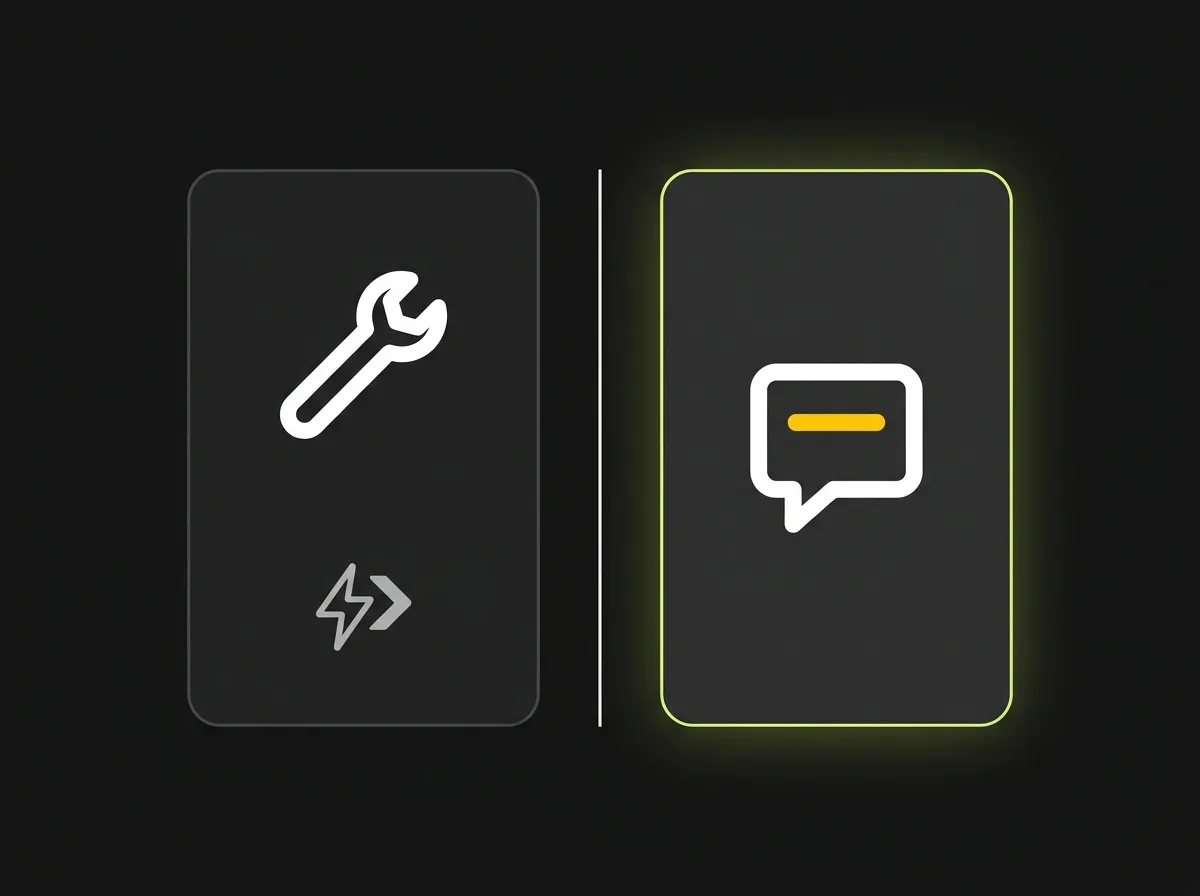
An AI SEO agency is an agency that helps businesses appear in AI-generated search results and recommendations, not just in traditional Google rankings. In practice, that definition covers two very different things, and most buyers cannot tell from the outside which kind of agency they are dealing with.
The distinction matters more than most pitches let on.
The first kind uses AI tools to do SEO work more efficiently. Content at scale, automated technical audits, machine-generated keyword clusters. The work is faster and sometimes cheaper. But the goal is the same as traditional SEO: ranking in Google's blue links. This is entirely legitimate. It is not the same as helping your brand appear in AI search.
Not even close.
The second kind helps your brand get cited, named, and recommended when people ask ChatGPT, Perplexity, Google AI Overviews, or Gemini questions relevant to your business. That is a meaningfully different goal. It requires different inputs, different signals, and a different definition of what success looks like.
GEO (Generative Engine Optimisation) and answer engine optimisation (AEO) are the technical labels for the second kind of work. GEO focuses on how AI systems generate answers from content across the web. AEO focuses on structured content that AI systems can extract and cite with confidence. You will hear both terms used, sometimes interchangeably.
The distinction between GEO and AEO matters less to your business than the distinction between agencies that actually do this work and those that have simply added the terminology to their service list.
Most agencies that have rebranded as AI SEO agencies are in the first camp. They are using AI tools to work faster and calling it AI SEO. If you want to understand the gap between GEO vs traditional SEO in practical terms before any agency conversation, it is worth five minutes.
What changes in search, and what doesn't
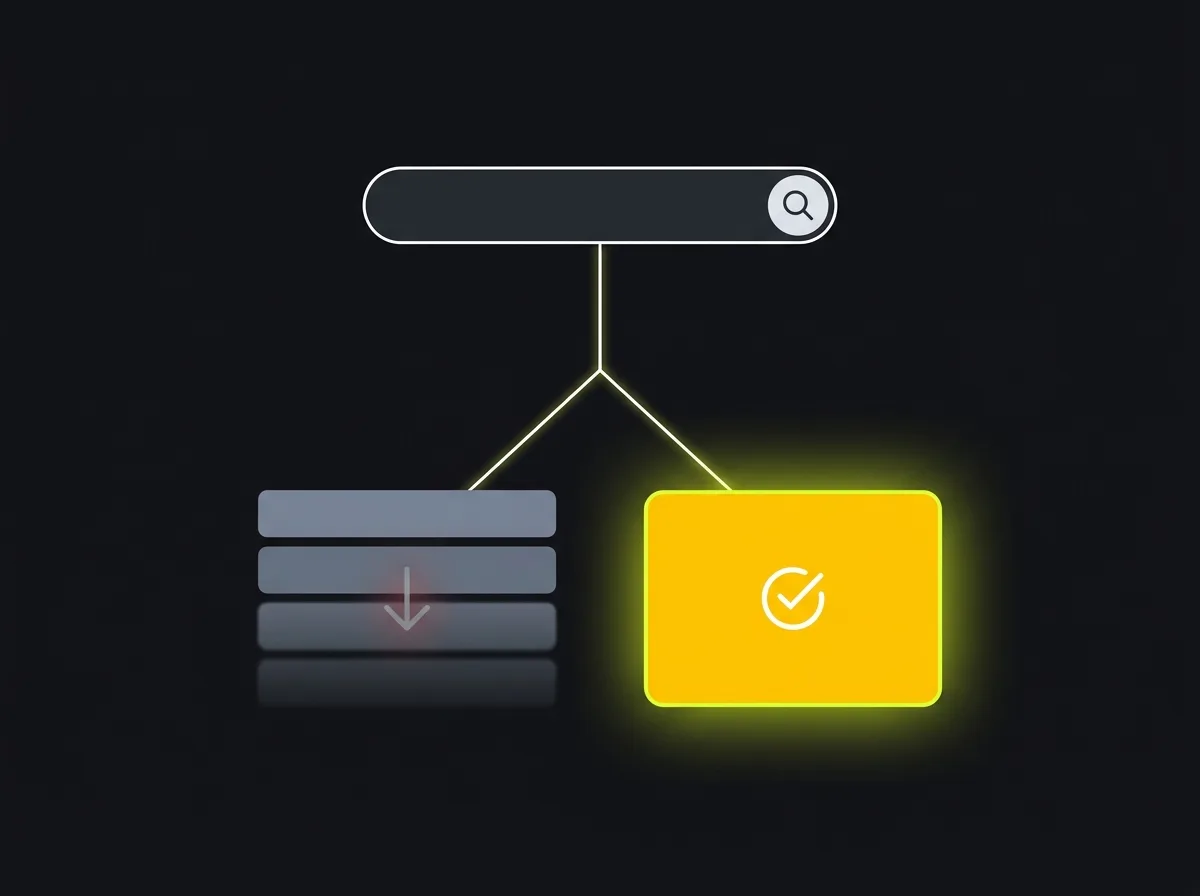
Something real is changing. A growing share of informational and research queries now get answered by AI directly, before the user reaches any search results at all. Google's AI Overviews synthesise an answer at the top of the page. ChatGPT and Perplexity answer questions in full, without sending the user to a website.
For many queries, the click never happens.
Research from BrightEdge and SparkToro research on zero-click searches point to substantial drops in organic click-through rates when AI-generated answers appear, with some studies reporting falls in the range of 30-60% for informational queries. The businesses whose brands are named in those AI answers are the ones capturing attention before the click-through decision is made.
What does not change is the foundation. Google's AI systems, and every other AI search system, pull from the web. They cite pages that are authoritative, well-structured, clearly written, and technically sound. There is no AI search visibility without solid traditional SEO underneath it.
Anyone telling you otherwise is selling a bolt-on, not a programme.
What is genuinely new is a layer of additional signals that AI systems use when deciding what to cite. Entity clarity matters: does Google's knowledge graph know clearly what your business does, who runs it, where it operates, and what it specialises in? Brand mentions on authoritative third-party sites matter, because AI systems treat consistent off-site references as signals of real-world credibility.
Structured data and schema markup help AI systems extract and present your content accurately. The content itself needs to contain atomic, quotable statements that AI can lift cleanly, rather than synthesising dense paragraphs that say everything and commit to nothing.
That is a different writing discipline entirely.
A rough working split: about 70% of what a credible AI SEO agency does is good SEO. The remaining 30% is the additional layer of entity building, off-site brand mention strategy, and AI-ready content architecture. A credible agency integrates both into one programme.
An agency that treats the 30% as a separate product tier at extra cost is almost certainly not doing the 30% properly.
AI search traffic converts at dramatically higher rates than traditional search. The reason is simple: people asking ChatGPT or Perplexity for a recommendation have already decided they want to buy. They are verifying, not browsing. That is a different quality of visitor, and it makes AI search visibility one of the highest-intent channels a B2B or professional services business can invest in.
When you actually need a specialist AI SEO agency
Here is the honest answer the rest of the SERP will not give you: you might not need one.
Every AI SEO agency pitch assumes you do. That is not a neutral starting point. So here is a cleaner diagnostic.
You probably do need specialist help if your brand is simply absent from AI-generated answers for searches your competitors appear in. Not ranking lower. Completely absent. If a potential client types "who are the best [your sector] firms in the UK?" into ChatGPT or Perplexity and your name does not appear at all, that is the gap this kind of work closes.
Absence is different from low ranking. It is the bigger problem.
You also probably need it if your brand has weak entity signals. If Google's knowledge graph is uncertain about what your business does, AI systems will be equally uncertain about when to cite you. Symptoms include inconsistent descriptions across your website, LinkedIn, and Google Business Profile; no structured data on your key service pages; your brand appearing in searches for things you do not actually offer.
All of those signals are fixable.
Healthcare, professional services, and B2B services are the sectors where AI is taking the most research traffic away from traditional Google results. Those queries tend to be informational and evaluative before they become commercial, which is exactly where AI search has made the biggest dent. If that is your world, the gap is almost certainly already there.
What you probably do not need is a separate specialist AI SEO agency if you already have strong traditional SEO in place and just need to extend it with AI-ready content and entity work. A capable generalist SEO agency that understands AI search can handle this.
The question to ask your current agency is whether they can show you a methodology for tracking AI citation, not just keyword rankings. If they cannot explain what entity clarity means, cannot show you brand mention tracking beyond Google Alerts, and have no process for testing your brand against actual buyer prompts in ChatGPT and Perplexity, that is the gap.
Whether you address it by switching agencies or by having a direct conversation with the one you have is secondary.
Five questions to ask before hiring an AI SEO agency

Every agency will say they do this. Here is how to tell whether they actually do.
1. How do you currently track brand mentions and citations in AI responses?
A real AI SEO agency has a defined methodology for tracking where and how often your brand appears in ChatGPT, Perplexity, Claude, and Google AI Overviews. This might involve prompt testing against a set of representative buyer queries, brand mention tracking tools, or scheduled manual auditing across platforms.
An agency that cannot describe their specific process for this is almost certainly doing traditional SEO with a different name on the invoice.
2. What is your process for entity building, not just content creation?
Ranking for a keyword in Google and being cited by an AI system require different signals. Content alone is not enough for the second goal. A credible agency will talk about knowledge graph clarity, schema markup strategy, and off-site brand mention building as separate workstreams alongside content production.
If their answer to "how do you build entity clarity?" is "we write good content and do some link building," they have not thought seriously about AI search visibility.
3. How do you measure success beyond traditional keyword rankings?
Look for measurement that includes AI citation frequency, share of voice across AI platforms, and a clear link to enquiry volume from AI-sourced visits. Traffic is a proxy. Enquiries are the outcome. An agency that reports only on keyword positions and organic traffic has not updated its measurement to match what you are actually buying.
4. Can you show me a client who has seen a measurable lift in AI-sourced traffic or enquiries?
Not a screenshot of a brand appearing once in a ChatGPT response. Before-and-after data with actual numbers. Growth in branded and navigational search volume in Google Search Console that correlates with the AI visibility work. AI-sourced referrals appearing in GA4. If they cannot show you something specific, the results may not yet exist.
5. Is AI search visibility integrated with your traditional SEO work, or is it a separate bolt-on?
If it comes as a separate tier with its own pricing, team, and reporting, treat that as a warning sign. The signals that determine AI citation (domain authority, entity clarity, content structure, external mentions) are the same signals that drive traditional SEO performance. Separating them into two products usually means one of them is not being done with full commitment.
Red flags beyond these five: agencies that guarantee placement in ChatGPT or Perplexity (no one controls AI outputs), agencies that cannot name which specific AI platforms they track your brand in, and agencies whose "AI SEO" service amounts to adding FAQ blocks to existing pages and calling it a programme. These agencies exist in number.
Free resource: AI Visibility Audit
Not sure where your business currently stands? The AI Visibility Audit maps your brand's presence across ChatGPT, Claude, and Perplexity for the searches your buyers are actually making. It takes about ten minutes and gives you a concrete baseline before you commission anything from anyone.
How CT approaches this differently
The short version: CT does not treat AI SEO as a separate product.
AI search visibility is built into how we run search visibility programmes from day one. Technical SEO, entity clarity, knowledge graph presence, content written for AI extraction, and measurement that tracks AI-sourced visits alongside traditional organic traffic. One programme, not two services on a pricing sheet.
Every engagement starts by testing actual buyer prompts across ChatGPT, Claude, Perplexity, and Google AI Overviews. We run the searches your potential clients are genuinely making and record where your brand appears, how it is described, and which competitors are named instead of you.
That baseline exists before any strategy decisions, because the gap is different for every business.
The engagement model is a 90-day sprint with clear milestones: entity-building, structured content, AI citation tracking from week one, and a review at the end of the sprint that shows movement in real numbers. Not a rolling retainer where progress is described but never demonstrated. You see what changed, or you see the data that explains why it took longer.
CT works across sectors rather than as a vertical specialist. The advantage of that is an integrated programme: AI search visibility built with technical SEO, conversion work, and measurement joined together, rather than AI SEO as a layer someone else has to bolt onto an existing arrangement.
We have run this approach for B2B professional services businesses, healthcare-adjacent firms, and service companies who knew they were invisible in AI search but had no baseline to work from.
What success looks like in practice is not a screenshot. It is a measurable shift in how often your brand appears in AI-generated answers for high-intent queries in your sector, tracked over 90-day intervals, and correlated with enquiry volume from AI-sourced visits in your analytics.
If the citations are not producing enquiries, they are a vanity metric. That is the test we hold ourselves to.
Where to go from here
Whether you hire CT or any other agency, start by understanding where you stand.
Most UK businesses have no idea whether they appear in ChatGPT or Perplexity for the searches that matter most to them. Not because they have done something wrong; AI search is moving fast enough that even businesses with strong traditional SEO are effectively invisible in the new layer. The gap is real but measurable, and measuring it first makes every subsequent decision considerably easier.
Free resource: AI Visibility Audit
A free audit that maps your brand's presence or absence across ChatGPT, Claude, and Perplexity for the queries your buyers are actually making. Find out where you stand before you commission anything.
Frequently asked questions about AI SEO agencies
What does an AI SEO agency do?
An AI SEO agency helps businesses appear in AI-generated search results and recommendations, not just in traditional Google rankings. The work covers two interconnected areas: building the technical and authority foundations (entity clarity, structured data, external brand mentions, content written for AI extraction) that AI systems use when deciding what to cite; and measuring and tracking how often a brand appears in answers from ChatGPT, Perplexity, Claude, and Google AI Overviews.
A credible AI SEO agency integrates this work with traditional SEO rather than selling it as a separate add-on.
How is an AI SEO agency different from a traditional SEO agency?
A traditional SEO agency focuses on improving a business's ranking in Google's organic results. An AI SEO agency does that and also works to ensure the business appears in AI-generated answers from platforms like ChatGPT, Perplexity, and Google AI Overviews. The signals involved are related but not identical: AI systems weight entity clarity, structured content, off-site brand mentions, and consistent data across the web in ways that go beyond keyword-based ranking signals alone.
A traditional SEO agency without an AI visibility methodology is building for only part of how potential buyers now discover businesses.
How much does an AI SEO agency cost?
It varies considerably by scope. Integrated programmes that combine traditional SEO with AI search visibility work typically start from similar investment levels to a mid-range SEO retainer, though the sprint model some agencies use can front-load work differently from a monthly retainer structure.
Be cautious of very cheap "AI SEO" add-ons priced at a few hundred pounds per month. At that level, the work is almost always limited to content with FAQ blocks added, not the entity-building, prompt-testing, and structured data strategy that actually moves AI citation metrics. Ask to see the methodology before agreeing on a price.
Do I need an AI SEO agency if I already have an SEO agency?
It depends on whether your current agency has an AI visibility methodology. The five questions in this article are the practical test. If your agency cannot explain how they track AI citation, cannot describe their entity-building process, and reports success only in keyword rankings, you have a gap worth addressing.
Whether you fill that gap by switching agencies or by having a clearer conversation with your current one is a practical decision based on what they can offer. You do not automatically need two separate agencies. You do need one agency that treats AI visibility as part of the brief, not as an optional extra.