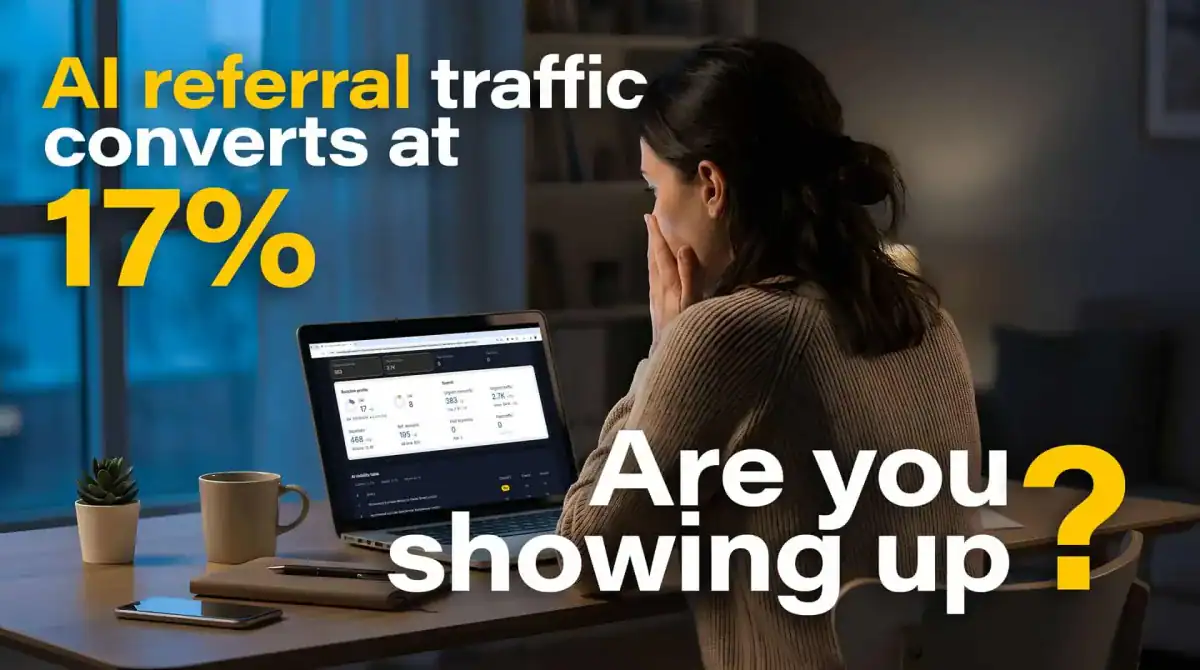
“We’re not on it. Not even on the list.”
She’d typed one question into ChatGPT: which firms handle commercial property conveyancing in Birmingham? Three names came back. Her firm, eleven years old, ranking well on Google, with a steady flow of referral work, wasn’t one of them.
Her competitors were getting recommended to buyers before a Google search even happened. She was invisible.
This is the answer engine optimisation problem in one phone call. It isn’t a traffic problem. It’s a citation problem. And it’s quietly happening to service businesses across every sector right now.
You’ve probably had your own version of this moment. You asked ChatGPT or Claude what your firm does, half as a sense check, half out of curiosity, and the answer named two competitors and not you. Maybe you’d already heard the term AEO floating around. Maybe you’d read one of the explainer articles. You closed the tab thinking you should probably do something about it, then got pulled into something else.
This article is the something. Nine moves you can make to become the source AI reads aloud, in priority order, written for a real business that does not have a content team waiting in the wings. There’s a quotable definition at the top, an honest take on AEO versus SEO further down, and a way to measure whether any of it is working at the end.
If you’ve read three explainers on what AEO stands for, skip ahead. The checklist is the point.
Search visibility is splitting into two channels: the one Google has always run, and the one AI tools now run alongside it. AEO is the part most service businesses have not addressed yet. That gap will not stay open for long.
What is answer engine optimisation
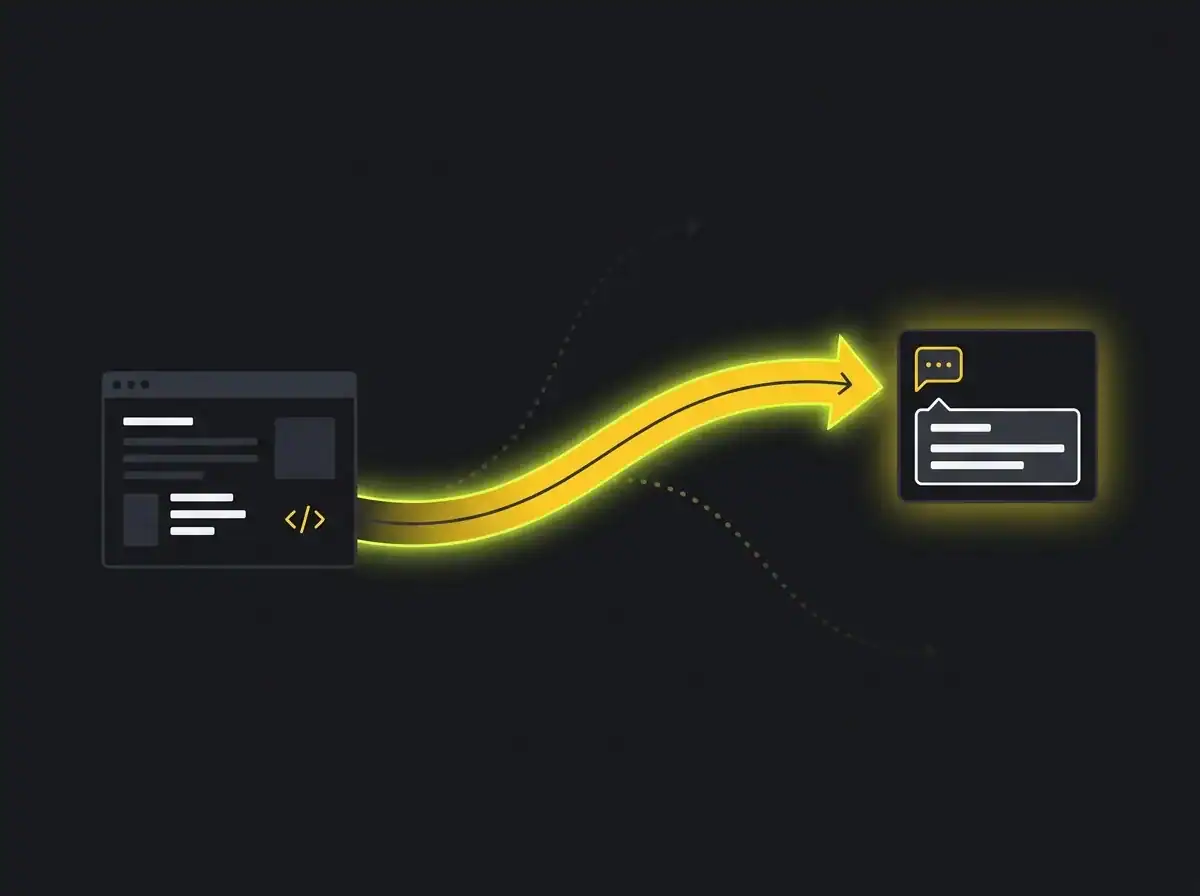
Answer engine optimisation is the practice of structuring your content, credentials, and online presence so that AI tools, specifically ChatGPT, Claude, Perplexity, Google AI Overview, and Microsoft Copilot, cite you as a source when answering questions relevant to your business.
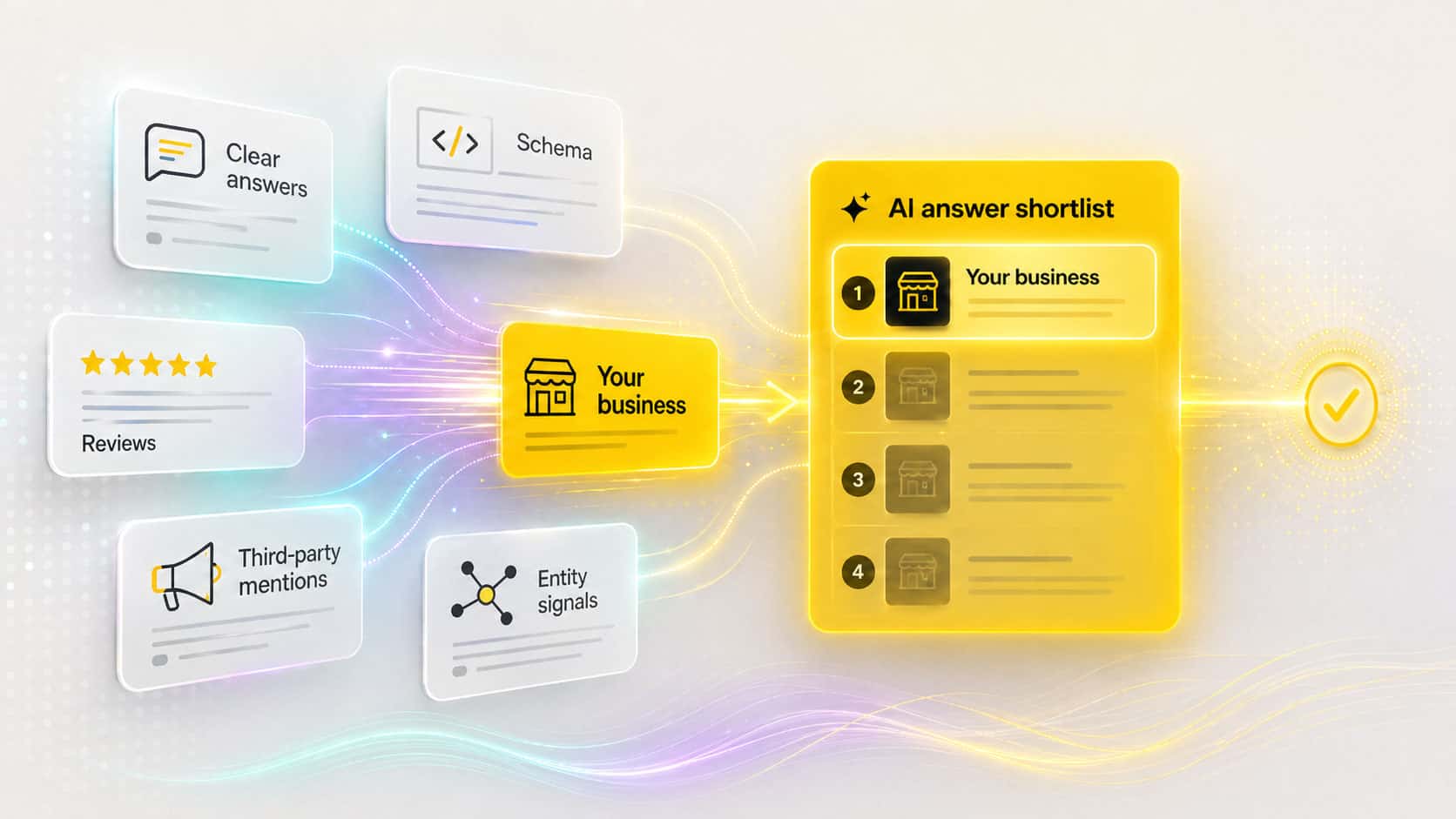
That definition is deliberately under sixty words. The AI tools you are trying to influence are all working on similar principles: they pull from indexed content, third-party citations, and named entities to construct their answers. If your business is not represented clearly in any of those three sources, you will not appear in the answer.
The term exists alongside SEO because the two disciplines share foundations but diverge at the point of citation. Traditional SEO gets you ranked so a human clicks through to your site. AEO gets you quoted so an AI mentions your business before the human decides where to search next. The mechanics are related. The outcomes are different.
What counts as an answer engine right now: ChatGPT, Claude, Perplexity, Google AI Overview (the AI-generated summary appearing above organic results), and Microsoft Copilot. Between them, these tools handle a significant share of the early-stage research that used to happen entirely in Google’s blue links. The nine moves below are designed to make you visible across all of them.
Why AEO matters in 2026 (and why most advice is still wrong)
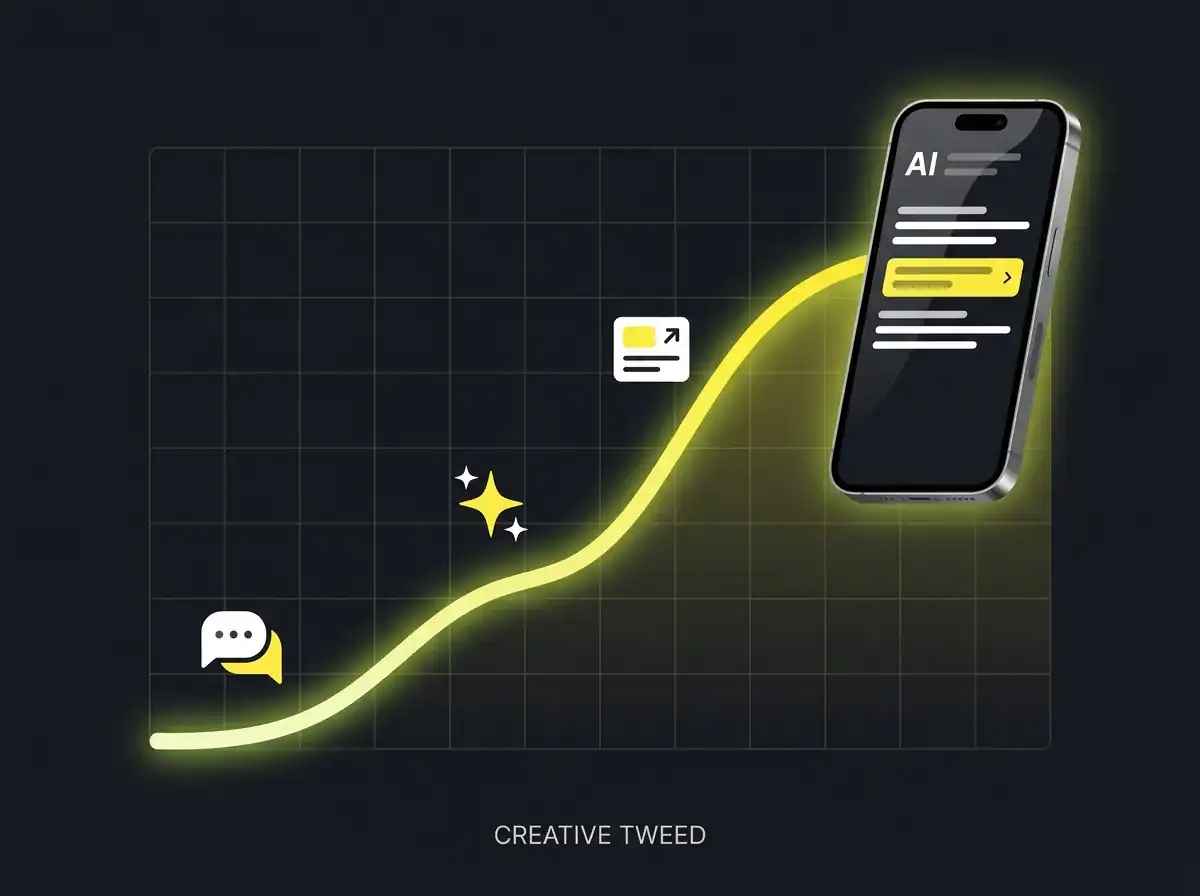
The shift in how people research decisions is the reason this matters now rather than in two or three years. McKinsey’s State of AI research found that 44% of people who use AI tools say AI is now their primary source for purchasing decisions. That figure has been tracking upward every quarter, and the majority of UK senior decision-makers now use AI tools in their professional research regularly.
The commercial consequence is not theoretical. We have tracked this in client data for over a year. AI search traffic converts at 5x the rate of traditional search, not because the product or service is different but because people who arrive via an AI citation have already been told you are the right answer. They are verifying, not exploring. The sale is half done before they land on your site.
Here is the honest framing that most AEO guides skip: roughly 80% of what makes a business citable by AI is simply good SEO done properly. Clear content, structured data, authoritative external mentions, a trustworthy About page. The remaining 20% is where AEO diverges from standard practice, and that 20% is what this checklist covers.
Most AEO advice right now is either US-focused, tool-specific (sold by the platform you have to pay for), or so general it is useless to a service business with a real budget constraint. This checklist is built for a UK service business of 5 to 50 people. If you run a law firm, an accountancy practice, an engineering consultancy, or any other professional services operation, this is the order of priority that tends to produce results.
The 9-move answer engine optimisation checklist
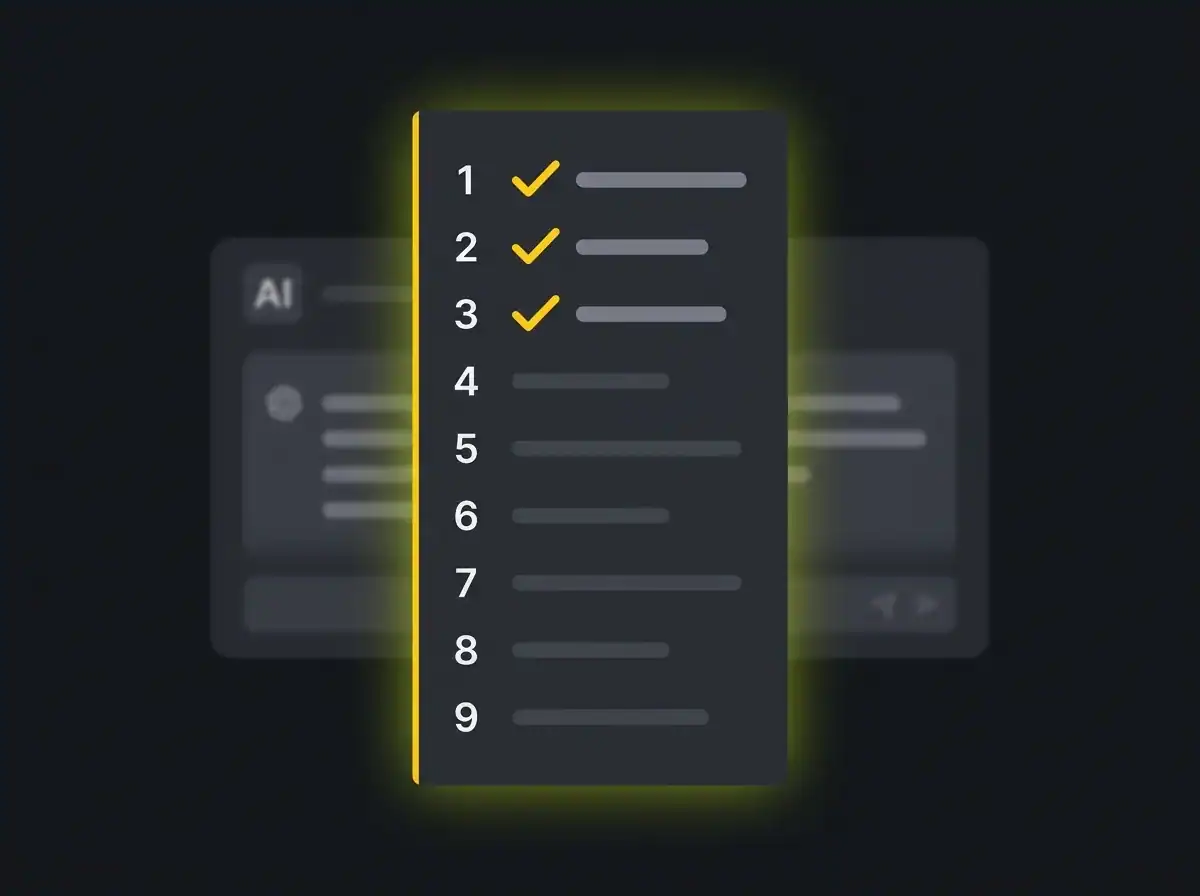
These nine moves are in priority order. If you can only do three this quarter, do the first three. Each item is written to stand on its own, because that is exactly how AI tools use content: they extract a single answer from a single section, not the whole article. That constraint shapes how every item below is structured, and it is worth keeping in mind as you read.
Move 1: Write the answer first, then the article
The structural habit that matters most for AI citation is putting the direct answer at the top of the page, before the context, the caveats, and the supporting detail.
AI tools scan for the cleanest, most direct answer to the query they are processing. If your answer is buried in paragraph seven after two paragraphs of company history and a paragraph about your founding philosophy, the AI will take it from a competitor whose answer is in paragraph one. That is not a flaw in the AI. It is a content architecture problem.
In practice, this means starting every page, every service description, and every FAQ entry with a 40 to 60 word direct answer to the question the page is targeting. Add depth afterwards. This pattern is equally good for traditional SEO, since it improves user experience and reduces bounce rate at the same time.
One thing to stop doing: opening pages with a welcome message, a generic “in today’s competitive landscape” paragraph, or three sentences about when your business was founded. Those signals tell search engines and AI tools alike that the answer is not here.
Move 2: Make every section quotable in isolation
An AI tool assembling an answer to a user query will often extract a single H2 section from a longer piece. That section needs to make complete sense without the rest of the article around it. If your section assumes the reader has read the two sections above it, the AI cannot use it cleanly.
Write your headings as specific questions where possible. “How long does answer engine optimisation take?” performs better as an AI-extractable source than “Timescales and expectations”. Write each section’s opening sentence as a direct claim that can stand alone. Include named entities in every section, not just once in the introduction. ChatGPT, Claude, and Perplexity appear throughout this article on purpose.
This is a change in how most service businesses write. Most B2B web copy is written to be read linearly. AEO requires writing to be read non-linearly, because your reader might be an AI assembling an answer at speed, pulling one paragraph from your site and one from somewhere else entirely.
Move 3: Show up as a named entity, not a faceless business
AI tools know about named businesses, named people, and named organisations. They do not know about anonymous service providers with a generic description. The difference is in how your business is represented across the open web.
A named entity has: an About page with specific named individuals and their credentials; consistent NAP (name, address, phone number) across Google Business Profile, your website, and third-party directories; author bios with real photos on content pages; mentions on third-party sites that link back; and some Wikipedia-adjacent presence where relevant, meaning news coverage, trade body listings, or industry directory entries. This last point matters more than most businesses realise. If a credible external source does not name you, the AI has no confirmation signal that you are real and relevant.
This is the unglamorous side of AEO. It is not a single afternoon’s work. But without entity signals, the AI tools have no confident basis to attribute their answer to your business rather than a generic description of your sector.
Move 4: Add the schema that AI actually uses
Schema markup is structured data code that tells search engines and AI crawlers what type of content a page contains. Not all schema types are equal for AEO purposes.
The ones that matter: FAQ schema (for pages with question-and-answer content), HowTo schema (for step-by-step process pages), Article schema (for blog posts and guides), and Organisation schema (for your main site identity, including logo, address, and contact point). Google’s structured data documentation gives the full specification for each type. On a WordPress site, the Yoast SEO and RankMath plugins handle FAQ and Article schema with minimal configuration. Organisation schema typically needs to be added to your site’s header template or implemented via Google Tag Manager.
Skip the rest of the schema universe for now. LocalBusiness, Event, Product, BreadcrumbList: these are useful in the right context, but they are not what moves AEO results for a service business in the near term.
Move 5: Decide on llms.txt with eyes open
llms.txt is a plain text file, placed at yoursite.com/llms.txt, that tells AI crawlers what content on your site is available for them to use and how it is structured. Think of it as a robots.txt for large language models, but with more context about what the AI is allowed to draw on. The llms.txt specification is open and takes an afternoon to implement.
The honest verdict: it is low effort, worth doing, and not a silver bullet. Setting up a basic version signals that you are AI-aware and gives crawlers a cleaner route to your most relevant content. What it does not do is guarantee citation. The AI tools that matter most operate on a mix of indexed web content and training data, and an llms.txt file does not override their core retrieval logic.
Do it anyway. The marginal cost is low. The competitive signal is real, particularly while most businesses are still ignoring it. But do not let it be the only AEO action you take this quarter.
Free resource: AI Visibility Audit
Before working through the remaining four moves, it is worth knowing where you currently stand. The AI Visibility Audit tells you how your business currently appears across ChatGPT, Claude and Perplexity, which of the nine moves will have the biggest impact in your specific competitive context, and where the gaps are in your current content and entity signals. The order you tackle the checklist often changes once you have those results.
Move 6: Earn citations on sources AI already trusts
AI tools are not neutral about which sources they draw from. They systematically favour sites with high domain authority, government sources, industry publications, and established review platforms. Getting your business mentioned on those sources is more valuable for AEO than publishing another page on your own site.
For most UK service businesses, the practical routes are: trade press coverage in sector-specific publications; mentions in national or regional business media; listings and reviews on Google, Trustpilot, and sector-relevant directories; client case studies on third-party sites; and participation in industry bodies that maintain public member directories.
This is PR work, not link-buying. A single well-placed editorial mention in a publication AI tools respect is worth more than twenty directory listings from low-authority sources. Think about which sources AI tools would trust in your sector. For a law firm: Chambers and Partners, Legal 500, regional legal directories. For an accountancy practice: ICAEW member listings, accounting trade press. For a healthcare business: CQC registration, NHS.uk mentions, clinical journal references. These third-party endorsements are the signals that tell the AI that your business is real, credentialed, and trusted.
Move 7: Refresh content with the year visible in headings
AI tools use recency signals when deciding which content to cite. An article with “2026” in the heading or in the first paragraph is more likely to be treated as current than an undated article covering identical ground. The same logic applies to service pages: if your main offering page was last updated two years ago and a competitor’s was updated this quarter, the AI makes a recency call.
In practice this means: adding a “last updated” date to blog posts and guides; including the current year naturally in titles and H2 headings where it fits the content; refreshing the statistics and examples on your most important pages annually; and not letting pillar pages stagnate once they rank. This is not about forcing years into headings artificially. It is about the genuine signal that the content reflects current knowledge rather than a snapshot from a previous version of the industry.
Move 8: Add an FAQ block answering the questions AI is already asked
The most efficient single AEO action for most service businesses is adding a well-structured FAQ section to key pages. AI tools pull from FAQ content at a disproportionate rate because FAQ entries are already in question-and-answer format, and that is exactly how AI answers are structured.
To find the right questions: use Google’s People Also Ask feature for your main service terms; type your core offering into ChatGPT, Claude and Perplexity and note the follow-up questions they anticipate; and check Search Console for query variants you already rank for but do not directly address. Write each answer in 40 to 80 words. Start with the direct answer. One sentence of supporting detail. Then, where relevant, a pointer to the next step. Keep each answer self-contained. Tag the FAQ block with FAQ schema (Move 4 covers how).
Move 9: Track citations, not just rankings
Traditional SEO measurement focuses on ranking positions. AEO measurement requires a different set of signals, because AI citations do not appear in a rank tracker and there is no position one equivalent to aim at.
The leading indicator to watch is branded query volume in Google Search Console. When AI tools start citing your business by name, more people search for your business name directly to verify what the AI told them. A rising trend in branded searches is the earliest and most reliable signal that AI visibility is improving. Check this monthly.
The second signal is AI referral traffic in GA4. In your traffic acquisition report, look for chatgpt.com, perplexity.ai, claude.ai, and gemini.google.com as referral sources. These will start small. A handful of sessions from these sources each week is a positive sign. The conversion rate on this traffic tends to be significantly higher than organic search, which is exactly what you would expect from visitors who arrived already knowing your name.
The third is manual prompt monitoring. At least once a month, open ChatGPT, Claude and Perplexity and ask the questions your target buyers ask. Record which businesses appear. Note how the answers change over time. Set realistic timelines: three months of consistent effort is typically the minimum before you see movement in branded query lift, and six months before AI referral traffic becomes a meaningful line in your GA4 report.
AEO vs SEO: the honest answer
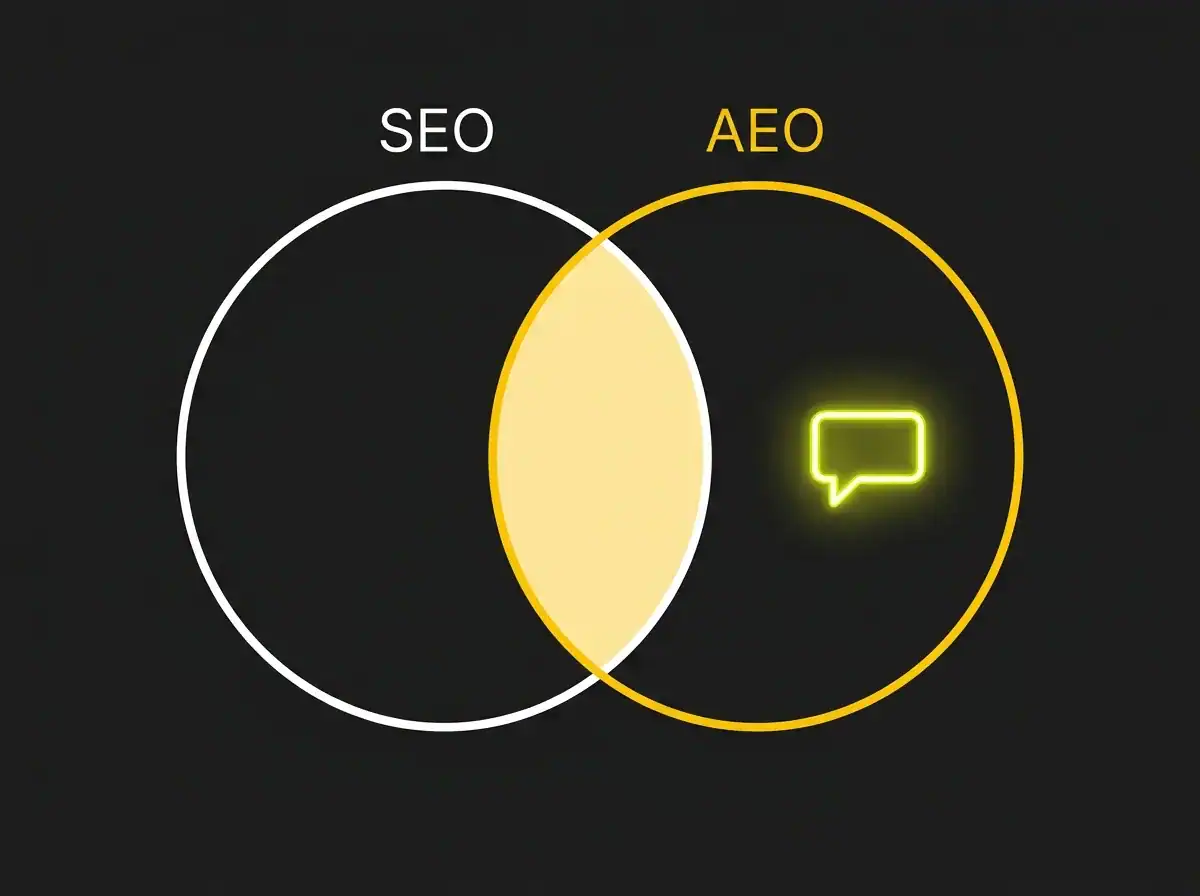
Most of the content on this topic makes AEO vs SEO the centre of gravity. It is not the most interesting question. Here is the short version.
They share the same foundations. A fast, accessible, well-structured site with credible external links and genuinely useful content is the basis of both. If your traditional SEO is weak, your AEO will be weak too. There is no shortcut around this.
Where they diverge: AEO adds the citation layer. Schema markup, answer-first content structure, entity signals, and llms.txt are primarily AEO-specific. Standard SEO practice does not require you to write for non-linear extraction by AI systems, or to build named-entity recognition into your About page and author bios.
The practical implication is that AEO without SEO foundations does not work. You cannot skip keyword research, content depth, technical site quality, and link-building, and then add an FAQ schema block and call it done. The nine moves above build on those foundations. They do not replace them.
What AEO does change is the frame. When you are writing primarily for traditional SEO, your reader is a human clicking through from a results page. When you are writing for AEO, you are also writing for an AI that will extract one paragraph and read it aloud to someone who may never visit your site at all. That changes how you structure sentences and sections, not just what topics you cover.
How to know if AEO is working
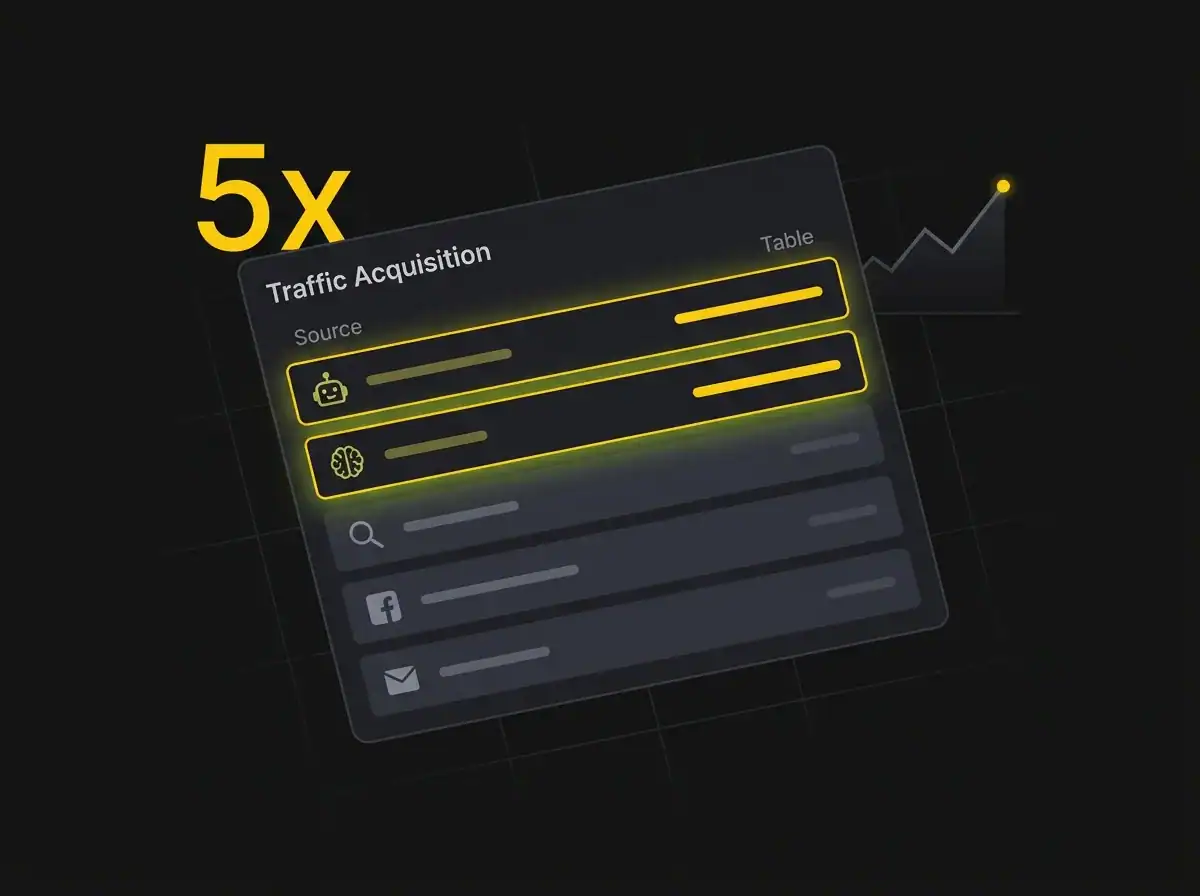
There are three measurement areas that matter, and one that does not.
Branded query lift in Google Search Console is the earliest and most reliable signal. When AI tools start citing your business, more people search for you by name to verify the recommendation. Look for an upward trend in branded queries in your Search Console performance report, filtered to show searches containing your business name or the names of your key people. This signal moves before AI referral traffic does.
AI referral traffic in GA4 is the second area. In your traffic acquisition report, filter for chatgpt.com, perplexity.ai, claude.ai, and gemini.google.com as referral sources. These numbers will be small at first. What matters is the direction and the conversion rate. AI referral sessions tend to convert at a higher rate than organic search sessions because those visitors arrive with a pre-formed positive signal about your business.
Manual prompt audits are the third. Once a month, open ChatGPT, Claude and Perplexity and ask the questions your ideal buyer would ask. Record the results. Note whether your business is cited, where in the answer you appear, and how confidently the AI references you. This is qualitative but often more diagnostic than any platform tool.
The thing that does not matter in isolation: ranking position in traditional search for AEO-adjacent keywords. That is a useful proxy but it is not the same as citation. You can rank well on Google for “answer engine optimisation” and still not appear in the ChatGPT answer to the same question. Measure both, but do not treat them as the same thing.
Frequently asked questions

Is AEO different from SEO?
Mostly no, with some important additions. Answer engine optimisation builds on the same foundations as traditional SEO: well-structured content, credible external links, technical site quality. The differences are in how you structure content for non-linear extraction by AI systems, and in signals like entity recognition, FAQ schema, and llms.txt that SEO does not require. Think of AEO as SEO with a citation layer added, not a replacement for it.
Do I need llms.txt?
Worth doing, but not urgent. An llms.txt file is a plain-text guide for AI crawlers that signals what content on your site they should draw from. It takes an afternoon to set up and represents a low-effort signal of AI awareness. What it does not do is guarantee citation by ChatGPT, Claude or Perplexity. Those tools use their own retrieval logic, which your llms.txt file does not override. Do it as part of a broader effort; do not do it instead of a broader effort.
How long does answer engine optimisation take to work?
Three months is the minimum before you see early signals, typically a lift in branded queries in Search Console. Six months is a more realistic window for noticeable AI referral traffic in GA4. The businesses that see the fastest results are those with existing SEO foundations, strong entity signals, and content that is already clearly structured. Starting from a weak baseline takes longer, but the foundations you build have lasting value beyond AEO.
Will AI search replace Google?
Not completely, and not soon. Google is actively integrating AI into its own results via AI Overview, so the two systems are converging rather than competing. For service businesses, the research phase of the buyer journey is shifting toward AI tools, while the verification and decision phase still involves Google. Being present in both is the aim. Treating them as an either/or choice is a mistake, and most of the work you do for one benefits the other.
Can I do AEO myself or do I need an agency?
You can do most of this yourself if you have time and a reasonable understanding of content marketing. The structural changes, the FAQ additions, the schema implementation, and the initial citation outreach are all within reach of a capable in-house team. Where an agency adds value is in knowing which of the nine moves to prioritise for your specific competitive context, and in executing the citation-building and entity-signal work at a pace that most in-house teams cannot sustain alongside everything else.
Where to go from here
Nine moves, in priority order: answer-first content, quotable sections, entity signals, schema, llms.txt, third-party citations, content freshness, FAQ blocks, and citation tracking. Each one builds on the others. None of them works in isolation, and none of them requires a six-figure budget to implement.
The businesses that are routinely cited by AI tools in 2027 are the ones doing this in 2026. That is not a warning designed to create urgency. It is simply how citation patterns compound: early movers accumulate entity signals and third-party mentions while the competitive field is still thin. The window for relatively easy gains is open right now.
If you want to know where you currently stand before committing to any order of priority, the AI Visibility Audit gives you that picture. It covers how your business appears today across ChatGPT, Claude and Perplexity, identifies the specific gaps in your content and entity signals, and gives you a prioritised view of which of these nine moves matters most in your specific situation.
Free resource: AI Visibility Audit
Find out how your business currently appears in AI search. The audit covers your presence across ChatGPT, Claude and Perplexity, identifies the specific gaps in your content and entity signals, and gives you a prioritised view of where to focus first.
If you would rather have a team run the whole programme, our AI SEO agency service covers all nine moves as a managed engagement, from the initial visibility audit through to citation-building and ongoing monitoring.
Search visibility and traffic is changing faster than most service businesses are adapting. The businesses that take AEO seriously in 2026 will be the ones their prospects’ AI tools are recommending in 2027.