
"We've got our Google Business Profile set up. We're getting reviews. But we're still not in the map pack."
That is probably the most common thing we hear from new enquiries who have already done some local SEO legwork. They have ticked the obvious boxes. They are not completely ignoring local search. And they are still invisible where it matters most.
More often than not, the gap is citations.
Not a total absence of them. Something more frustrating: citations that exist but do not quite agree with each other.
This guide explains what local SEO citations actually are, why consistency matters more than volume, which UK directories to prioritise, and how citations now feed directly into whether AI tools recommend your business when someone nearby searches for what you do. That last part is relatively new, and almost every other guide on this subject has not caught up with it yet.
What is a local SEO citation?
A local SEO citation is any online mention of your business's name, address, and phone number. These three pieces of information are collectively called NAP. That is it in its simplest form.
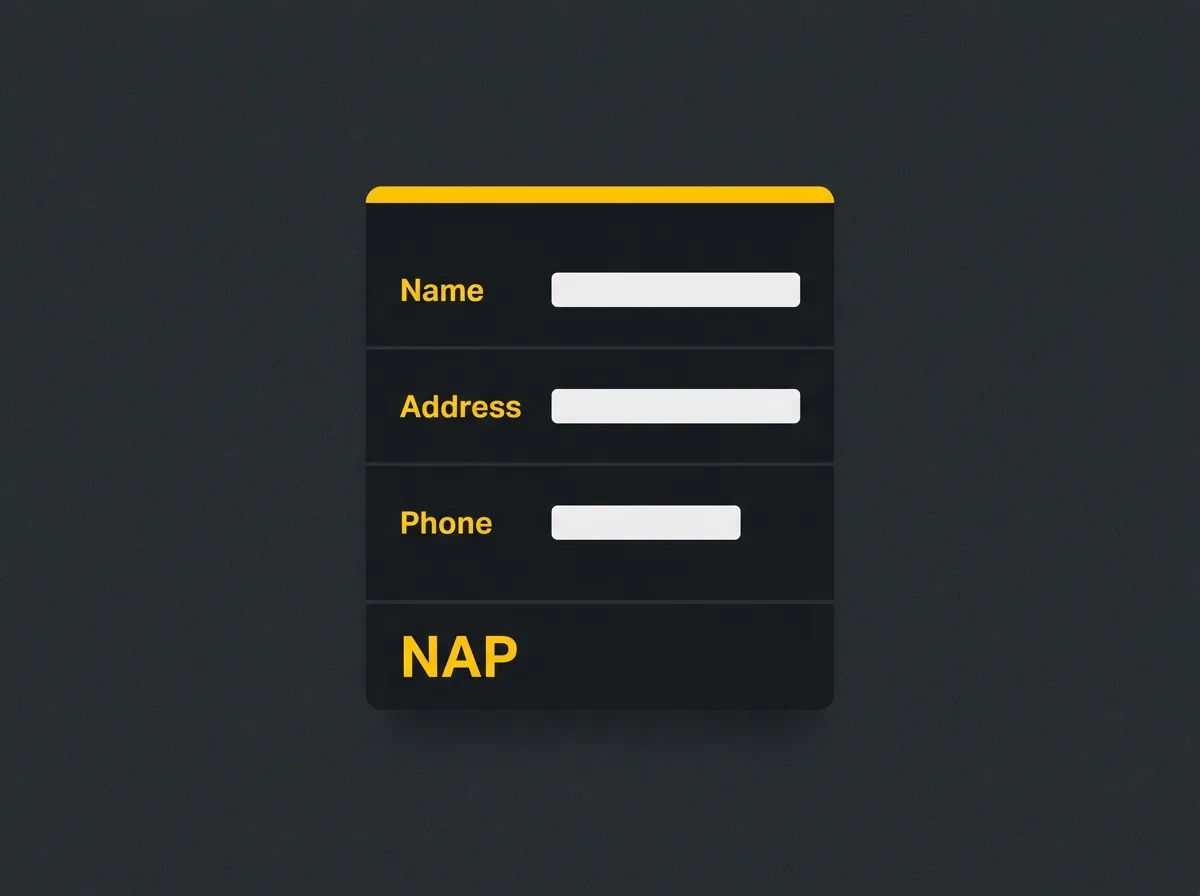
An entry on Yell.com is a citation. A listing in a local council's business directory is a citation. A mention in a trade association's member register is a citation. What unifies all of these is the NAP data they contain.
There are two types worth understanding.
Structured citations are the ones you create intentionally. You fill out a form on a directory platform with your name, address, phone number, website, and business category. The platform publishes a listing. Google Business Profile, Bing Places, Apple Business Connect, and Yell.com all produce structured citations in this way.
Unstructured citations appear organically in somebody else's content. A regional newspaper covering a local business event. A council's business register that lists companies in a particular area. A sponsored link on a community organisation's website. You did not submit these, which is part of why they often carry more weight when they exist: they represent a genuine third-party reference rather than a form you completed.
The word "citation" is borrowed from academic writing. The analogy is worth understanding.
When a researcher cites a source, they are pointing to external evidence that verifies a claim. Local citations work the same way. Multiple independent sources pointing to the same business details tell Google: this business is real, it is established, and external evidence agrees on where it is and how to contact it.
Two concrete examples. A plumber in Solihull has a listing on Checkatrade showing the business name, a Lozells Road address, and a mobile number. That is a structured citation. The same plumber is mentioned in a local news article about tradespeople operating in Solihull during the floods, with their name and phone number in the text. That is an unstructured citation. Both contribute to the verification signal.
Why citations still matter for local search
The question we get asked most about local SEO citations is some version of "are they even relevant any more?" The implication is that Google has moved on and citations are a relic of an earlier era of SEO.
They have not.

The mechanism has not changed, even as the broader algorithm has grown more sophisticated. According to the Moz Local Search Ranking Factors research, citation signals remain a meaningful component of how Google assesses local authority, alongside your Google Business Profile, your reviews, and the relevance of your website to local search queries.
Think of it as a background check. Citations are the references.
When Google encounters a business in a local search context, it cross-references data points from multiple external sources. If the majority of those sources consistently confirm the same name, address, and phone number, Google gains confidence. That confidence is what drives map pack performance. And the map pack is what matters: that three-business block at the top of a local search result captures the large majority of clicks. Most users never scroll below it.
The relationship between volume and quality has become clearer over time.
Twenty consistent citations on authoritative platforms outperform two hundred inconsistent ones scattered across low-quality sites. Volume without consistency is noise. This surprises many business owners who have been told to "get as many citations as possible" without being told that the quality and accuracy of each one matters more than the count.
Citations are not the whole picture. Your GBP optimisation, your review volume and recency, your proximity to the searcher, and the relevance of your website all play a role. Think of citations as supporting cast, not the lead. But if the supporting cast is giving contradictory information, even the strongest lead performance will underperform.
For businesses operating across more than one location, this compounds significantly. The principles are the same but the execution is more involved, and we have covered the specific dynamics in our post on local SEO for multi-branch businesses.
The NAP consistency problem most businesses don't notice
The most common citation problem for UK service businesses is rarely a total absence of directory listings. It is inconsistency across the ones that already exist, often accumulated quietly over several years.
Sound familiar?

Here is what inconsistency looks like in practice. "Limited" on one platform, "Ltd" on another. A mobile number on some listings and the landline on others. "High St" abbreviated on three directories, "High Street" written in full on two more. The old premises address still live on a handful of platforms from before a move three years ago. The trading name on the website but the registered company name on Companies House-linked directories.
None of these feel significant in isolation. Collectively, they undermine the verification signal Google is looking for.
The mechanism: Google cross-references NAP data across external sources when assessing a business. Inconsistency introduces ambiguity. When some sources say one thing and others say something slightly different, confidence drops. And where confidence drops, rankings suffer. We see this pattern regularly with trades businesses and professional service firms that have been operating for a decade or more. Plenty of citations exist, but with enough variation to muddy the signal.
The resolution is simpler than it sounds.
Choose one canonical version of your details, match it exactly to what your Google Business Profile shows, and make every other platform agree with it. The GBP version is the master record. If the GBP shows "07711 123456", every other directory shows "07711 123456". If the GBP uses your trading name, every directory uses your trading name. Not approximately. Exactly.
This issue surfaces in almost every audit we run for professional service businesses. We have written about what accounting firms get wrong about local SEO and the pattern is consistent: a firm with ten or more years of local history tends to have the widest spread of inconsistencies, because their details changed over time and the updates never reached every directory.
The UK directories worth prioritising
Most guides on this topic produce a list of 200 directories and present it as a comprehensive resource. It is not useful.
The real question is where to focus first.

Tier 1: non-negotiable for every UK business. These are the platforms that carry the most authority, that AI tools draw from most directly, and where the cost of getting it wrong is highest.
-
Google Business Profile. The most important citation of all. It is also your map pack entry and your review platform. Everything else assumes this is complete, accurate, and actively managed.
-
Bing Places for Business. Often skipped. Worth doing. Bing powers several AI search tools and the setup takes under an hour.
-
Apple Business Connect. Powers the Maps app on iPhones. In the UK, that is a significant proportion of the population. A neglected Apple listing is a missed touchpoint.
-
Yell.com. The highest-authority general business directory in the UK. A listing here carries genuine weight.
Tier 2: high-authority general UK directories. Once Tier 1 is locked in and consistent, these are worth building. Thomson Local, 192.com, Scoot, FreeIndex, Cylex UK, and Hotfrog all have reasonable domain authority and contribute to the overall verification signal.
Industry-specific directories. These vary by sector but often carry more weight than a general directory, because they represent endorsement within a specific professional community. Some examples by sector:
-
Healthcare and aesthetics: NHS directory listings and platforms such as Doctify or Treatwell.
-
Legal: The Law Society's solicitor finder register is particularly high-authority for law firms.
-
Trades: Checkatrade, Rated People, Bark, and MyBuilder are widely used by consumers and carry citation value alongside their lead-generation function.
-
Hospitality and restaurants: TripAdvisor and OpenTable.
-
Accountancy: AccountingWEB's directory is worth pursuing for firms targeting local accountancy search terms.
The Foursquare note. Foursquare's business database feeds into several AI tools when they respond to location-based queries. Being listed and consistent on Foursquare has become relevant beyond traditional search, which connects directly to the AI section below.
On bulk citation services. Be cautious of services promising 500-plus directory submissions. The return diminishes sharply after the top 20 or so authoritative platforms. Low-quality listings on directory farms can generate more inconsistency than signal. If you are considering paying for citation building, ask exactly which directories are included before committing.
How to audit your existing citations before building new ones
Fix before you build.
Adding new citations to a foundation of inconsistent existing data makes the overall signal noisier, not stronger.
Start with a manual check. Search your business name and town on Google and note what appears. Then visit the Tier 1 platforms directly and look at what they show. Check your business name format, address, and phone number on each against your GBP master record. Note every discrepancy, however small.
For a more thorough view, BrightLocal's citation finder tools are the most practical option for UK businesses. A limited free version is sufficient for most businesses doing this for the first time. The paid version earns its cost quickly for companies with a complex citation history or multiple locations. Whitespark Citation Finder covers similar territory and is particularly useful for surfacing citations you did not know existed.
On duplicate listings. These are actively harmful.
Two listings for the same business on the same platform, one of which contains outdated information, means Google sees conflicting signals every time it references that source. Claim any duplicate you can find. Correct it, or request removal where the platform allows. Unclaimed duplicates with old addresses from previous premises are the worst offenders: they can silently suppress performance for years without ever appearing in a manual check.
Once the existing landscape is clean, build new listings in tier order. Start with Tier 1, then Tier 2, then any industry-specific platforms relevant to your sector.
Realistic timeline: citation corrections are not processed overnight. Allow four to eight weeks before expecting the effect of fixes to show up in local ranking positions. The work is right before that point. It just takes time for the algorithm to process the signal.
What citations mean for AI search in 2026
Here is the part almost every other guide on local SEO citations is not covering.
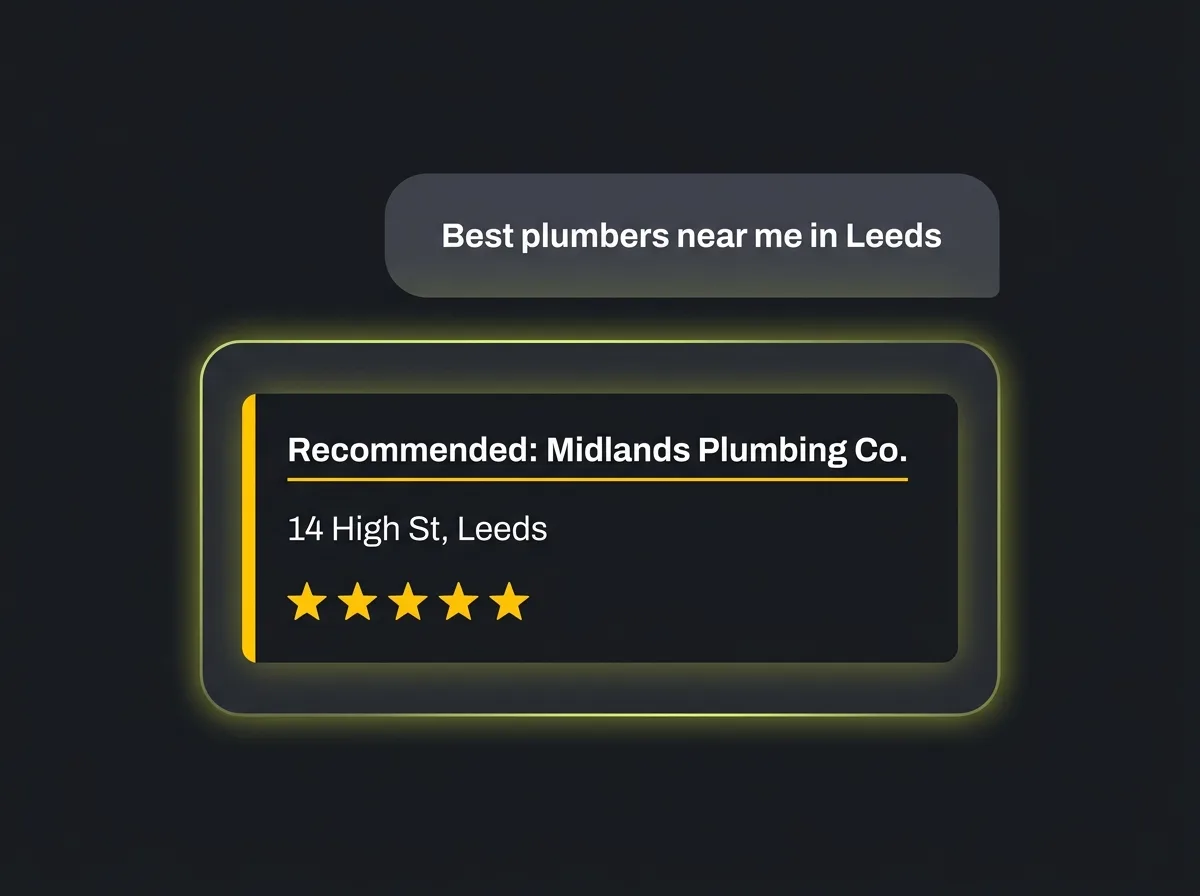
A growing number of people are using AI tools to find local service providers. Not as a replacement for Google, but as the first stop when they want a recommendation rather than a ranked list. According to BrightLocal's Local Consumer Review Survey, the proportion of consumers who have used AI tools such as ChatGPT or Perplexity to find a local business has increased substantially over the past year.
These tools do not maintain their own independent databases of local businesses. They draw from existing sources.
Perplexity sources heavily from Yelp and TripAdvisor in real time. ChatGPT draws from the Bing index and third-party databases including Foursquare for location-based queries. The practical consequence: a business whose NAP data is inconsistent across those platforms will not be confidently recommended by AI tools, regardless of how it ranks in traditional local search.
This is not a theoretical risk. It is the same mechanism, applied to a different channel.
Entity consistency is what gives AI tools the confidence to recommend a specific business by name. Clean, consistent data across Yelp, Foursquare, Bing, and the major UK directories: the AI can cite you. Mixed signals: it stays silent on you, even when you are the strongest local candidate for the query.
That is why AI search traffic converts at a significantly higher rate than traditional search traffic. Someone who asked an AI tool "who are the best physios near me in Leeds" and received your name as the answer is not comparison shopping. They are verifying. The intent at the point of arrival is qualitatively different.
The implication is straightforward. Citation consistency that improves your map pack performance now also feeds your AI recommendation visibility. It is the same work, serving two channels. That compound return makes getting citations right more valuable now than it was two years ago. For businesses looking to take the AI channel further, our work on AI search visibility covers the broader picture.
Getting the sequence right
Pull together what the sections above have covered and there is a clear practical order of operations.
Start here.
Start with your Google Business Profile. Make sure it is complete, accurate, and reflects the exact version of your business details you want everywhere else to match. This is the master record.
Then audit. Before adding anything new, look at what already exists. Note every inconsistency against the GBP version. Fix Tier 1 first. Then work through Tier 2 and any industry-specific directories that matter to your sector.
Once the existing landscape is clean, build. Twenty authoritative, consistent citations are worth considerably more than two hundred inconsistent ones on sites nobody uses.
Then maintain. Businesses move, rebrand, and change phone numbers. Every time any detail changes, the audit process starts again. This is not a one-off task. It is a recurring part of a properly managed local presence.
Citations are not the whole of local SEO services. Your GBP, your reviews, your on-page relevance, and your content all play a part. But citations are the component most UK service businesses have half-right: some exist, they do not all agree, and the inconsistency is quietly suppressing map pack performance that should be stronger. Fixing that tends to be one of the more reliably effective moves in local search, particularly when combined with a broader SEO strategy.
If you want to understand what local search could realistically deliver for your business specifically, the Traffic Projection Report gives you a concrete picture.
Free resource: Traffic Projection Report
A free diagnostic that maps out the local search opportunity for your market. It takes about two minutes to request and gives you a clear view of the traffic on offer, and whether it is worth pursuing with a proper programme behind it.
Frequently asked questions about local SEO citations
What is a local SEO citation?
A local SEO citation is any online mention of your business's name, address, and phone number, collectively referred to as NAP. Citations appear on business directories, data aggregators, industry-specific platforms, and in editorial content across the web. Structured citations are the listings you submit directly to platforms such as Yell.com or Bing Places. Unstructured citations are organic mentions in third-party content, such as local news articles, trade association pages, or sponsorship listings.
Does NAP consistency affect Google rankings?
Yes. Google cross-references your business's NAP data across multiple external sources as part of its local authority assessment. Inconsistent data, including different phone number formats, an abbreviated address on some platforms and the full version on others, or an old address still live after a premises move, introduces ambiguity into that verification process. Consistent NAP data across authoritative platforms builds the confidence signal that underpins map pack performance.
Which UK directories matter most for local SEO?
The non-negotiable Tier 1 platforms are Google Business Profile, Bing Places for Business, Apple Business Connect, and Yell.com. After those are complete and consistent, high-authority general directories such as Thomson Local, 192.com, and Scoot add meaningful signal. Industry-specific platforms carry particular weight within their sectors: Checkatrade and Rated People for trades businesses, the Law Society register for solicitors, NHS directory listings for healthcare practices. Prioritise the directories your specific customers are likely to use, not just the longest list you can find.
Do citations still matter in 2026?
Yes. The relationship between citation quality and local search performance has not weakened. The case for getting them right has actually strengthened because of AI-powered local recommendations. Tools such as ChatGPT and Perplexity draw from business directory data, including Foursquare and Bing-indexed listings, when responding to location-based queries. Citation consistency that helps you appear in the Google map pack now also feeds whether AI tools recommend your business to people searching nearby. The same work is serving two channels rather than one.
What should I fix first: existing citations or missing ones?
Existing inconsistencies first, always. Adding new citations to a foundation of conflicting data makes the overall verification signal noisier. Start by auditing what already exists against your Google Business Profile as the master record. Correct anything that does not match exactly, paying particular attention to Tier 1 platforms. Then build new listings in priority order. A clean base of 20 consistent citations on authoritative platforms will outperform 100 inconsistent ones every time.