
You have been asked what your positioning is. Maybe by a web designer during the initial briefing call. Maybe by a potential referral partner over lunch. Maybe by someone on a shortlist who wanted to understand why they should choose you specifically. And the answer came out fine, but longer than it should have been, or slightly different from what a colleague would have said.
That gap is not a messaging problem or a design problem. It is a positioning problem. And it shows up everywhere in the business, from the website that looks professional but does not convert, to the sales conversations that start with a lot of explaining rather than a lot of qualifying.
This article covers what brand positioning actually is, how to map it using a tool most service businesses never apply, how to write a statement that gives your marketing something real to work from, and what changes across your business once you do.
What brand positioning actually is (and what it isn't)

Brand positioning is not your logo. It is not your tagline, your company values, or the colour palette on your website. It is the specific place you occupy in a customer's mind at the moment they are deciding who to call, hire, or buy from.
Al Ries and Jack Trout made this argument in 1981 and it has not dated. Their core claim: the real competition is not in the market, it is in the mind. The business that owns a clear, specific slot in a customer's thinking at the right moment wins the decision. More businesses, more channels, and less attention than ever before has only made that more true.
Small business branding covers a wide range of territory: identity, tone of voice, visual language, customer experience. Positioning is the strategic logic that sits underneath all of it. Identity without positioning is decoration. You can invest significantly in making something look good and still leave a customer unsure why they should choose you rather than the other three options on the shortlist.
Here is a practical test worth running. Ask three different clients to describe your business to a colleague who has never heard of you. Would their descriptions broadly match? If one says "they are the affordable option", another says "they do serious work with complex clients", and a third says "they are a local firm that handles a bit of everything", your positioning is unclear. Not because your clients are confused. Because you have not yet made a clear enough choice about who you are for.
Positioning is also relational. You do not sit in a slot alone. You sit there relative to the alternatives the customer is weighing up while they are deciding. That is why the mapping exercise involves plotting yourself against competitors, not just describing yourself in isolation.
Why most UK businesses end up sounding vague
There is a reason most brand language sounds like "reliable, professional, and passionate about what we do." It gets written from the inside out.
The people who know a business best are often the worst judges of what makes it genuinely distinctive. Too close to see the outside view. So they reach for the qualities that feel self-evidently true: we care, we are experienced, we deliver results. None of those differentiate them from any competitor on the shortlist. They describe everyone equally well.
The cost of this shows up in predictable places. Content that attracts the wrong enquiries. Sales conversations that start with a lot of explaining rather than a lot of qualifying. A website that looks polished but converts poorly because visitors cannot quickly work out whether you are the right fit for their situation.
One question comes up regularly during web design briefings: "what is the one thing you want visitors to understand immediately?" It sounds like a design question. It is a positioning question wearing a design mask.
According to ONS Business Population Estimates, there are over 5.5 million small businesses registered in the UK. Competing from a vague position in that environment is not cautious. It is invisible.
The useful reframe: claiming to be reliable and professional is a minimum, not a position. "We work exclusively with regulated healthcare practices" is a position. It rules people out. Ruling people out is precisely how you make the right people feel found.
The positioning map: how to find where you actually sit
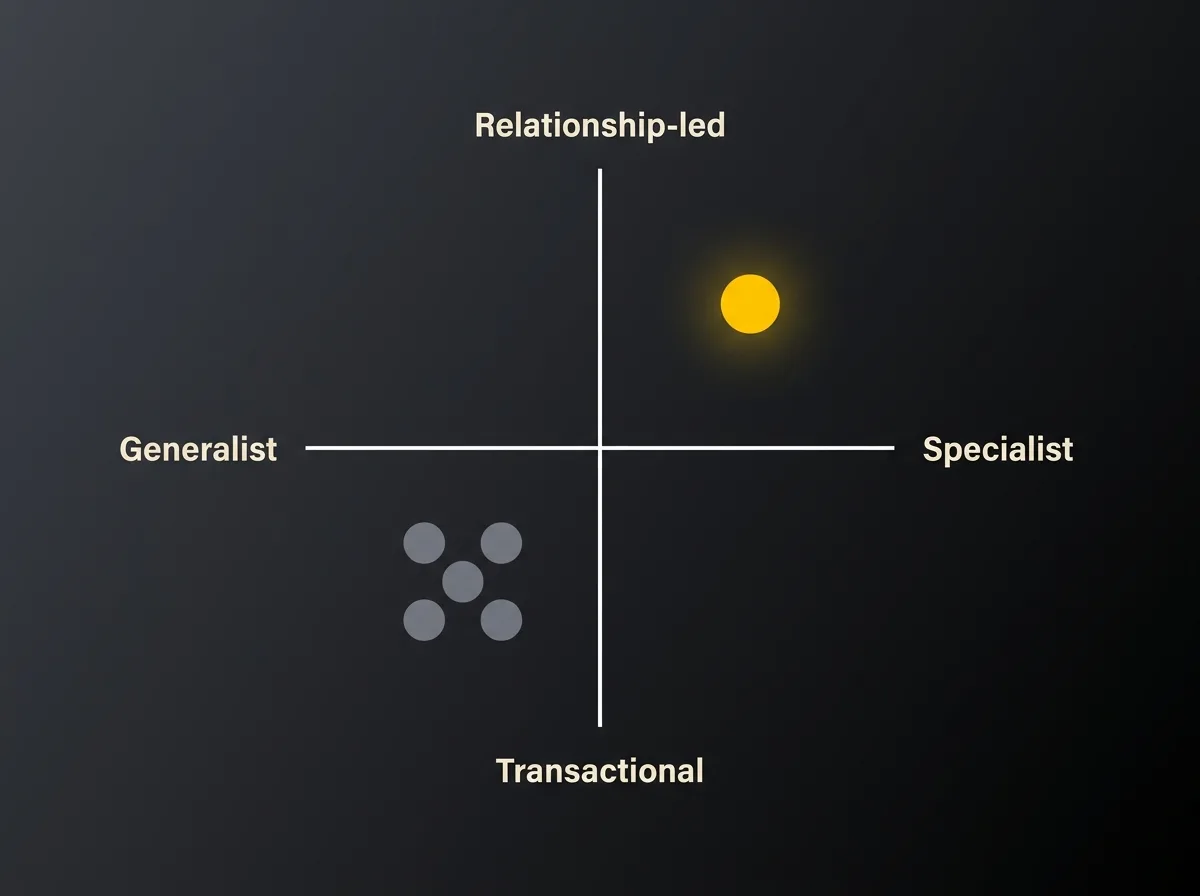
The perceptual map is the most practically useful tool in the positioning exercise. It is a two-axis chart that plots your brand and your competitors against attributes customers actually use when they are choosing between options.
The most common mistake is choosing the wrong axes. Price versus quality is almost always useless. Every business places itself in the top-right quadrant: high quality and reasonable price. The map tells you nothing you did not already know. Better axes for a UK service business might be: transactional versus relationship-led, generalist versus specialist, fast and responsive versus thorough and meticulous, or local and personal versus national and scalable.
How do you choose the right axes? Talk to your best clients. Ask what they were specifically looking for when they chose you. Ask what concerned them about the alternatives they considered. The two things that come up most consistently are your axes. Not your preferences. Theirs, drawn directly from the moment they were deciding.
Take a regional commercial solicitor as an illustration. They map three competitors on axes of "transactional versus relationship-led" and "broad practice versus property specialism." All three competitors cluster in the same quadrant: transactional and broad. There is a visible gap at the relationship-led, property-focused end. When they look at their longest-standing clients, those clients consistently say things like "you actually understood our deal structure" and "we never felt like just another file moving through the system." The gap in the map matches what their best clients already think about them.
That is the key insight. Your position is not where you want to be. It is where customers already put you.
The exercise only works done honestly. If you claim to be the premium option but your pricing, your process, and your current client list say otherwise, the map shows you the gap between aspiration and reality. Useful information.
What you are looking for is an unoccupied, credible space. A gap you can genuinely deliver on, that competitors cannot easily replicate, and that clients actually want. If you find yourself thinking "we would have to turn down some of our current work to own that slot properly", you are probably looking at the right gap.
If the map reveals that your current position is actively working against you, that is the moment to consider a brand refresh rather than spending more budget in a direction that is attracting the wrong clients.
Writing your positioning statement
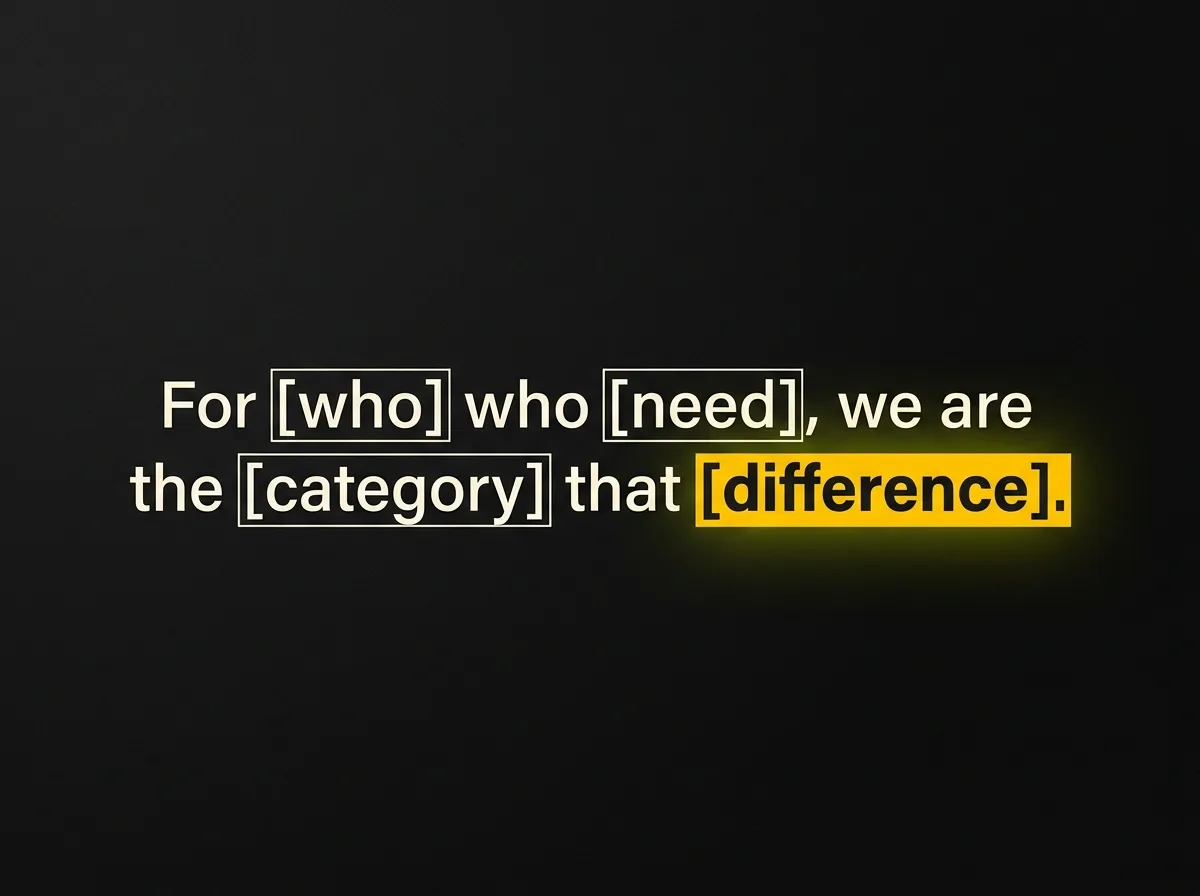
A positioning statement is not copy. It is not your strapline and it is not your company description on LinkedIn. It is an internal document: the organising idea that your copy, your design decisions, and your content strategy should all flow from. It answers, for everyone who works in your business, who you are for, what you do, why you, and why not someone else.
The formula that works:
"For [target customer] who [has this specific need or situation], [your business] is the [category or provider type] that [key benefit or differentiation], unlike [the typical alternative] which [what makes you different]."
Working through the solicitor example: "For property developers and commercial landlords in the East Midlands dealing with complex acquisition or disposal transactions, Greenfield Law is the specialist commercial property firm that treats each transaction as a long-term relationship investment, unlike most practices which handle property alongside a broad case mix and move on once the file closes."
That is a working positioning statement. Too long for a strapline, but it answers every useful question: who it is for, what the specific situation is, what makes them different, and what the alternative fails to provide.
Notice what makes it sharp. It rules people out. Litigants, family matters, employment disputes, one-off residential buyers: gone. Every excluded audience makes the included audience feel more precisely served.
Too broad in the target customer. "Businesses of all sizes across all sectors" is not a target customer. It is the absence of one. A statement that could describe anyone cannot guide any decision.
Too inward-facing. "We are passionate, experienced, and committed to delivering excellent results" is zero differentiation. Every business on the shortlist says this, and none of it can be verified by a prospect who has never worked with you.
Too aspirational. "We aim to become the leading firm in the UK" describes a goal, not a position. Nobody reads that and thinks "yes, this is the right provider for me, specifically."
A good positioning statement feels slightly uncomfortable. Not wrong, but specific enough to actually rule something out. If everyone reads it and nods agreeably, it is not sharp enough yet. This connects closely to what brand consistency means in practice: not "use the same logo everywhere" but "every touchpoint reinforces the same idea, in the same direction."
What changes once you have a clear position
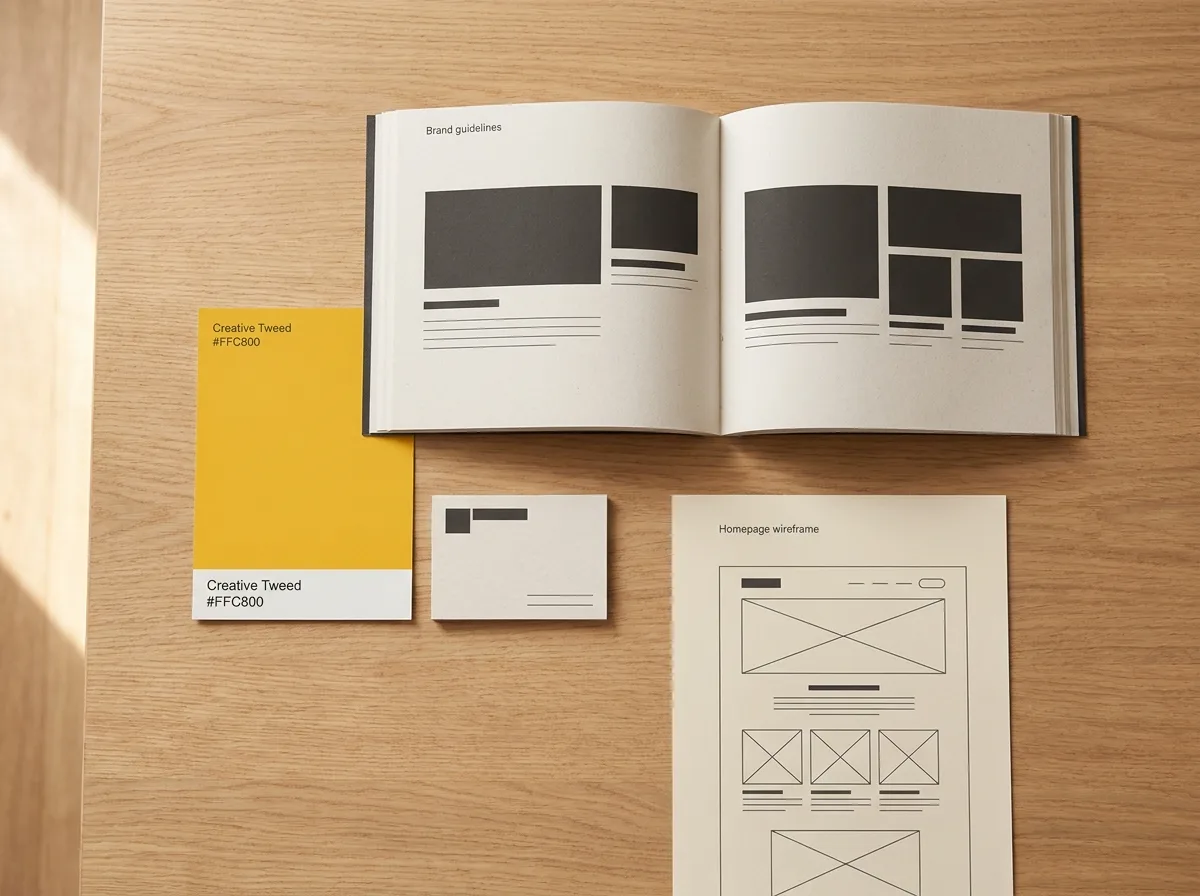
A clear positioning statement changes a lot of things. Most of them were probably drifting without direction before.
The homepage. The hero section of a website should answer three questions in roughly ten seconds: who this is for, what you do, and why you are the right choice. A clear positioning statement makes writing that headline straightforward. Without one, homepage copy drifts toward something like "welcome to our firm, dedicated to delivering excellent service with a personal touch." Technically inoffensive. Completely forgettable.
Service pages. Positioning tells you which services to lead with, how to frame outcomes for the right client, and which case studies to feature. The relationship-led property solicitor does not open their service pages with litigation volume. They open with the deals where staying close to the client through complexity made a genuine difference to the outcome.
Keyword and content strategy. Your positioning determines the specific angle you take on every piece of content you produce. A business positioned as "the specialist digital agency for regulated healthcare practices" produces a radically different content plan from "the friendly agency for any business in any sector." Positioning narrows your topics, the questions you hold authority on, and the language you use. Without that narrowing, content tends to cover everything and own nothing.
Visual identity. Once the strategic position is clear, your visual identity has a proper brief to follow. This is what how brand design builds trust explores in practice: typography, colour, photography direction, the way case studies are laid out, all of it should express the same position. Design that comes before positioning can look polished without saying the right thing to the right person.
If you are approaching a designer or a brand identity agency, arriving with a clear positioning statement changes the quality of that conversation entirely. It gives the creative work a brief rather than just a budget.
Free resource: How to write a design brief
A practical guide for business owners and marketing managers about to brief a designer, web agency, or brand team. Covers what to include, what to leave out, and how to brief in a way that produces the output you actually want rather than the output the designer thought you wanted.
What your positioning means in an AI search world
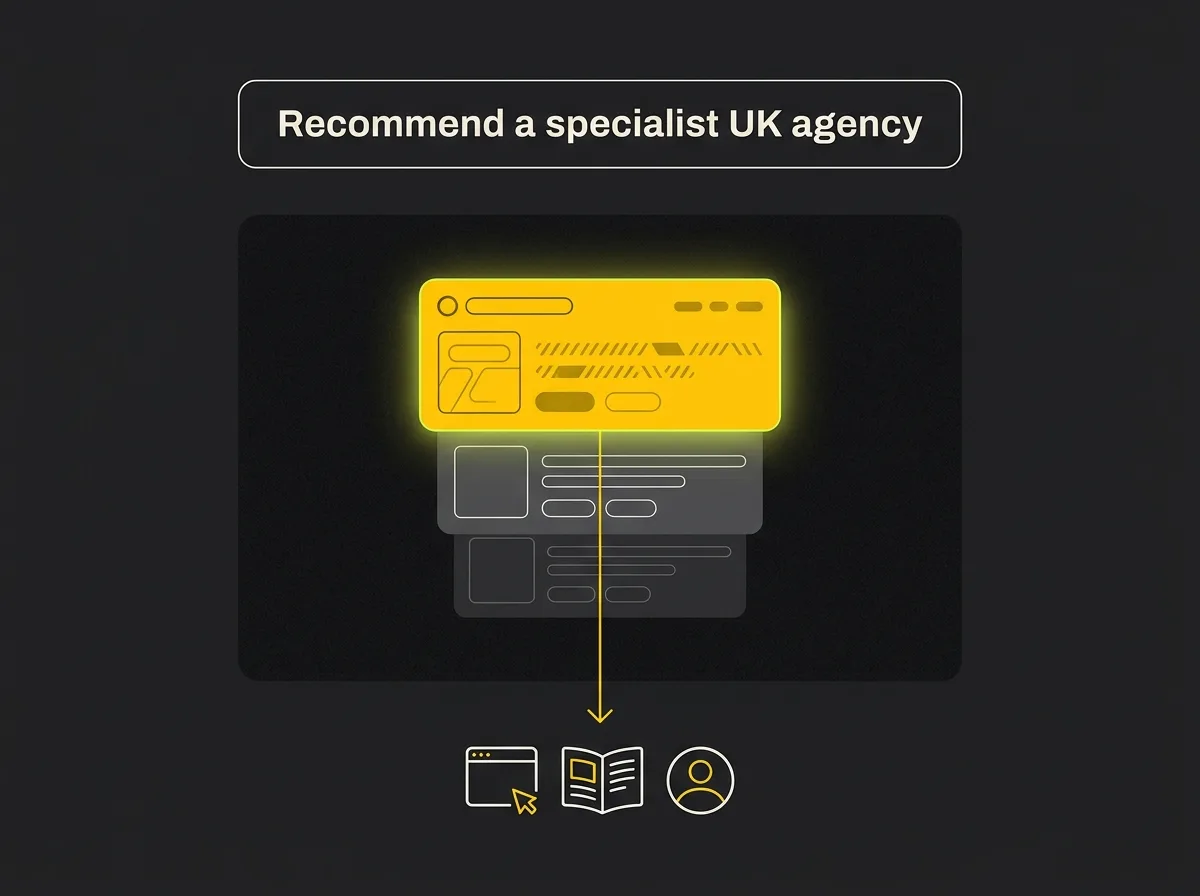
AI tools are changing how prospects find and evaluate suppliers. When someone asks ChatGPT to recommend a specialist B2B agency in the Midlands, or asks Perplexity for a commercial property solicitor in Birmingham, the AI does not just return a list of search results. It reads the available evidence and forms a judgement.
The evidence it reads is your digital presence. Your website copy, your blog content, your case studies, your Google Business Profile, and how consistently all of those signals point in the same direction. Google's AI Overviews now appear for a significant proportion of informational and definitional searches, which means clearly and consistently expressed positioning is increasingly what determines whether you get cited or passed over entirely.
Think about it from the AI's perspective. If your website describes you as a full-service agency for businesses of all sizes, your blog covers everything from social media tips to enterprise software integration, and your case studies span a local bakery, a FTSE 250 manufacturer, and a charity, the AI cannot describe you in a sentence that accurately matches any specific prospect's query. So it recommends someone it can describe.
A business with clear, consistent positioning, where the website, the content, the case studies, and the profiles all tell the same story, gives the AI something precise to work with. It can quote you accurately in response to a relevant query. That is what makes you citable.
There is also a related point worth knowing: AI-generated traffic converts at markedly higher rates than standard organic search traffic, precisely because those visitors have already done their evaluation before they arrive. They asked an AI for a recommendation and the AI named you. Clear positioning is what gets you into that flow in the first place.
This is why positioning is not purely a brand strategy exercise. It is also an AI search visibility exercise. The businesses that AI recommends are the ones AI can describe.
Frequently asked questions about brand positioning
What is brand positioning?
Brand positioning is the specific place your business occupies in a customer's mind when they are deciding who to hire or buy from. It is defined relative to the alternatives they are also considering. A clear position means the right customer can quickly understand why you are the obvious choice for them, and equally, who you are probably not right for.
How is brand positioning different from brand identity?
Brand identity is the visual and verbal language you use: logo, colour palette, typography, and tone of voice. Positioning is the strategic logic that sits underneath all of it. When the position is clear, identity has a brief. It knows what it needs to express and who it needs to speak to. Without a clear position, identity work produces something that may look professional without helping the right customer feel they have found the right provider.
What should a brand positioning statement include?
A working positioning statement identifies who the target customer is, what specific need or situation they are in, what category or type of provider you are, what your key point of difference is, and what the typical alternative fails to deliver. It is not a tagline or a mission statement. It is an internal document that gives your copy, design decisions, and content strategy a single organising idea. It should feel specific enough to rule some people out.
How do I know if my brand positioning needs work?
Several signals are worth looking for. Website traffic is reasonable but enquiry quality is low. Sales conversations start with explaining rather than qualifying. Different people in the business describe you differently to prospects. Marketing content covers a wide range of topics without a clear through line. Or you are regularly asked "so what exactly do you do?" by people who have already visited your website. Any one of these is a positioning problem wearing a different face.
Does brand positioning affect how AI tools recommend businesses?
Yes, directly. AI tools read your digital presence to decide whether to recommend you when a prospect asks a relevant question. Consistent positioning across your website, blog, case studies, and business profiles makes it straightforward for an AI to describe you accurately and match you to the right query. Vague or contradictory signals mean the AI cannot confidently recommend you, even when you are technically the right answer. The businesses AI cites are the ones it can summarise in a sentence.
Getting your position to work for you
Positioning is not a luxury for businesses with a dedicated marketing department. It is the foundation that makes every other marketing investment work harder, because it tells you what to say, who to say it to, and why they should believe you.
The exercise does not have to take months. A few honest conversations with your best clients, an afternoon mapping the competitors you actually lose work to, and a first draft of the statement that you stress-test against the clients you want more of. That is the process.
Making the position real, building it into your website, your content plan, and your visual identity, is where the longer work begins. If you are at that stage, a conversation with a brand identity agency that starts from the strategic position rather than jumping straight to the logo is worth having first.
Once you know your position, the next question most business owners want answered is what search visibility could realistically look like if the site and content were built around it. That is exactly what the Traffic Projection Report gives you.
Free resource: Traffic Projection Report
A clear view of the search traffic your business could realistically attract, based on your target keywords, competition levels, and current domain strength. The businesses that are easiest to recommend, by humans and by AI, are the ones that made a clear choice about who they are for.