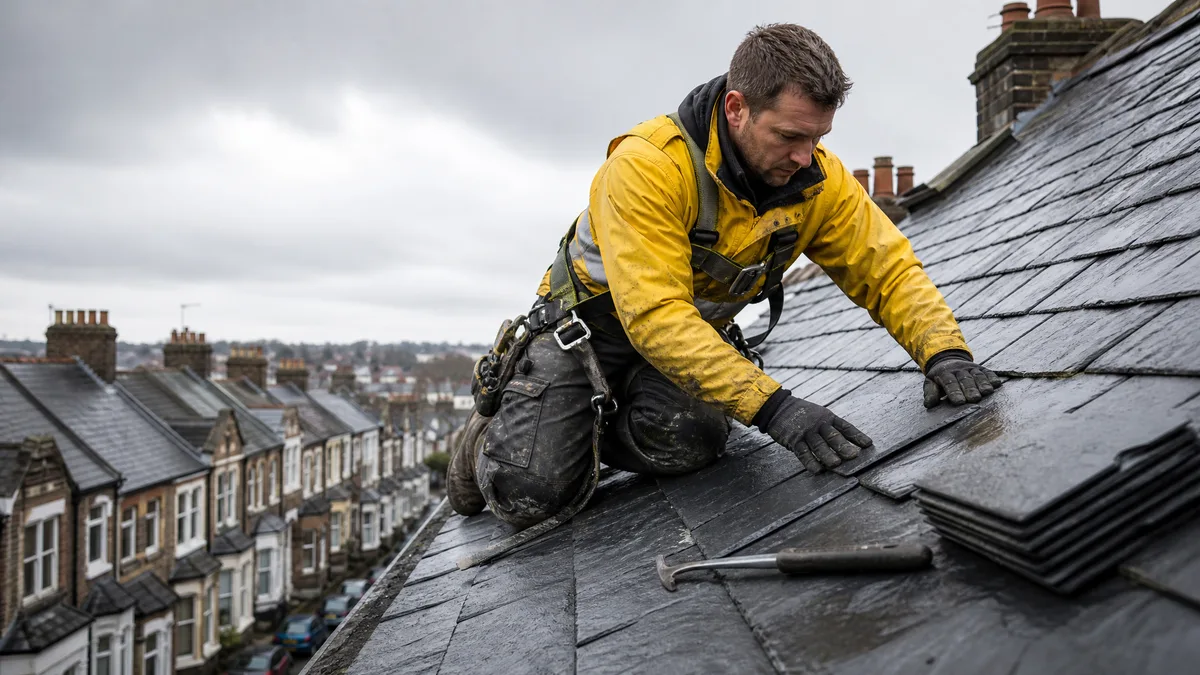
Storm Ciaran came through in October 2023, and within 48 hours certain roofers across the South East were fully booked for three weeks. Not three days. Three weeks.
They weren't lucky. Their storm damage pages were already ranking before the storm arrived.
The roofers who missed that surge weren't smaller businesses or less experienced. They just hadn't built the content Google needed before the search volume hit.
By the time a homeowner types "emergency roofer after storm [town]" into Google, it is too late to publish a page and expect it to rank. That work happens months earlier, when there isn't a cloud in the sky.
This guide covers how to build SEO around how roofing demand actually behaves: the seasonal patterns, the storm-driven spikes, the local proof content that compounds over time, and the Google Business Profile fundamentals that put you in front of customers at the exact moment they need you.
What is SEO for roofers? SEO for roofers is the process of making your roofing business appear in Google results when local customers search for services you offer. It covers three main areas: your Google Business Profile (which drives the map pack results most roofing enquiries come from), your website (which needs service and location pages for each area you cover), and your reputation (reviews, directory listings, and backlinks from credible sources). Results take three to six months to show meaningfully, but they compound over time and do not switch off the moment you stop paying.
How customers search for a roofer, and why the timing matters as much as the keyword
Not all roofing searches are the same. The customer typing "roofer near me" at 9pm on a rainy Tuesday is in a completely different state of mind from the one searching "flat roof re-cover quote [city]" in April. Both are potential jobs, but they need different content to convert them.
Timing matters as much as the keyword itself.
There are three distinct modes of roofing search.
Emergency search. Terms like "roof leaking now," "roofer near me," and "emergency roofer [town]" spike after weather events and during sustained rainfall. Conversion intent is high. The customer wants a phone number and a fast response, not a long service page. Your Google Business Profile and a clear contact page with a prominent number matter more here than any amount of blog content.
Planned seasonal search. Terms like "roof replacement [city]," "flat roof re-cover quote," and "new pitched roof [town]" follow a predictable annual curve. They rise in late winter as homeowners start thinking about spring and summer work. These customers are comparing options, reading reviews, and getting two or three quotes before deciding. A thorough service page, real project photos, and a solid recent review count convert this group.
Storm-triggered search. This is the category most roofing websites miss entirely. Terms like "storm damage roof repair [town]," "roof inspection after storm," and "emergency roofer after [storm name]" spike within hours of a named weather event and stay elevated for days or weeks.
These customers have an urgent, specific problem, and many are going through their buildings insurance. Conversion rates are considerably higher than generic searches because the need is immediate and the financial mechanism is already in motion.
Understanding all three modes is the foundation of sensible SEO for tradespeople. A roofer with content built for all three captures demand at every point of the year. One who only ranks for "[city] roofer" is leaving the highest-intent searches to whoever prepared earlier.
The UK roofing calendar, and why your SEO needs to run six months ahead
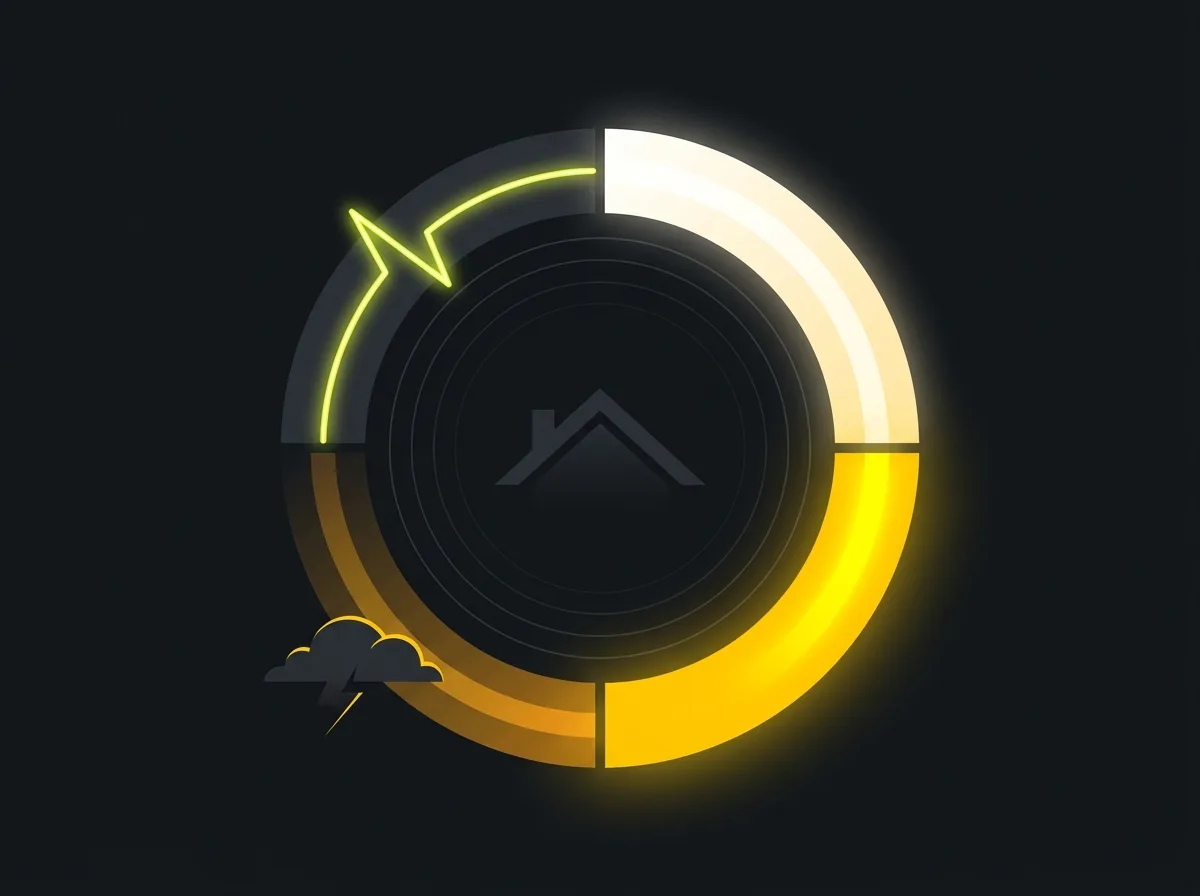
The most important thing to understand about SEO for a seasonal trade is the lag. New content takes three to six months to rank. That is not a rough estimate. It is a consistent pattern across every niche.
It means you cannot publish a storm damage page in November and capture December searches. The window to build that content is spring.
February to April is when homeowners start planning spring and summer work. After a winter of rain and wind, people begin noticing the missing tile they've been ignoring since October. Searches for re-roofing, inspection, and loft conversion work start climbing. Content published by the previous October is now in a position to rank. If you haven't started yet, publish now, but expect results in summer rather than spring.
May to August is peak season. Quote volume is highest, booked slots fill quickly, and Google reviews accumulate fastest because work is being completed and relationships are warm. The SEO investment from the previous autumn is paying out in calls. This is also the time to publish storm damage and pre-winter inspection content so it has time to rank before October.
September and October is the pre-winter window. Searches for "roof check before winter" and "is my roof ready for winter" increase. Storm season is approaching. Anything published now about storm damage will not rank in time for the first autumn events, but it will rank by January when the season hits hardest.
November to February is storm season and emergency repair period. If storm damage content is not already ranking, it is not capturing anything. This is also when paid lead platforms are at their most expensive.
Every roofer in your area is bidding for the same connections.
The contrast with Checkatrade or MyBuilder is straightforward. Those platforms are reactive. You pay when you need leads, and the leads stop when you stop paying. SEO is proactive. Each piece of ranked content keeps working for months or years without further cost. That compounding effect is the reason marketing for home improvement businesses built on search always outperforms rented lead supply over a three-to-five-year horizon.
Storm damage keyword surges, and how to be ranking before the storm hits

The UK gets named storms every year. The Met Office has been naming them since 2015, and a typical winter sees eight to fifteen named events between October and February. Some cause widespread damage across multiple regions in the same week.
When they do, searches for "storm damage roof repair [city]" and "emergency roofer after storm [town]" spike within hours and stay elevated for days.
The Association of British Insurers publishes annual data on weather-related property claims. Roofing damage consistently represents one of the largest single categories in the aftermath of named storms. These are homeowners with an urgent problem, a policy they are already paying for, and a strong incentive to find a roofer quickly.
That is the opportunity. And it is entirely available to any roofing business that has the right content already indexed.
The preparation strategy is not complicated. Build dedicated storm damage pages before October. Each page should explain what storm damage looks like in plain terms (broken or missing tiles, flashing failure, ridge tile movement, gutter damage), how the insurance claim process works, what a survey involves, and what the repair will look like. Make the phone number prominent. Include real before/after photos from previous storm damage jobs.
If you cover more than one area, consider building pages for each. Storm Ciaran hit a wide geographic band across England in a single event. Roofers in Bristol, Oxford, and parts of the South East all saw search spikes in the same week. A roofer with location-specific storm damage pages for each service area captures more of that volume than one with a single generic page.
On your Google Business Profile, add "storm damage repair" and "emergency roofing" as named services. Update your hours to reflect emergency call-out availability. Upload before/after images from storm damage jobs, tagged with the location.
The National Federation of Roofing Contractors recommends that homeowners inspect their roofs each autumn before storm season. That kind of authoritative framing earns trust on the page. Your storm damage content should show genuine understanding of the problem and the insurance process, not just a call to action.
One practical note on timing. The moment to publish storm damage content is spring, when it feels least urgent. That is the only window that gives Google enough time to index and rank the pages before October. Publishing in September is better than nothing, but you are racing against the calendar.
Before/after project content, the proof asset most roofing websites skip
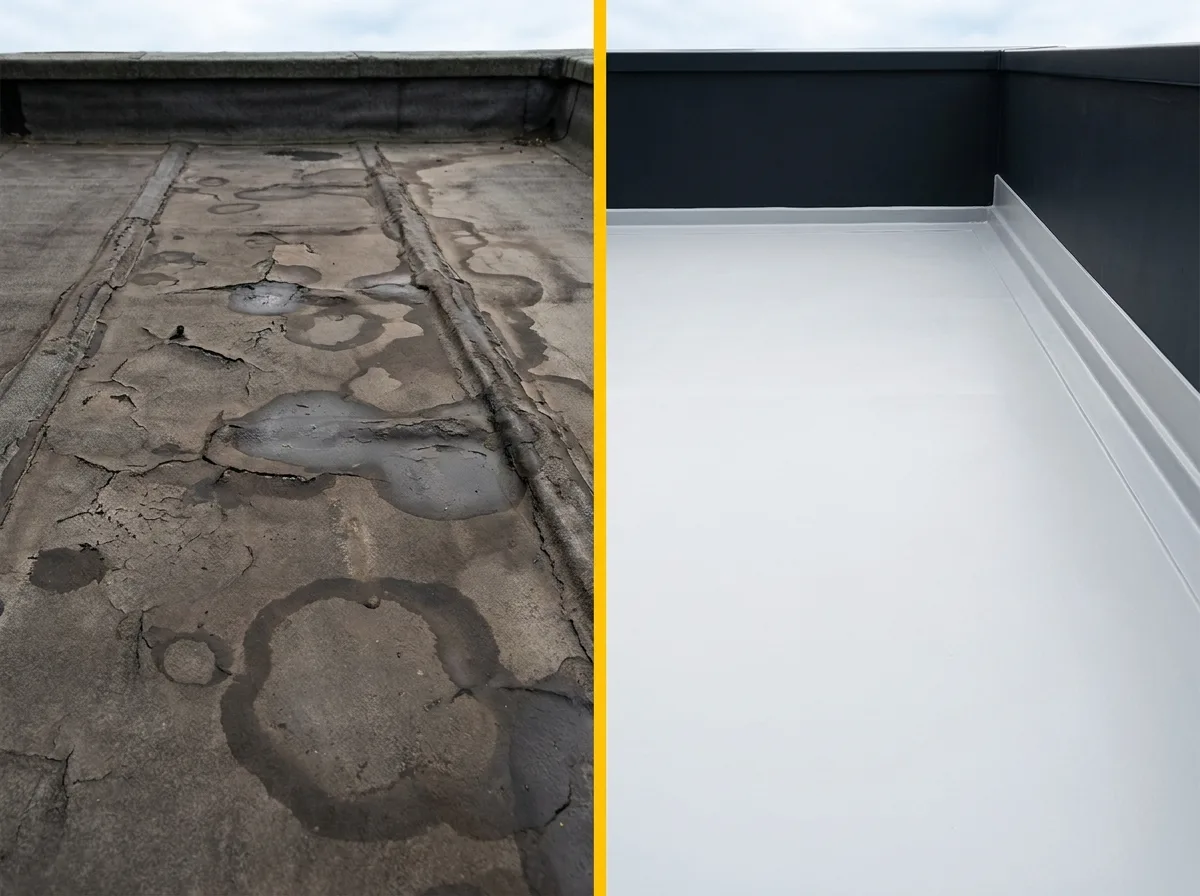
Most roofing websites have a gallery tab. Usually it is a grid of photos with no captions, no context, and no information that helps Google understand what the page is about. It earns nothing in search and converts poorly.
Project pages are different.
Not a gallery, but individual pages, one per job, documenting a single project from problem through to completion.
The format that works: a short introduction explaining what the customer's problem was, before photos, in-progress photos, finished photos, a bullet list of the work carried out and materials used, the location (suburb or town), and a brief client quote in their own words. Not "great service, would recommend." Something specific, like: "We'd been putting it off for two years. The whole thing was done in a day and a half."
Each project page is unique, locally specific, and image-rich. A "flat roof replacement Moseley" page targets a long-tail search that a generic flat roofing service page will never rank for on its own. Twelve of these published over twelve months is a meaningful body of work.
Two years in, it is a significant competitive advantage.
The conversion benefit matters equally. A homeowner researching a re-roofing job wants to see work done on a house similar to theirs, in a neighbourhood they recognise. That converts considerably better than stock photography or a generic testimonials section.
Project pages also earn backlinks naturally. Customers share their jobs on local Facebook groups. Suppliers reference completed work. Local press occasionally covers interesting projects. Each link builds site authority without any outreach.
Local SEO fundamentals, what UK roofers still get wrong
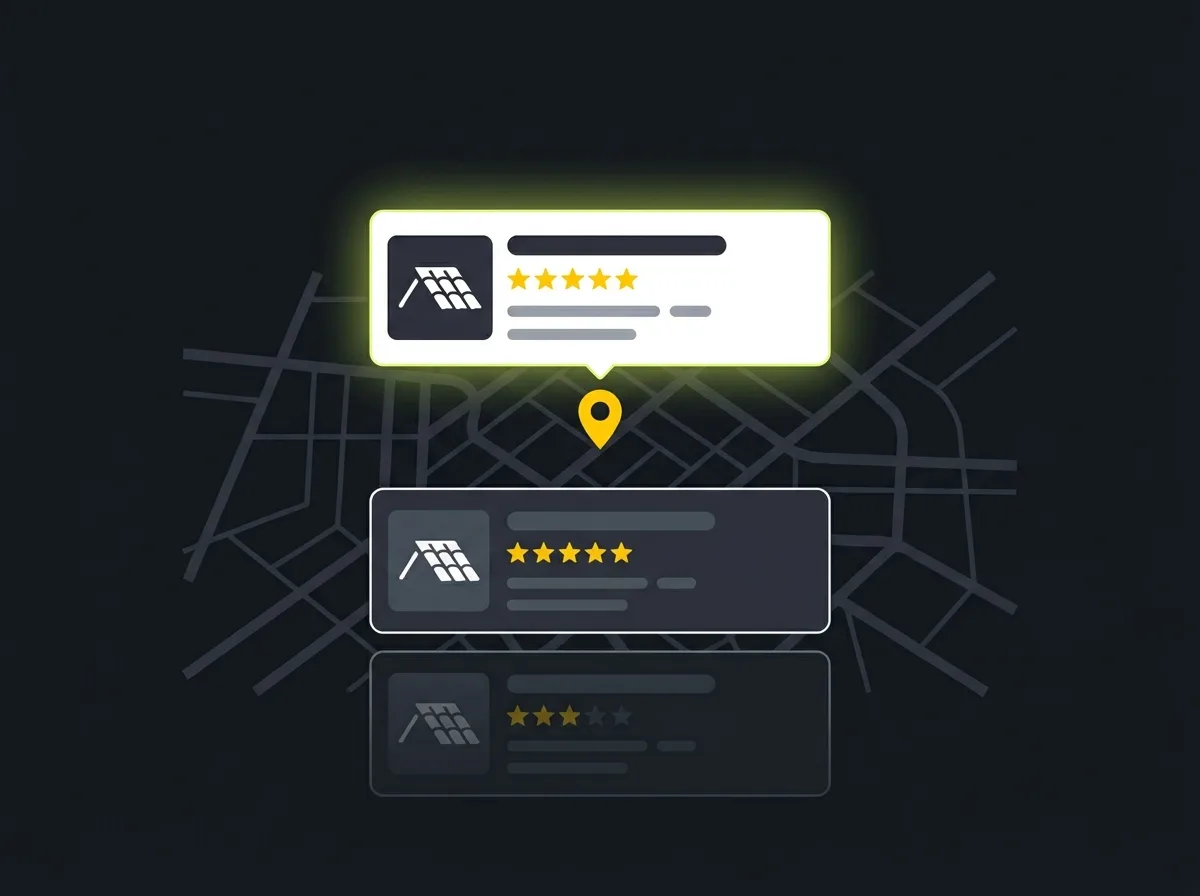
The local map pack is where the majority of roofing enquiries originate. Getting into the top three positions for "roofer [your city]" is worth more than almost any other ranking you could chase.
The same mistakes appear again and again.
Google Business Profile. Set your primary category to "Roofing Contractor." Add secondary categories where accurate: Roof Repair Service, Gutter Cleaning Service, or whatever genuinely reflects the work you do. The services list should name every type of work, including materials (EPDM, GRP, slate, flat felt, lead flashing). Your description should name the towns you cover, the types of roofing you handle, and one line about your accreditation or history. Upload a minimum of twenty real job photos. Not stock images. Your own work.
NAP consistency. Your business name, address, and phone number must be letter-for-letter identical across your GBP listing, your website, Checkatrade, TrustATrader, Yell, the NFRC directory, and anywhere else you appear. "Smith Roofing Ltd" and "Smith Roofing Limited" are not the same as far as Google's local authority signal is concerned. One inconsistency dilutes the signal. Check every listing manually.
NFRC membership. Beyond professional credibility, the NFRC directory provides a citation from a high-authority, industry-specific domain. It also appears in GBP as an accreditation badge, which functions as a trust signal in local search. If you qualify, get listed.
Location pages. One page per town or area you cover. Not an "areas we cover" bullet list at the bottom of your homepage. Each location page targets "[primary service] [town]" and needs its own unique content: real photos from jobs in that area, a description of the local housing stock you work on most, and the specific services you offer there. Generic location pages with the town name swapped in produce nothing. Specific ones rank and convert.
Reviews. Review count and recency are direct local ranking factors. In a competitive urban market, fifty or more reviews with a 4.5-star average is the threshold that reliably reaches the top three. Asking for reviews needs to be systematic. After every completed job, every customer gets asked. If you use a CRM or job management tool, build the ask into the close-out process. Do not leave it to chance.
A properly structured local SEO for roofers programme treats all of these as an integrated system, not a checklist. Google is trying to show local customers the most credible, well-documented business near them. Every element above is evidence you are that business.
What AI search means for your roofing business in 2026
AI is now a discovery channel for local services. Most roofing businesses have not caught up with what that means.
Worth knowing.
When a homeowner asks ChatGPT "who is a good roofer in [city]," it gives an answer. When they use Perplexity, it cites sources. When they search Google, an AI Overview may appear above the organic results for informational roofing queries. This is not a future prediction.
What AI surfaces is not random. It favours businesses with a strong entity presence: a complete Google Business Profile, NFRC listing, consistent citations across directories, and mentions in local press or industry publications where possible. It also favours structured content, including FAQ sections and clear heading-to-answer pairs that an AI tool can quote directly.
The practical step most roofing websites are missing is an FAQ section. Not generic questions, but the ones customers genuinely ask: "How long does a new roof last?", "How much does a roof replacement cost in the UK?", "Should I repair or replace my flat roof?", "What does storm damage cover under buildings insurance?" These questions pull People Also Ask traffic from Google and are increasingly cited by AI tools when users ask similar things.
Adding LocalBusiness schema to your website is the other practical step. It declares your business name, address, phone number, and service area in a structured format that search engines and AI can read directly. It increases the likelihood of being named in AI responses for local service queries. A developer can add this in an afternoon.
Worth knowing: AI search converts at a measurably different rate from traditional organic traffic. Users who arrive via AI recommendations are in a verification mindset, not a discovery one. They have already heard about you. Your website needs to confirm what they heard, quickly and credibly.
How to know if your roofing SEO is actually working
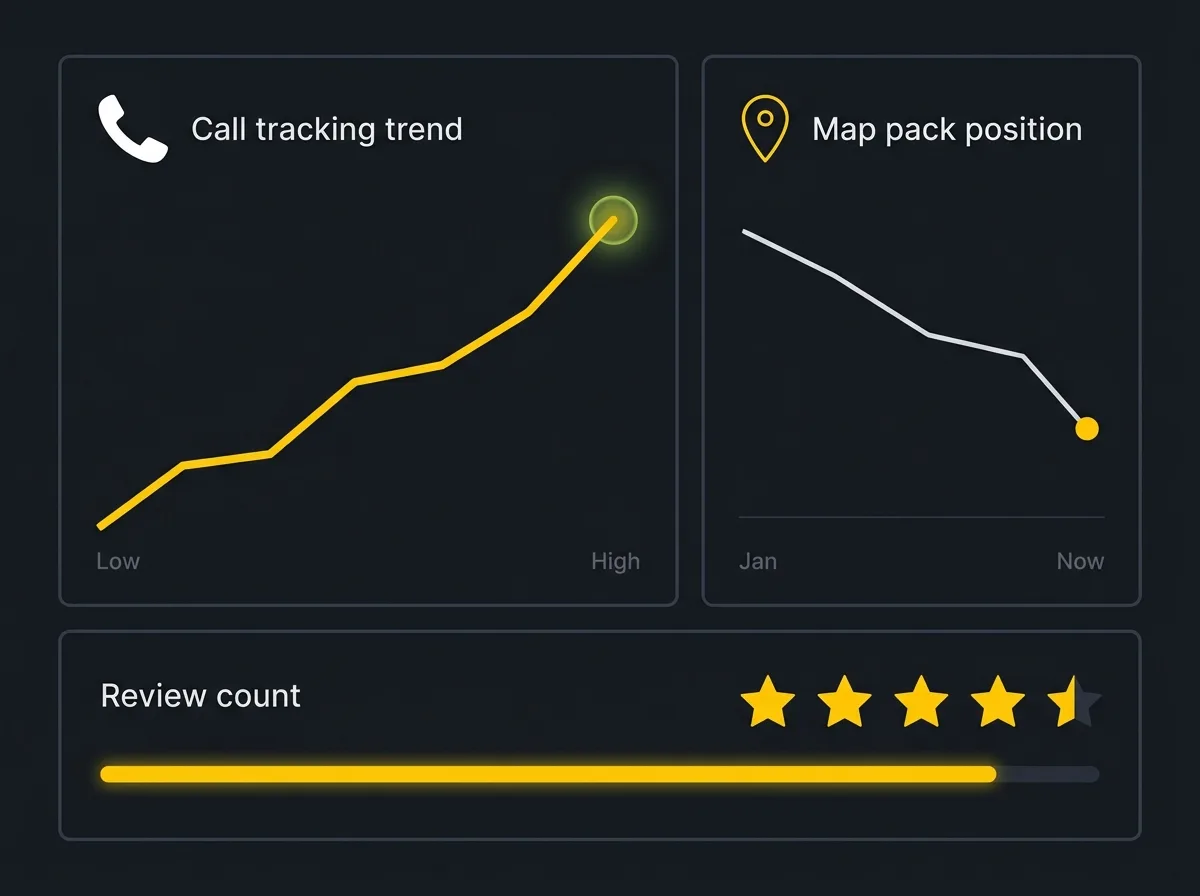
Total website traffic is the wrong metric for a local roofing business. Knowing you had four thousand visitors last month tells you almost nothing if you cannot confirm they were in your service area, looking for a roofer.
These are the numbers that actually matter.
Tracked calls from organic search. Your Google Business Profile shows call volume directly from GBP. A call tracking number on your website, attributed to organic traffic in GA4, separates calls from SEO from calls from everywhere else. If call volume is increasing alongside your GBP completeness and review count, you are moving in the right direction.
Map pack ranking for your priority terms. Track five to ten terms: "roofer [city]," "roof repair [city]," "flat roofer [city]," "emergency roofer [city]," and "storm damage roof repair [city]." A rank tracker (Semrush, Ahrefs, or a lighter tool like Ubersuggest) monitors these weekly. Movement in map pack position correlates directly with phone volume. This is the metric to watch.
Enquiry form submissions attributed to organic. Not every customer calls. Some fill in a contact or quote form. GA4 with basic conversion tracking shows how many of those came through organic search versus paid or direct.
Review count and recency. This is a leading indicator. Consistent review accumulation signals that the business is doing work, customers are satisfied, and local ranking signals are building. A plateau, particularly after a period of growth, often precedes a decline in map pack position.
The timeline is honest rather than flattering. Expect three to six months for initial movement on lower-competition terms. In competitive city markets, twelve months of consistent effort is a realistic window for sustained top-three positions. Storm damage pages can move faster if they are well-built and published well ahead of October.
The tools you need are mostly free. Google Search Console shows which queries your site ranks for and how many clicks they generate. Google Business Profile Insights shows calls, direction requests, and profile views. A basic rank tracker for your ten priority terms completes the picture.
For roofers considering working with an agency, SEO for roofing companies should include all of this measurement as standard. If an agency cannot tell you your current map pack position for your five most important terms before you sign anything, that is worth knowing early.
Free: Traffic Projection Report
If you want to understand what organic traffic could realistically look like for your roofing business before committing to anything, the Traffic Projection Report gives you a keyword-level view of the opportunity. It shows estimated search volumes, the competitiveness of each term, and the approximate level of effort to reach ranking positions. It is a diagnostic, not a pitch.
If you are already further along and thinking about choosing an agency, the next step is reading about what to look for in a roofing SEO agency before signing a contract.
Frequently asked questions about SEO for roofers
How long does SEO take for a roofing company?
Most roofing businesses see initial ranking movement on lower-competition terms within three to six months. Consistent map pack visibility in competitive city markets takes closer to twelve months of sustained effort.
Storm damage pages can move faster if they are well-built and published well ahead of the October to February storm window.
The timeline also depends on the starting point: a site with no previous SEO work, inconsistent GBP data, and few reviews will take longer to show results than one with some existing authority built up.
Is SEO worth it for a small roofing business?
The honest answer depends on your market and your patience. In areas with lower competition, SEO can show meaningful results in four to six months and deliver a reliable stream of enquiries without per-lead costs.
In competitive urban markets the investment is higher and the timeline longer, but the compounding effect is also stronger. The comparison to make is not SEO versus doing nothing. It is SEO versus paying £30 to £50 per Checkatrade connection indefinitely, in a bidding environment that gets more expensive every year as more roofers join the platform.
How do I get my roofing company to show up on Google?
Start with your Google Business Profile. Claim it, complete every field (services, description, hours, photos), and set your primary category to "Roofing Contractor."
Then check that your business name, address, and phone number are identical across every directory where you appear. After that, a steady stream of genuine Google reviews and service pages covering the specific work you do in the specific areas you cover will build your map pack presence over time. There is no shortcut, but the steps are genuinely straightforward.
What is the difference between Google Ads and SEO for roofers?
Google Ads puts you at the top of search results immediately, but you pay for every click and disappear the moment the budget runs out. SEO takes longer but the presence you build compounds and does not switch off.
Most established roofing businesses use both: Ads for immediate lead volume while SEO is being built, and SEO as the long-term foundation that reduces dependence on paid leads over time. They are complementary, not alternatives.
Should I use Checkatrade and SEO, or one or the other?
Both serve different purposes and most established roofing businesses use both. Checkatrade and similar platforms provide immediate access to homeowners actively requesting quotes. SEO builds a direct channel to Google traffic that you own outright.
The risk of relying only on platforms is that you are renting your lead supply. If the platform changes its algorithm, pricing, or terms, your enquiry volume is at risk. SEO is the hedge against that dependency.
How much does SEO for a roofing company cost?
A credible SEO programme for a UK roofing business typically runs between £600 and £2,000 per month, depending on the size of the market, the level of competition, and the scope of work.
At the lower end, you are looking at local SEO fundamentals: GBP management, citation building, and review strategy. At the higher end, you get full website optimisation, content production, project pages, and ongoing reporting. Be cautious of any agency offering guaranteed rankings or very low monthly fees without a clear description of what the work actually involves.