
Two agencies pitched you this week. Both showed you traffic graphs for someone else’s business. Both promised first page Google in 90 days. Both quoted around a thousand pounds a month. Neither could tell you how many actual jobs that client won.
That is the roofing SEO market right now. Agencies selling the same package to every trades business in the country, wrapped in slightly different logos. The quiet phone, the price-shopper leads, the feeling that something should be working better than it is. And now two pitches that looked almost identical.
A roofing SEO agency is a specialist marketing partner that gets your business found in Google, Google Maps and increasingly AI tools like ChatGPT, when the people in your service area search for the work you do. The good ones make a measurable difference to your enquiry quality and volume. The bad ones take twelve months of retainer fees and hand back a keyword ranking report that does not mention a single job won.
These seven checks will help you tell them apart before you sign anything. For the wider picture on how search and traffic fit together as a business strategy, the search visibility and traffic hub is a useful starting point.
What a roofing SEO agency actually does (and what it cannot)
The deliverables break into five categories. Technical site work: fixing the things that stop search engines indexing your site correctly, meaning page speed, structured data markup, sitemap health, and whether your site actually loads on a mobile in under three seconds.
Content: service pages, service-area landing pages, and editorial articles that answer the questions potential customers type before they call anyone.
Google Business Profile management: your GBP listing is where most roofing enquiries start, and it needs active management rather than a one-time setup.
Link earning: getting credible websites to reference your business, which builds the authority that pushes you up the rankings over time. (If you are also considering outsourcing your link building as part of a wider programme, the quality of what gets built varies enormously between agencies.)
More recently, a fifth category has emerged: AI search positioning. Making sure your business gets mentioned when someone asks ChatGPT or Perplexity for a roofer recommendation. More on that in Check 7.
What a credible agency cannot do is equally important to understand. They cannot manufacture Google reviews. They cannot guarantee a ranking position on a specific date, and if they claim they can, that is your cue to leave.
They cannot turn a thin five-page website into a lead machine overnight, and they cannot fix a service that is genuinely weaker than your local competitors. SEO amplifies what is there. If what is there is strong, it accelerates. If it is not, it makes the gap more visible, not less.
A decent SEO agency will tell you all of this in the first conversation. That honesty is itself a check worth running.
Check 1: do they focus on local or national rankings, and which do you actually need
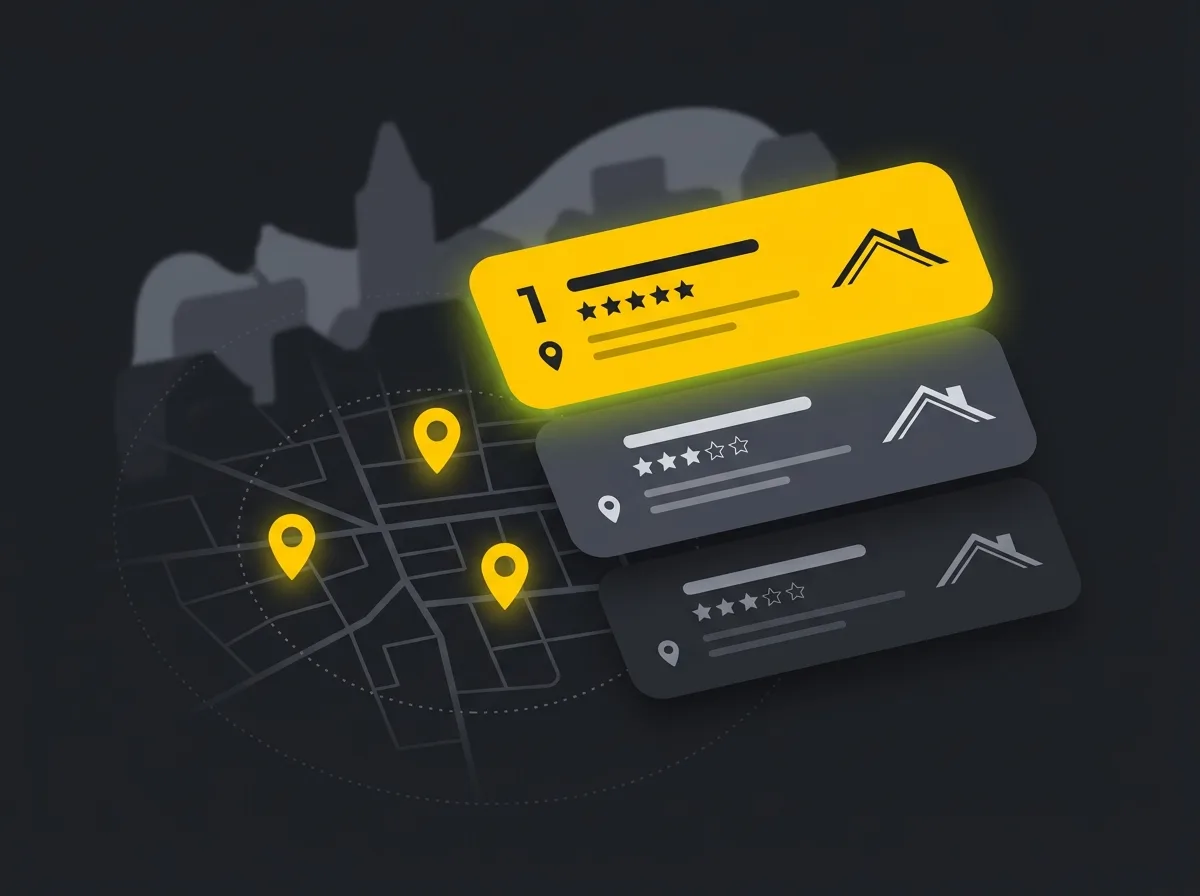
If you run a four-van roofing firm covering Surrey and the surrounding counties, you do not need to rank for “flat roofing” nationally. You need to appear in the map pack when someone in Guildford types “roofer near me” on a Tuesday afternoon after a heavy shower. Those are two completely different problems, and an agency that conflates them will spend your money on the wrong one.
Local search for roofers means three things in practice. Map pack rankings for “roofer [town]” and “roofing company [postcode area]” across your service radius. Organic rankings for service-and-location terms like “flat roof repair Guildford” or “heritage tile roofer Surrey.” And Google Business Profile health, which drives both.
According to Whitespark’s Local Search Ranking Factors, GBP signals consistently rank among the top influences on local pack inclusion. That is where a credible agency focuses first, not on broad national traffic that converts at a fraction of the rate.
There are exceptions. A heritage slate specialist in Yorkshire working on listed buildings might legitimately target national organic rankings, because the pool of buyers for that specific expertise is small and spread across the country. Commercial roofing contractors operating on industrial estates often work across a wider radius than a residential firm. For most roofing businesses, though, local is not a compromise. It is the right answer.
A proper local SEO programme for a roofing firm covers GBP management, service-area content, local citation consistency, and Local Services Ads readiness. The question to ask any agency: which specific search terms and locations are you targeting for my business, and why those?
Check 2: do they report on lead quality, not just rankings
The classic agency move is a monthly report showing keyword position movement without connecting any of it to whether you won any work. A ranking screenshot proves you appear somewhere on page one. It does not prove the phone rang.
A credible agency tracks enquiries, not just positions. That means call tracking set up on your site, form submission data attributed to specific sources, and a monthly breakdown of how many enquiries came from organic search versus direct versus paid.
It means knowing whether the leads that came in were emergency call-outs or quoted reroofs, because those are won differently and worth differently to your business. Over time, that data tells you whether the SEO investment is changing the mix of work you win, not just the volume.
Two questions to put to any agency before you sign. First: how do you measure lead quality, not just lead volume, and what does your monthly reporting include beyond keyword positions? If they talk only about traffic numbers and position changes, that is your answer.
Second: can you show me a recent monthly report with the client name removed? A credible agency has nothing to hide here. If the report contains only traffic graphs and ranking tables, ask why.
Check 3: do they actually understand roofing
This sounds obvious. It matters more than most business owners expect.
Roofing enquiries split roughly into two types. The emergency: something has gone wrong, often overnight, and a homeowner needs someone reliable immediately. The planned job: a customer who noticed the moss creeping up the tiles last spring, got three quotes over summer, and will book in the autumn. An agency that does not understand this split will not know how to shape your content, your GBP listing, or your site structure to capture both.
Signs an agency genuinely understands roofing: they use the right vocabulary without prompting. Flat versus pitched. Single ply membrane versus EPDM. Lead flashings. Tile and slate profiles. Insurance work. The difference between a domestic reroof and a commercial flat roof project. They understand that roofing is seasonal in a way that, say, accountancy is not, and that the spring and autumn peaks are driven by different buyer motivations.
A specific test you can run in the first call: ask them to look at a competitor’s site with you and name two or three content gaps. A competent agency will pull it up, look at what is missing or thin, and tell you what they would write first. An agency that stumbles on this has not done the homework on your industry.
Check 4: transparent pricing and contract length
The UK roofing SEO market has a wide pricing range, and it maps fairly closely to the quality of the work underneath.
Under £500 a month is almost always directory management: Checkatrade listings, Rated People profiles, a handful of local citation sites. That has its place, but it is not SEO in any meaningful sense. You will not build organic search visibility from it, and it does not compound over time the way a real content and link-earning programme does.
Genuine retainer-level work sits between £800 and £2,000 a month for a roofing business with a defined service area. At the lower end you get the essentials: technical audit and fixes, GBP management, one or two content pieces a month, citation cleanup.
At the higher end you get a full programme: regular content, active link earning, structured data work, conversion improvements on the site itself, and monthly reporting that actually tells you something useful. Above £2,000 starts to make sense for larger regional firms or those running paid search alongside SEO as a joined-up programme.
On contracts: a 12-month commitment is reasonable and you should expect to sign one. SEO takes time, and any agency comfortable with a rolling monthly arrangement either has very low churn or is not thinking carefully about your investment horizon.
What you should not accept is a lifetime contract with an exit penalty that makes leaving impractical, or a rolling agreement where the deliverables are vague enough that the agency can quietly reduce what they are doing without you noticing.
The red flag is simple. If an agency will not give you a written breakdown of the specific deliverables in your monthly retainer before you sign, do not sign.
Check 5: technical SEO foundations they will fix in the first 90 days
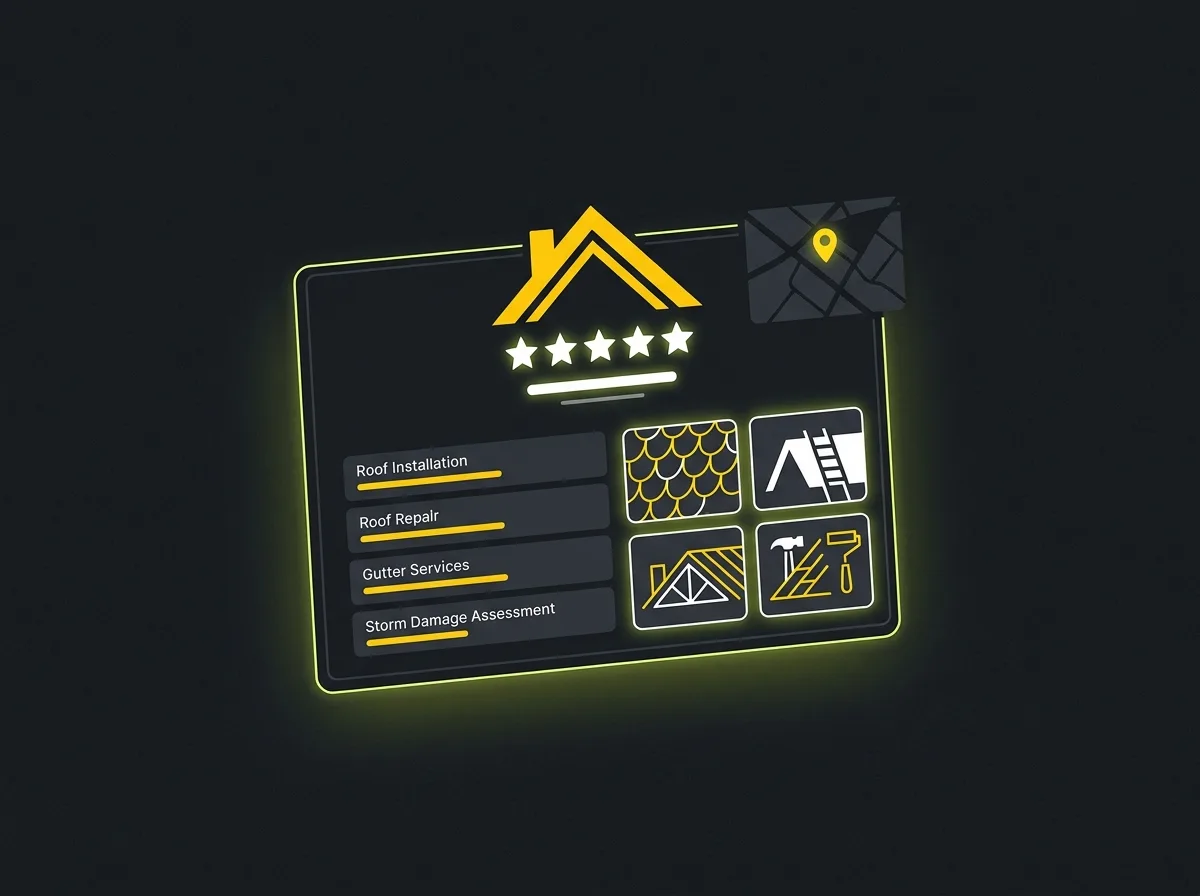
The first three months of a roofing SEO engagement should look unglamorous. That is a good sign, not a bad one.
Before an agency writes a single piece of content for you, they should be working through a technical list. Site speed: if your site takes more than three seconds to load on a mobile, you are losing enquiries before anyone has read a word.
Schema markup: LocalBusiness schema confirming what your business is and where it operates, Service schema for each service type, and Review schema pulling your star ratings into search results. Sitemap and indexation: making sure every important page is being crawled correctly and no important pages are accidentally blocked.
Internal linking: connecting your service pages to your location pages to your editorial content in a way that distributes authority through the site rather than leaving it pooled in one place.
Then the GBP work. Fully completing the listing. Adding every service category you cover. Uploading project photos that show actual work quality rather than stock images. Making sure your address, service area, and opening hours are correctly set.
Listing your trade body memberships correctly, whether with the NFRC (National Federation of Roofing Contractors), the FMB (Federation of Master Builders), or other relevant certifications.
These are the credibility signals that convert a browser into a caller, and they also happen to be the named entities that AI models use when deciding whether to recommend you.
An agency that skips this phase and goes straight to writing blog posts is building on a weak foundation. The technical work is what makes everything that follows worth doing. Ask any agency you are evaluating for a clear first-90-days plan, in writing, before you commit.
Check 6: content depth in your real service areas
Roofing SEO content has one persistent failure mode, and if you have worked with an agency before there is a good chance you have seen it.
Ten service-area pages, each three hundred words long, all starting with “Are you looking for a roofing company in [town]?” followed by the same three paragraphs with the town name swapped out. Google spotted this pattern years ago.
It does almost nothing for rankings, and it makes your site look cheap to every prospective customer who lands on one of those pages.
Credible service-area content looks different. One properly researched page per genuine target location, long enough to describe the roofing context in that specific area: the local housing stock, the common problems, the types of work you have done there, the neighbourhoods you cover. Photos from actual jobs in that area if you have them. That kind of page takes longer to write but it earns rankings and it converts the traffic when it arrives.
A sensible content plan for a roofer covering a 30-mile radius looks roughly like this. Four or five core service pages covering flat roofing, pitched roofing and reroofing, lead and chimney work, emergency repairs, and if relevant, commercial or heritage work.
Service-area pages for the five or six towns where most of your work comes from, genuinely differentiated from each other.
And a small editorial layer, perhaps one article a month, covering the questions customers ask before they pick up the phone: how to spot storm damage, what a flat roof replacement actually involves, how long a new roof should last.
Ask the agency to show you a content plan for the first six months covering all three layers. A list of fifty thin location pages is not a content plan.
Check 7: AI search visibility, not just Google

This is the check that almost nothing else in the roofing SEO market addresses. It is also the one that will matter most in the next two to three years.
Customers are increasingly asking ChatGPT, Perplexity, and similar tools for recommendations before they call anyone. “Who are the best roofers in Surrey?” “Can you recommend a flat roofing specialist in Leeds?” “What should I look for in a roofing contractor?” These are not hypothetical future queries.
They are happening now, and AI search now drives higher-intent enquiries than traditional search because users arrive having already done some of the verification themselves. They are not comparison shopping. They are calling to confirm.
Being visible in those answers requires different work from being visible in Google. Clean, well-structured content that AI models can read and quote directly. Consistent named entity coverage: your business name, your specific location, your service types, your trade body memberships and certifications. Schema markup that makes your data machine-readable. And editorial depth that gives a model something genuinely worth citing rather than a vague paragraph about how committed you are to customer service.
An AI search visibility programme builds on the same technical foundations as traditional SEO but adds a layer of content structure and entity coverage that most agencies have not yet got to grips with. It is still early enough that the agencies who do understand it have a clear advantage.
The question to put to any agency you are evaluating: have you worked on a client’s AI search visibility, and how did you measure whether it improved? If they look blank, they are not yet working at the level you need.
A short checklist for your first agency conversation
Take these questions into the meeting. They will tell you quickly whether you are talking to a credible agency or a well-rehearsed pitch.
How do you attribute leads to organic search specifically, and what does your monthly report include beyond keyword positions?
What are the specific deliverables in my monthly retainer, listed in writing before I sign?
What does the first 90 days look like in terms of technical work, before any content is written?
Can you show me a service-area page or content sample you have written for a similar-sized roofing or trades client?
Do you have any experience with AI search visibility, and how do you approach it?
What are the exit terms if I am not satisfied after six months?
Who will be working on my account day to day, and what happens if that person leaves?
You do not need a perfect answer to every question. You need honest, specific ones. Vague answers to straightforward questions are the signal.
Frequently asked questions
How much does a roofing SEO agency cost in the UK?
The range is wide. Directory and citation management sits below £500 a month and is not really SEO in any meaningful sense. Genuine retainer-level work covering technical SEO, content creation, GBP management, and monthly reporting typically runs between £800 and £2,000 a month for a roofing firm with a defined service area.
Larger regional firms or those running integrated paid and organic programmes will pay more. The price is not a guarantee of quality, but sustained work below £800 a month rarely has the resource behind it to move the needle on competitive local terms.
How long before I see real enquiries from SEO?
The honest answer is phases. The first 90 days are mostly foundations: technical fixes, GBP work, citation cleanup. These are necessary but they rarely produce a visible jump in enquiries on their own. Months three to six is where organic rankings start improving and GBP visibility increases, usually bringing a modest lift in calls.
By month twelve, a properly-run programme should show measurable improvement in both organic traffic and lead quality. If nothing has changed by month six, it is time to ask hard questions about what has actually been done.
Is SEO still worth it for roofing businesses in 2026 with AI search on the rise?
Yes, with a caveat. Traditional Google search remains the dominant channel for roofing enquiries, and the map pack is still where most of those enquiries begin. That is not changing quickly.
What is changing is that a growing share of high-intent buyers now run a parallel check through ChatGPT or Perplexity before they pick up the phone. An SEO programme that also builds AI search visibility covers both channels from day one.
A programme that only addresses the Google side will start to look incomplete within two or three years. The agencies that understand this now are the ones worth working with.
Bringing it all together
Seven checks sounds like a lot of due diligence. In practice, it adds up to one simple shift: you move the buying decision from “which agency has the slickest pitch deck” to “which agency can actually answer these specific questions.”
Most agencies cannot answer all seven cleanly. The ones that can tend to be the ones that will actually deliver. And the ones that try to rush past the questions usually have a reason for doing so.
Before you sign with anyone, it is worth running your own business through the Traffic Projection Report. It shows you what a realistic 12-month SEO trajectory looks like for your specific business and location, which gives you something concrete to bring into the next agency conversation. A credible agency will be comfortable discussing it. One that deflects has told you something useful.
If you want to understand how CT approaches this work, the SEO services page covers the specifics.