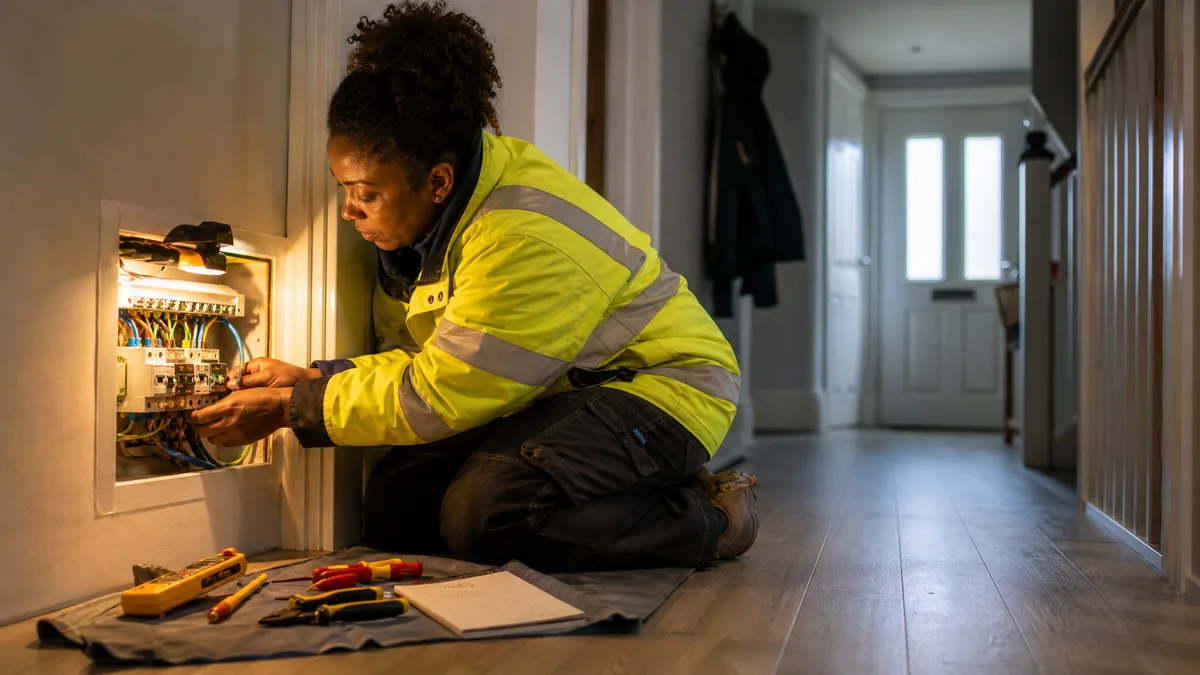
Nine years trading, a solid reputation, a Google Business Profile that's claimed, a website that doesn't look too bad. Still nothing from emergency searches.
That's where a lot of UK electricians find themselves. A competitor who set up four years ago is fielding four or five call-outs a day from Google. You're not. And you've followed the advice. The guides said claim your GBP, build a website, get some reviews. Done, done, done.
Sound familiar?
Here's what's likely happening. That competitor has three things working in parallel: a GBP with 200-plus reviews, a dedicated emergency electrician page on their site, and a Google Verified badge sitting above the local pack. You probably have one of those three. Maybe one and a half.
That's the gap.
This guide explains what those three things are, how they interact, and what to work on first. It won't tell you to "do SEO". It'll tell you what local search for electricians actually involves, why most guides conflate three separate systems into one vague instruction, and what the strategic decision actually looks like.
Word of mouth and referrals still run most electrical businesses, and they always will — but search is the layer that fills the gaps at midnight.
The short version, for those who want it: SEO for electricians means getting found by homeowners searching Google for electrical work in your area. It runs across three layers — your Google Business Profile (which drives local pack rankings), your website pages (which rank in organic results for service and emergency queries), and optionally Google Verified Local Service Ads (which appear above both the pack and organic results but charge a per-lead fee).
Each layer works differently. Each has a different cost, timeline, and way of failing.
How UK homeowners actually search for an electrician
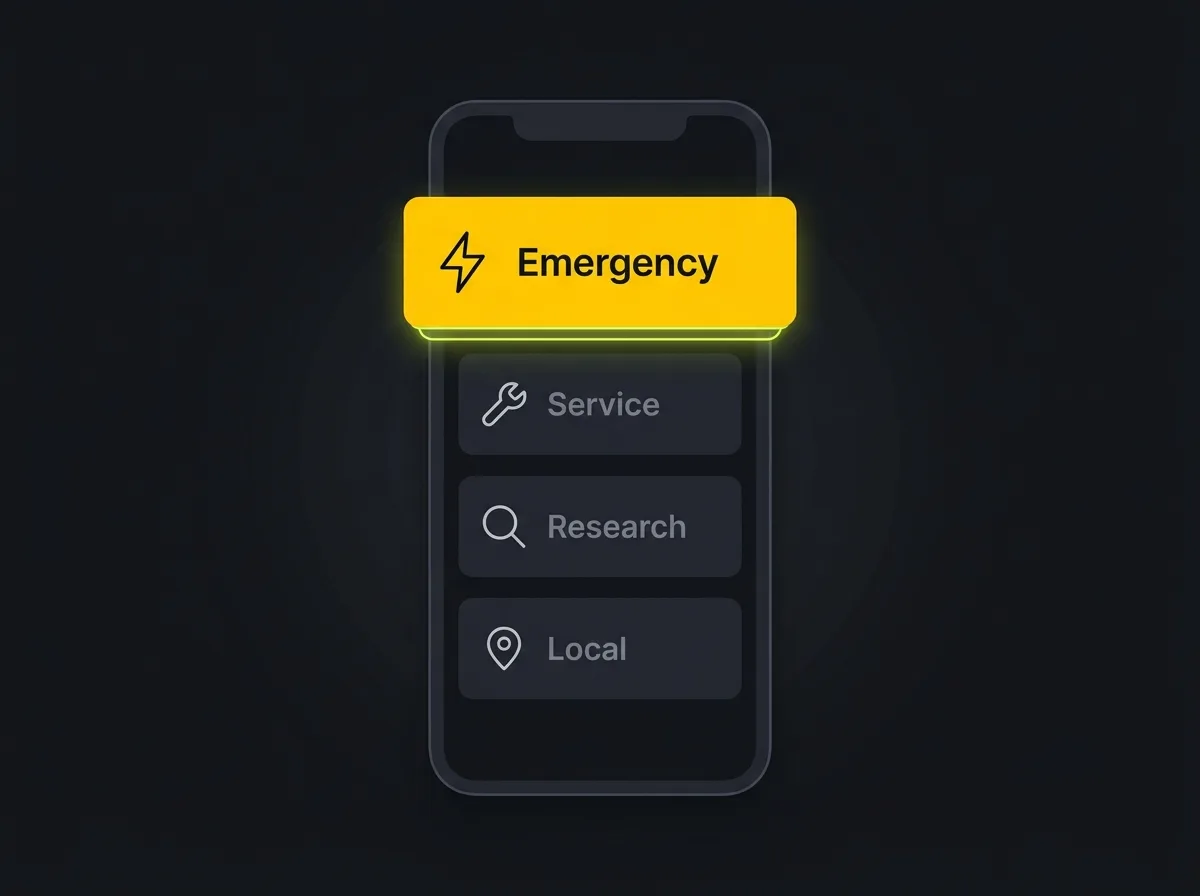
The homeowner whose power has gone out at 10pm is not making the same type of search as the one who's been thinking about an EV charger installation for three weeks. These are fundamentally different problems. They need different things from your web presence.
Emergency searches. "Emergency electrician near me", "electrician open now 24 hours", "fuse box tripping keeps going off", "electrician tonight". These are panic searches. The person searching is not comparing reviews carefully or requesting quotes from three firms. They call the first credible result they can see, full stop.
Emergency searches convert faster and at a higher rate than any other electrician query.
And they are the searches most electrician websites are entirely unequipped to win.
Service-specific searches. Planned work with a budget forming: "EV charger installation Birmingham", "consumer unit upgrade Manchester", "EICR testing Sheffield". These homeowners have a specific job in mind. They will look at two or three sites, check for NICEIC or NAPIT registration, and compare what they see. A well-structured service page built around the job type wins here.
Research searches. "How much does a consumer unit replacement cost UK", "how long does a full house rewire take". These people are not ready to book. They are doing homework. Most electrician websites have no content for this audience at all, which means a competitor with a useful blog post is capturing these readers months before the booking decision.
They convert more slowly, but they convert.
Local branded searches. "NICEIC approved electrician Coventry", "Part P registered electrician [area]". These searchers are filtering by qualification before they look at anything else. Named certifications are the trust signal they're searching for, not the price.
One SEO strategy doesn't cover all four of these. SEO for tradesmen is more complex than a single instruction to "get on Google" — the businesses that dominate local search have thought through each search mode separately and built for each one.
The three layers of local search every electrician needs to understand
Most guides on SEO for electricians call the whole thing "local SEO" as if there is one lever to pull. There isn't.
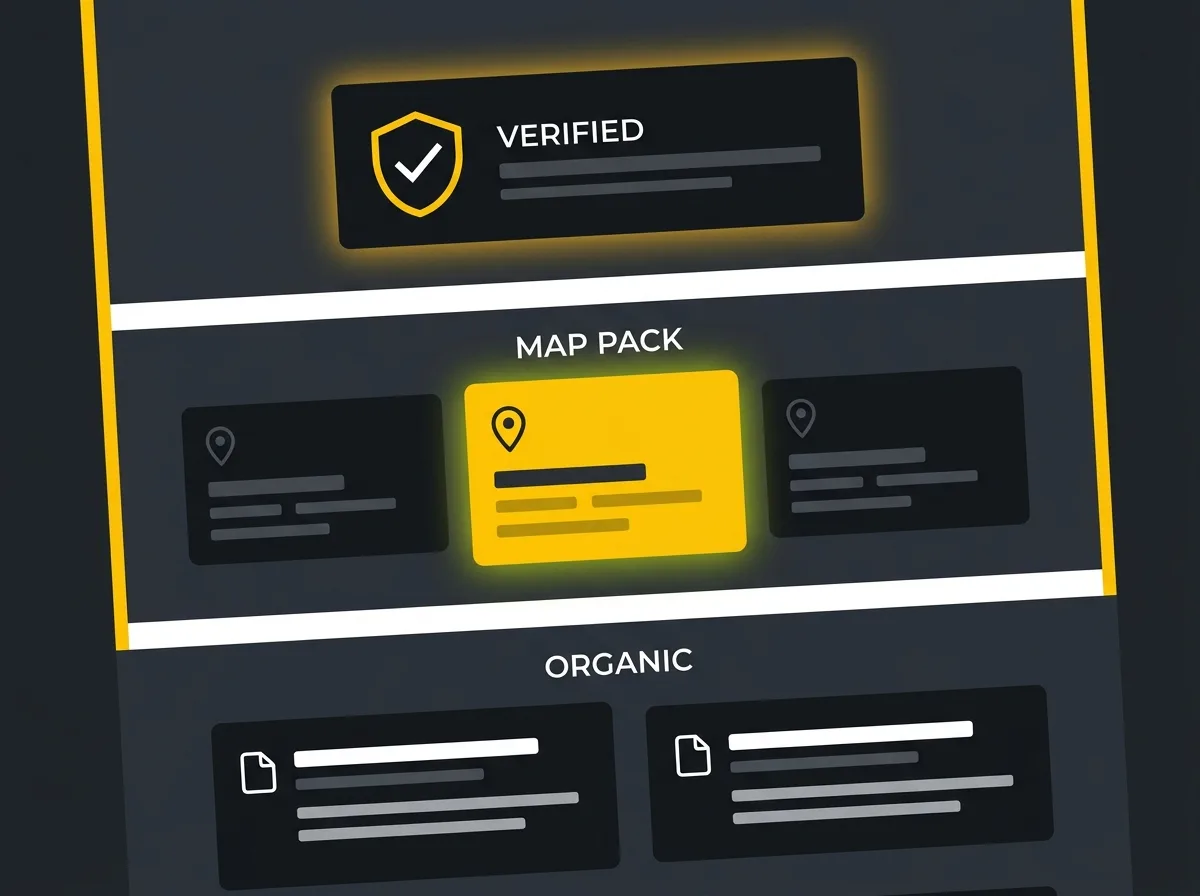
There are three distinct layers on a Google results page, each with its own cost model, its own timeline, and its own failure mode. Confusing them is what leads to six months of effort going into the wrong thing.
Google Verified. The badge that appears above the local map pack. As of October 2025, Google consolidated its older Google Guaranteed, Google Screened, and License Verified programmes into a single Google Verified badge. Many guides still use the old names.
That tells you something about how current they are.
UK electricians who are Part P registered or on a NICEIC, ELECSA, or NAPIT competent-person scheme can apply. The badge requires a background check and licence verification. When a homeowner contacts you through it, Google charges a per-lead fee.
The local pack. The three business listings in the map section, which appear directly below any Google Verified results. These are driven primarily by your Google Business Profile signals, your proximity to the searcher, and your review velocity. No cost per call.
According to LocaliQ research, the local pack captures approximately 44% of local search clicks. Getting into it without paying per enquiry is the compounding asset in the system.
Organic results. Your website pages ranking below the pack for service and research queries. They cover keyword territory the local pack cannot, including research-stage content and specific service terms in areas without a strong map pack trigger. They take longer to build but carry no marginal cost per click once established.
Here is how the three layers compare on the dimensions that actually matter:
-
Google Verified: sits above the pack, pay per verified lead (approximately £20-55), results within days of approval, but stops the moment the account pauses or a verification lapses
-
Local pack: three positions below Google Verified, no cost per call, results in weeks to months, compounds as reviews accumulate
-
Organic results: below the pack, no cost per click once ranking, results in months, highest potential for research queries and longer-tail service terms
How builders approach local search involves exactly this three-layer thinking. The mechanics are identical across trades.
Google Business Profile — the engine of local pack rankings
The Whitespark Local Search Ranking Factors survey consistently finds that GBP signals account for approximately 36% of local pack ranking weight. That's more influence than the website alone for most local queries.
It compounds. And it is entirely free to build.
Most electricians claim a GBP and then never touch it again. That is the gap most competitors are not closing either.
Primary category. "Electrician". This single field is the strongest ranking signal you directly control. Do not use a combined or generic category. Primary category tells Google what you are, before anything else on the profile gets read.
Secondary categories. "Electrical installation service", "Emergency electrician service", and "EV charging station" where relevant to what you actually offer. These extend the keyword range your profile can appear for without weakening the primary signal.
Services section. Every job type you take should be listed here with a short description: consumer unit replacements, EICR testing, rewires, EV charger installations, fault finding, partial rewires. This feeds keyword signals into the profile and populates the services menu homeowners see before they click through.
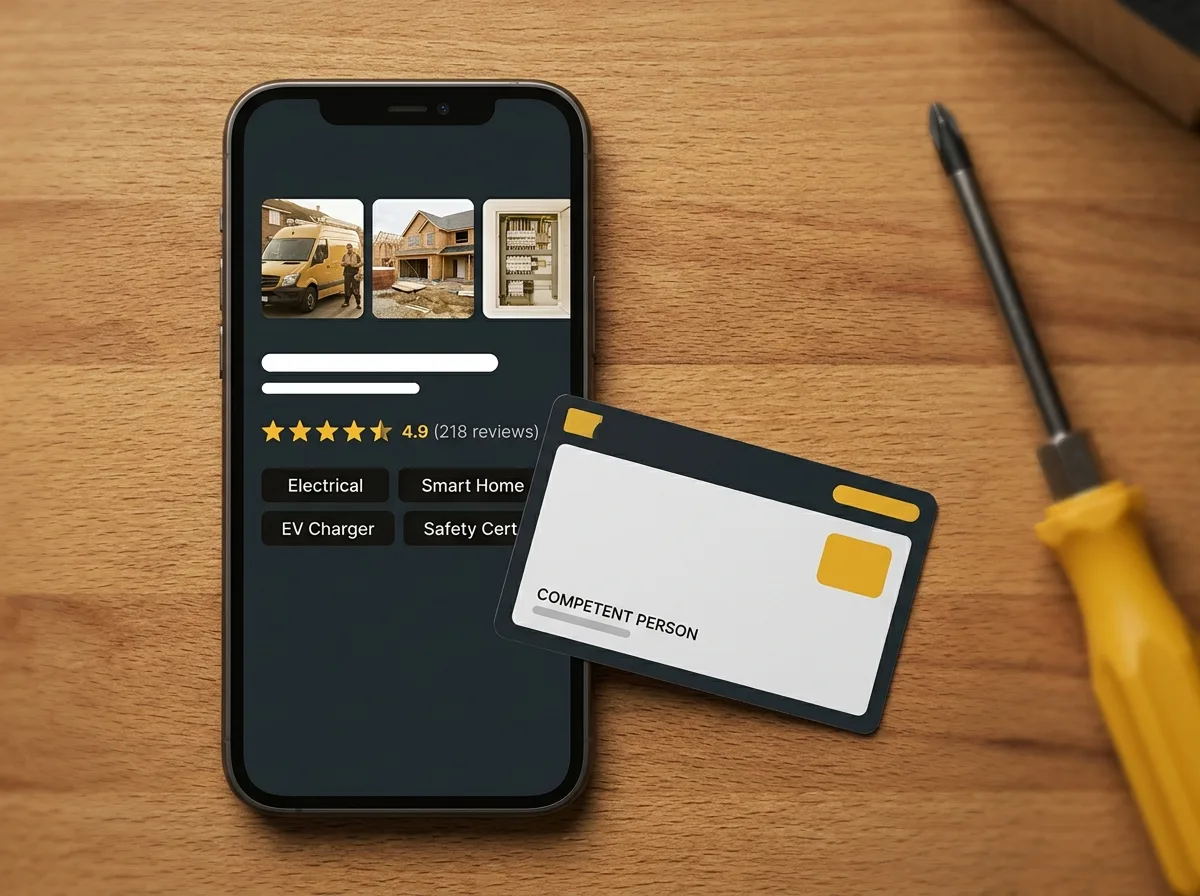
Attributes. "NICEIC approved" and "NAPIT registered", where you hold those accreditations, are E-E-A-T signals that influence how Google assesses your profile's authority in local results. Not just trust badges for humans. Use them.
Photos. Van shots, job-site before-and-after photos with customer permission, consumer unit work, NICEIC registration cards, team photos. Not stock imagery. A profile with 30 genuine job photos signals active, real business in a way an empty photo section never can.
GBP photos are one of the few entirely free ranking signals that most electricians ignore completely.
GBP posts. A weekly update — a completed job, a seasonal tip, an offer — signals to Google that the profile is actively managed. A profile that hasn't been posted to in six months looks dormant. In a competitive city, active management is the minimum to stay competitive.
Q&A section. Seed it yourself. "Are you NICEIC approved?" "Do you offer 24-hour emergency call-outs?" "Do you cover [town]?" Answer them directly. Left unseeded, anyone can ask questions and anyone can answer them. That's a situation worth avoiding.
A profile that looks exactly like it did the day it was claimed is not working. The electricians who dominate the pack treat their GBP as a live business asset. The local SEO for trades businesses starts here, before anything else.
Emergency electrician keywords — the highest-converting searches
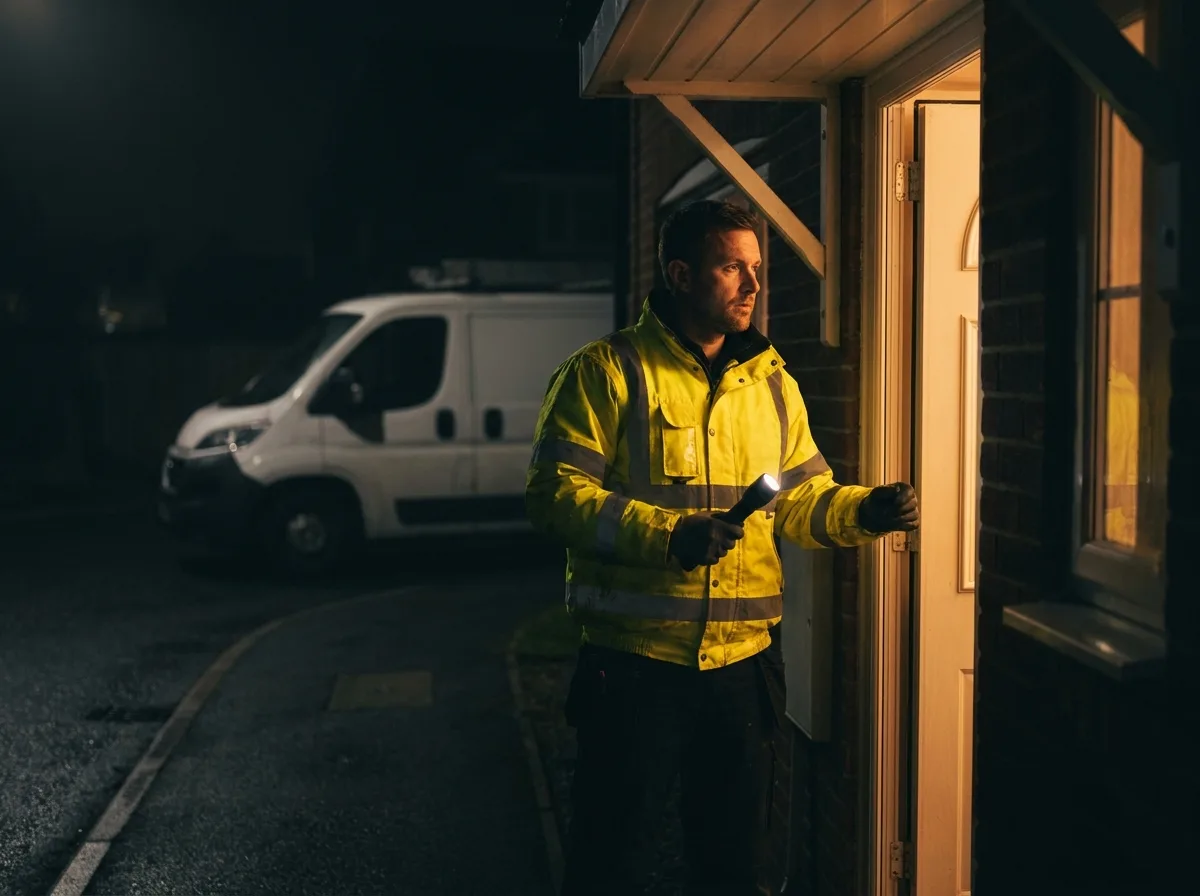
The homeowner at midnight with a tripped consumer unit and a house full of children is not doing comparative research. They are calling whoever Google shows them first.
This is the highest-converting category of electrician search. Most electrician websites are completely unequipped to win it.
What most sites have: an "emergency call-outs" bullet on the main Services page. This will not rank for "emergency electrician Birmingham" in a competitive area. At all.
What a page that actually ranks for emergency queries looks like: a dedicated URL at /emergency-electrician-[location]/, an H1 that says exactly "Emergency Electrician [Location]: Available 24 Hours", a response time stated in the first paragraph, a phone number visible before the reader has to scroll, a list of the specific scenarios you cover (tripped fuse, power failure, sparking socket, flooded consumer unit, partial power loss), and opening hours stated accurately.
If you genuinely take calls at 2am, say so clearly. If you do not, do not claim it. Homeowners who discover the mismatch leave reviews that undo months of work.
Review language for emergency queries. When a customer calls you out in an emergency, ask them to mention in their Google review the time of day, the scenario, and your response time. "Called at 11pm with a tripped consumer unit, arrived within the hour, sorted it quickly and cleanly" is worth ten generic five-star reviews for emergency keyword ranking.
The review text is a signal, not just a trust indicator for humans. That matters.
GBP settings. Tick the "24-hour service" attribute only if you genuinely take out-of-hours calls. Set your opening hours to reflect your actual availability. Google can penalise profiles that misrepresent availability when review patterns suggest otherwise.
Schema markup. Adding EmergencyService schema and 24-hour availability in OpeningHoursSpecification on the emergency page tells Google explicitly what the page is for. It is one of the few technical signals that is genuinely underused across the trades sector.
The lead generation for trades case always starts the same way: the emergency page is the highest-ROI single piece of work most electrical businesses have not built.
Google Verified vs organic SEO — which one to prioritise
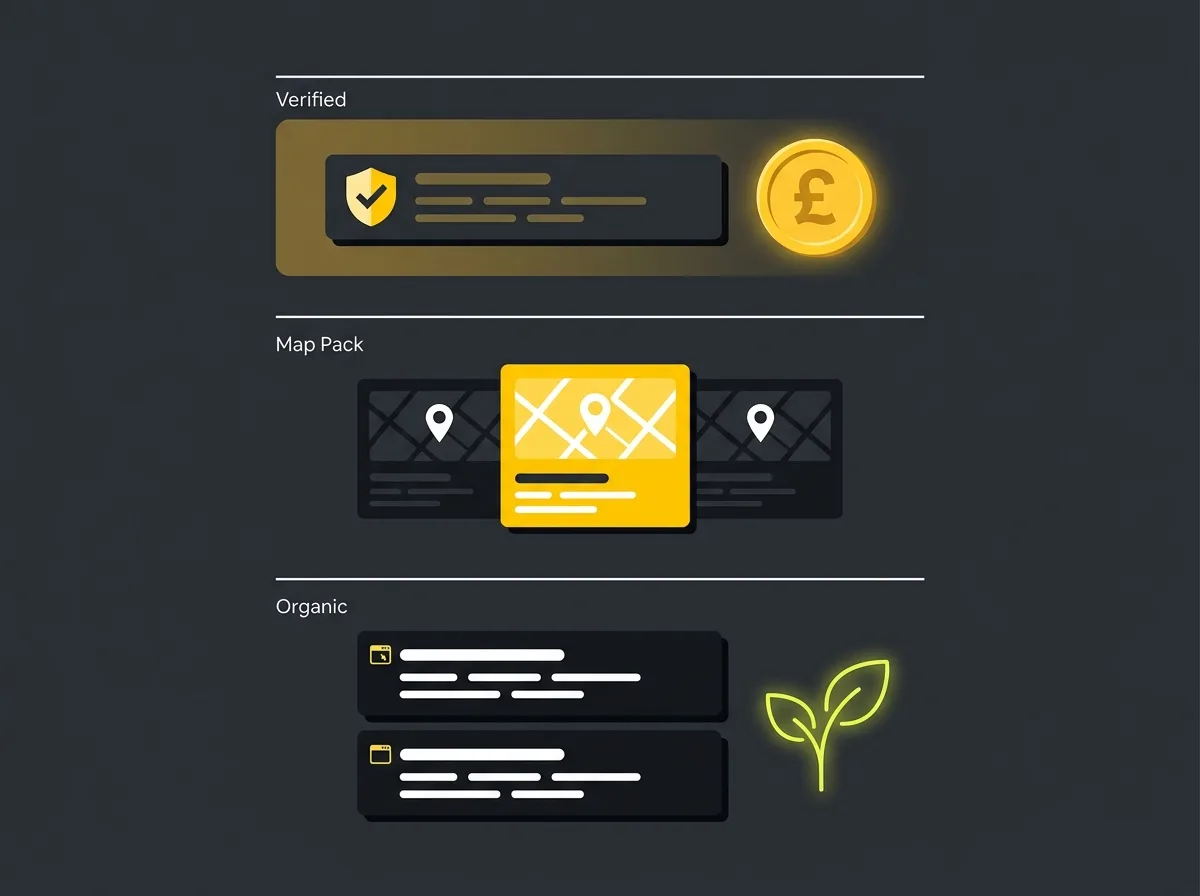
Google Verified sits above the local pack. It's available to UK electricians who are Part P registered or on a NICEIC, ELECSA, or NAPIT competent-person scheme. Applying requires a background check and licence verification.
The badge cannot be bought by anyone without the right qualifications, which is exactly what gives it credibility with homeowners who are worried about rogue traders.
According to 2026 UK LSA cost data, the average cost per verified lead for UK electricians is approximately £28.70, with roughly £99 per booked job when you account for unbooked contacts and failed calls. You pay when a homeowner contacts you through the listing.
Budget runs out, the badge disappears and the calls stop.
The advantage is immediacy. Google Verified results appear above the pack. The badge signals safety in an industry where homeowners genuinely worry about qualifications. And pay-per-lead means your budget is tied to actual enquiries, not impressions or wasted clicks.
The risk is equally clear. There is no compounding. An organic ranking or a well-reviewed GBP keeps working after the month's investment is made. Google Verified stops working the moment the account is paused, the verification lapses, or a dispute affects the account.
A business that relies entirely on Google Verified is one verification problem away from a phone that goes quiet without warning.
Organic search builds equity. A well-ranked local pack listing keeps the phone ringing at no marginal cost per call. The call at 2am is free, once you are ranking.
For most UK electricians, the right sequence looks like this. Start with GBP (free and foundational, results in weeks). Build the organic website layer alongside it in months one to six. Add Google Verified once the business can handle the volume and sustain the budget.
They work together, not in competition.
The wrong question is "should I do SEO or run Google ads?" The right question is: which do I need right now, and what should the mix look like in six months? That is what SEO for service businesses properly scoped looks like.
Your website — why one services page will not rank for 15 different jobs
The standard electrician website: a home page, an about page, a services page with a bullet list of everything you offer, and a contact page. This structure will not rank competitively for individual service queries in any town with more than a handful of electricians fighting for the same searches.
Each major service needs its own page.
Not a section on the services page. A dedicated page: /consumer-unit-upgrade/, /ev-charger-installation/, /eicr-testing/, /rewiring-service/, /emergency-electrician-[location]/. One page cannot rank simultaneously for multiple distinct queries in a competitive market. Google reads each page for its keyword signals; a page that says "consumer units, EV chargers, rewires, EICR, fault finding" is a page about all of those things, and therefore a strong contender for none of them.
Each area you genuinely serve may also benefit from a location page. /electrician-birmingham/, /electrician-solihull/, /electrician-tamworth/. These work only when they contain genuinely local content — specific to the area, the types of housing stock, the local job history.
Google distinguishes between a location page written with real knowledge and a template with the town name swapped in. It's worth writing the former.
Schema markup reinforces all of this. LocalBusiness schema on the homepage with your consistent name, address, and phone number. Service schema on each service page. FAQPage schema on any FAQ section. These tell Google what your pages are about at the entity level, not just the keyword level.
The technical baseline: Core Web Vitals pass on mobile, because most emergency electrician searches happen on a phone. Click-to-call on every page, visible without scrolling. Address in the footer so your NAP is consistent across the site and across the web.
Most electrician websites were built as brochures. A brochure tells people you exist. A lead-generation machine brings in the call.
The authority signals that move both Google rankings and AI recommendations

Reviews. Not just in number but in velocity.
Eight to 15 new Google reviews per month is the range that moves local pack position meaningfully in a competitive area. A profile with 50 reviews, the last one 18 months ago, signals inactivity to both Google and to the homeowner comparing three profiles side by side.
Ask for the review while the job is fresh, and send a direct link to your Google review page. Don't assume it will happen unprompted.
Quality matters as much as quantity. "Called out to replace a consumer unit in Sutton Coldfield, NICEIC approved, arrived same day, very tidy" carries keyword signal that "five stars, great service" does not. The job type, the location, the certification.
When a customer is happy and you ask naturally, most people are glad to include a useful detail when they know what to mention.
UK trade directories. Checkatrade, TrustATrader, Which? Trusted Traders, the NICEIC approved contractor directory, Bark.com, Yell.com, Houzz. These form the citation layer of local search. The critical thing is consistency: the same name, address, and phone number across all of them.
A single incorrect phone number across 12 directories suppresses local pack ranking in ways that can take months to trace if you do not know to look for it.
NICEIC and NAPIT member pages. Both bodies link back to registered members. Claim the profile, keep it current with your correct address and contact details. These are high-authority, topically relevant links pointing at your site. Most electricians who have been NICEIC registered for years have never looked at whether their member page is accurate.
For AI search recommendations, the picture is slightly different but the logic is the same. When a homeowner asks ChatGPT or Perplexity which electrician to call, those systems draw on Foursquare data for local business recommendations and on published web content for informational answers.
Claim and verify your Foursquare listing. Ensure GPTBot and PerplexityBot are not blocked in your robots.txt. Many older trades website templates block all bots as a legacy default.
Check yours.
Named entity density matters here. NICEIC, NAPIT, Part P Building Regulations, BS 7671, Checkatrade — mention these by name in your website content. AI systems use named entities as anchors for citation. Generic references to "trade certifications" are not citable.
AI search converts at higher intent levels — and AI search visibility for trades businesses starts with these named signals in your content and your directory profiles.
What to expect — timeline and how to measure it
Local search does not move in a straight line.
There are weeks of apparent stillness followed by visible jumps. Knowing what is normal at each stage is what stops you pulling the plug on something that is actually working.
Weeks two to four. GBP Insights will show movement in call click volume and direction requests within a month of serious profile work. These are the right metrics to track at this stage, not keyword rankings. In lower-competition towns with fewer electricians chasing the same searches, map pack movement can sometimes appear within this window.
Months three to six. Map pack ranking lift in competitive cities — Birmingham, Manchester, Leeds, Bristol — typically starts becoming visible in this window. Organic results for lower-competition service terms may begin appearing on page one.
Emergency page traffic, if the page is correctly built, often moves faster than other service pages because the competition for dedicated emergency pages is thinner than most people expect.
Months six to twelve. Competitive city terms for the local pack and organic service pages. AI search citation from well-structured content. Organic traffic for research-stage queries. This is the timeline for compound benefits to become clearly visible in the enquiry data.
What to track: call click volume in GBP Insights, organic sessions to service pages in Google Search Console, map pack position for your target keywords via a rank tracker or a regular manual check, inbound enquiry form fills, and calls from call-tracking if you have it installed.
If Google Verified is running alongside, track cost per booked job on the paid side versus cost per enquiry on the organic side. That comparison tells you the actual financial case for the mix you're running.
What winning looks like is specific. One local pack position for the right emergency keyword can keep a sole trader fully booked. The call at 2am costs nothing. That is the compound case for organic search.
Frequently asked questions about SEO for electricians
Worth knowing.
How long does electrician SEO take to show results?
GBP improvements often show movement in call click volume within two to four weeks. Map pack ranking in competitive cities typically takes three to six months of consistent effort. Organic rankings for service pages take three to six months in lower-competition areas and six to twelve months in cities such as Birmingham, Manchester, or London.
AI search citation from published web content takes six to twelve months to build. Timeline depends heavily on how competitive your local market is and how much has been done before you start.
Is SEO worth it for electricians?
For most UK electrical businesses, yes. Emergency call-out leads from organic search cost nothing per call once you are ranking, compared to approximately £28.70 per verified lead on Google Verified LSAs.
A sole trader who achieves a local pack position for the right emergency keyword can sustain a full diary from that placement alone. The investment is in time or agency fees upfront; the payback compounds rather than stopping the moment the spend stops.
What is the difference between the local pack and organic results?
The local pack is the three business listings in the map section of a Google results page, driven by your Google Business Profile signals, proximity, and review velocity. Organic results are your website pages ranking below the pack for service and research queries.
Both are free per click once established, but they rank through different signals and require different work to achieve. A well-run business should aim to appear in both.
How does Google Verified work for UK electricians?
Google Verified is the badge that appears above the local map pack. UK electricians can apply if they are Part P registered or hold accreditation from NICEIC, ELECSA, or NAPIT. The application requires a background check and licence verification.
When a homeowner contacts you through the listing, Google charges a fee per verified lead, approximately £28.70 on average in 2026. Leads can be disputed if they are clearly low-quality. The badge disappears if the account is paused or the verification lapses.
How much does SEO for an electrician cost?
Local SEO for an electrician with a specialist agency typically runs from around £400 to £1,200 per month, depending on how competitive the market area is and the scope of work. Some businesses handle elements in-house, particularly GBP management and review building.
Google Verified LSAs sit alongside this at approximately £28.70 per verified lead. The relevant comparison is cost per actual enquiry: organic and GBP-driven calls cost nothing per contact once you are ranking, which is the financial argument for making the organic investment.
How do I get my electrical business to appear in the Google local pack?
Start by completing your Google Business Profile fully: primary category set to "Electrician", secondary categories for your specific services, every service listed with a description, genuine job photos uploaded, and a consistent flow of Google reviews being collected.
Ensure your name, address, and phone number match exactly across your website and UK trade directories including Checkatrade, the NICEIC approved contractor directory, and Yell.com. A well-optimised profile in a low-competition area can reach the local pack within weeks; in a competitive city, allow three to six months of consistent effort.
Local search for electricians is not one lever. It is three distinct systems, each with different costs, different timelines, and different ways of failing.
Getting the GBP right is the first investment. Building a properly structured website is the second. Google Verified adds immediate volume once the organic foundation is in place. And AI search visibility is the layer most of your competitors have not addressed yet.
If you want to see what these numbers could realistically look like for your specific business, the Traffic Projection Report projects traffic and enquiry volume based on your actual market, service area, and current online position. Most electricians are surprised by the size of the gap between where they sit now and what the market could deliver. It takes about two minutes to request one.