
It is the last week of March. You open the membership report.
In January you signed up 80 new members. The gym was buzzing. Instagram was full of people posting their first workouts. The referral offer seemed to run itself. You ran paid social ads that got a solid response, added some Google spend, and felt, for the first time in a while, like the marketing was actually working.
Net new members since January: ten.
Seventy of them have gone. Some cancelled outright. Others quietly stopped coming, the direct debit bounced, and nobody chased it. The floor is no fuller than it was last March. You are, in marketing terms, back to where you started.
Sound familiar?
This happens at most independent gyms. Not because January was handled badly, but because January marketing is a campaign, and campaigns end. What most gym operators build in January is a spike. What they need is a floor.
This guide covers why the boom-bust pattern happens, what the full marketing channel landscape actually looks like for UK fitness businesses, and where to start if you want a foundation that keeps working in April, July, and October as well as January.
The short version: the gyms with growing year-round membership have invested in channels that compound over time, specifically local search, reviews, referrals, and increasingly AI recommendation presence. These channels take longer to build than a paid campaign, but they do not switch off when the budget runs out. The seasonal campaigns are still worth running. They just work far better when they are amplifying something that already exists.
Why most gym marketing creates a boom-bust cycle
The three seasonal peaks in gym membership are real and predictable. January brings New Year resolution joiners. May and June bring the summer-motivation cohort. September brings the back-to-routine wave. These surges happen every year regardless of what marketing is running.
The problem is not the peaks. The problem is what most gyms build their marketing around.
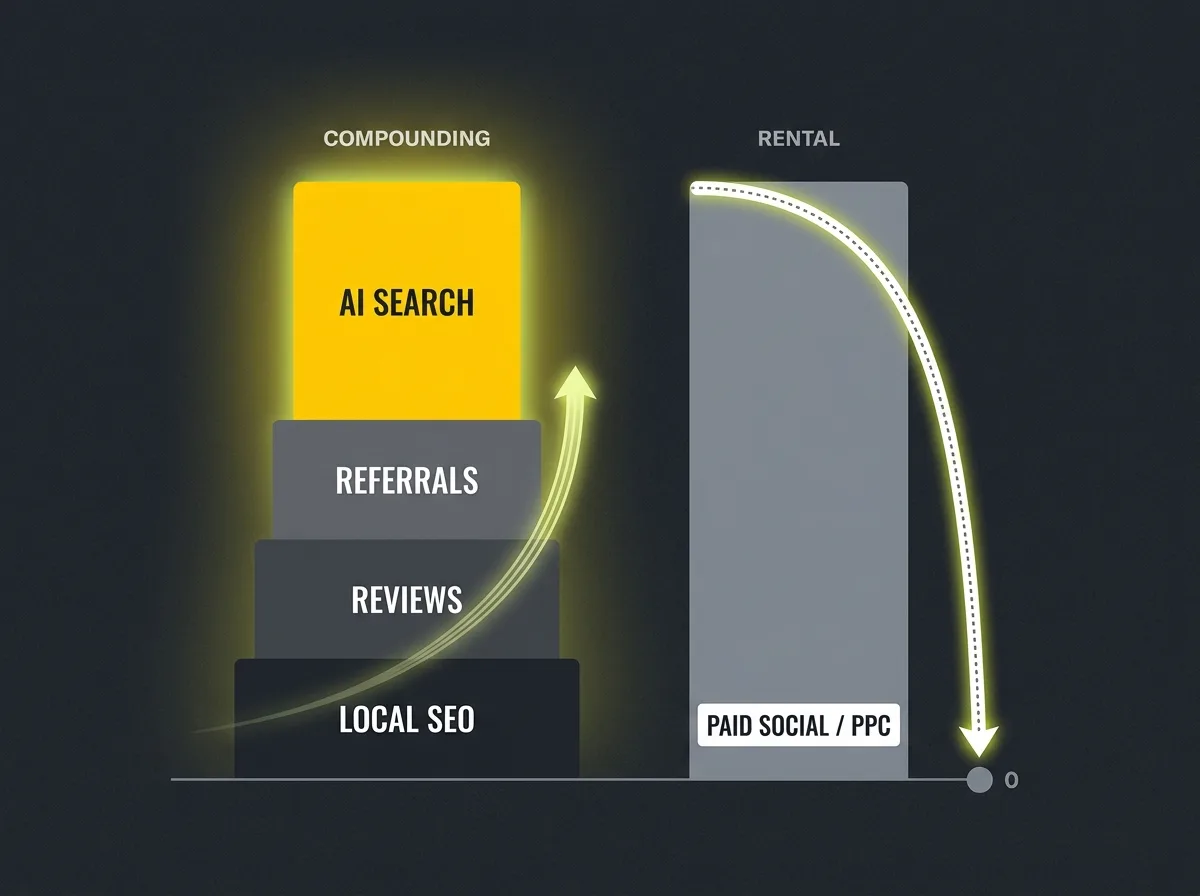
Most gym marketing activity sits in what you could call the rental category. Paid social ads, seasonal PPC, influencer campaigns. These perform well during the push. They generate reach, clicks, and sign-ups while the budget is running. The moment the budget stops, so do they. You are renting membership acquisition rather than owning it.
That is not inherently wrong. Rental channels are useful and genuinely effective during their window. The issue is when they are the only channels running.
Compounding channels work differently. Building search visibility through local SEO, maintaining a strong Google Business Profile, consistently collecting reviews, and running a structured referral programme are all activities that build over time and keep producing results without ongoing spend to sustain them. A gym with 200 recent five-star reviews and a well-optimised GBP listing will appear when someone searches "gym near me" whether or not a campaign is running that week.
Most independent UK gyms run at roughly 80 percent rental, 20 percent compounding. The gyms with consistently growing membership rolls look more like the reverse. The marketing budget is still there in January, but it is amplifying a foundation rather than replacing one.
The rest of this guide is about building that foundation.
The honest channel mix for gyms — and what each one is actually good for
Most gym marketing guides are written by software companies or fitness platform vendors with an obvious interest in particular channels. So before diving into the specifics, here is an honest picture of what each channel actually does.
Organic social (Instagram, TikTok, Reels) is genuinely important for gyms, particularly PT-led studios and gyms with a strong community identity. Transformation content, class previews, member spotlights, and trainer profiles all build awareness and trust over time. Organic reach on most platforms has declined significantly over the past few years, but fitness content consistently outperforms most other verticals, especially short-form video. The honest note: social builds awareness and community. It rarely builds the kind of intent that converts to membership on its own. Someone who sees your Reel is in a different mindset to someone actively searching for a gym to join today.
Referrals and word-of-mouth are the highest-quality lead source that most gyms systematically under-use. A referred member already trusts your gym before they walk through the door. They convert better, integrate faster, and stay longer than members from any paid channel. Most gyms rely on informal word-of-mouth, which captures a fraction of what a structured scheme would. The cost of a proper referral programme is nearly nothing compared to what paid acquisition costs per member. More on the mechanics later.
Paid social (Meta and Instagram ads) is powerful for seasonal campaigns, challenge launches, and demographic targeting in a defined local radius. It is the tool that gets your January offer in front of 5,000 people within three miles who have shown a fitness interest. It works. But it is definitionally a rental channel, creative fatigue sets in quickly, and the return declines without fresh content and ongoing spend.
Google search and local SEO for gyms captures people at the exact moment they are ready to act. Someone searching "gym near me" is not scrolling for inspiration. They are about to decide. The intent profile is materially different from social, and the conversion rate from search-driven enquiries reflects that. Search is also a compounding channel. A gym that ranks well in the local map pack today built that position over months of consistent work and will benefit from it long into the future.
AI search is newer and still developing, but increasingly worth understanding. More on that below.
Email and SMS are not acquisition channels. They are the layer that makes every other acquisition channel worthwhile. Once a member joins, their contact details are the tools you use to build the habit, prevent early cancellations, and keep them engaged long enough to become part of the community rather than part of the March churn figure.
The honest point: no guide can prescribe the exact right channel mix without knowing your gym's location, competitive landscape, member demographic, and starting point. What it can say is that gyms with flat annual membership are almost always over-indexed on rental and under-invested in compounding. The next sections go into the compounding channels in detail.
Local SEO for gyms — what map pack ranking actually takes
"Gym near me" is one of the most-searched phrases in UK fitness. The local map pack, the three-listing block at the top of Google for location-based searches, is the first thing most prospective members see when they type it on their phone.
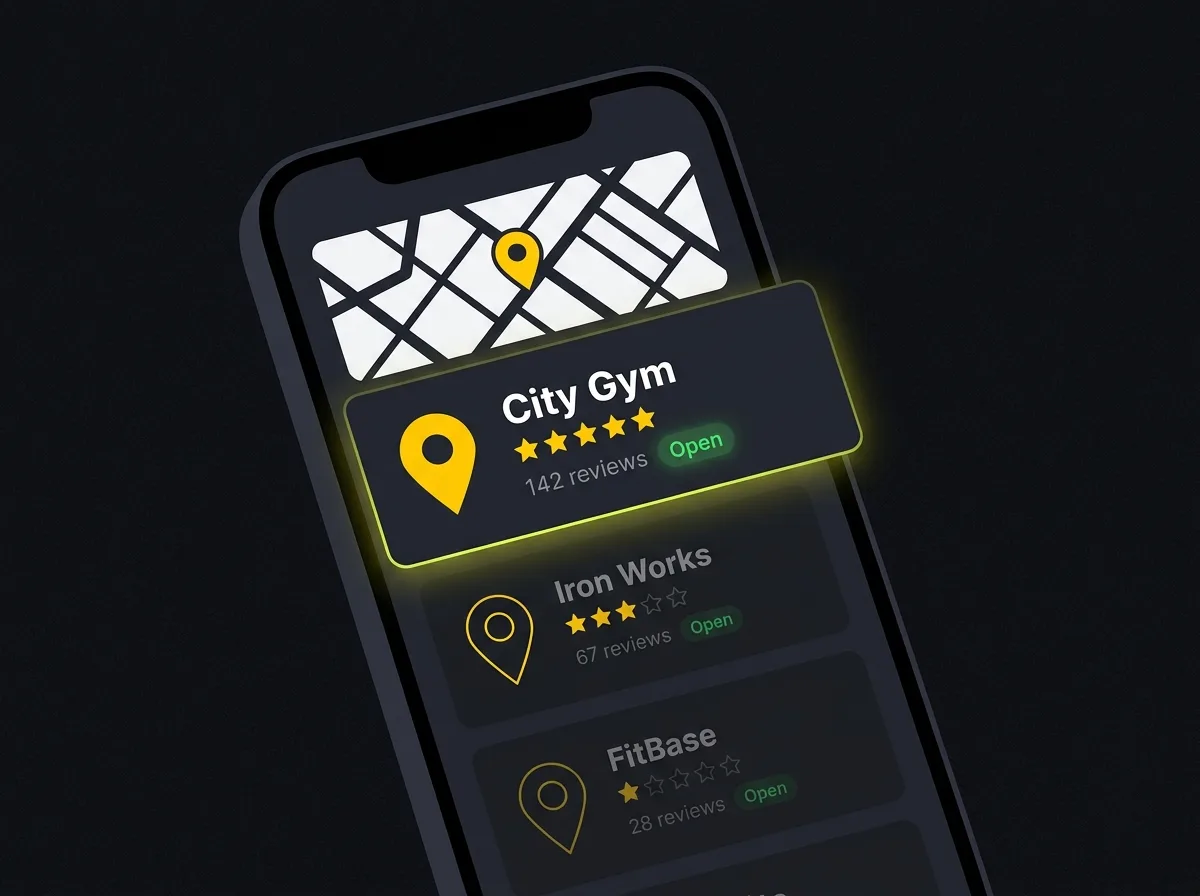
Ranking there is not about having a Google Business Profile. Every gym has one. It is about actively maintaining and developing one over time, with consistency that most operators underestimate.
GBP completeness. Every field should be filled in. Services listed in full, including specific class types and equipment available. Opening hours current and accurate, including holiday exceptions. Attributes set: parking, changing facilities, accessibility, personal training availability. The primary category set to "Gym / Physical Fitness Center," with appropriate secondary categories for any specialisms such as "Boxing Gym," "Yoga Studio," or "Pilates Studio." An incomplete GBP listing ranks below a complete one for competitive local searches. This is not opinion; it is how Google's official Business Profile guidance describes the factors that determine local ranking.
Review velocity. This is the most commonly underestimated ranking factor for local fitness businesses. A gym with 100 reviews from three years ago will typically rank below a gym with 60 reviews where half arrived in the last six months. Recency signals to Google that the business is active and relevant. The practical implication: do not ask for reviews once during onboarding and then forget it. Build the review ask into the member experience at the moment members are most likely to respond positively, around four to six weeks in when they are beginning to see results. Ask in person at the reception desk, follow up via email with a direct link, and make it frictionless. A two-click path to leaving a Google review gets dramatically more responses than a request that requires the member to find your profile themselves.
Photos and posts. Regular photo uploads improve click-through rates on GBP listings significantly. Prospective members look at photos before they read anything. Upload gym floor shots, equipment, classes in action, and team members consistently, at least monthly. Google Posts (the update feature inside GBP) can be used for seasonal promotions, new class launches, and challenge events. They expire, so they need refreshing, but they signal active management to Google and to prospective members scanning the listing.
Local citations. Your name, address, and phone number need to be consistent across every directory where your gym appears: Yelp, Yell, FreeIndex, local leisure guides, and any fitness aggregators. Inconsistent details across these platforms confuse both Google and AI search systems and suppress local rankings. A gym operating under a slightly different business name on Yell than on Google will see this show up in its local ranking performance.
Website location signals. A common and significant gap: a gym with a well-maintained GBP but a generic website. If your website does not have a location-specific page with real, substantive content about your local area, your gym's relevance to nearby residents, and your community context, you are leaving map pack positions on the table. Gyms that rank for their brand name but not for category searches like "gym in [city]" almost always have this missing piece.
These are not one-off tasks. They are an ongoing maintenance rhythm. For gyms that have not looked at this systematically before, visible improvement in local search ranking typically appears within three to four months of consistent effort.
January and beyond — capturing the rush without losing everyone by March
January is a campaign opportunity. It is not a strategy.

The gyms that grow their membership year on year use January to acquire and onboard simultaneously. The gyms that do not grow use January to acquire, then watch the attrition unfold in February and March. The campaign was not the problem. The absence of anything that happens after the sign-up is.
Before January: December preparation. The warm-up window matters more than most operators realise. Build your email list in December through a free trial offer or a structured pre-launch lead magnet, a free class, a limited introductory membership, or a free induction session with a PT. Prospective members who have already interacted with your gym before January 1st are easier to convert in January than cold audiences seeing your ads for the first time. Launch the referral mechanic in December so existing members have something specific to invite friends to. Update your GBP listing with accurate January hours and any New Year offer copy. Warm audiences convert at a significantly higher rate than cold ones during the peak window.
January campaign structure. Paid social via Meta ads with a clear, time-limited joining offer is the most effective paid channel for the January push. A joining-fee waiver, a discounted first month, or a free first month with a three-month commitment are the mechanics that consistently work. Targeted at a three to five mile radius around the gym, aimed at demographics with a fitness interest, run for three to four weeks rather than the whole of January. Pair it with Google Search ads for "gym [city]" and "gym near me" terms, because January is the peak intent moment for those keywords and search intent converts differently from social intent. A prospective member searching on Google on 3rd January is in a different mental state from someone who sees your Reel while scrolling.
Onboarding the January cohort. This is where most gyms lose the 70.
ukactive's annual industry data confirms what most gym operators already know from experience: attrition in the first eight weeks is substantially higher for January joiners than for any other cohort in the year, driven by goal-setting motivation that has not had time to become genuine habit. Members who make it to six weeks have built something sustainable. Members who do not are the ones who cancel before they have seen a return on the joining fee.
An onboarding sequence does not have to be complex. A welcome message on day one. A "how was your first week?" check-in on day five or six. A two-week progress note. A 30-day milestone message. A recognition of the six-week point. These can run via email or SMS and can be automated through any standard gym management system. The goal is to make the first six weeks feel personally attended to, even when they are running on automation.
Retention automation. Set a re-engagement trigger: when attendance signals go quiet, a soft prompt at ten days of no check-in, a light offer at 30 days, a gentle decision message at 60 days. This runs all year, not just in January. The members it saves in February and March are the ones who would otherwise become the "where did the 70 go" problem. Retention is a marketing discipline as much as an operations one.
Building a referral scheme that works year-round
Most gym referral schemes are passive. A QR code on the front desk. A line in the welcome email. A sign in the changing room. These capture some referrals. A structured scheme captures meaningfully more.
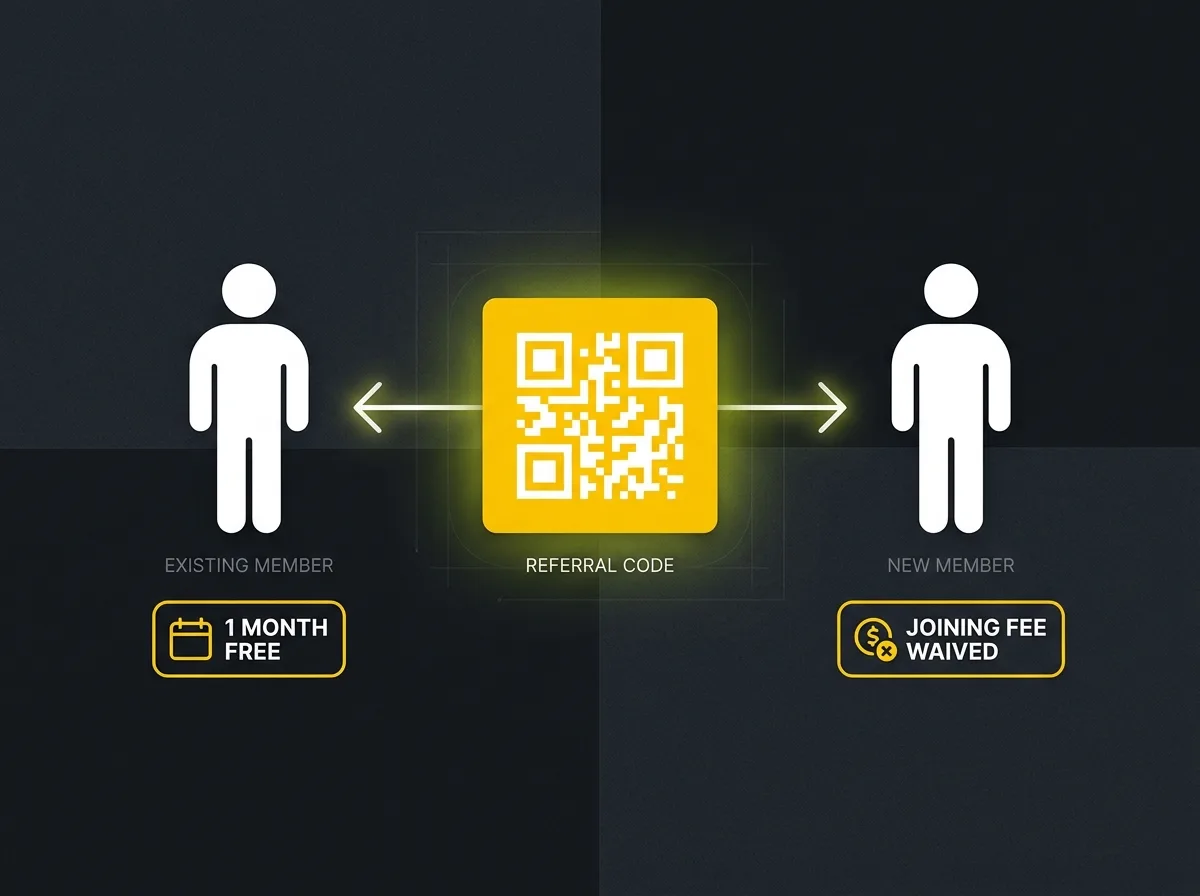
The double-sided incentive. The mechanics that work consistently give both parties a reason to act. The existing member receives something of genuine value: one month's membership free, a class pack credit, or a PT session credit when their referral joins and completes their first month. The new member receives something that removes friction: a joining-fee waiver or a discounted first month. Both sides benefit. A scheme where only the new member benefits tends to generate fewer referrals because the existing member has no personal incentive to actively share it.
The timing of the ask. Day one members are still uncertain whether they will stick with it. Asking someone to refer a friend before they have decided they like your gym is asking them to vouch for something they have not yet committed to. The right moment is around 30 days in, when the habit is forming, early results are showing, and the member is in a positive mindset about the gym. That is when organic word-of-mouth happens anyway. A structured ask at that moment simply formalises and captures it.
Digital tracking. A unique referral link or code per member removes the dependency on "mention my name at reception," which is both untrackable and low-friction for the wrong person. A referral link that goes directly to a joining page, with the incentive automatically applied, is something a member can share via WhatsApp in thirty seconds. Most gym management platforms support some version of this natively; if yours does not, it is worth factoring into your next platform decision.
Seasonal amplification. A deliberate referral push in early May times the scheme around peak summer motivation. Existing members are in good habits and feeling positive, prospective members are thinking about summer fitness, and new members from other channels (the spring sign-up wave) are at exactly the point where a referral ask lands well. A targeted push over two or three weeks in May can generate a meaningful mid-year membership uplift without any significant paid spend.
Referred members tend to stay longer and cost less to acquire than members from paid channels. The direction is consistent across the fitness industry even when the specific figures vary. If your current referral scheme offers a branded water bottle as the incentive and uptake is low, the incentive is the problem. A generous incentive that costs you one month's fees per referred member who then stays for 18 months is not a cost. It is the best acquisition deal in your marketing mix.
AI search and the gym recommendations most operators are missing
A growing number of people now use ChatGPT, Perplexity, and Google's AI Overview to research local services before they commit. Gyms are on that list. A search for "best gym in Birmingham" or "good independent gyms near me" in a chat AI returns a synthesised response naming options and briefly describing them.
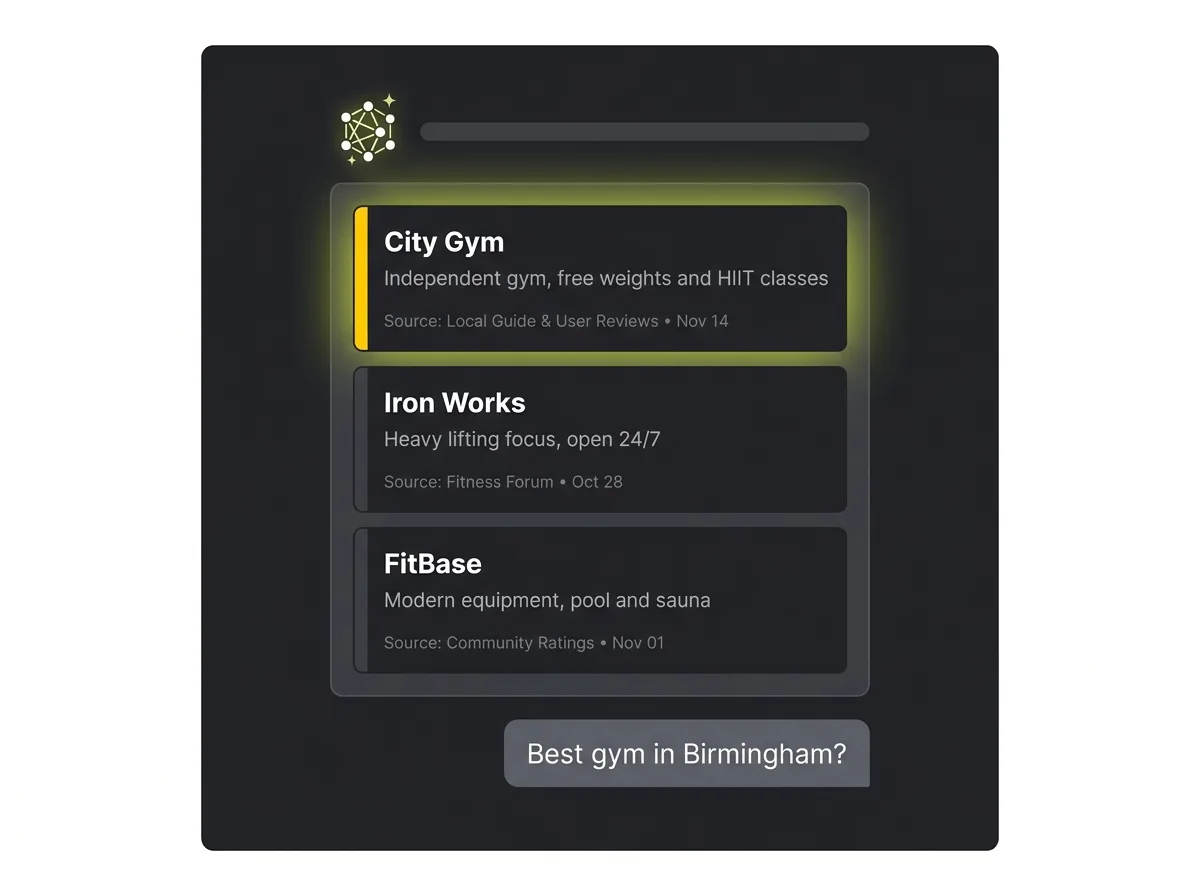
The signals that determine who appears in those recommendations are largely the same ones that drive local SEO. GBP quality, review velocity, consistent local citations, and structured website content are all factors AI systems read and weigh. There is one addition: clear, factual, entity-rich web content that AI tools can reliably read and cite.
A gym website that directly and specifically answers the questions AI tools try to answer, what equipment you have, what classes you run, what membership options are available, who the gym is actually for, and what makes you different from the national chain down the road, is more likely to be surfaced in an AI recommendation than a website with a hero image, a pricing table, and a contact form. AI search traffic tends to convert at a higher rate than traditional organic because people arriving via an AI recommendation have already read a synthesised description that told them this gym sounds right for them. They are verifying, not browsing.
What helps specifically: structured data markup (LocalBusiness schema, FAQ schema at the close of your website pages), consistent name and address signals across all web touchpoints, and content that directly answers the questions people ask when researching gyms in your area. AI search visibility for local fitness businesses is still an early-mover opportunity. The operators who build these signals now are establishing a position that becomes harder to earn as more gyms start paying attention to it.
This is not a reason to stop everything else and focus only on AI search. It is a reason to make sure your GBP, your website content, and your review profile are in good enough shape that an AI reading them would describe your gym accurately and positively. That is largely a byproduct of the local SEO work described above.
Measuring your gym marketing — what actually matters
Most gym operators measure new member sign-ups. Fewer measure which channel each sign-up came from. Almost none measure channel-specific cost per acquired member against lifetime value by channel.
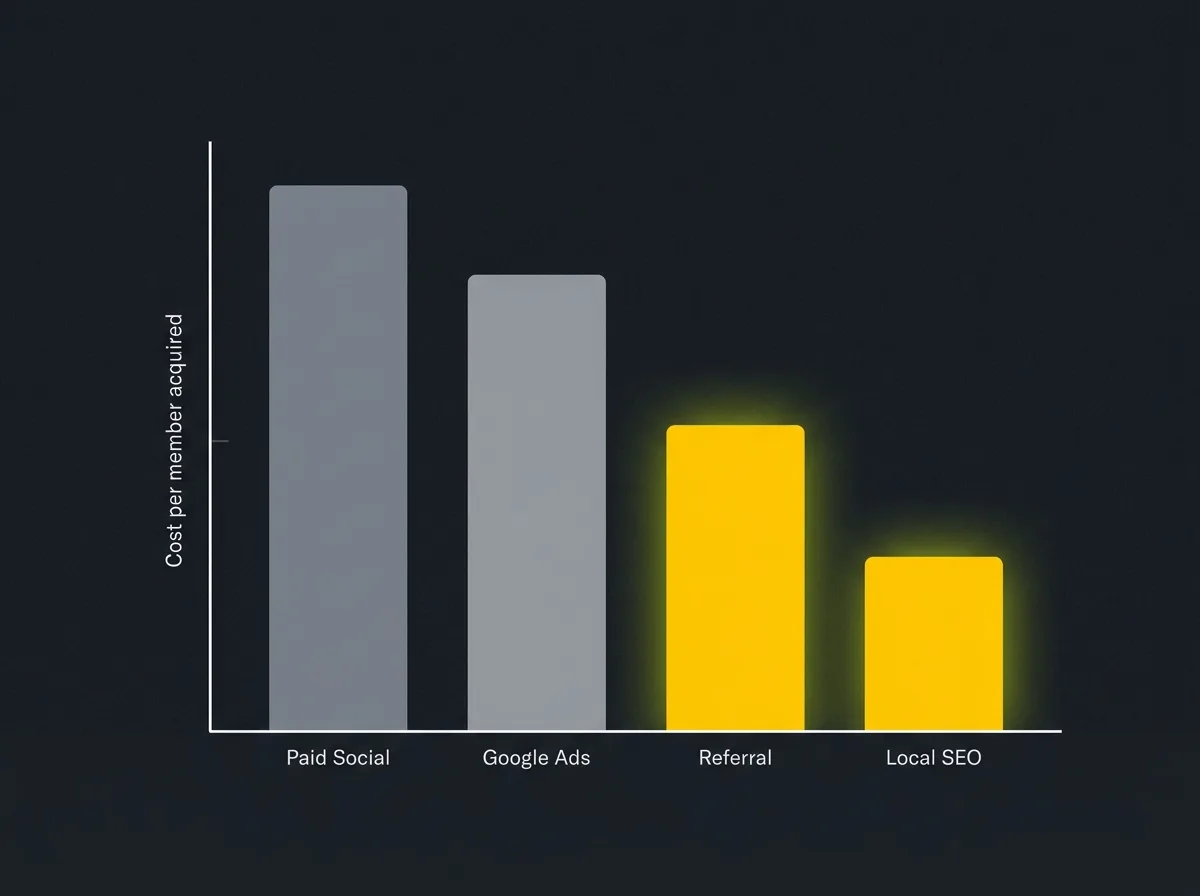
That gap is where marketing budgets get misallocated. Paid social is visible. You can see the ad, watch the impressions accumulate, and feel like something is happening. Search visibility is quieter in the short term, which makes it easy to underestimate. The result: most operators over-invest in the channel that feels most active and under-invest in the channel with the better 12-month return.
A practical measurement setup does not need to be complex. Track new members by acquisition channel using a simple question at joining: "how did you hear about us?" alongside GA4 website data. Track cost per acquired member by channel: total spent on paid social divided by members it generated, compared with your local SEO investment divided by members from search over the same period. Track retention rate by cohort: are your January joiners staying at the same rate as your September joiners? If they are not, that gap is diagnostic. It tells you whether the retention problem is seasonal, campaign-specific, or systemic.
Monitor your GBP Insights monthly. Search impressions, map views, and direction requests are a free and reliable proxy for local search visibility. A gym whose GBP impressions are growing month on month is building compounding reach even if no other metric is moving yet.
For your referral scheme, track the conversion rate from referral link clicks to actual joined members. This tells you whether the incentive is strong enough and whether there is friction in the joining process that is killing referrals after the friend clicks the link but before they complete sign-up.
The practical point: without channel attribution, the loudest channel wins the budget. Running a basic attribution review once per quarter, spending 30 minutes per channel on the numbers, is usually enough to see where the real return is and where the marketing spend is performing on hope rather than evidence.
Free resource: Traffic Projection Report
If you want to understand what search could realistically deliver for your gym specifically, a Traffic Projection Report maps out the search volume available in your location, the keyword landscape you could rank for, and a realistic traffic timeline. It is a concrete starting point for understanding whether the search channel gap is as significant as it probably is, before committing to any investment.
Frequently asked questions about marketing for gyms
How much does gym marketing cost in the UK?
It depends on channel mix and gym size, but as a working range for a small to mid-size independent gym: a local SEO programme typically runs between £500 and £1,500 per month with an agency, or materially less if managed in-house with a clear process and consistent effort. A paid social campaign for January might run between £1,000 and £5,000 across the peak window, depending on radius, competition, and creative volume. Referral schemes cost almost nothing beyond the value of the incentive. The total marketing spend for an independent gym running a balanced channel mix, including seasonal campaigns, tends to sit between £1,500 and £4,000 per month, with a higher proportion concentrated in the January window.
What is the most cost-effective way to get more gym members?
A structured referral scheme is almost always the highest-return channel when measured against cost per acquired member. Referred members convert at a higher rate, integrate faster, and stay longer than members from paid acquisition. The challenge is that referral programmes scale with existing membership, so they are not the answer for a gym opening with 20 members. For gyms with 100 or more active members, a properly structured referral scheme with a genuine double-sided incentive is the first thing worth building rigorously.
How do I stop losing members after January?
With an onboarding sequence that covers at least the first six weeks. Members who reach the six-week point have built a habit and are far more likely to stay. The sequence does not have to be elaborate: a welcome message on day one, a first-week check-in, a 30-day milestone recognition, and a re-engagement trigger when attendance signals go quiet. These can run via email or SMS and can be automated through most gym management systems. The members this saves in February and March are the ones who would otherwise become the attrition figure.
Does my gym need local SEO?
If you rely on members from your local area, yes. The Google map pack, the three-listing block that appears at the top of search results for queries like "gym near me," is the first thing most prospective members see when they are actively deciding. Appearing there requires an actively maintained Google Business Profile, consistent review velocity, and location-specific content on your website. A gym that does not appear in the map pack for local searches is invisible to a significant proportion of active buyers at exactly the moment they are ready to act.
What is AI search and does it matter for my gym?
AI search refers to the way tools like ChatGPT, Perplexity, and Google's AI Overview synthesise answers to queries, including local recommendations. When someone asks "best gym in [city]" in one of these tools, the response is generated from what those systems can read about local gyms online. The signals they use are similar to traditional local SEO: GBP quality, reviews, consistent citations, and clear website content that directly answers the questions people ask about gyms. It matters for gyms because people increasingly use these tools to research local services before they decide where to go. Building strong local search signals now is the groundwork for appearing in those recommendations.
The floor that stops resetting every January
Seasonal campaigns are worth running. January is worth investing in properly. A structured summer push in May and June is worth the effort.
But these are amplifiers. They work best when there is something to amplify: a gym that already ranks in the map pack, already has a stream of fresh reviews, already has a referral programme running quietly in the background, and already has AI tools that can read its content and describe it accurately.
The gyms with genuinely growing membership rolls have invested in those foundations. When January arrives for them, the campaign brings in members who are joining a gym that is clearly established, well-reviewed, and easy to find. The attrition is lower because the onboarding is already set up. The referral scheme starts catching the January joiners at the six-week mark. The floor goes up.
If you want to understand what search could do for your gym specifically, a Traffic Projection Report gives a realistic picture of the traffic available in your local area, the keywords worth targeting, and a plausible timeline for what a search investment could return. It is the clearest way to see the gap before committing to anything.
For readers thinking about what an agency relationship looks like in the fitness sector, the CT guide on what to look for in a fitness marketing agency covers how to evaluate the options before signing anything.