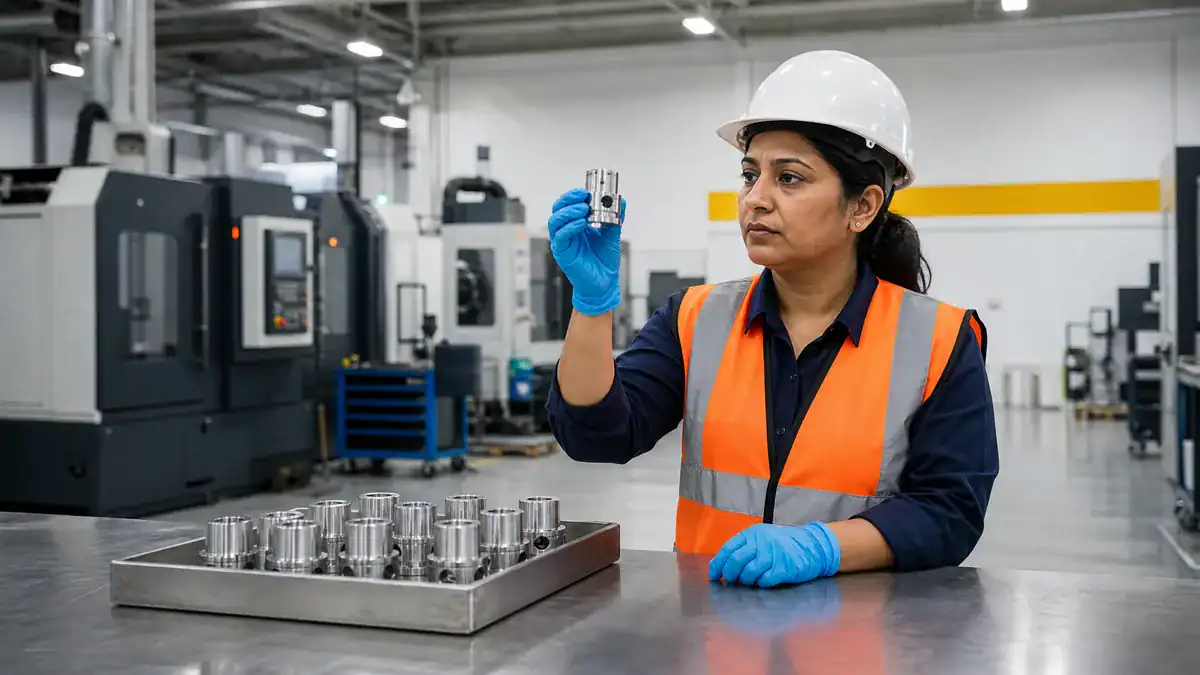
Your website looks the part. Good photography of the shopfloor, a contact form at the bottom of the page, a downloadable brochure if buyers dig around long enough. It represents the business honestly. You are quietly proud of it.
But the RFQs are not coming through the website. Most enquiries still arrive through existing relationships, trade shows, or an occasional referral. The website sits there, professional and largely idle.
The frustrating part is that the site is not obviously broken. No glaring errors. Nothing embarrassing. The product range is described. There is a contact form. So why isn't it working?
The answer is not in how the site looks. It is in how it behaves for the specific person evaluating you: a procurement buyer or engineering manager with a shortlist and a limited amount of patience.
UK manufacturers are not alone in this. Make UK, the trade body representing UK manufacturers, has consistently pointed to the gap between the quality of UK manufacturing output and the digital presence that represents it. Many manufacturers have capable operations and credible products. The websites behind them were built for a different era of buyer behaviour.
This guide covers the decisions that determine whether a procurement buyer submits an RFQ or quietly moves on.
What a B2B buyer is actually doing when they land on your site
The most important thing to understand about a procurement buyer is that they are not on your site to choose you.
They are on your site to find a reason to eliminate you.
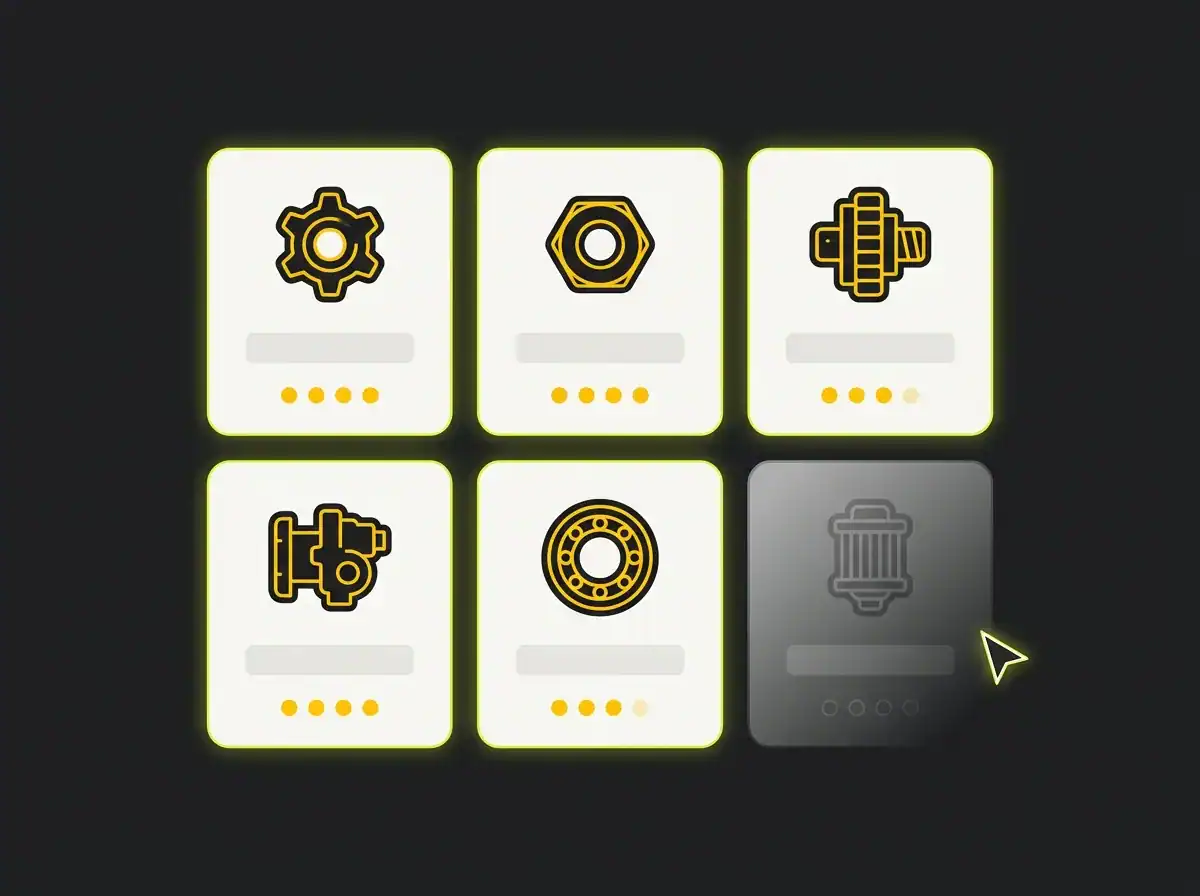
They have a shortlist of four to six potential suppliers. Their job is to reduce that shortlist before speaking to anyone. Your website is one of several browser tabs open. They are not reading carefully. They are scanning for disqualifiers.
This changes everything about how a manufacturing website should be structured. If your first instinct when building a capabilities page was "let's explain what we do," you have already lost the frame. The buyer's question is not "what do you do?" It is "are you the kind of supplier who can handle a job like mine without something going wrong?"
That assessment happens fast. Forrester research consistently shows that B2B buyers complete the majority of their procurement research digitally before making any contact with a supplier. By the time a buyer lands on your site, they already have context. They know roughly what they need, they may know your name from a search or a referral, and they are evaluating whether your site confirms or contradicts that first impression.
What happens if it doesn't confirm it?
Nothing visible.
The tab closes. Another supplier gets the RFQ. No call to say they are moving on. No email. Just silence. This is why manufacturing website underperformance is so hard to identify: the site is not failing dramatically, it is failing quietly, at scale. A sound approach to manufacturing web design starts from understanding that gap and closing it, rather than from making the site look more impressive.
The technical credentials that stop the shortlist process dead
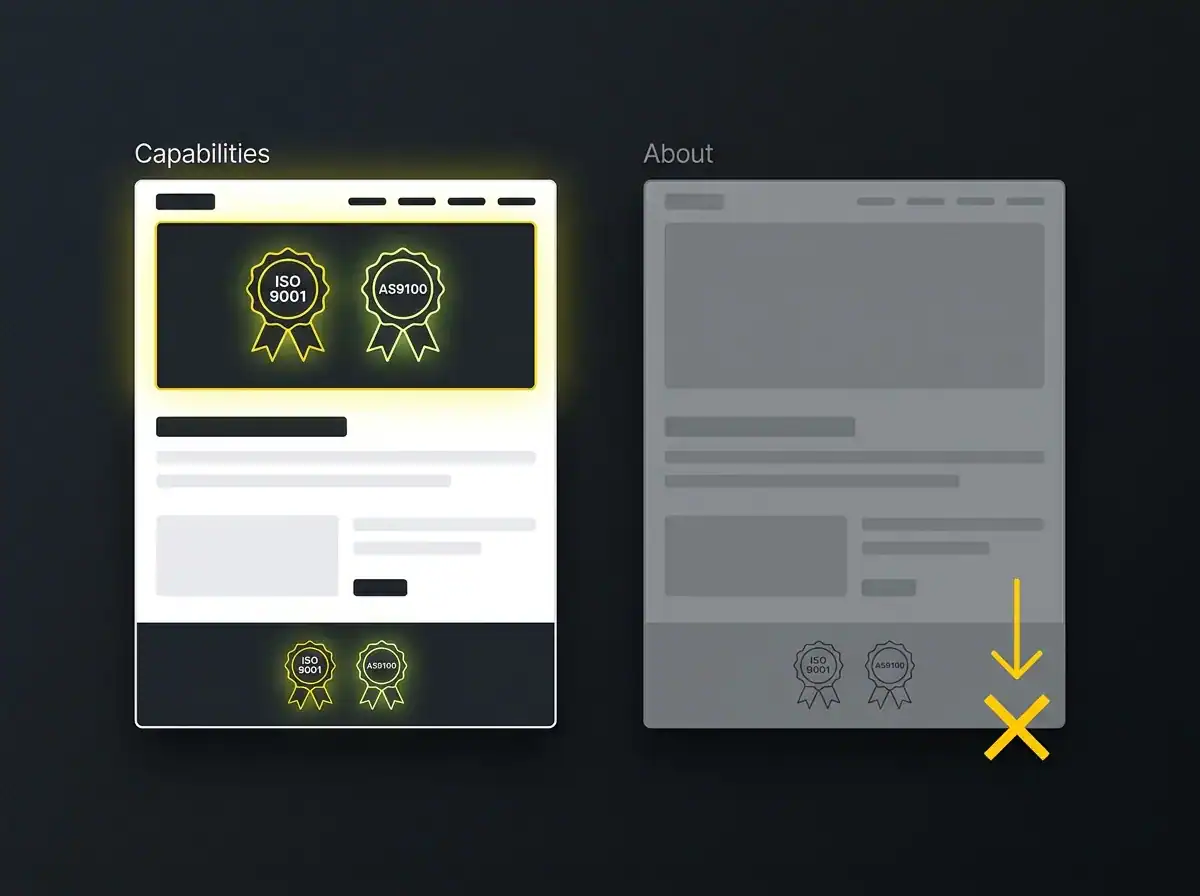
A procurement officer evaluating a precision machining supplier has a mental checklist. ISO 9001 is usually on it. AS9100 if the job touches aerospace. IATF 16949 if it is automotive. CE marking, UKAS accreditation, or UL certification, depending on the application. If these are not visible within the first scroll of the relevant capabilities page, one of two things happens: the buyer assumes you do not hold them, or they conclude the site is organised so poorly that confirming it would take more effort than it is worth.
Either way, they leave.
The "About Us" trap is where most manufacturing websites lose this. Certifications end up on the About page, next to the company history and the team photograph. That is exactly the wrong place. The About page is where buyers go once they have already decided they are interested. It is not where initial impressions of technical credibility are formed.
Where certifications need to live: prominently on every capabilities page, near the RFQ form, and in the site footer as a persistent signal. Visible before a buyer has clicked a second time.
Specificity matters more than most manufacturers expect. "Precision machining" tells a procurement officer almost nothing. "CNC turning with tolerances to ±0.001 inches, working in stainless, titanium, and Inconel for aerospace and medical applications" tells them whether their job is in scope. The difference between vague and specific is often the difference between a bounce and a submission.
Downloadable documentation helps too. Material data sheets, capability statements, test reports, and CAD files, made available on the relevant page, remove friction and pre-qualify serious enquiries. Gating them with a corporate email address is reasonable; the availability itself signals professionalism.
A manufacturing website that offers nothing to download is asking a buyer to trust a wall of text. They usually won't.
How the RFQ form design earns or kills the submission
A generic contact form on a manufacturing website is a polite way of saying "we don't really know what you need to tell us."
Name, email, message. Maybe a phone number. The procurement officer looking at this form knows they need to describe project type, quantity, material, finish, tolerance, file format, and timeline. There is nowhere to put any of it. So they either write a very long unplanned message, or they move on to a supplier whose form makes it easier.
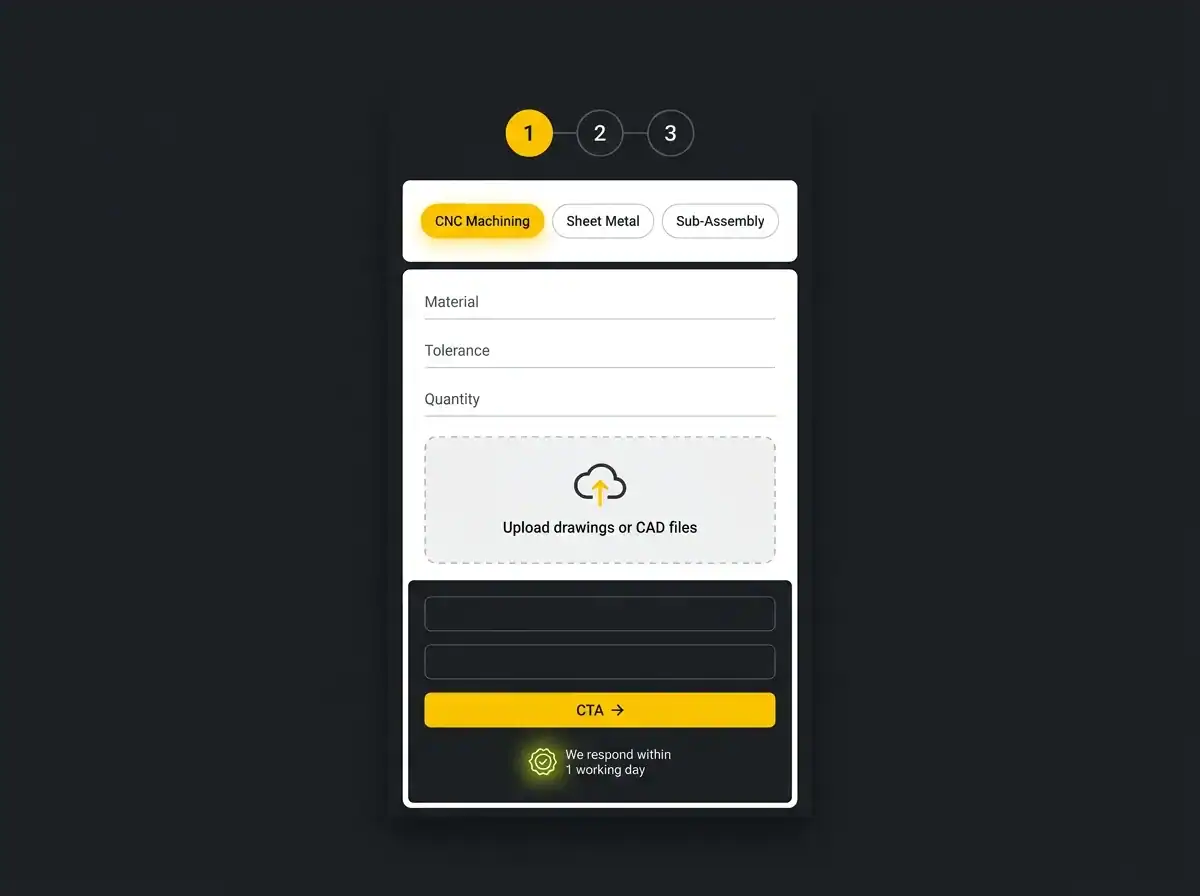
The elements of a well-designed RFQ form are straightforward. A project type selector at the start filters the fields that follow, so an aerospace tooling enquiry presents different options from a sheet metal fabrication job. A file upload zone handles drawings and CAD files without the buyer needing to email them separately. A timeline or delivery deadline field. Materials and tolerances in a structured way. Then contact details and submission.
Multi-step design makes a significant difference. Breaking the form into three steps, project type first, technical specification second, contact details third, means the buyer does not face a wall of questions on arrival. They answer the first question and click next. The cognitive load stays manageable throughout.
There is one element more manufacturing websites should include: a response time commitment. "We respond to all RFQs within one working day" is a trust signal as much as a service level. Buyers comparing several suppliers often go with whoever responds first. Stating a response time on the form page changes the calculation before any conversation has happened.
The RFQ form is often the final interaction between browser and buyer. Getting it wrong wastes everything the rest of the site has built. It is a significant part of what effective web design for manufacturers actually involves.
Product and capability pages that do the selling before a call
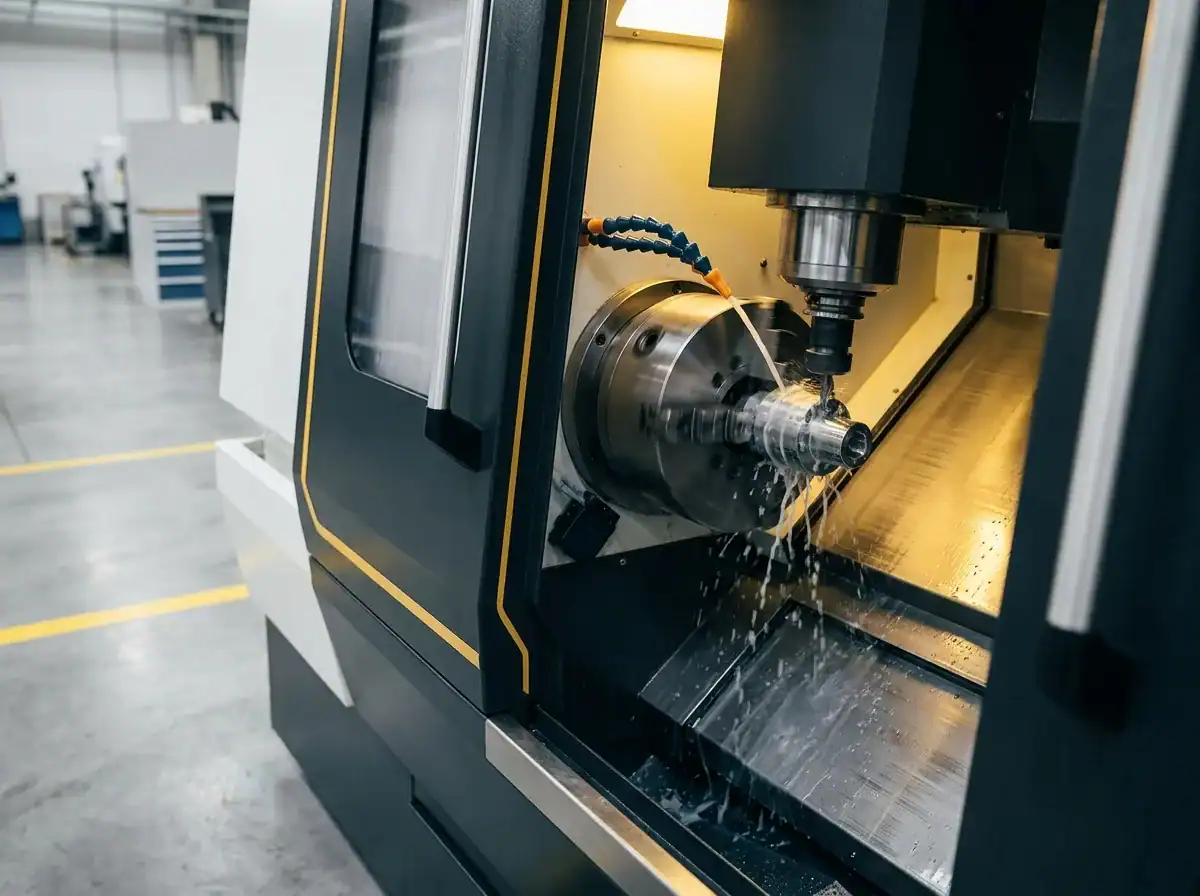
Most manufacturing websites have a single "What We Do" page. One page covering all processes, all materials, all industries, in one document. The page is accurate. It is also nearly useless to a buyer with a specific job in mind.
A procurement manager sourcing a contract manufacturer for titanium aerospace components is not looking for a company that also does plastic injection moulding and general fabrication. What they need is to quickly establish whether your capabilities cover their specific requirements. A catch-all page forces them to read everything to find the portion that is relevant.
Wrong approach.
Application-first architecture solves this. Instead of organising capability pages around how your internal departments are structured, organise them around what buyers are trying to achieve. By industry: aerospace, medical, automotive, defence. By process: CNC machining, sheet metal fabrication, surface treatment, sub-assembly. By material: aluminium, titanium, stainless steel, composites. Each page goes deep on that specific application, covering the certifications relevant to it, the tolerances achievable, and the industries served.
Case study placement matters as much as the case studies themselves. If a buyer lands on your aerospace machining page and wants to understand whether you have done this type of work before, they should not have to navigate to a separate News section to find it. The relevant case study should be one scroll away from the capabilities copy. The decision to enquire often happens at that capabilities page; the case study should be there when it does.
This connects to a broader principle in B2B content strategy: buyers in considered purchase categories do not buy from the first site they find. They buy from the one that made them feel most confident during the evaluation phase. Your capabilities pages are either building that confidence or leaving it to chance.
Trust signals: where they live is as important as whether they exist
A manufacturing company trading for 30 years, holding ISO 9001 and AS9100, employing 150 people, and having supplied major names in aerospace and automotive might still have a website that communicates none of this in the first scroll.
That is a credibility failure. Not a values failure. Not a capability failure. A placement failure.
Buyers evaluate credibility through a stack of signals they encounter as they move down the page: years trading, certification badges, client logos from recognisable brands, real photography of the operation. The order and prominence of these elements shapes their impression before they have read a word of your capabilities copy.
Client logos are particularly powerful, with permission and with relevance. A recognisable aerospace or automotive brand alongside your key capabilities page tells a procurement buyer something no paragraph of copy can: you have already passed someone else's supplier approval process. That proof point is worth more than six testimonials from companies they have never heard of.
Real photography matters in a way that surprises manufacturers who have invested in stock imagery. Industrial buyers know what a manufacturing facility looks like. They can tell immediately whether the shopfloor photos are of your actual machinery or sourced from a library.
Real photos, even imperfect ones, communicate something stock cannot.
Named engineers, technical directors, and quality managers, even brief bios, build confidence at the evaluation stage for buyers entering long-term supply relationships. A buyer placing repeat orders that depend on consistent quality over two or three years wants to know there are specific, accountable people on the other end of the project. None of these elements are expensive to implement. They are decisions, not budget items.
How AI search is changing how buyers discover manufacturing suppliers
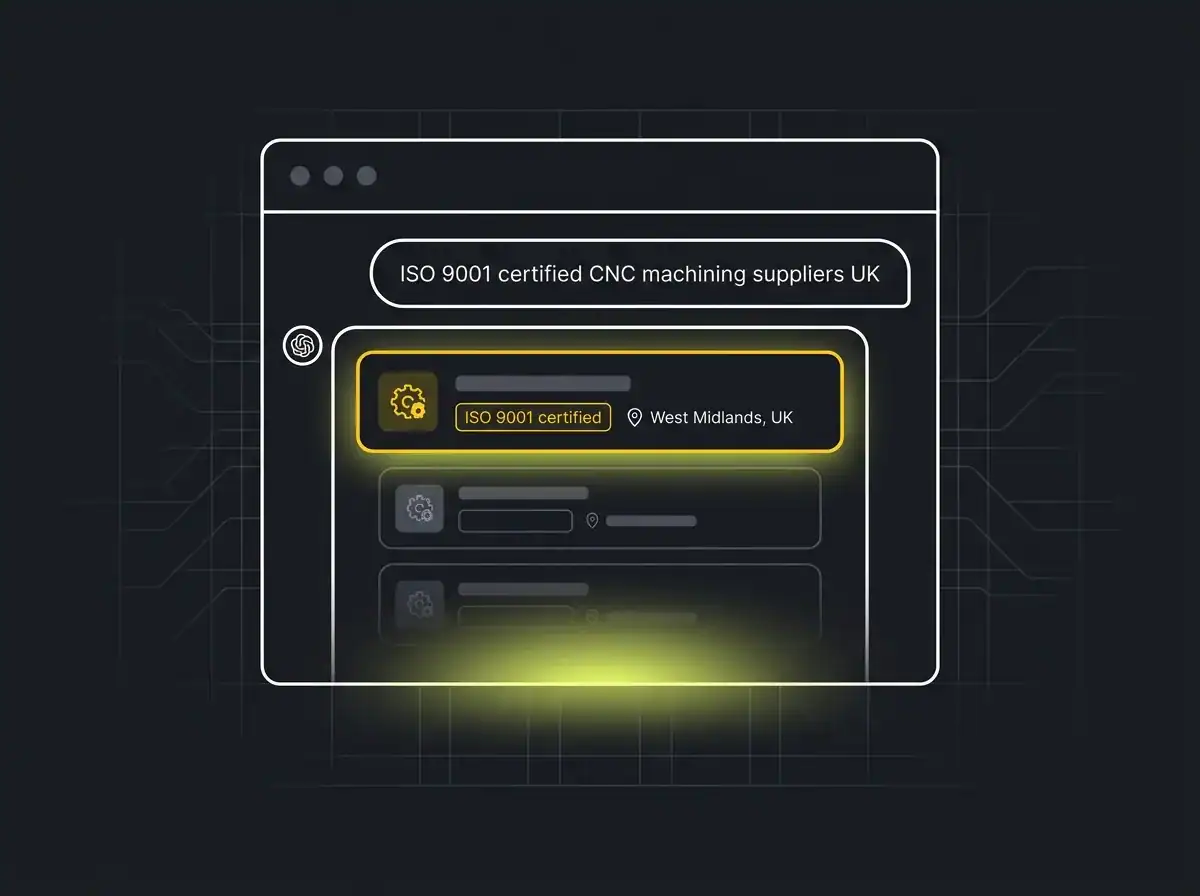
A growing number of procurement managers and engineers now start their supplier research not on Google, but in ChatGPT or Perplexity.
The query is familiar: "ISO 9001 certified CNC machining UK," "contract sheet metal fabrication West Midlands," "precision engineering supplier for aerospace components." But the way AI tools respond is different from a search results page. Rather than returning a list of links, they synthesise a response from the content they can access, surfacing suppliers whose websites have clear, structured capability statements, explicitly named certifications, and FAQ-style content that reads as a direct answer to a procurement question.
A manufacturing website with specific, well-structured copy is more likely to appear in those AI-generated responses than a brochure-style site with generic language. The signals AI tools respond to are very similar to what makes a site credible to a human buyer: named processes, specific standards, industry vertical focus, and plain-English answers to common procurement questions.
This matters commercially. AI traffic converts at significantly higher rates than standard organic search traffic, because the buyer arriving from an AI recommendation is not discovering you for the first time. They are verifying you. They have already been told you might be a fit; they are on your site to confirm it.
What this means practically: a FAQ section answering "what certifications do you hold," "what industries do you supply," and "what are your standard lead times" makes you more citable by AI tools. Capabilities copy that names specific processes and standards, ISO 9001, AS9100, IATF 16949, gives AI something concrete to surface. A site with generic "high quality components" copy gives it nothing to work with.
AI search visibility is increasingly part of the lead generation picture for B2B businesses, including manufacturers who have not thought about it yet. The companies building structured, specific websites now are the ones AI will be recommending in the years ahead.
Frequently asked questions about manufacturing websites and RFQ generation
What should a manufacturing website include to generate enquiries?
At a minimum: dedicated capabilities pages structured by process, material, or industry vertical; certifications displayed prominently on those pages, near the RFQ form, and in the site footer; a multi-step RFQ form with file upload and a response time commitment; real shopfloor photography; and client logos from recognisable brands where permission allows. A FAQ section helps both buyers and AI tools find answers to common procurement questions. These elements, in the right places, turn a website that represents a business into one that generates enquiries from it.
How do B2B procurement buyers find manufacturing suppliers?
Through a combination of channels: Google search, industry directories, referrals, trade shows, and, increasingly, AI tools like ChatGPT and Perplexity. The significant shift is that buyers now complete most of their evaluation before making any contact, which means the website has to do more work than it did when the first touchpoint was a phone call or a trade show conversation. A manufacturer that is easy to find but hard to evaluate on arrival loses buyers it never knew about.
What makes a good RFQ form for a manufacturing website?
A well-designed RFQ form reduces friction for the buyer while giving the manufacturer enough detail to quote accurately. The key elements: a project type selector that filters subsequent fields; specification fields covering materials, tolerances, finish, and quantity; a file upload zone for drawings and CAD files; a timeline or required delivery date; and a response time commitment telling the buyer when they will hear back. A generic single-step form with "name, email, message" loses enquiries that a purpose-built form would have captured.
Where should ISO and other certifications appear on a manufacturing website?
On every capabilities page, near the RFQ form, and in the site footer as a persistent signal. The most common mistake is placing certifications only on the About page, where buyers arrive after they have already formed their initial impression. Certifications on the About page reassure buyers who are already interested. Certifications on capabilities pages reassure buyers who are still deciding. That is a meaningful difference in where the conversion happens.
How does AI search affect how manufacturing suppliers get discovered?
AI tools like ChatGPT and Perplexity synthesise responses from structured, specific content. A manufacturing website with named certifications, specific capability statements, industry vertical pages, and a FAQ section is more likely to appear in an AI response to a procurement query than a site with generic copy. Buyers arriving from AI recommendations tend to be further along in their decision process, which makes them easier to convert once they land. Investing in specific, well-structured content now builds visibility across both traditional search and AI channels.
Getting from "looks professional" to "generates enquiries"
The gap between a manufacturing website that represents your business and one that generates RFQs from it is rarely one obvious missing element.
It is usually a combination of smaller decisions, stacked: certifications in the wrong place, an RFQ form that asks too little, capability pages that describe processes without helping buyers assess whether those processes match their job. Each decision is fixable on its own. Together they determine whether the procurement buyer who found you via search, referral, or AI recommendation stays long enough to submit something.
Free resource: Traffic Projection Report
If you are not sure whether your manufacturing website is working as hard as it should be, the Traffic Projection Report shows what organic search traffic could realistically look like with the right foundations in place. It is a useful first step before any conversation about what to change.
A manufacturing website that earns RFQs is not a fundamentally different build from one that just looks good. The difference is whether the buyer's evaluation process has been taken seriously at every design decision. When you are ready to look at what that means for your site, our web design for manufacturers work starts from exactly that question.