You've just wrapped a project you're proud of. The garden is transformed, the client is delighted, and you've got the before-and-after photos lined up. Somewhere in your town, a homeowner typed "landscape gardener [your area]" into Google on a Sunday afternoon, looked at the top three results, and sent an enquiry.
Not to you. You weren't there.
Not because your work isn't good. Because when she searched, your name didn't appear.
This happens every week. For most landscaping businesses, it's invisible.
Referrals, Checkatrade, and word of mouth are all real routes to work. Understanding marketing for home improvement companies means knowing the full picture of channels available to you. This article focuses specifically on the organic search piece: the channel that runs at 2am on a Sunday without you doing anything, that your competitors are quietly using to fill their schedules, and that most SEO guides explain badly by jumping straight to tactics before explaining how the homeowner actually behaves.
That last part is what the tactical guides miss. It changes everything about which tactics matter.
Why homeowners search for a landscaper differently to an emergency trade
When a boiler breaks or a pipe bursts, homeowners Google the problem and call whoever appears first. Speed is everything. The decision takes four minutes.
Landscaping is not like that.
A garden redesign, a new patio, or a full outdoor living project is a £5,000 to £30,000 decision for most UK homeowners. They do not call the first name they find. They look at several businesses, check portfolios, read reviews, talk to neighbours who've had garden work done recently. The journey from "I want to sort the garden this year" to "I'm ready to ask for quotes" can take weeks or months. Think with Google data on local search behaviour consistently shows that high-consideration local services involve multiple search sessions and several website visits before a homeowner makes contact.
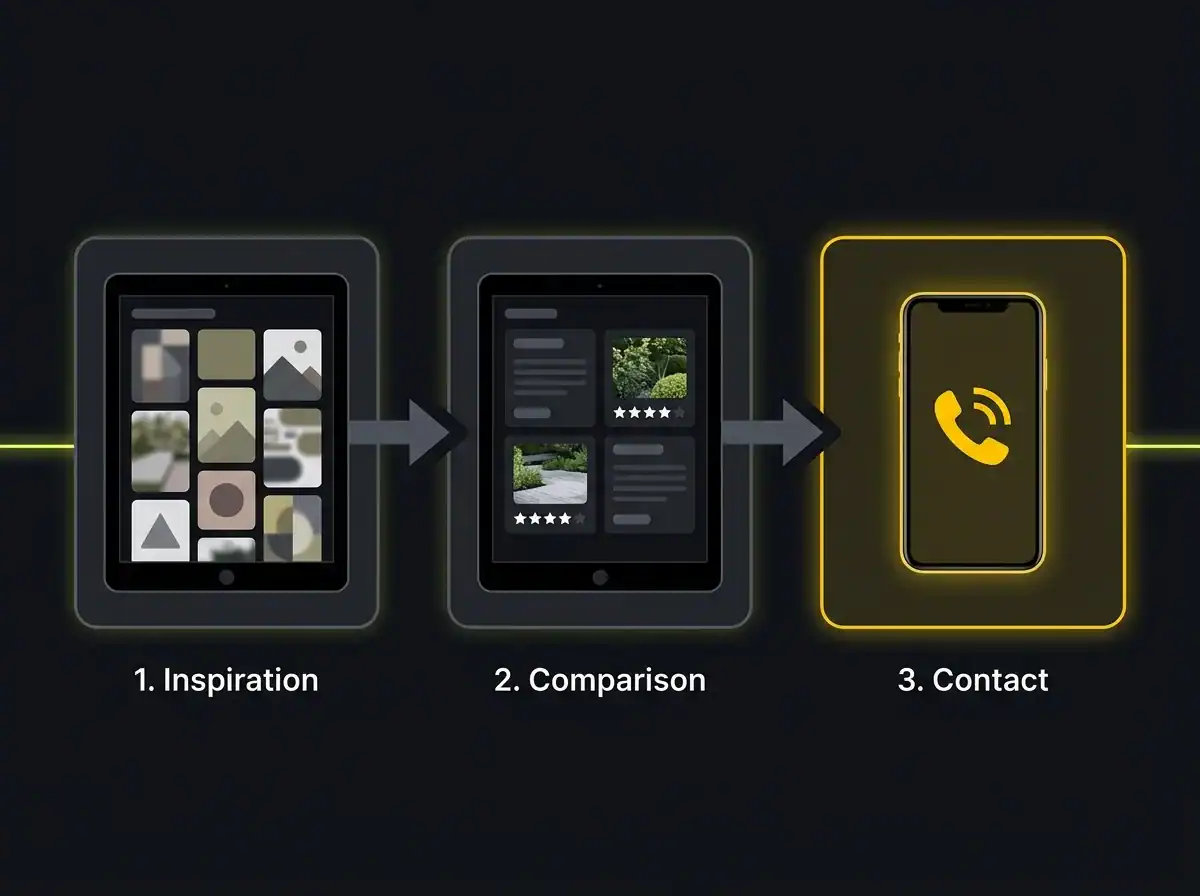
This research phase breaks into three distinct stages.
Stage one: inspiration. The homeowner is still forming the idea. They're searching for concepts, not companies. "Front garden ideas", "low maintenance garden design UK", "patio ideas for a small garden." They're on Houzz, Pinterest, and Google Images. They don't know what they want yet, and they aren't looking for a business.
Stage two: verification. The idea is taking shape. Now they start looking for companies. "Landscape gardener [town]", "garden design company near me", "landscaping services [area]." They visit websites, look at portfolios, compare review scores. A shortlist of two or three businesses starts to form.
Stage three: selection. The shortlist exists. They look up company names individually, re-read reviews, check Checkatrade or Rated People profiles. Then they make contact with the ones who made the cut.
Most SEO guides focus entirely on stage three.
They help businesses rank for "[service] near me" queries. That matters, and this article covers it. But a landscaper who only shows up at stage three is competing against two or three companies the homeowner has already researched, warmed to, and formed an opinion of. Showing up at stages one and two, before the shortlist is built, is where the compounding advantage comes from.
There is also a seasonal dimension worth understanding. UK search volume for landscaping and garden design peaks from February through May as homeowners plan spring projects, then again from August through October for autumn garden work. Deep winter is quiet. Momentum built before February matters considerably. For a broader view of how search behaves differently across home service trades, our guide to how SEO works for UK tradespeople covers similar dynamics across the sector.
The two search surfaces most landscapers are only getting half right
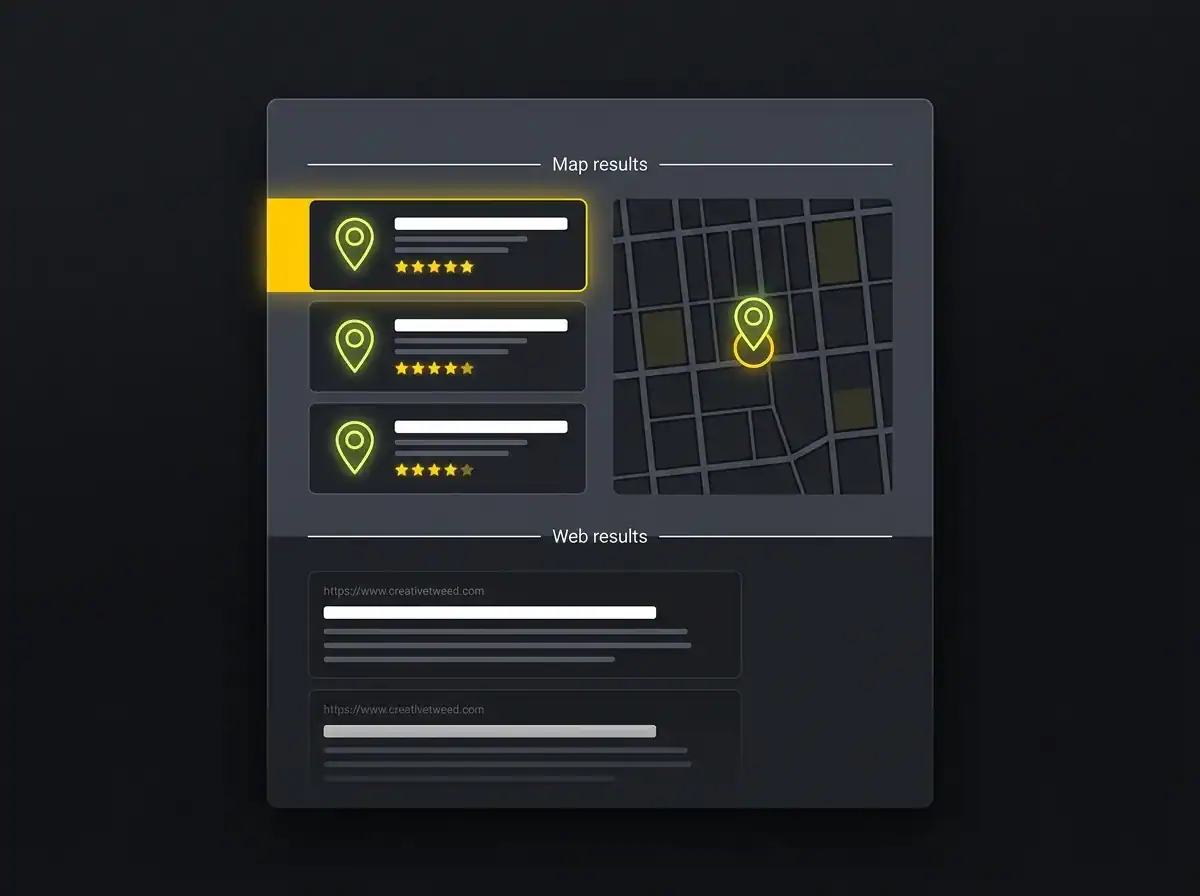
When someone searches "landscape gardener [town]" on Google, two things happen. A map pack appears near the top showing three local businesses with star ratings, phone numbers, and a small map. Below that sit the organic website results.
These are not the same thing. Not even close.
The map pack is controlled by Google Business Profile (your GBP listing). The categories you have selected, the completeness of your listing, the number and recency of your reviews, the photos you have uploaded: these determine whether you appear in those three coveted results.
Organic website results below the map pack are controlled by your actual website. The quality and structure of your pages, whether you have pages dedicated to specific services, whether your site loads quickly on a mobile phone, and how much relevant content Google can find across the domain.
Here is where most landscaping businesses go wrong. They put effort into one and ignore the other.
A landscaper with eighty reviews and a beautifully maintained GBP, but a thin website with one "services" page listing everything, will miss the organic results entirely. A landscaper with a stunning portfolio website but a GBP that hasn't been updated in two years will miss the map pack. Both matter because different homeowners use them differently. Homeowners still in the research phase tend to click through to websites and look at project portfolios. Homeowners who are ready to call right now tend to tap directly on the map pack result.
Miss one surface and you lose half your potential enquiries. This is the gap that a structured approach to local SEO for landscapers is designed to close, covering both surfaces together rather than treating them as separate problems.
What actually moves your Google Business Profile ranking
Your GBP listing is often the first impression a homeowner forms of your business. Here is what actually affects whether you appear in the map pack for local searches, whether you call yourself a landscaper, a landscape gardener, or a garden design company.
Category selection. GBP offers several categories for garden businesses: "Landscaping Service", "Landscape Designer", "Gardening Service", "Garden Center", and others. These send different signals to Google about what you do. If your primary work is garden design and full landscaping rather than general gardening or maintenance, your primary category should reflect that clearly. Get it wrong and you rank for searches you don't want while missing the ones you do.
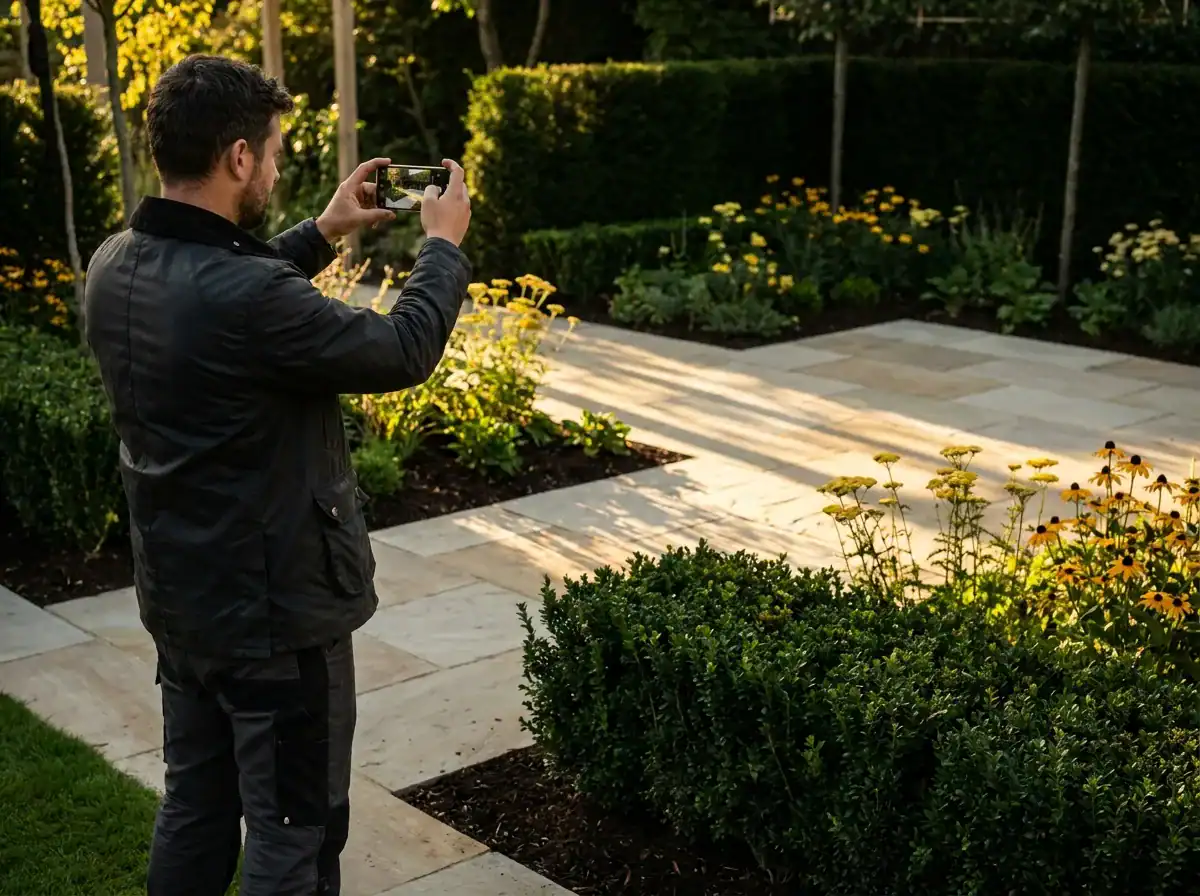
Photo quantity and recency. GBP uses photos as an active ranking signal, not just a display feature. Businesses that upload fresh project photos regularly (at least once a month) consistently outperform those with a static gallery from three years ago. Before-and-after project photos work particularly well because they show the transformation homeowners are actually searching for. A brief caption describing the project type and location adds further relevance signals that many businesses overlook.
Review velocity, not just total count. According to BrightLocal's annual Local Consumer Review Survey, the recency of reviews carries significant weight in how Google evaluates local businesses for the map pack. Three genuine reviews posted in the last month carry more ranking weight than fifty reviews posted three years ago. The practical fix is simple: a text message to each client after project completion, with a direct link to your GBP review page. That habit, maintained consistently, compounds over time in a way that almost nothing else does.
Service areas and services listed. GBP lets you specify the towns and postcodes you serve. Fill these in completely. They directly affect which "[town] landscape gardener" and "near me" searches you appear for. The services section within GBP, where you can list garden design, patio installation, lawn care, hedge trimming, and so on, also affects keyword relevance for your listing.
Posts and Q&A. Monthly GBP posts take about thirty minutes and keep the listing active in Google's eyes. Seasonal posts work particularly well for landscaping: an autumn garden preparation post in September, a spring garden planning post in January or February. The Q&A section is left completely empty by most businesses. Seeding it with the genuine questions homeowners ask before enquiring ("Do you cover [area]?", "How long does a full garden redesign take?") adds another layer of relevance that your competitors are almost certainly ignoring.
Building the website content that ranks below the map pack
The map pack gets a lot of attention. The organic results below it often get less, which is a mistake. For homeowners in the research phase, organic website content is where decisions are shaped. They are reading, comparing, and forming views. They need something worth reading.
Service-specific pages. The most common SEO mistake landscaping businesses make is a single "services" page that lists everything. Google cannot rank one page well for ten different services. A dedicated page for garden design, a separate page for patio installation, a separate page for lawn care, a separate page for hedge trimming: each can rank individually for the relevant search. One page trying to cover all of them ranks well for none.
Location pages. If you serve a radius of twenty or more miles across several towns, location-specific pages are a direct route into local organic results for each area you cover. "Landscape gardener in [Town]" pages need genuine content differences, not just the town name swapped into an otherwise identical template. Writing about specific project types completed nearby, or the particular characteristics of gardens in that area, gives Google a reason to serve the page rather than treating it as thin filler.
Project portfolio pages. Before-and-after content is the single highest-value website investment for most landscaping businesses. A well-written project page, describing the brief, the approach, the materials used, and the outcome, does two things at once. It gives Google something specific to rank: a page about a patio redesign in Harrogate is far more likely to appear for "patio design Harrogate" than a general services page. And it gives the homeowner who finds it conversion evidence before they enquire. They can see work similar to theirs, read the thinking behind it, and form a view about the quality of your business before picking up the phone.
Answering research-phase questions. Homeowners in stage one are searching for information, not services. "How much does a garden redesign cost UK?", "How long does garden landscaping take?", "How to choose a landscape gardener": these are live search queries. A landscaping website that answers them with genuinely useful content ranks at stage one of the homeowner journey, before competitors who only appear at stage three. The homeowner who found you through a useful piece of content feels differently about contacting you than one who found you through a cold search result.
What not to bother with. Keyword-stuffed paragraphs in website footers. Thin blog posts about generic seasonal garden tips with no specific insight. Exact-match domain purchases. These are tactics from a decade-old SEO playbook and they add nothing today.
The question of what organic traffic is realistically achievable for a specific landscaping business in a specific area is one that deserves a proper answer.
Free Traffic Projection Report
A diagnostic that maps organic search demand in your specific service area and shows what realistic traffic and enquiries look like at month 6 and month 12, based on where your business currently stands. Takes about 48 hours to produce.
How AI search is entering the way homeowners research garden projects

This is a more recent development, but it is accelerating fast enough to plan for now rather than catch up on later.
Google AI Overviews now appear at the top of many homeowner research queries. Someone searching "how do I find a reliable landscape gardener near me?" may see an AI-generated summary before they reach any organic result. This does not kill organic search. But it does change what earns a click. Generic guides that provide the same information as the AI summary get skipped. Content that offers something more specific, more local, or more grounded in real experience earns the click the AI summary cannot satisfy on its own.
ChatGPT and Perplexity are also increasingly used by homeowners to get recommendations. "Who are the best landscape gardeners in [town]?" is a prompt these tools receive regularly. They pull from indexed websites, structured content, and local signals. A landscaping business with clear service pages, named services, a defined service area, and genuine credentials is far more citable than one with vague marketing copy.
Practically, two things follow.
First, structured content is easier for AI to extract and reference. Specific services listed clearly, specific locations named, specific qualifications mentioned, FAQ sections that answer real questions in plain language: this is what AI tools can quote and cite. Vague "we provide an outstanding service" paragraphs are not.
Second, your GBP signals feed into Google's AI layer directly. The investment in reviews, photos, and category selection that improves your map pack ranking also makes you more visible in Google's AI-generated responses. The two reinforce each other in a way most businesses have not yet thought about.
AI traffic converts at a significantly higher rate than traditional search: users who arrive via an AI recommendation have typically formed a positive view of the business before they even click through. For a landscaping business where a single enquiry can lead to a £15,000 project, the quality of that traffic matters as much as the volume. Our AI search agency service covers what it takes to be visible in this layer alongside traditional organic search.
Realistic timelines for landscaper SEO in the UK
"Give it twelve months and trust the process" is what most agencies say, which is fair enough as far as it goes. It helps to know what happens when, and what you should expect to see at each stage.
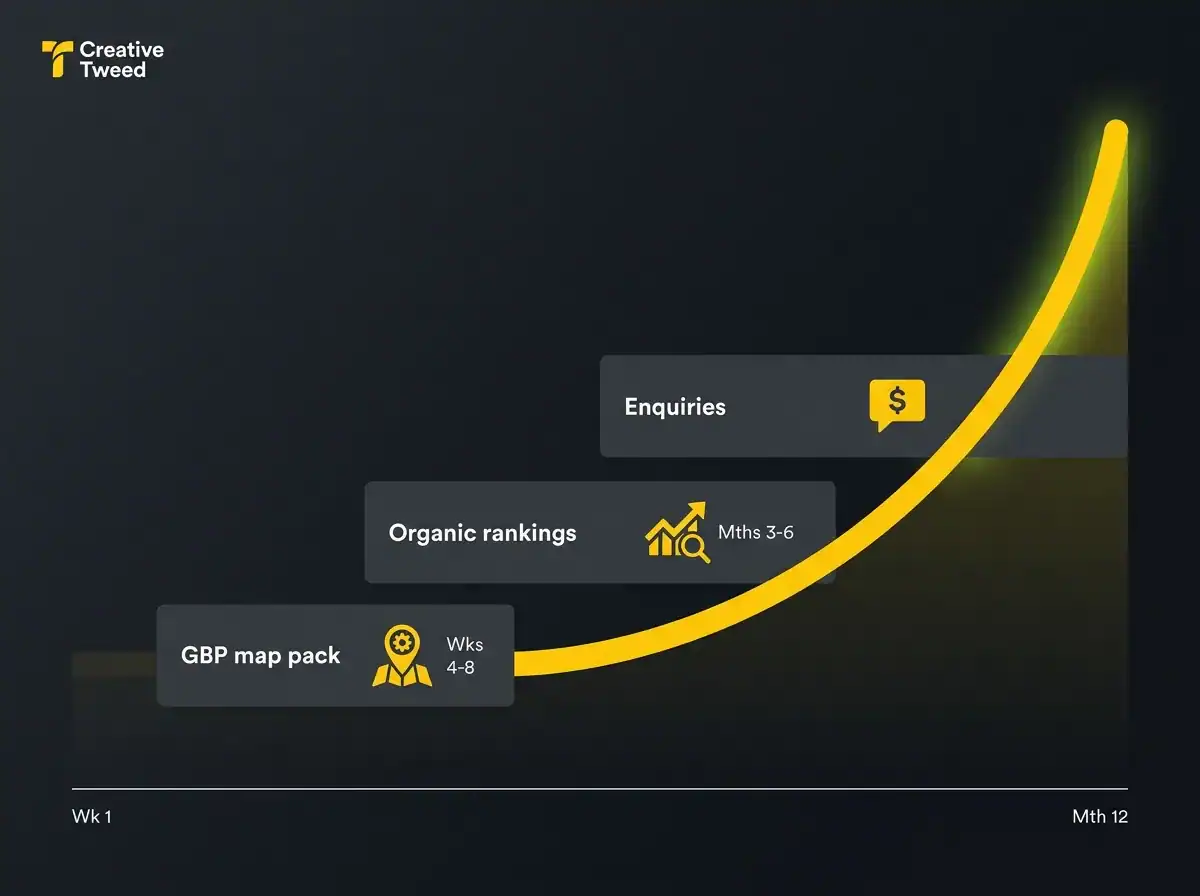
GBP improvements move fastest. A landscaper who completes their GBP, adds project photos regularly, and starts a consistent post-project review process can see map pack movement within 4 to 8 weeks. This depends on how competitive your local market is, but the response time is faster than almost any other SEO change. It is also the lowest-cost place to start.
Organic rankings take longer. Service pages and location pages typically show meaningful movement at 3 to 6 months. This assumes the pages are properly structured and the site has basic technical health: mobile-friendly, fast-loading, secure. The timeline is real, but the compounding effect is what makes early investment worthwhile.
What compounding actually looks like. A Glasgow-based landscaping and garden design company started working with us from near-zero organic presence. Domain rating of 6, seven organic keywords, no GA4 or Search Console data to work from. We published nine blog posts targeting research-phase questions homeowners were actively searching, optimised twelve core service and location pages, and built a hundred foundational citations.
All nine posts were generating traffic within 6 to 8 weeks of publication. None were duds. Front Garden Ideas reached position 10 for a keyword with 6,800 monthly searches. Low Maintenance Garden Ideas hit position 6.4 for a 1,500-search term.
Then the compounding began. A second phase built an Outdoor Living cluster: a hub page, six sub-service pages, nine more blog posts, and thirty editorial backlinks averaging domain rating 50. That phase delivered 963% more clicks than the first, 2,063 clicks against 194. Monthly enquiries tracked through GA4 went from 8 in December to 11 in January, 11 in February, 20 in March, and 24 in April. Cleanly, consistently upward. The site now ranks for 199 organic keywords, with 23 sitting in positions 1 to 3.
That trajectory is what a well-structured SEO agency engagement produces when the foundations are right and the content investment is sustained.
The case for starting in autumn. Starting in September or October means momentum builds through winter, ready for the February to May search peak. The landscaping business that started SEO in autumn arrives at the spring season with ranked service pages, a stronger GBP profile, and an established review pattern. The business that starts in March is building foundations during the peak. A meaningful difference.
Frequently asked questions about SEO for landscapers
How long does SEO take to work for a landscaping business?
GBP improvements typically produce map pack movement within 4 to 8 weeks, depending on how competitive your local market is. Organic website rankings take 3 to 6 months to show meaningful movement, assuming pages are properly structured and the site is technically healthy. The compounding effect on enquiry volume usually becomes clear around months 9 to 12. Starting in autumn, before the spring search peak, gives you the best chance of arriving at the busy season with established rankings.
Does Google Business Profile count as SEO?
Not exactly. GBP and traditional SEO are separate systems that affect different parts of Google search results. GBP controls whether you appear in the map pack, the three local results near the top of the page with a map and star ratings. SEO controls whether your website appears in the organic results below the map pack. They are managed differently and respond to different signals. Most landscaping businesses underinvest in at least one of them, which is why the gap between the map pack and the organic results often shows different businesses.
What type of content should a landscape gardener publish on their website?
The highest-value content is project portfolio pages: before-and-after write-ups describing the brief, the approach, the materials, and the outcome. These serve SEO (Google has something specific to rank for a relevant local query) and conversion (homeowners can see work similar to theirs before they decide to enquire). After portfolio pages, dedicated service pages (one per main service) and location pages (one per area served) do more for organic rankings than a blog full of generic seasonal garden tips.
Is SEO worth it for a small landscaping company?
It depends on project size and local competition. For a landscaping business where a typical project runs to £10,000 or more, a single additional qualified enquiry per month from search justifies several months of investment. The relevant question is not whether search traffic is valuable but whether sufficient demand exists in your specific area for your specific services. A free Traffic Projection Report maps that demand and shows what is realistically achievable before you commit to anything.
How much does SEO cost for a landscape gardener?
Monthly retainer costs for a local SEO agency working with a UK landscaping business typically sit between £600 and £2,000 per month depending on scope, local competition, and starting point. A GBP-and-website-foundation engagement in a lower-competition market sits at the lower end. A competitive city market with content and link investment sits higher. The more useful question is what a single additional enquiry per month from organic search is worth to your business. For most landscaping companies running £10,000-plus projects, the arithmetic is straightforward.
Where to start with SEO for your landscaping business
Most landscaping businesses should start in the same place.
A GBP audit. Check that your primary category accurately reflects the work you actually do. Count how many project photos you have uploaded in the last three months. Look at when your most recent reviews were posted. These three things cost nothing and, done properly, can produce map pack movement within weeks.
The next priority is website structure. Do you have one page per main service, or one "services" page attempting to cover everything? Do you have location pages for the areas you serve? Do you have project portfolio pages documenting real work with real specifics? These are the foundations that make every other investment pay back. Without them, everything else you spend on SEO is building on sand.
If you want to understand what search demand looks like in your specific area, and what traffic and enquiries are realistically achievable for your service mix, a free Traffic Projection Report maps that out. It takes about 48 hours and gives you a clear picture of what organic search could realistically deliver before you commit to a penny of ongoing spend.
For businesses ready to hand this off entirely, our local SEO for landscapers service covers both search surfaces together: GBP management, website structure, content, and the kind of link-building that builds lasting visibility in your area, not just a short-term ranking bump.