
The audit arrived twelve days after the kick-off call. A 94-page PDF, colour-coded by severity, with a covering note that said "let us know if you have any questions."
The business owner read the executive summary, forwarded it to their developer, and waited. The developer looked at the first fifteen items, estimated it would take six months to action them all, and asked who was going to prioritise the list.
Nobody prioritised the list. The PDF sat in a shared drive. Six months later, the same agency renewed the retainer.
Sound familiar?
If you have been quoted somewhere between £500 and £5,000 for a technical SEO audit and you genuinely have no idea what you should receive for that money, this article is for you. We will cover three things: what a technical SEO agency actually does (and what it does not), what a serious audit should cost in the UK, and how to tell whether an agency is going to fix your site or simply document its problems.
Read on.
What technical SEO actually covers (and what it is not)

A technical SEO agency works on the infrastructure of a website, making it crawlable, indexable, and performant enough for search engines to rank it. This is distinct from content SEO, which is about what your site says, and link building, which is about who links to it. Technical SEO is the layer underneath both: if Googlebot cannot read your site properly, the best content in the world will not rank.
The three pillars are worth understanding before you hire anyone.
Crawlability is about whether Googlebot can physically reach your pages. Google sends automated bots across the web to discover and read content. If your site has blocked URLs in robots.txt, broken internal links, or page hierarchies that run too deep for Googlebot to navigate efficiently, it will miss content entirely. Sites that have been through a poorly managed redesign or platform migration are often riddled with crawlability problems the business does not know about.
Most clients have no idea.
Indexability is a step beyond crawlability. Googlebot can crawl a page but still decide not to index it, either because it has been explicitly excluded via a noindex tag, or because the content is so thin or duplicated that Google does not consider it worth storing. A common symptom is index bloat: a site with thousands of indexed pages where only a fraction are genuinely useful, diluting the site's overall authority across too wide a surface.
Both problems are fixable. The third pillar is where it gets technical.
Performance is where Core Web Vitals come in. The web.dev guidelines define three key thresholds for LCP (Largest Contentful Paint). Under 2.5 seconds is good. Between 2.5 and 4 seconds needs improvement. Over 4 seconds is poor. Slow LCP scores actively suppress rankings regardless of how good your content is. An agency that improves your Core Web Vitals without changing a single word of your content can produce measurable ranking movement simply by making the technical foundation passable.
Speed is a ranking signal. Full stop.
Technical SEO does not include writing blog posts, building backlinks, crafting meta descriptions, or selecting target keywords. These are separate disciplines. Many agencies offer them alongside technical work, which is perfectly reasonable, but conflating them with the technical layer suggests the agency does not fully understand what they are selling.
Your technical SEO services are the foundations. Content and links are what you build on top. Without solid foundations, the rest does not compound the way it should.
The real problems a technical SEO agency fixes
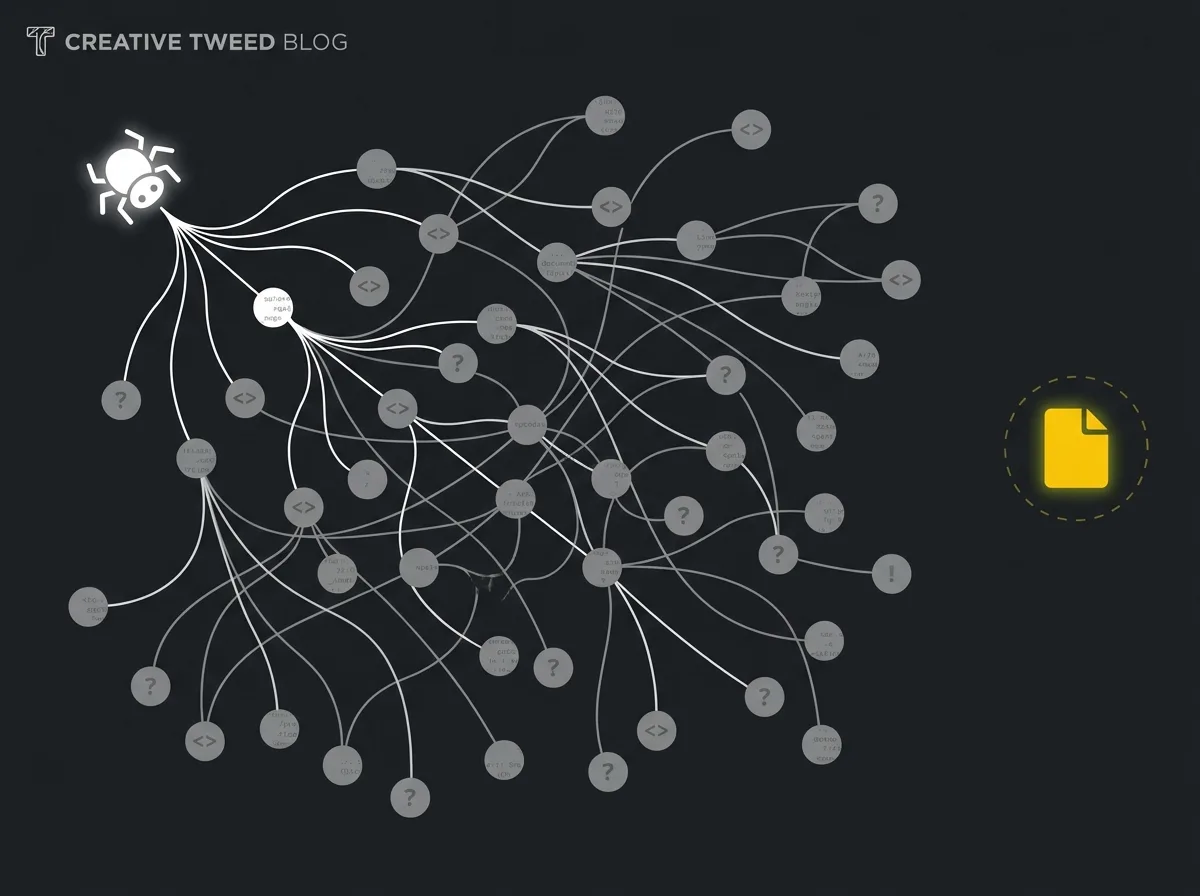
Technical problems are easier to understand when they are anchored in outcomes rather than definitions. Here are the issues that appear most consistently on real sites.
These come up again and again.
Crawl waste. Googlebot has a crawl budget, meaning it will only visit a certain number of pages on your site in any given period. On sites that generate lots of URL variants, such as ecommerce platforms with filtered product pages or CMSs that create parameter URLs for sessions and tracking, Googlebot can spend its entire budget on low-value pages while never reaching your key service or product pages. This is particularly common after a platform migration, and it is often completely invisible until someone looks at the server logs.
That lost budget never comes back.
Index bloat. A site with 12,000 indexed pages where only 800 have any genuine value is spreading its authority too thin. Thin auto-generated tag archives, near-duplicate location variants, and paginated pages with no unique content all contribute. The fix involves a combination of noindex directives, canonical signals, and sometimes consolidating pages that should never have been separate in the first place.
Less is measurably more here.
Redirect chains. Every URL that redirects to another URL loses a small amount of link equity at each hop. A three-step chain, old URL to an intermediate page to the current URL, dilutes the equity that should pass through cleanly. It slows Googlebot down too. Auditing and flattening redirect chains is one of the more mechanical technical fixes, but it consistently produces improvements once resolved.
Mechanical, but it works.
Duplicate content and canonicalisation failures. CMS platforms generate duplicate content with minimal encouragement. WordPress, by default, can produce multiple URLs for the same post: with and without trailing slashes, with category prefixes, with preview parameters. Without canonical tags telling Google which URL is the definitive version, link equity and crawl attention get split across versions of the same page. Very common. Usually fixable within days once correctly identified.
The fix is usually straightforward.
Slow Core Web Vitals. An LCP score above 4 seconds on a key service page means the algorithm is actively holding that page back in rankings, regardless of how relevant the content is. Google's own guidance confirms Core Web Vitals are a direct ranking signal. Fixing them requires identifying whether the cause is image sizing, render-blocking scripts, server response times, or layout shifts, then working with your developer to resolve each root cause.
Every second counts.
Orphaned pages. A page with no internal links pointing to it is effectively invisible to Googlebot unless it appears in your sitemap. Valuable content migrated from an old site, or published and then forgotten, ends up orphaned. The fix is often as simple as adding internal links from relevant existing pages. First, you have to find the orphans.
Finding them is the job.
Structured data gaps. A FAQ section with no FAQ schema, or product pages with no price and availability schema, means you are losing eligibility for rich results in the SERP. Rich results improve click-through rates in ways that pure rankings do not. Getting them requires schema markup in your page code. Technical implementation, not editorial work.
Not optional anymore.
What a technical SEO audit actually involves

There is a real distinction between running a tool and conducting an audit. It is worth being clear on this before you receive a quote.
Screaming Frog, Sitebulb, and Ahrefs all produce crawl reports. Run any of them on a site and you will get a spreadsheet of flags: broken links, missing alt text, slow pages, redirect chains. This is useful raw data.
It is not an audit.
An audit is the interpretation of that data in the context of your specific site, your traffic patterns, your business goals, and your competitive landscape. It answers questions the tool cannot: which of these 400 issues actually matters for your rankings, in what order should they be fixed, who needs to implement each one, and what does your developer need to know to do so correctly?
That distinction is what you are paying for.
A thorough audit for a medium-sized site covers several distinct areas. A full crawl compared against Google Search Console coverage data, to identify the gap between what Google knows about and what it is actually indexing. Log file analysis, to see what Googlebot has been visiting, at what frequency, and what it has been served. Core Web Vitals assessment on real user data rather than just lab scores.
That is where Googlebot's actual behaviour shows up.
An indexation report comparing crawled pages against indexed pages. A structured data and schema review. Internal linking depth analysis to identify orphaned content. A redirect chain and canonical audit. HTTP status code mapping across the full crawl.
The deliverable from all of this should be a prioritised remediation brief, not a spreadsheet of traffic-light colours. Your developer needs to know what to fix, why it matters, and what to do first. A good brief groups issues by urgency (fix this week, fix this month, monitor), includes implementation notes your developer can action directly, and gives the business rationale for each priority.
Format matters as much as findings.
The implementation question is the most important one to ask before you engage anyone. Does the agency hand over the document and invoice, or do they remain involved until the fixes are confirmed live and working? Re-crawling after fixes are deployed to verify they worked as intended is not optional. It is part of the job. An agency that skips this step will often miss that the developer implemented something slightly differently from the brief, and the original problem persists.
Ask it explicitly.
On timescales: a thorough audit for a 500 to 2,000 page site takes two to four weeks of qualified analytical time. A quote promising delivery in 48 to 72 hours for a site of that size is either a junior scan or a tool output with a PDF wrapper. Before you accept any quote, ask what data sources were used, how many hours are budgeted, and who specifically will conduct the analysis.
Worth asking every time.
What a technical SEO audit costs in the UK
Pricing varies significantly in the UK market, and understanding what drives the range makes the numbers much easier to evaluate.
The gap is wider than most people expect.
Small sites (under 100 pages). Typically £500 to £2,500. At the lower end of this range you are usually getting a crawl report with basic interpretation. At £1,500 to £2,500 you should expect human analysis, a prioritised remediation brief, and a walk-through meeting with your team.
Medium sites (100 to 2,000 pages). Typically £2,500 to £5,000. UK technical SEO specialists charge approximately £600 to £1,200 per day depending on seniority and agency positioning. A medium-site audit requiring eight days of senior analytical time is going to cost between £4,800 and £9,600 before the delivery meeting. A £500 quote for the same scope is not the same service.
The numbers explain themselves.
Large and enterprise sites (over 2,000 pages, ecommerce, multi-language). Typically £5,000 to £15,000 or above. At this scale the audit scope expands substantially: crawl budget analysis, JavaScript rendering assessment for single-page-application builds, hreflang auditing for international targeting, and log file analysis all become essential rather than optional extras.
More pages, more complexity, more time.
What explains the range within each bracket? Site complexity is one factor: a JavaScript-heavy site built in a modern front-end framework needs rendering analysis that a standard WordPress install does not. International targeting adds meaningful scope: mapping hreflang implementations across twelve country variants is a genuinely different job from a single UK domain.
Site history adds more.
The state of previous work matters too: a site with years of accumulated technical changes takes longer to map than one built cleanly eighteen months ago. And log file analysis, the gold standard for understanding actual Googlebot behaviour, adds time and requires server access that not every client can readily provide.
Each factor adds real time.
After a one-off audit, the question is what happens next. An audit finds the problems. A retainer fixes them and prevents new ones. A practical ongoing technical SEO budget for a medium site is one to two days per month, roughly £600 to £2,400 per month, once the initial remediation is underway. New content being published, CMS updates being pushed, plugins being added: all of these create fresh technical issues on a rolling basis. Monthly monitoring catches them before they compound.
Problems compound. Monitoring prevents it.
What should you receive for the money at any price point? A written audit with a prioritised remediation brief. At least one meeting to walk through the findings with your team and developer. Clarity on whether the agency will remain involved through implementation or hands off at the PDF stage. If none of these are included in the proposed scope, push back before you sign.
Non-negotiable basics.
Red flags that separate serious agencies from template-auditors
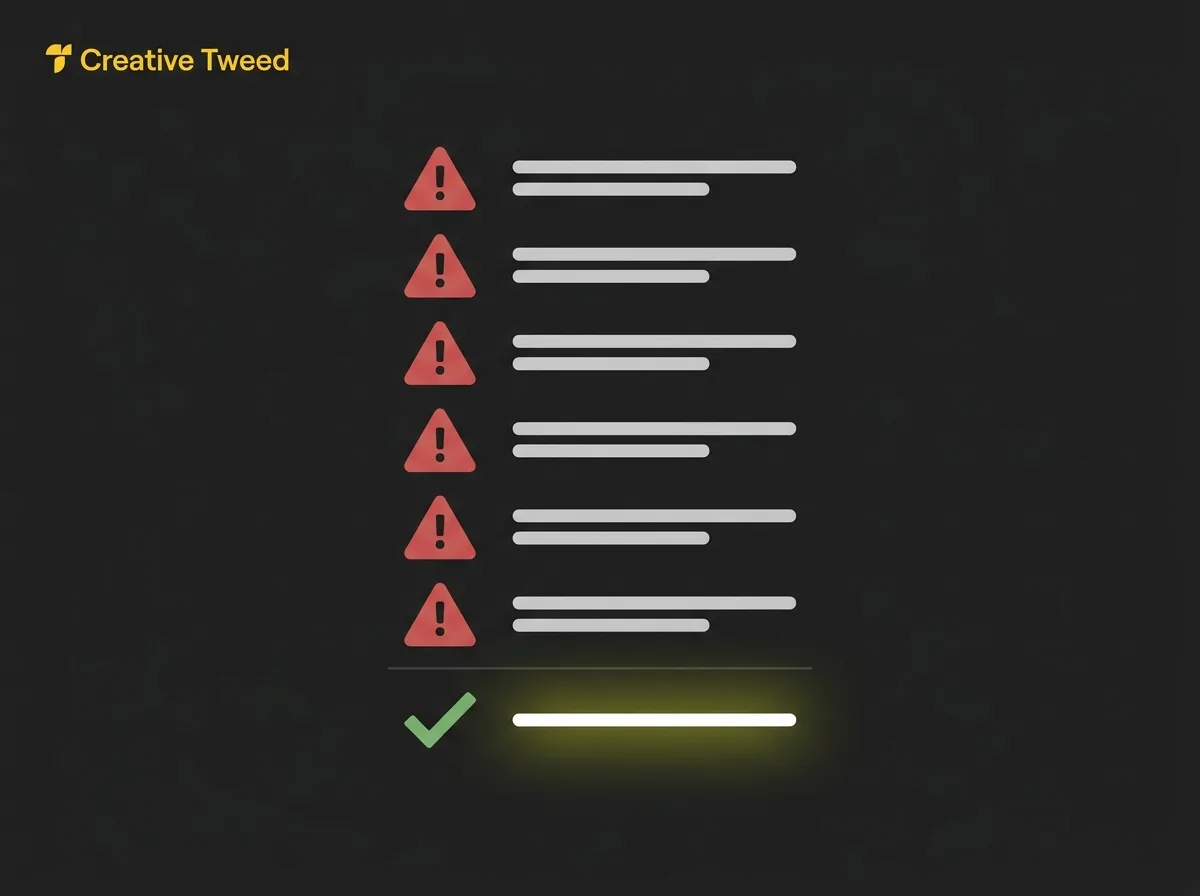
Red flag 1: Guaranteed rankings. No legitimate agency can guarantee a position in Google. Technical SEO addresses how well a site can be crawled and indexed; rankings also depend on content quality, competition, backlink profile, and algorithm decisions that no agency controls. A guarantee is either a sales tactic or a fundamental misrepresentation of how search works. Treat it as an immediate disqualifier.
Walk away from that conversation.
Red flag 2: The audit arrives in 48 hours. A proper audit for a 500 to 2,000 page site requires multiple days of qualified analytical time. An agency that delivers within two days has almost certainly generated the output via a tool and lightly formatted it. Before accepting any quote, ask what data sources were used in the analysis, how many hours were budgeted, and who specifically conducted the work. If the answers are vague, you have all the information you need.
Vague answers are answers.
Red flag 3: Vague "proprietary" methods. Credible technical SEO follows documented, auditable practices: Google Search Central guidelines, Core Web Vitals standards, and established tools including Screaming Frog, Google Search Console, and PageSpeed Insights. An agency that will not explain what they do and why has no real accountability to you if the work produces no results. Ask to see a sample audit structure or a methodology overview before you engage. A serious agency will have one ready.
No methodology means no accountability.
Red flag 4: No communication with your developer. Technical SEO recommendations are worthless unless they get implemented on the actual site. An agency that does not ask to speak with your development team, or that does not understand your CMS and hosting environment, has no practical route to making anything happen. Ask in the first conversation: how do you work with our developers? A serious agency will answer without hesitation.
Implementation is the whole point.
Red flag 5: Reporting on rankings only. An agency whose monthly report covers keyword positions and nothing else is not doing technical work. Rankings are an output; crawlability, indexability, and Core Web Vitals scores are the inputs that drive them. Ask to see a sample report before you engage. If it does not include crawl coverage trends, index health, Core Web Vitals data, and crawl error monitoring, what you have is a vanity reporting exercise with a monthly invoice attached.
Inputs matter more than outputs.
Red flag 6: Their own site fails the basics. A blunt check, but a reasonable one. An agency whose website performs poorly on Core Web Vitals, has obvious technical issues, or cannot be found for the terms they claim to specialise in is giving you direct evidence about their standards. Run PageSpeed Insights on their URL before any pitch meeting. Two minutes. Worth it every time.
Two minutes of checking.
The green flag. An agency that requests access to Google Search Console, asks about your server logs, and wants to understand your hosting environment in the first conversation is starting correctly. They are diagnosing before prescribing. That is the right order of things.
What good collaboration with a technical SEO agency looks like
Month one is about access and diagnosis. The agency gets read access to Google Search Console and GA4, ideally server log access, and runs the initial crawl. A proper kick-off meeting aligns on business context: which pages drive revenue, what conversions are tracked, what changed on the site in the past twelve months.
History matters here.
A migration, a CMS update, a hosting change: any of these can introduce technical issues that are invisible without that history. Without it, the audit will identify problems but may prioritise them incorrectly.
Months two and three are about implementation. The prioritised fix list goes to your developer. Priority-one issues, the ones actively suppressing crawlability or causing measurable ranking depression, go first. A serious agency stays involved through this phase, reviewing developer questions, clarifying implementation briefs, and running a verification crawl once fixes are deployed. If the developer implemented something slightly differently from the brief, you need to catch that before Google does.
Verify, then close the loop.
After that, the work shifts to monitoring and maintenance. Monthly checks on index coverage and Core Web Vitals scores. Alerts on regressions: a new plugin, a CMS update, or a deployment can accidentally break a canonical implementation or add a noindex tag to the wrong page template. Catching these early prevents the kind of slow visibility decline that quarterly-only checks will miss entirely. This is what a proper search visibility programme looks like in practice.
Quarterly checks are not enough.
Honest timescale expectations matter here. Removing an accidental robots.txt disallow can restore crawled pages within two to three weeks. Core Web Vitals improvements can produce ranking movement within one to three months. Competitive keyword movement from a clean technical foundation typically takes three to six months of sustained work alongside continued content quality. Do not expect a ten-position ranking jump by month two. Any agency that promises one should trigger red flag one immediately.
The timescales are real. Plan for them.
Technical SEO and AI search in 2026: what changes
AI search tools including ChatGPT, Claude, Perplexity, and Google's AI Overviews discover and rank content differently from Googlebot, and technical SEO increasingly includes readiness for these platforms alongside traditional search. The two are complementary, not competing. The infrastructure that makes your site readable to Googlebot makes it readable to AI systems.
Good infrastructure works for both.
Structured data and schema markup have always been a technical SEO concern. They are now doubly important because AI search tools use them to understand what a page is about, how to categorise it, and whether to cite it in a synthesised answer. A page with well-formed FAQ schema is more likely to surface in an AI-generated response. A product page with clean price and availability schema is easier for a model to extract and recommend confidently. This has moved from a nice-to-have to a standard expectation on a technical SEO brief.
Schema is now table stakes.
Page structure matters for AI search in ways it sometimes did not for traditional search alone. AI tools prefer pages with clear hierarchies, defined sections, and explicit headings that answer predictable questions. How your headings are structured, how clearly each section is delineated, and whether the page hierarchy is logical all affect how AI tools parse and use your content. This sits at the intersection of technical and editorial work, and a technical SEO agency in 2026 should have a considered view on it.
Structure is no longer just UX.
llms.txt is an emerging convention worth understanding. It provides a machine-readable site manifest for AI crawlers, analogous to robots.txt for Googlebot. Not yet universally adopted, but a serious technical SEO agency should know what it is, whether it applies to your site, and how it interacts with your existing crawler directives.
Ask your agency if they know it.
If you want to understand what this means in practice, our AI search readiness work covers the technical and structural requirements now sitting at this intersection. And if you need a reason to take it seriously: AI search traffic converts at a measurably higher rate than traditional search traffic, because users arriving via AI tools are typically further along in their decision-making. They are verifying, not comparing.
That matters for conversion, not just visibility.
They are not separate problems.
Before you brief an agency, answer this question
If you are evaluating technical SEO agencies, the question you have probably not answered yet is what the organic search opportunity on your site actually looks like. Not in abstract terms, but specifically: what traffic is your site currently missing, what is preventing it, and what would a realistic improvement programme actually produce?
It matters more than the brief.
Knowing the ceiling makes the agency conversation much more grounded. It also makes it considerably easier to tell whether an agency's proposed scope is proportionate to the actual opportunity.
Free report: Traffic Projection Report
CT's Traffic Projection Report gives you a realistic picture of what your site could be generating with a search visibility programme in place. It covers the current technical barriers, the content and authority gaps, and a conservative projection of what sustained improvements would mean in traffic terms. Before you commit to an audit spend, it is worth knowing what you are working towards.
Start there.
Frequently asked questions about technical SEO agencies
Worth knowing.
How much does a technical SEO audit cost in the UK?
Technical SEO audit costs in the UK range from approximately £500 to £2,500 for small sites under 100 pages, £2,500 to £5,000 for medium sites of 100 to 2,000 pages, and £5,000 to £15,000 or above for large ecommerce or enterprise sites. The range within each bracket is driven by site complexity, whether log file analysis is included, and the seniority of the analyst conducting the work.
A quote significantly below these figures for your site size almost always means a tool-generated output rather than a human-interpreted audit.
How long does technical SEO take to show results?
It depends on what is being fixed. Removing a crawl block or flattening redirect chains can produce improvements visible in Google Search Console within two to three weeks. Core Web Vitals improvements typically translate to ranking movement within one to three months. Competitive keyword movement from a clean technical foundation tends to take three to six months of sustained work.
Any agency promising first-page rankings within 60 days should be treated with significant scepticism.
What is the difference between technical SEO and on-page SEO?
Technical SEO covers the infrastructure of the website: how it is crawled, indexed, and loaded by search engines. On-page SEO covers the content on individual pages: title tags, headings, keyword usage, and overall content quality. They are distinct disciplines requiring different skills.
A developer can implement most technical SEO fixes; on-page improvements are usually led by the content or marketing team. Both need to work together, but conflating them leads to briefs that address neither properly.
How do I know if my site has technical SEO problems?
A free starting point is Google Search Console, which shows you crawl errors, coverage issues, and Core Web Vitals scores as Google actually sees them.
If there is a significant gap between pages Google has crawled and pages it has indexed, or if Core Web Vitals show red across a substantial portion of your site, you have issues worth investigating. PageSpeed Insights gives you a quick read on individual page performance.
Neither replaces a full audit, but both will tell you whether problems exist before you spend money finding out how serious they are.
What is the difference between a technical SEO audit and an SEO audit?
A full SEO audit typically covers technical health, on-page content quality, and link profile in one scope. A technical SEO audit focuses specifically on the infrastructure layer: crawlability, indexation, page speed, structured data, and site architecture.
When an agency quotes for an "SEO audit", ask which of those areas is covered and to what depth. Some agencies use the terms interchangeably; others treat them as separate scopes with different pricing and timelines. Knowing which you are buying matters before you sign anything.
Do I need a technical SEO agency or can I do this in-house?
For small sites with no significant migration history and a competent developer who knows the CMS well, a basic in-house review using Google Search Console and a tool like Screaming Frog can catch the obvious issues.
The case for an agency grows with complexity: JavaScript-rendered sites, international targeting, large paginated archives, and accumulated technical debt are harder to assess and fix without experience working across many different site types.
An in-house team that knows their site well but has limited experience with large-scale remediation will often miss the second-order effects of their fixes. A specialist has seen those effects before.