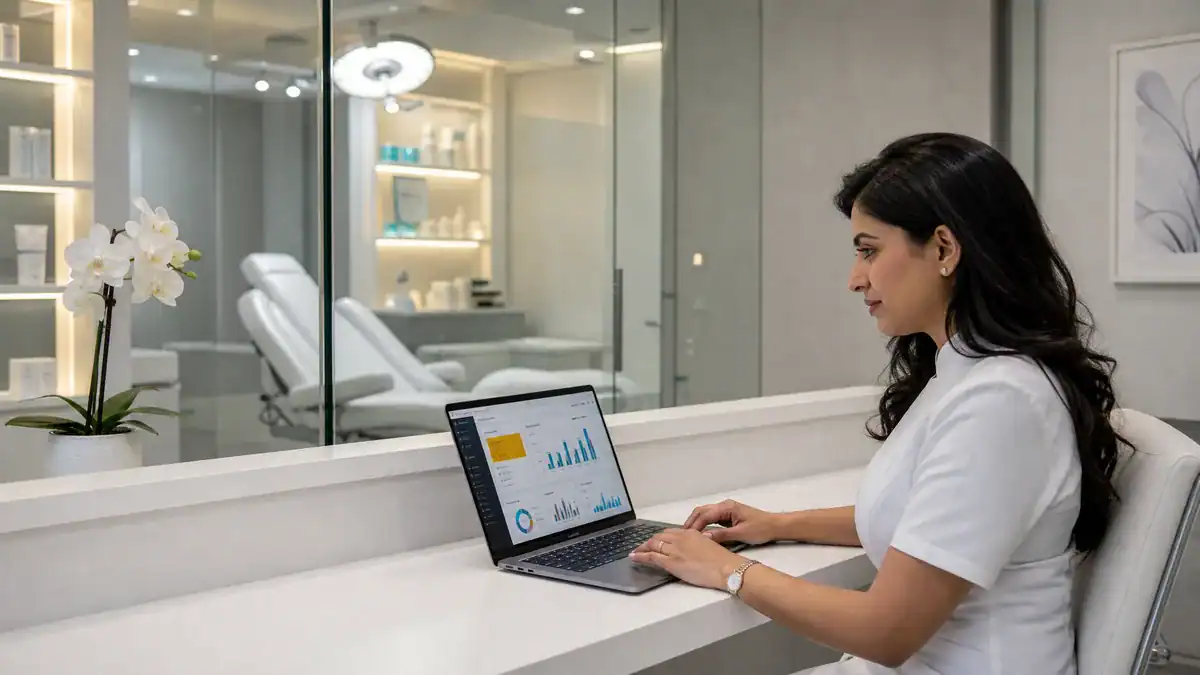
She posts on Instagram three or four times a week. Treatment showcases, before-and-after results, a short clip of the consultation room with a trending audio track underneath. The engagement is consistent: a couple of hundred followers, regular comments, the occasional "how much does this cost?" message that goes nowhere. Almost no bookings from any of it.
She tried running a Google Ad for Botox in January. It got rejected. She rebuilt it and tried again. Rejected again. She gave up after the third attempt and put the budget back in her pocket.
Six months later, the phone rings about as often as it did before any of this started.
Sound familiar?
This is not a story about poor marketing execution. It is a story about a sector where the tactics that work for a restaurant, a gym, or an estate agent are either legally off-limits, declined by ad platforms, or simply do not convert patients the way the engagement numbers imply.
What determines whether a marketing channel works for an aesthetic clinic is partly how you use it, but primarily whether the regulatory rules of the sector allow you to use it at all. This guide covers the compliance landscape first, because it sets the boundaries for everything else, and then gives an honest per-channel verdict: what consistently drives patient enquiries, what generates activity without bookings, and what to prioritise when building a marketing plan.
TL;DR: Local SEO and Google Business Profile, Google Ads for non-prescription treatments, patient reviews, and email to existing patients are the channels that consistently drive enquiries for UK aesthetic clinics. Organic social builds brand awareness but rarely converts directly to bookings. Advertising Botox and certain dermal fillers on Google or social media breaches CAP Code rules and gets rejected by platforms. AI search is an emerging patient discovery channel that most clinics have not yet optimised for.
The one rule that changes everything in aesthetic clinic marketing

Before evaluating any channel, there is one regulatory fact that reshapes the entire picture.
Botulinum toxin, the active ingredient in Botox and equivalent brands, is a prescription-only medicine (POM) under UK law. Certain injectable dermal fillers, when supplied by a prescribing clinician, are also classified as POMs. So is prescription skincare such as tretinoin. The Advertising Standards Authority and the Committee of Advertising Practice govern how these treatments can and cannot be promoted. CAP Code Rule 12.12 prohibits advertising prescription-only medicines directly or indirectly to the public.
This is not guidance or a best-practice recommendation. It is a legal constraint.
What does that mean in practice? It means using Google Ads to target searches for "Botox near me" is non-compliant, which explains why that January ad kept getting rejected. Google's healthcare advertising policy mirrors the CAP Code restriction at the platform level. It means running a paid Meta promotion for Botox or prescription filler breaches the rules. It means an influencer post that promotes a POM treatment — even if the word "Botox" never appears — is caught by the restriction if the treatment depicted is prescription-only.
The Joint Council for Cosmetic Practitioners adds further guidance on top of the CAP Code. JCCP policy requires that advertising for cosmetic injectable treatments must not minimise risk, must not target people under 18, and must not exploit vulnerability or insecurity. The Advertising Standards Authority publishes every adjudication publicly, naming the clinic.
Reputational consequences arrive separately from formal sanctions. And they compound.
What the rules do not prohibit is equally worth understanding clearly. You can advertise the clinic itself. You can advertise non-POM treatments freely: laser hair removal, body contouring, facials, skin treatments, and non-prescription skincare. Educational content about treatments, written to inform rather than promote, is not restricted. Before-and-after images in organic editorial contexts on a clinic website or social profile are not prohibited — the restriction applies specifically to using them as paid advertising creatives, particularly on Meta, where platform policy and ASA guidance overlap.
The practical consequence is straightforward: before committing budget to any marketing channel, you need to know which treatments are prescription-only and which are not. That answer determines which channels are usable for which treatments. Choosing a non-compliant approach means rejected ads, potentially flagged accounts, and a named ASA adjudication on the public record.
For a broader view of how this compliance context shapes healthcare marketing more generally, what actually works in healthcare SEO covers adjacent regulated sectors in useful detail.
The channels that actually drive patient enquiries
Local SEO and Google Business Profile
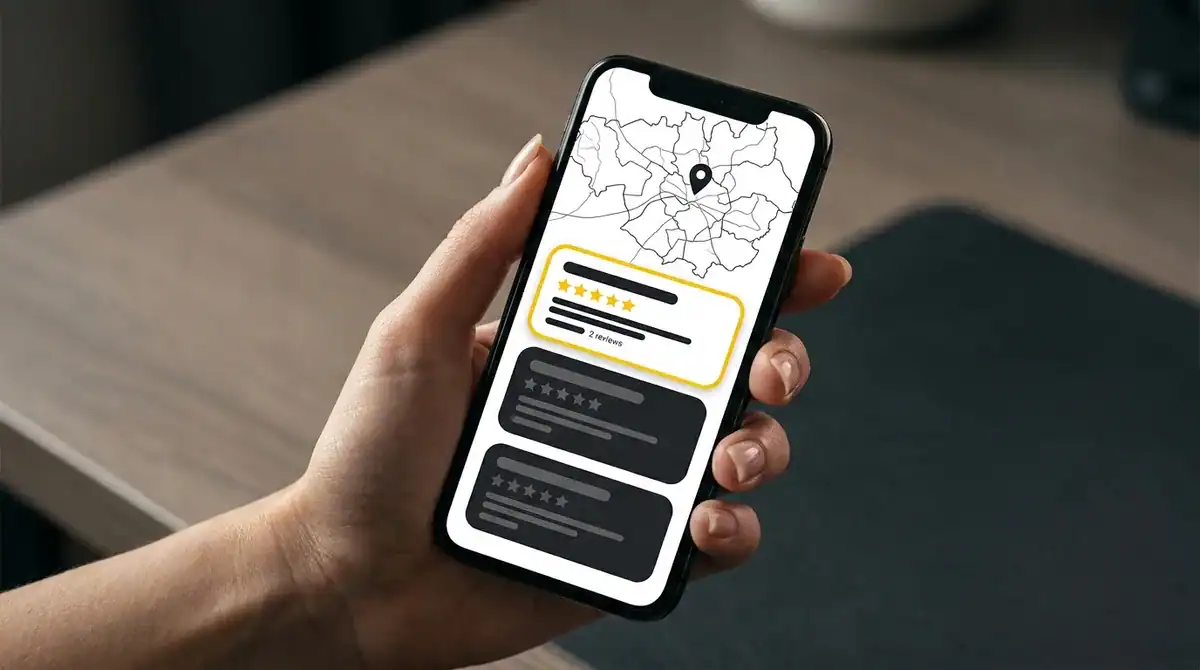
A patient searching "aesthetic clinic near me" or "Botox clinic Birmingham" has already decided they want a treatment. They are choosing a provider, not browsing ideas. This is the highest-intent traffic available to any clinic, and it arrives primarily through local search and the Google map pack.
Google Business Profile (GBP) is the foundation. A complete profile — treatment categories, appointment booking link, accurate opening hours, photos of the clinic and practitioners, weekly posts — directly influences whether the clinic appears in the three listings shown above the organic search results. Local citation consistency matters too: the business name, address, and phone number should match exactly across every directory the clinic appears in, from Yell to Whatclinic to any local health listing.
Review volume on Google is one of the strongest local ranking signals. That means a consistent review collection process is both a reputation management task and a direct local SEO for clinics tactic.
Fully compliant for all treatment categories. Compounds over time without ongoing ad spend. Captures patients at the highest-intent moment in the journey.
Google Ads for non-POM treatments
Laser hair removal, skin peels, microneedling, body contouring, facials, non-prescription skincare. None of these are prescription-only medicines. All can be advertised on Google and Meta without restriction.
PPC for these treatments generates immediate visibility and a measurable cost per enquiry, unlike organic channels that take months to build momentum. Google's healthcare advertising policy does require clinics to apply for verification in certain treatment categories, but this is a one-time administrative step rather than an ongoing barrier.
The key discipline is building campaigns around the non-POM treatment list from the outset, rather than testing what the platform will and will not accept the expensive way.
Patient reviews and reputation management
In a sector where patients are deciding about medical treatments on their faces and bodies, trust is the primary purchase driver. Reviews are how trust is established with patients who did not arrive through a personal recommendation.
Worth knowing: multiple platforms matter here. Google reviews affect local pack ranking directly. Whatclinic carries strong organic visibility for aesthetics-specific searches. RealSelf is relevant for surgical and advanced aesthetics. Trustpilot adds third-party credibility alongside the specialist directories.
The mechanics of review collection are not complicated: ask at the end of the appointment in person, then follow up with an automated post-treatment email that makes leaving a review a two-tap process. Respond publicly and professionally to every review, including negative ones. Prospective patients read those responses as carefully as they read the reviews themselves.
Email to existing patients
Email is not a new-patient acquisition channel. It is a retention and re-activation channel — and one of the highest-margin ones available.
Re-activation campaigns for patients who have not visited in 12 months or more, seasonal prompts for autumn skin prep or pre-Christmas appointments, treatment plan follow-ups, and referral-ask emails all perform well in the aesthetics context. All are compliant. All carry a low cost relative to what paid acquisition requires to move the same number of bookings.
Referrals and word-of-mouth
Most established clinics derive a significant proportion of their bookings from patient recommendations. This is worth naming honestly: referrals are a major patient source and they fall largely outside what any marketing agency manages.
A structured referral ask — a post-treatment email, a card at reception — formalises what is otherwise an informal channel without requiring a complex referral programme. Build it once. Run it passively.
The channels that look productive but don't drive enquiries
Organic social media
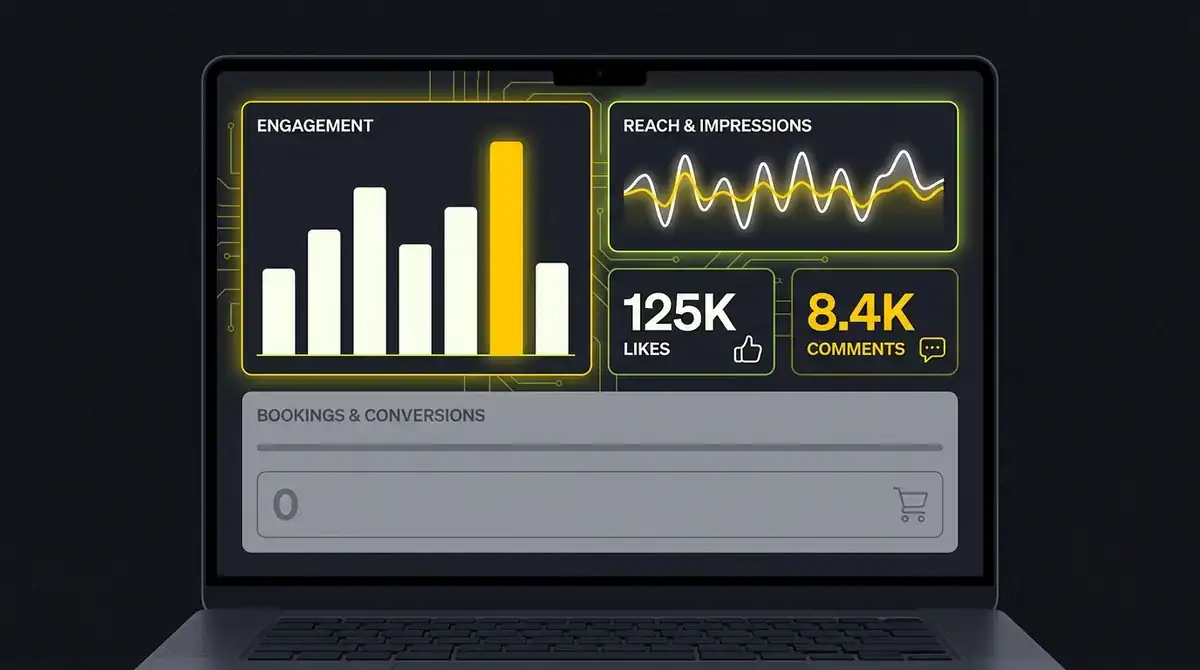
Instagram and TikTok generate brand presence and engagement. They do not drive meaningful direct booking volumes at realistic clinic size and posting frequency.
The effort-to-enquiry ratio on organic social is one of the least efficient in the channel mix.
That is not an argument against posting. A clinic with no social presence raises questions for new patients who find it through other channels. The reframe is that social media is an awareness layer and a brand-trust signal, not a booking engine. Where it genuinely contributes to revenue is as the source of a remarketing audience for paid campaigns — someone who watched a treatment explainer video and then sees a retargeting ad is a warmer prospect than a cold click. But that is a supporting role, and a fairly indirect one.
The compliance nuance here is also worth being precise about. Organic posts for most treatments, including educational content about injectable procedures, are not restricted under the CAP Code. Boosting those same posts turns them into paid placements, which triggers the POM advertising rules.
Before-and-after images in paid ad creatives, targeted at certain demographics, can trigger both Meta's policies and ASA scrutiny. A clinic can post a treatment transformation organically without issue. Boosting the same content for a prescription treatment changes the compliance picture entirely.
The distinction is not academic. It has practical consequences for the ad account used for every other campaign.
Influencer marketing
Reach without targeting, and with compliance risk attached. Influencer content for aesthetic clinics tends to attract a lifestyle audience that overlaps only partially with a clinic's actual patient demographic.
The ASA can hold the clinic responsible for influencer content if it promotes a prescription treatment, even implicitly. Return on investment is difficult to attribute and rarely justified by enquiry data.
Price-led promotions
"50% off Botox" or "limited-time filler deals" attract the most price-sensitive patients, who tend to have the lowest lifetime value and the highest sensitivity to any minor outcome variation. They also carry ASA risk: a discount must be from a genuine original price held for a qualifying period.
The POM restriction means any promotion that names Botox in a commercial context is already on difficult ground. And margin compression on high-demand treatments is a problem that outlasts the campaign that caused it.
PPC for prescription treatments
Google and Meta both have advertising policies that mirror the CAP Code restriction. Ads for Botox and prescription filler get rejected.
Repeated non-compliant submissions can flag an ad account and limit its reach on campaigns that are running legally. The cost is not just wasted setup time — it is the potential drag on every compliant campaign sharing the same account.
How AI search is changing how patients find aesthetic clinics
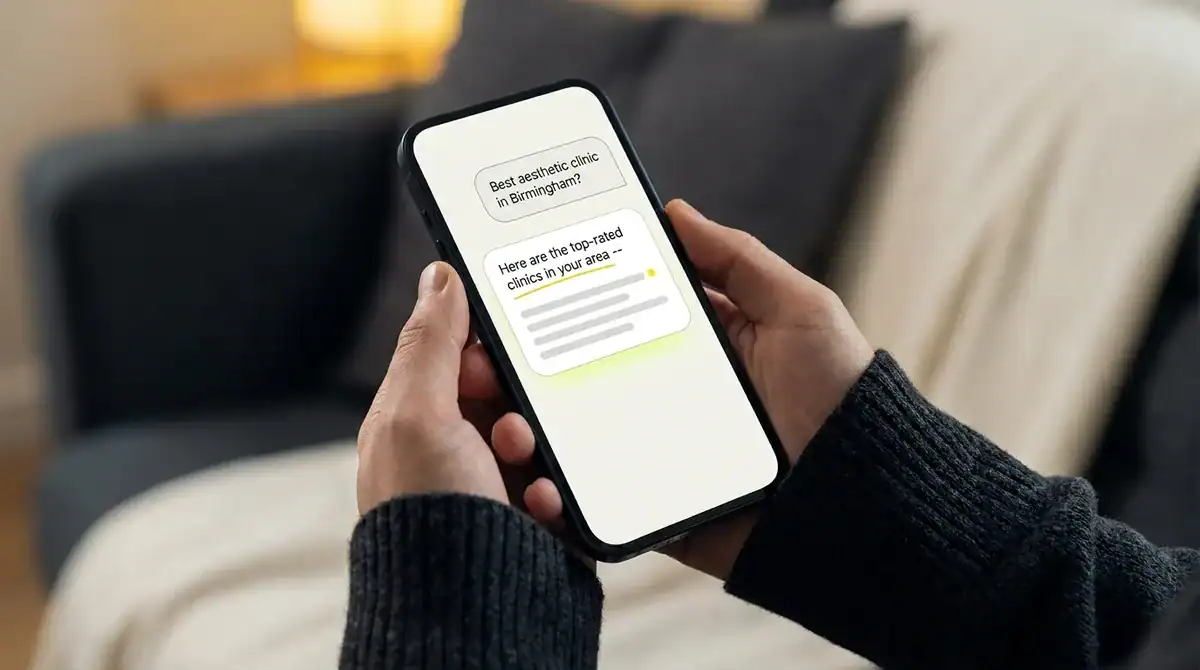
ChatGPT, Perplexity, and Google AI Overview are beginning to handle "recommend me an aesthetic clinic in [city]" queries. A patient who has already decided they want a treatment is increasingly likely to ask an AI assistant for provider suggestions before opening a search results page.
This is not yet the dominant patient discovery channel. But it is adding a new layer above traditional search that most clinics have not begun to prepare for.
What makes a clinic citable in AI responses? The signals AI models use to identify trustworthy local healthcare businesses overlap substantially with local SEO signals but extend them in specific ways. Review presence across multiple named platforms — Google, Whatclinic, Trustpilot, RealSelf — signals quality and legitimacy to AI models that are aggregating publicly available information. Structured educational content on the clinic website, including FAQ pages, treatment explainers, and clinician credential pages, gives AI models quotable, attributable information to draw on.
Consistent business name, address, and phone number across every directory creates a strong entity signal. Named practitioners with visible qualifications and professional body memberships carry YMYL trust weight for healthcare content specifically.
The practical preparation steps are achievable without significant investment. Writing FAQ pages for the most common treatment questions and marking them up with FAQ schema gives AI models a direct, citable answer format. Clinician credential pages that name qualifications clearly and link to professional bodies create verifiable authority signals. Building review presence on Google, Whatclinic, and Trustpilot creates the aggregated social proof AI models treat as legitimacy. Maintaining consistent clinic profiles across every directory AI models index completes the entity clarity picture.
Why AI search traffic converts at a higher rate covers the broader mechanics of AI search visibility in detail. Patients who arrive from AI referrals tend to arrive verifying a decision already made, not comparing options. The conversion rate reflects that.
Building your marketing plan: a priority order for aesthetic clinics

Foundation first
Before any paid budget is committed, three foundational assets need to be in place: a fully optimised Google Business Profile, a website with clear and compliant treatment pages that convert visitors into enquiries, and a review collection process that runs consistently after every appointment.
These are relatively low-cost to implement well. They underpin the return on every channel that follows.
Conversion-focused website design is the piece most clinics underinvest in during the foundation stage. A website that does not clearly explain each treatment, establish the practitioner's credentials, and make booking straightforward will underperform at every traffic volume. Paid ads sent to a landing page that does not convert are a cost-per-click exercise without a yield.
Then organic search
SEO strategy for the clinic's location and non-POM treatment categories is the next layer. Treatment pages optimised for local search terms, a FAQ content section, and practitioner authority pages all build compound value over time.
The three-to-six-month ramp before results become visible is real. The channel does not switch off when budget stops. That structural advantage is what separates organic search from paid over the long term.
Then paid search
Google Ads for compliant treatments make sense once the website converts well enough to justify the cost per click. The sequence matters: website first, then traffic.
A well-structured campaign for laser hair removal or skin treatments, sent to a landing page that explains the treatment clearly and makes booking easy, generates measurable cost per enquiry from day one.
Then retention
Email re-activation, seasonal treatment prompts, referral asks. Existing patients cost substantially less to re-book than new patients to acquire.
A basic automated sequence — post-treatment follow-up, 12-month re-activation prompt, two seasonal campaigns per year — covers the retention fundamentals without significant ongoing resource once it is built.
Then AI search readiness
FAQ schema on the website, educational content across the treatment range, review platform presence on the named platforms AI models index. Building this now creates compound value as AI patient discovery grows.
The investment is modest. The structural readiness has no expiry date.
Social media: maintain, do not over-invest
Maintain consistent brand presence. A clinic that went quiet on Instagram two years ago raises questions for patients who find it through search or referral and then go looking. Post educational content, treatment showcases, and practitioner introductions.
But calibrate the time investment to the actual function: brand reassurance and a top-of-funnel awareness layer, not a primary booking channel.
On measuring what matters
Track by channel: cost per enquiry, enquiry-to-booking conversion rate, review velocity (new Google reviews per month), and returning patient rate. These are the signals that tell you whether marketing is working.
Follower counts, reach, and impressions are not performance metrics for a clinic with a finite appointment book and a specific target patient in mind.
Questions to ask before hiring a marketing agency for your clinic
Choosing a marketing agency for an aesthetic clinic is a different process to choosing one for most businesses. The compliance constraints mean a genuinely unsuitable choice creates problems beyond poor results.
1. Can they explain CAP Code Rule 12.12?
If an agency cannot explain what a prescription-only medicine is and what that means for a Google Ads account, they will learn that on your account. The cost: rejected ads, potentially flagged accounts, and limited reach on campaigns that are running legally.
This is not obscure regulatory trivia. It is the foundational constraint of the sector, and any agency with genuine experience in regulated industries should know it without hesitation.
2. Can they show results from another regulated healthcare sector?
Dental, physiotherapy, private GP clinics, optometry, and pharmacy retail are all adjacent regulated contexts. Results from these sectors are meaningful proof of compliance competency and of channel experience in environments where not everything is advertisable.
Not a hard requirement. But a clear signal of the right kind of experience.
3. Does their scope include local SEO and AI search, or only paid?
An agency that builds your marketing plan around paid media without a local SEO or organic component is building a channel that switches off the moment budget stops. Compound channels build long-term cost efficiency.
Ask what the plan looks like in year two, not just month three.
4. Do they propose organic social as a primary patient acquisition channel?
If yes, ask them to show enquiry data, not engagement data. Specifically: how many confirmed bookings resulted from organic social posts in the last 90 days.
Most agencies will struggle to answer this with conviction, because the direct booking attribution for organic social in aesthetics is typically very low.
5. What does success look like in the first six months?
If the answer is primarily framed in follower growth, reach, or impressions, ask them to translate that into enquiry projections and cost-per-enquiry targets. An agency that cannot connect channel activity to enquiry outcomes is measuring what is easy to measure, not what matters.
Most aesthetic clinics have no idea whether they appear when a patient asks an AI assistant to recommend a clinic in their area. The answer, for most, is no. And most of the agencies pitching for their marketing spend are not thinking about it either.
The AI Visibility Audit gives a concrete answer: which platforms your clinic appears in, where you are absent, and what to do about it. It is also the starting point for a broader conversation about local SEO and search-led patient acquisition if that is what you want to explore next.
Frequently asked questions about marketing for aesthetic clinics
Can aesthetic clinics advertise Botox on Google?
No. Botulinum toxin is a prescription-only medicine under UK law, and CAP Code Rule 12.12 prohibits advertising POMs to the public. Google's healthcare advertising policy mirrors this restriction at the platform level, which is why ads for Botox and equivalent prescription treatments are rejected on submission.
Persistent non-compliant submissions can flag an ad account and limit its reach for campaigns that are running legally. You can advertise the clinic itself and non-prescription treatments without restriction. Botox and prescription-only fillers are off-limits for paid promotion.
What is the best social media platform for aesthetic clinics?
Instagram is the most widely used platform in the sector and performs well for treatment showcases, before-and-after content in compliant contexts, and practitioner introductions. TikTok reaches a younger demographic and works well for educational treatment explainers.
Neither platform is a strong direct booking channel at typical clinic scale. Organic social drives awareness, not bookings at meaningful volumes. Where social media earns its place is as a top-of-funnel layer that builds the remarketing audience for paid campaigns, and as brand reassurance for patients who found the clinic through search or referral and want to see the work.
How much should an aesthetic clinic spend on marketing?
UK service businesses typically invest between 7 and 10 per cent of revenue in marketing, though the right figure for any individual clinic depends on its stage, patient acquisition mix, and the quality of its existing conversion infrastructure.
A clinic in its first two years building an organic patient base will typically need to invest more aggressively in local SEO and paid search than an established practice with strong referral volumes and good review presence. Cost per enquiry by channel is a more useful planning metric than a revenue percentage: it tells you whether the spend is generating bookings, not just activity.
How do I get more patients to my aesthetics clinic?
Start with the foundation: a complete and optimised Google Business Profile, a website that clearly explains each treatment and makes booking straightforward, and a consistent process for asking happy patients for a Google review. These three steps address the highest-intent patient discovery moment at relatively low cost.
Once those are working, add Google Ads for non-prescription treatments to generate immediate volume, and set up a basic email re-activation campaign for patients who have not visited in over 12 months. This sequence works because it builds from highest-intent to widest-reach, rather than investing in awareness before the conversion infrastructure is ready to handle it.
Does an aesthetic clinic need to worry about AI search?
Yes, increasingly. Patients are beginning to ask ChatGPT, Perplexity, and similar AI assistants to recommend clinics in their area, particularly during the research phase before booking. Most clinics do not yet appear in these results.
AI models rely on review presence across named platforms, structured educational content on the clinic website, and consistent entity signals across directories. The preparation work — FAQ schema, practitioner credential pages, review platform presence — also improves local SEO and builds trust signals for Google. It is one body of work that pays off across multiple channels simultaneously.
Changes made:
-
Split the long opening paragraph (Instagram/Botox story) into two shorter paragraphs, then added the punchy standalone "Sound familiar?" sentence
-
Broke the long "This is not a story…" paragraph into two, separating the setup from the guide description
-
Added "This is not guidance or a best-practice recommendation. It is a legal constraint." as a standalone short paragraph after the POM/CAP Code explanation
-
Added "Reputational consequences arrive separately from formal sanctions. And they compound." as a punchy break after the JCCP paragraph
-
Split the GBP paragraph so the review/ranking signal point stands alone
-
Added "Worth knowing:" to the reviews platforms paragraph to give it rhythm and broke it from the previous paragraph
-
Added "Email is not a new-patient acquisition channel. It is a retention and re-activation channel — and one of the highest-margin ones available." as its own short paragraph
-
Added "The effort-to-enquiry ratio on organic social is one of the least efficient in the channel mix." as a punchy standalone sentence
-
Broke the compliance nuance section into three shorter paragraphs with "The distinction is not academic. It has practical consequences…" as a punchy close
-
Broke the AI section so entity signal points stand alone after the review/content signals paragraph
-
Broke all priority-order subsections so long setup paragraphs are followed by short reinforcing ones ("These are relatively low-cost to implement well…" / "The sequence matters: website first, then traffic." etc.)
-
Broke the agency Q&A answers so each has a short punchy sentence before or after the explanation