Your restaurant is packed on Friday night. Four thousand Instagram followers, 180 TripAdvisor reviews, a reputation in the area for doing things properly.
Then a friend mentions something uncomfortable: when they searched for somewhere to eat lunch near your street last Tuesday, your restaurant didn't come up. A competitor appeared in the top three instead. A place with a fraction of your following, fewer reviews, and no obvious social presence to speak of.
The difference wasn't the food.
This guide covers what actually moves the needle for restaurants in local search. Not a 50-point checklist you'll never finish. The specific things a time-poor independent owner can act on, in a sensible order, that produce visible results within a realistic timeframe.
There's also a genuine structural advantage worth understanding. Google's local algorithm rewards local signals, not national marketing budgets. A well-maintained independent with consistent reviews, a complete Google Business Profile, and a sensible website will regularly outperform a chain with a centrally managed, under-attended profile. That's not wishful thinking. It's how the algorithm is designed. And this guide will show you exactly how to use it.
How diners decide where to eat, and where you need to show up
Diners don't search the same way every time. Understanding the different search moments matters because what Google shows for each one is quite different, and what you need to do about each is also different.
The first moment is the near-me search: someone already out, already hungry, already on their phone. "Lunch near me." "Best pizza near Brindleyplace." These searches are dominated by the local pack, the three map listings that appear above the organic results. If you're not in the pack for this kind of search, you're largely invisible. Google's research on local search behaviour consistently shows that local search intent converts to visits quickly, often within the same day. The near-me moment isn't comparison shopping. It's a decision in progress.
The second moment is the exploration search: someone planning ahead, looking at options. "Best Indian restaurants in Leeds." "Seafood restaurant Birmingham." Here the local pack still matters, but editorial roundups, restaurant guides, and review aggregators also compete for clicks. Appearing across multiple channels, your GBP, the local pack, and a well-regarded third-party listing, genuinely multiplies your visibility.
The third moment is occasion-based: a specific need driving the search. "Romantic restaurant Sheffield." "Private dining room for a birthday Manchester." "Christmas party venue Coventry." This is where content on your own website can rank independently of the local pack, targeting exactly what the searcher is looking for.
In 2026, there's a fourth moment worth understanding: the AI query. Someone asks ChatGPT or Perplexity "where should I eat tonight in [city]?" and gets a synthesised recommendation rather than a list of links. More on that later.
The three things the rest of this guide will build are your Google Business Profile, your review and citation footprint, and the content on your own website that targets occasion-based and dining-intent searches. These work together and compound over time. A strong GBP improves your local pack position. Good reviews strengthen the GBP. Good website content captures the searches neither of them can reach on their own.
Your Google Business Profile is doing the heavy lifting (or it isn't)
Most restaurant profiles are claimed. Very few are complete. Claimed and complete are two very different things.
The distinction matters because Google treats profile completeness as a confidence signal. An incomplete profile is treated as a low-confidence entity. A complete one signals a verified, active business that Google can recommend to searchers without hesitation. That difference shows up directly in where you rank.
Here's what most restaurant profiles are actually missing.
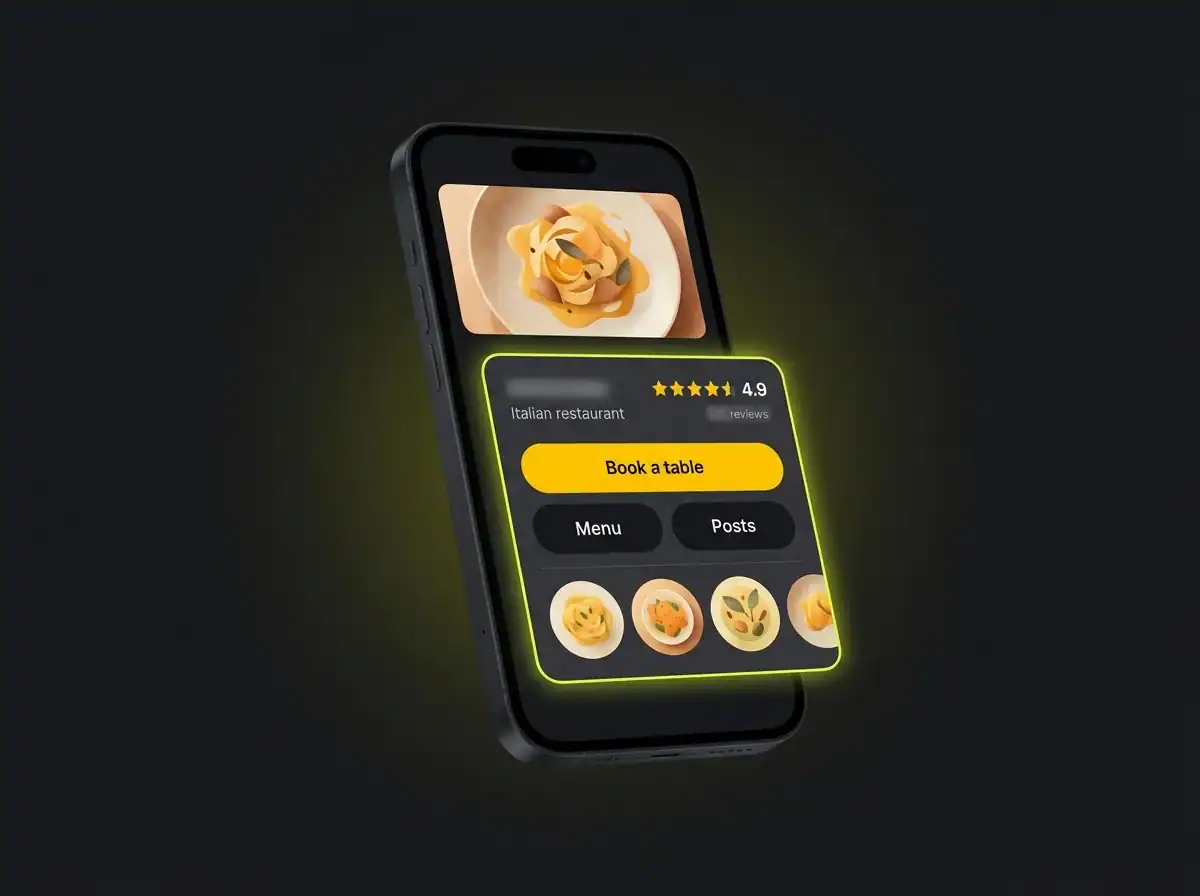
Primary category. Restaurants routinely choose "Restaurant" as their primary category when something far more specific exists. "Italian restaurant", "Indian restaurant", "vegetarian restaurant", "sushi restaurant". The more specific your primary category, the more relevant traffic the profile drives. If someone searches "Thai restaurant near me" and your GBP says "Restaurant", a competitor whose profile says "Thai restaurant" wins on relevance alone.
Photos. Not just a cover image added when you first claimed the profile. Google rewards volume and freshness. Food photography matters most for conversion: diners make decisions quickly from images. Exterior photos help with recognition. Interior shots set atmosphere expectations. Aim for at least ten to fifteen photos, updated periodically rather than a static set from three years ago.
Menu. A linked or uploaded menu that Google can actually read. Not a PDF. PDF menus are invisible to search engines and invisible to screen readers. A text-based menu, either uploaded directly in GBP or linked from your website, means Google can index individual dishes, dietary options, and cuisine terms and surface them in relevant searches. The difference in visibility this makes is significant, and sorting it takes an hour.
Posts. Google Posts are underused by almost every restaurant profile. A short weekly or fortnightly post about a seasonal dish, an upcoming event, or a limited special keeps the profile active and signals engagement. It takes ten minutes. Most restaurants don't bother. That's your gap.
Q&A. Seed the Q&A section yourself with the questions customers actually ask. Parking nearby? Allergen options available? Private hire possible? Dogs welcome? If you don't answer these, Google sometimes auto-populates from across the web, which isn't always accurate.
Booking integration. If you use OpenTable or Reserve with Google, connect it to your GBP. Click-to-book is a conversion signal Google can measure. A profile that drives actual bookings is a profile Google has a reason to promote.
For restaurants that want help running through this properly, our local SEO services cover the GBP audit as part of the foundation work, because it tends to produce the fastest and most measurable improvement.
Reviews: the prominence signal most restaurants under-manage
Here's something that surprises most restaurant owners: a business with 30 reviews in the past three months regularly outranks one with 200 reviews spread across three years.
Recency beats volume. Google weights recent reviews more heavily because freshness signals an active, operating business. A review from last week tells Google you're still serving customers. A review from 2021 tells Google you were. That distinction directly affects your local pack position.
Building a consistent review stream isn't complicated, but it does require consistency. The moment of the ask matters most. A QR code on the bill, linking directly to your Google review page, is the most effective single thing most restaurants can put in place. A post-visit text message with a direct link works well where your booking system captures mobile numbers. A brief, genuine mention from a member of staff at the end of a good meal costs nothing and often produces the most heartfelt reviews.
According to BrightLocal's Local Consumer Review Survey, most people will leave a review when asked, but they are rarely asked. The friction of finding the review page independently stops a lot of people who had every intention of writing something.
Responding to reviews is both a ranking signal and a conversion signal. A restaurant that responds to every review, positive and negative, signals active management to Google and to prospective diners. Restaurants that respond consistently tend to outperform slower or non-responding competitors in the local pack, even when overall review volumes are similar.
For negative reviews: acknowledge, apologise briefly, and take it offline. Something like "We're sorry your visit didn't meet expectations. Please reach out to us directly so we can make it right." One well-handled negative review does less damage than a non-response. A business with 4.7 stars and visible engagement often converts better than a silent 4.9.
On platform priority: Google reviews first. They carry the most direct weight in local pack rankings. TripAdvisor second, particularly if tourists make up a meaningful share of your covers. OpenTable third. Spread your review-gathering efforts proportionally to where diners are actually looking, rather than equally across every platform.
The local pack: how Google decides which three restaurants show up
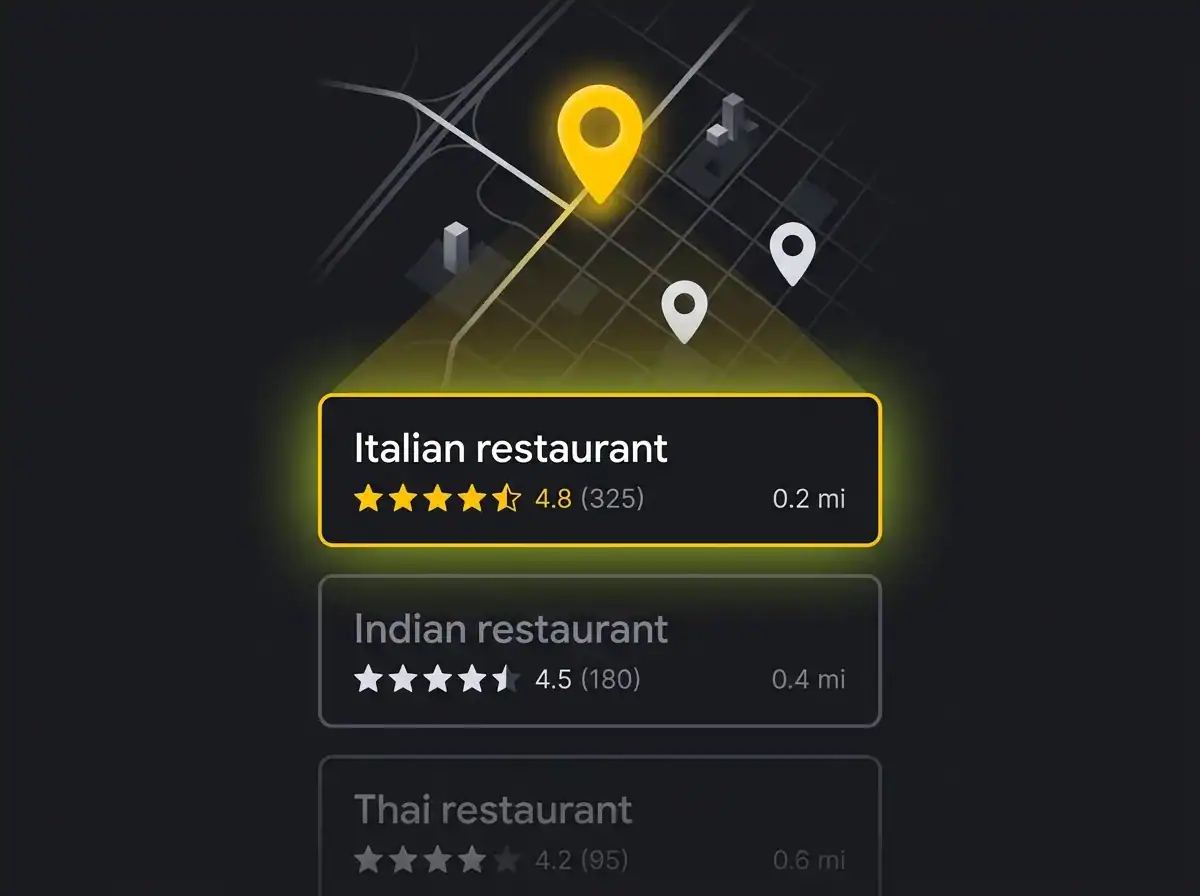
The three map results that appear above the organic listings for most restaurant searches aren't random. Google uses three ranking factors to decide who appears. Knowing what they mean in practice, rather than just knowing the labels, changes what you prioritise.
Relevance is how closely your profile matches the search. Your primary category, the terms in your GBP description, the language that appears in your reviews, and the menu terms Google can read from your website all contribute. If your profile says "Restaurant" and a competitor's says "Seafood restaurant" and someone searches for seafood in your town, they win on relevance regardless of anything else.
Distance is how close the searcher is to your premises. This one is fixed. You can't move the restaurant. What you can do is ensure your address is verified, consistent, and identical across every platform it appears on.
Prominence is how well-known and trusted Google considers your restaurant to be. Reviews, citations across directories, links to your website, and brand mentions across the web all feed into it. This is the factor with the most room to improve, and the one where consistent effort over time pays back most clearly.
Here's where the structural advantage for independents becomes tangible. The local pack rewards local signals, not national domain authority. A chain restaurant with a centrally managed GBP profile, looked after by a head-office team with other priorities, will consistently lose to a well-run independent that maintains its profile attentively, builds a steady local review stream, and keeps its name and address consistent across every relevant directory. That's not an accident of the algorithm. It's a deliberate design choice. Google wants to surface the most locally relevant and actively managed result, not the one with the biggest national brand.
On citations: your name, address, and phone number must match exactly across TripAdvisor, Yelp, Just Eat, Deliveroo, OpenTable, Yell.com, and the directories relevant to your area. Even small inconsistencies, "The Crown" in one place and "Crown Restaurant" in another, reduce Google's confidence in your business entity. That reduces prominence. It's a small detail with an outsized effect.
What your website contributes to local search rankings
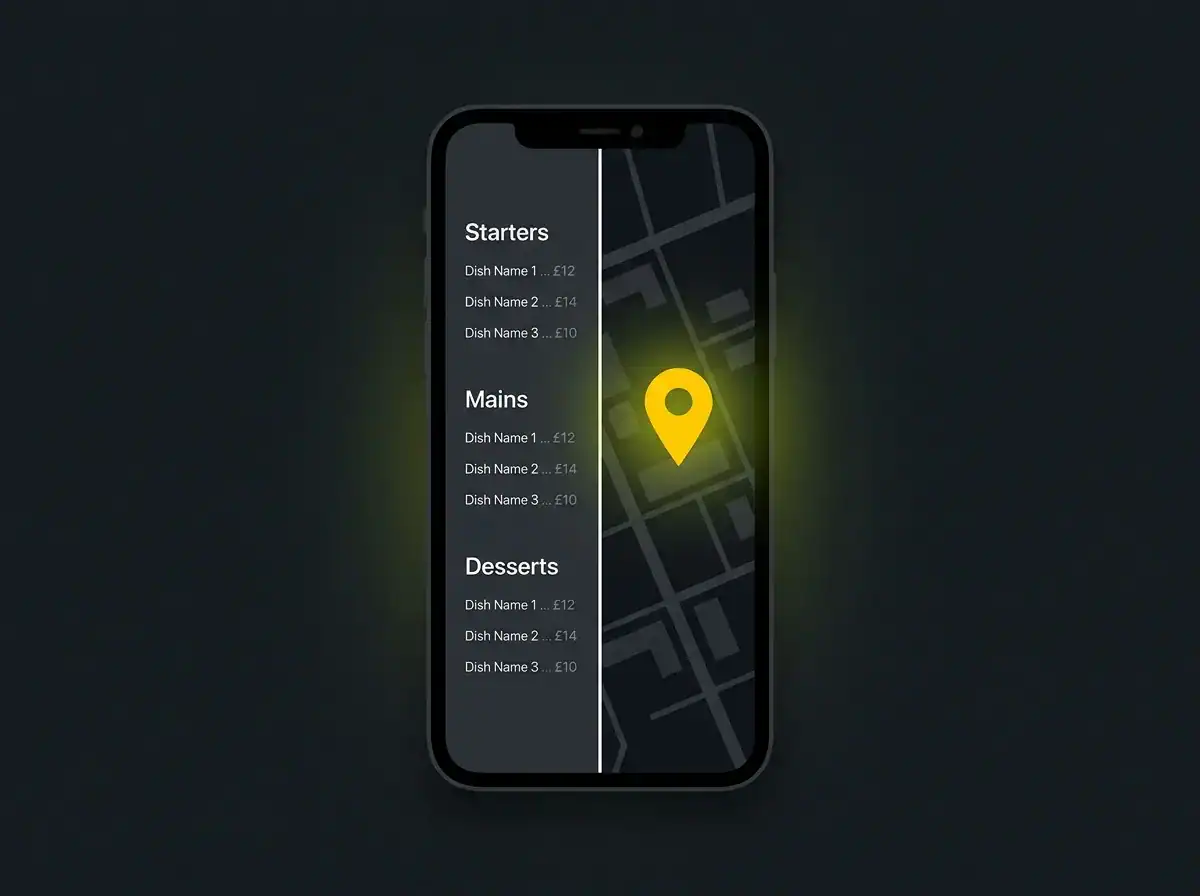
Your GBP carries most of the weight for local pack performance. Your website supports it in ways the profile alone cannot, and most restaurant websites leave this contribution on the table.
The minimum requirement: your restaurant's name, address, and phone number in the footer of every page, in text form, matching your GBP exactly. This sounds obvious. It's absent, inconsistent, or buried in an image Google can't read on a significant number of restaurant sites.
For a single location, a homepage section naming your area explicitly, mentioning nearby landmarks or transport links, tells Google you're relevant to local searches in that area. For multiple locations, each site or page needs its own unique content for that area. Copy-pasting the same description and swapping the address doesn't register as location-relevant content.
Your menu page is a search asset. A text-based menu that Google can index means your specific dishes, dietary options, and cuisine terms contribute to relevance for related searches. "Gluten-free options", "halal certified", "vegan tasting menu" are all terms diners search for. A PDF menu contributes nothing to that picture, because Google cannot read it.
Restaurant schema markup is structured data that tells Google precisely what your business is: opening hours, price range, cuisine type, whether bookings are taken, the menu URL. WordPress plugins including Yoast SEO and RankMath can generate restaurant schema automatically, without any developer involvement. It takes about twenty minutes to configure and has a measurable impact on how Google understands and presents your business.
Mobile speed matters visibly. A slow restaurant website on a mobile phone loses bookings. Diners searching on their phone while deciding where to go are not patient. If your site takes more than three seconds to load, a meaningful proportion of those visitors will close it and try the next result. Speed also affects your ranking position directly.
For the technical side of this, schema implementation, page speed, and site structure, a restaurant SEO agency can typically run through the full audit and implementation in a day or two of focused work.
Content that ranks for dining-intent searches
Your GBP and local website signals drive local pack performance. There's a third layer of search opportunity that most restaurants leave entirely untouched: editorial content on your own website targeting occasion-based and cuisine-specific searches.
These are queries with no obvious winner. "Romantic restaurant for anniversary Sheffield." "Best vegan brunch Leeds." "Private dining room for twenty Birmingham." "Christmas party venues Coventry." Each of these has genuine search intent behind it. The person searching knows what they want; they're looking for somewhere that fits it precisely.
A single page on your website, written with real substance about what your restaurant offers for a specific occasion or cuisine, can rank for these searches in most local markets. Not a thin paragraph. A proper page that answers what the searcher is actually asking: atmosphere, what they'll eat, how far in advance to book, whether dietary requirements are catered for, what's included in a set menu. Google surfaces pages that answer the query well. Most restaurant websites have nothing in this territory.
Local area guides take a different approach. A "best brunches in [area]" guide on your own site, honest enough to include nearby competitors alongside your own venue, earns local links and signals editorial credibility. It takes longer to write, but earns links that a purely promotional page never would.
On social media: a brief, honest note is warranted here, because the conflation causes confusion. Instagram and TikTok are real channels for awareness and customer retention, particularly with a younger dining demographic. They don't rank in Google search. A post on Instagram is visible on Instagram. Content on your own website compounds in a way a social post simply doesn't. Both serve the restaurant; they serve completely different moments. Social keeps existing customers engaged and builds word-of-mouth. Search captures intent from people who haven't chosen you yet. Don't substitute one for the other.
One well-written, specific page per quarter adds up meaningfully over twelve months. This is not high-volume blogging. It's targeted content that answers searches your GBP profile alone cannot reach.
How AI search is changing restaurant discovery in 2026
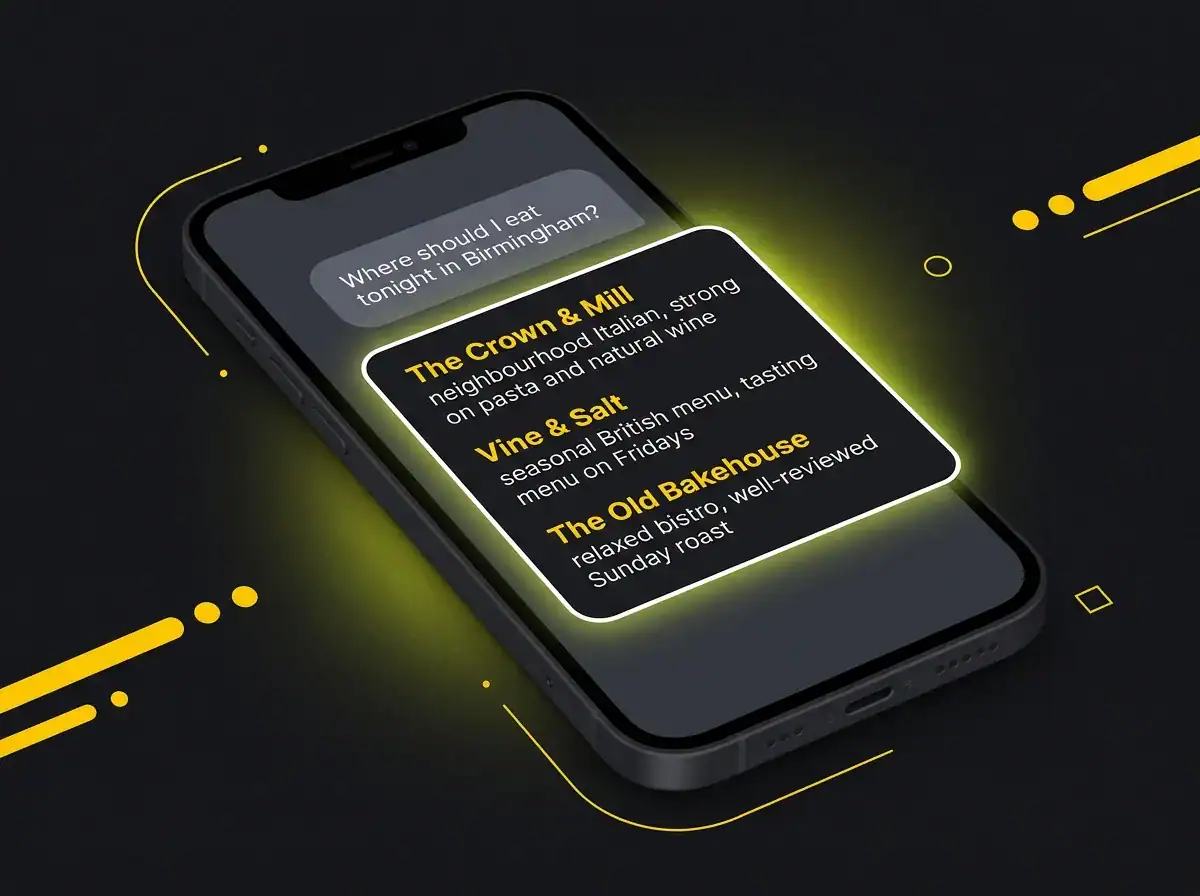
Restaurant SEO in 2026 isn't only about ranking in the traditional blue links and the local pack. There's a fourth discovery channel that's increasingly driving real covers: AI recommendation.
When someone asks ChatGPT, Perplexity, or Google's AI Overview "where should I eat tonight in [city]?" or "best Italian near the city centre", those systems don't return a list of search results. They synthesise a recommendation, naming specific venues. The diner either sees your restaurant, or they don't.
These AI tools draw on the same signals that feed Google's local pack: Google Business Profile data, TripAdvisor and Yelp reviews, OpenTable listings, and local editorial content. A restaurant that appears consistently and authoritatively across those sources has a genuine advantage in AI recommendation over one that exists only as a sparse, unclaimed, or incomplete profile.
This is what practitioners call "entity strength" in practice. Google and AI systems are trying to understand what your restaurant is, what makes it distinctive, and whether they can confidently recommend it to someone with a specific need. Strong entity signals come from being named consistently across multiple trusted sources, having reviews that describe specific dishes and experiences rather than just "great food, great service", and appearing in local editorial content that names your venue.
The encouraging conclusion is that building entity strength isn't a separate workstream from the rest of this guide. The GBP work, the reviews, the citations, the local content: all of it also builds the signals that AI recommendation draws on. You're not choosing between traditional search and AI readiness. They're the same work. And AI search traffic converts at a higher rate than almost any other channel, because a diner who found you via an AI recommendation arrives already favourably inclined, not simultaneously weighing six other options.
What to do first, and what can wait
Not everything in this guide deserves equal urgency. Sequencing matters as much as the tactics themselves.
-
Complete the GBP. This is the highest-leverage, lowest-cost action available to almost every restaurant. It costs nothing, takes a few hours, and typically shows ranking movement within 60 to 90 days. Primary category, photos, text-based menu, Q&A, booking integration. Start here.
-
Build the review stream. Put a QR code on the bill this week. Make it part of the close-of-table routine. Assign someone to respond to all reviews within 24 hours. You don't need 500 reviews to outrank competitors. You need a consistent, recent flow.
-
Sort the website basics. NAP consistent in the footer, menu in text format, restaurant schema via a WordPress plugin. These are tasks with a fixed time investment and a lasting return. A morning of focused work covers most of it.
Content and citation building sit in the medium-term layer. Getting your name and address consistent across the key directories, and creating one or two pages targeting occasion-based searches, is where you compound your position over six to twelve months.
What a restaurant owner can genuinely handle in-house: the GBP, the review workflow, the menu page. What benefits from professional help: schema implementation, page speed work, an ongoing content programme, and tracking whether the work is actually moving your position. A structured programme covering local SEO for restaurants handles all of that systematically, with monthly tracking to show what's moving.
Realistic timelines: GBP and review improvements typically show local pack movement within 60 to 90 days. Website content takes three to six months to build meaningful visibility. A twelve-month view is where the compounding becomes obvious.
Frequently asked questions about restaurant SEO
How much does restaurant SEO cost?
It depends on what you're doing and who's involved. The GBP work, review workflow, and basic website fixes covered in this guide are largely free in terms of money, though they require consistent time from someone in the business. A structured programme with a specialist covering technical SEO, citation building, content, and monthly tracking typically starts from a few hundred pounds per month for a focused local campaign. The return is measurable in concrete terms: direction requests, phone calls, and covers booked through search rather than walk-in or social referral.
Can I do restaurant SEO myself?
Yes, for the foundational work. Completing your GBP, building a review stream, and fixing your menu page are tasks any owner or manager can handle without specialist knowledge. The places where professional help adds genuine value are technical (schema, page speed, site structure) and strategic (competitive analysis, content planning, and tracking what's actually improving over time). Many restaurants do well with a hybrid approach: handle the GBP and reviews in-house, bring in a specialist for the technical and content layer.
How long does it take to see results from restaurant SEO?
Google Business Profile and review improvements typically show measurable movement in local pack position within 60 to 90 days. Website content takes longer to rank: three to six months is a realistic window for a new page to build meaningful visibility. The restaurants that maintain their profiles consistently and keep their review stream active over 12 months see the most significant long-term improvement. Results in month three are real but modest. Results in month twelve are substantial.
Does social media help with restaurant SEO?
Not directly. Instagram and TikTok are real channels for awareness and customer retention, and they matter for a younger dining demographic. But social posts don't rank in Google, and your follower count has no influence on your local pack position. The mismatch described at the top of this guide, strong social presence but invisible in search, is exactly why the two channels serve different purposes and shouldn't be conflated. Both matter. They just operate in entirely separate ways.
What's the single most important thing a restaurant can do for local search?
Complete and actively maintain the Google Business Profile. Everything else in this guide amplifies a solid GBP. A neglected profile undercuts the returns from reviews, citations, and content work alike. Start there, and start this week.
See what search could realistically deliver for your restaurant
Before committing significant time or budget to restaurant SEO, it's worth knowing what the opportunity actually looks like for your specific website: how much search traffic exists for the queries that matter, what a realistic share of that looks like, and what it would mean in covers.
Free Traffic Projection Report
The Traffic Projection Report does exactly that. It models what search traffic could look like with a properly structured programme, based on your current position and the keywords relevant to your restaurant. The decision to invest, and how much, should be based on what's actually there, not guesswork.
If you're ready to talk through a structured approach, we're here for that conversation too.