
You've had three agency calls this month. Three decks. Three promises of growth. And not one of them could tell you which of your category pages is losing traffic, or why.
That's not a research question. Any agency worth hiring should be able to glance at your site in Google Search Console and give you a specific observation before they've even quoted you. The fact that none of them could is information.
This guide is a buyer's evaluation, not a pitch. It covers the questions to ask in the first call, how to read a proposal, what red flags actually sound like, and what good measurement looks like at month one versus month six. At Creative Tweed, we offer ecommerce-ready SEO services and we're happy to be evaluated against the same criteria this article sets out. That confidence is the point.
The UK ecommerce market has taken a rising share of total retail spend year on year, as ONS retail sales data consistently shows. Organic search remains one of the best-value customer acquisition channels for online stores. Getting the agency decision right, then, matters more than most businesses realise.
What "ecommerce SEO agency" actually means (and why most generalists fail at it)
An ecommerce SEO agency is one that treats your category pages, product pages, and on-site search as the primary commercial surface, and optimises them as a system rather than as a content blog with shopping bolted on.
That distinction sounds obvious. It isn't.
Generalist SEO agencies are usually built around three activities: technical fixes, blog content, and backlinks. All three matter for an ecommerce store, but they are supporting work. The main event is the category page architecture, the product listing page structure, and the merchandising signals that tell search engines which products are popular, well-reviewed, and available to buy today.
Three things separate genuine ecommerce SEO from generalist work:
-
Scale. A mid-sized online store can have ten thousand product URLs. Managing crawl budget, handling duplicate content from faceted navigation, and deciding which pages to index and which to exclude requires a different approach entirely from managing a 200-page professional services site. Running a Screaming Frog crawl on a large catalogue is a routine first step for a specialist. For many generalists, it's an afterthought.
-
Commercial structure. Category pages and product listing pages generate revenue. An agency that optimises these correctly can shift rankings in three months in ways that two years of blog posts cannot match.
-
Merchandising signals. Stock availability, pricing, reviews, and structured product data all feed both rankings and conversion. An agency that understands only the ranking side and ignores how those signals affect what a visitor does when they arrive is solving half the problem.
Platform fluency matters too. An agency working on a Shopify store faces different technical constraints from one working on WooCommerce, Magento, or BigCommerce. Ask which platforms they have live, active clients on. Not which ones they've "worked with."
Schema markup should be table stakes. Product, Offer, Review, and BreadcrumbList schema are the minimum for any ecommerce site. Google's own guidance on product structured data is explicit about what needs to be marked up and why. If an agency talks about "implementing schema" without specifying which types and for which pages, that's a tell.
The questions to ask in the first call

The first call with any agency is not a briefing session. It's an evaluation. Here are six questions that separate agencies who genuinely work on ecommerce from those who pitch it.
"Which of our category pages do you think is losing traffic, and why?"
Good answer: a specific observation. "Your /women/dresses/ category has no meta description, the H1 matches the page title word for word, and you're not pulling review count data through to the search snippet." A basic look at your site in Ahrefs or Google Search Console takes ten minutes. Bad answer: "We'd need to do a full audit first." If they haven't looked before the call, they didn't prepare.
"Walk me through the last ecommerce site you took from X to Y. What did you actually change?"
Good answer: a specific sequence. Which pages they prioritised, what technical fixes they made first, which content changes shifted rankings, and a real timeline with real numbers. Bad answer: "We ran a comprehensive SEO programme covering all aspects of the site." That sentence says nothing.
"How do you handle product URL structure changes without losing equity?"
Good answer: they understand 301 redirects, canonical tags, and the risk of changing URL patterns at scale. They can tell you which changes they would and wouldn't recommend without a full migration project. Bad answer: "We'd handle that as part of the technical audit." Every complex question pushed to the audit stage means they don't know the answer yet.
"What's your view on AI Overview and ChatGPT for product discovery?"
Good answer: they have a position. Whether that's "we're building structured product data to feed AI Overview for clients" or "we've started AI visibility auditing as standard" doesn't matter as much as having an opinion. Bad answer: "That's still pretty early stage, we're watching it." It's not early stage. It's current.
"How do you measure success in month one, month three, and month six?"
Good answer: three genuinely different sets of metrics, matched to what's realistic at each stage. Month one is baselines. Month six is revenue. Bad answer: a single GA4 dashboard showing keyword rankings.
"What does a sensible pilot look like?"
Good answer: a defined scope, a fixed duration (60 to 90 days), agreed outputs, and a clear decision point. Bad answer: "We prefer to work on a 12-month contract so we can show results."
Remember that last answer. It comes up again below.
How to read an ecommerce SEO proposal
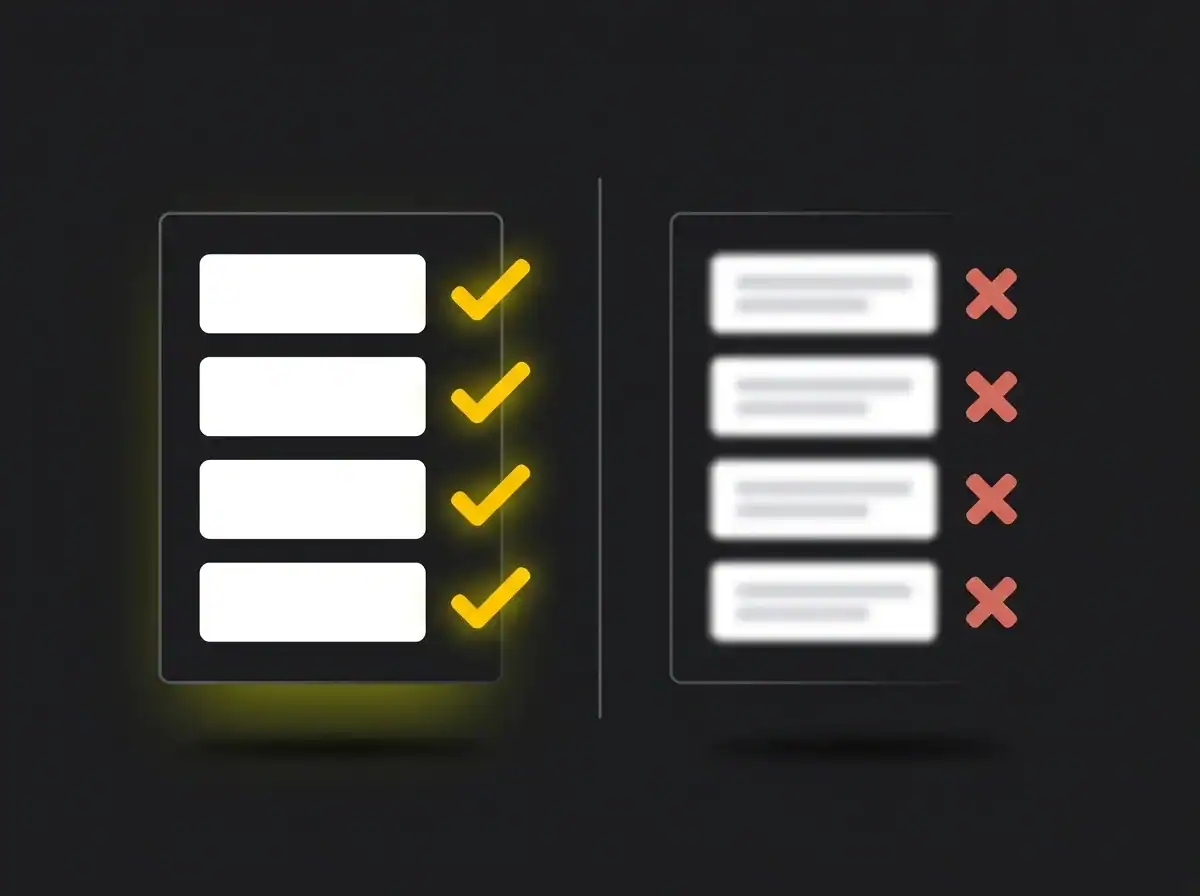
Most agency proposals are built to impress, not to inform. Here's what should be in a proposal from an ecommerce SEO specialist, and what is noise.
A solid proposal includes:
-
A technical baseline assessment specific to your site, not a generic list of "technical SEO factors we'll review."
-
A category and product page audit identifying which pages are underperforming and the specific reasons why.
-
A content gap and search demand analysis showing where your store is invisible and what the realistic traffic opportunity is.
-
A measurement plan naming which metrics will be tracked, in which tools (Google Search Console, GA4, Looker Studio, or some combination), and at which frequency.
-
A phased roadmap with month-by-month priorities and named outputs for each phase.
-
A named lead: the specific person who will be doing the work, not "your dedicated account manager."
Filler to watch for:
-
"Industry-leading approach." This phrase has appeared in agency proposals since 2009. It means nothing.
-
"Best practice SEO." As opposed to worst practice?
-
"Results-driven." Cut.
-
Any pricing tier that lists what you'll receive without explaining why those items were chosen for your business specifically.
-
"Guaranteed first-page rankings." Run.
A quick scoring method: read the proposal and mark every sentence that could have been pasted into any other ecommerce client's proposal without changing a word. If more than 40 percent of the document qualifies, the agency templated the pitch rather than thought about your store.
The right proposal sits inside a wider search visibility programme, not as a list of monthly tasks disconnected from commercial outcomes. If a proposal doesn't describe what it's trying to achieve in revenue terms, only what it will do technically, that's the most important page missing.
Red flags to listen for
Some red flags are loud. Others turn up quietly in the contract or the reporting dashboard three months in.
Pricing patterns. Agencies quoting dramatically below peers for a multi-thousand-SKU store are usually running a content operation: templated posts from non-specialist writers, no named editor, no ecommerce context. Agencies quoting dramatically above their peers with no explanation of what justifies the difference are often packaging a junior team's spare capacity. The price gap you cannot explain with specifics is itself a signal worth investigating.
Reporting promises. An agency that guarantees specific keyword rankings is either inexperienced or not being honest with you. Rankings are Google's decision. An agency that promises a specific percentage traffic increase within a fixed window is making a claim they cannot support. And an agency whose monthly reporting is a screenshot of GA4 with a few numbers circled is not doing analysis. That's admin.
Content factory tells. Ask to see examples of content written for current or previous ecommerce clients. Read two or three pieces. Would you buy from a store whose category page copy sounded like that? The tell is usually vague references to "our team of writers," no named editor, and a portfolio of articles that read as if they were written by someone who has never actually shopped online.
Link building tactics. Private blog networks, foreign-language guest posts, and "DA50 placements" sourced from link vendors are approaches that have worked temporarily and then caused problems for the sites relying on them. If an agency mentions any of these as a positive, or references domain authority as the primary quality metric without discussing sector relevance or editorial context, it's worth understanding their full approach before signing. The question of which link building approaches age well and which don't is worth thinking through separately.
Contract terms. A 12-month minimum with no break clause is not standard. It's a lock-in. A notice period of two or three months is reasonable; twelve is not. Check who owns the content produced during the engagement. If the agency retains IP, the work walks out the door when you leave. Check whether your reporting dashboards stay accessible if you cancel. If they don't, the agency has built dependency into the relationship by design.
How AI search changes what you should expect from an ecommerce SEO agency
AI Overview is now present on commercial ecommerce queries in Google. ChatGPT, Claude, and Perplexity are being used to discover, compare, and shortlist products before people open a search engine at all. An agency without a position on this is already behind.
This isn't a future concern. It's current.
The right ecommerce SEO agency should already be working on four things in this space. Structured product data, meaning Product, Offer, Review, and BreadcrumbList schema, is the input layer that feeds AI Overview summaries and AI-powered shopping results. Brand entity work, meaning consistent business information across the web, mentions in cited sources, and a coherent digital footprint, determines whether AI tools have an accurate picture of who you are. AI Overview readiness, meaning content structured with specific, quotable statements and FAQ schema, gives Google's summarisation engine something it can actually lift. And direct AI visibility auditing tells you where your products and brand currently appear in AI-generated results and where they don't.
This is not separate from SEO. It's the direction SEO is heading, particularly for product-led businesses. The case for it is clear: AI search now matters as much as classic organic, and for ecommerce specifically, being absent from AI-generated product recommendations is a revenue problem with a growing cost.
Ask any agency you're evaluating directly: "Which of our product categories are currently appearing in AI Overview results, and which aren't?" If they can't answer that, or look uncertain, note the gap. A proper AI search visibility for ecommerce capability is part of what the right agency should bring.
What good measurement looks like

Measuring the wrong things at the wrong time will make any agency look either incompetent or miraculous depending on when you look. The timeline matters.
Month one is for baselines. A technical audit with specific issues listed and prioritised by impact. An indexation report showing which pages are indexed, which are excluded, and which category those exclusions fall into. A category-level traffic and ranking inventory drawn from Google Search Console and Ahrefs, showing where you currently stand. A conversion baseline by source, so you know what organic was already contributing before the work started.
Month three is for page-level movement. Which category or product pages have improved in rankings, by how much, and specifically why. Content wins on long-tail product and category queries: branded searches, "best X for Y" queries, specific model or SKU searches. Technical fixes that have been shipped, along with their measurable impact on crawl coverage or indexation rates.
Month six is for revenue. Organic revenue compared to the baseline from month one. Share-of-voice movement against named competitors across key category terms. AI search appearance tracking showing where your products and brand now appear in AI-generated results versus the beginning of the engagement.
Vanity metrics to push back on: domain authority increases that don't correspond to organic traffic movement, "total keywords ranking" reports that include hundreds of low-value long-tail terms to imply growth, total backlink counts without quality context. If the monthly report is full of numbers that feel impressive but don't connect to revenue, ask why. The answer tells you something.
What the right engagement actually looks like
A sensible ecommerce SEO engagement starts with a pilot: 60 to 90 days, clearly scoped, with a kill clause. The scope should specify which pages will be worked on, what technical fixes will be addressed, what content will be produced, and what the measurement plan is. At the end of the pilot, you should have enough real data to decide whether the approach is working. Not a promise of future results.
You should have a named lead, not a rotating account manager. The person presenting in the sales call should be the person doing the work, or closely supervising it. "Your dedicated account manager will coordinate with our team" is the structure of an agency that has already treated your account as a resource allocation problem.
Working sessions should happen weekly or fortnightly. Monthly status reports are not collaboration. They're reporting. Good ecommerce SEO happens in dialogue: you share context about product launches, stock changes, and upcoming promotions, and the agency adjusts priorities in response. That requires actual working sessions, not a PDF arriving on the last Friday of every month.
Dashboards should belong to you. Built in Looker Studio, connected to your own Google Search Console and GA4 accounts, accessible whether or not you remain a client. If the reporting lives inside the agency's proprietary platform and disappears on cancellation, that's a dependency built into the contract.
If those principles describe the kind of engagement you're looking for, it's also how we approach our ecommerce SEO work at Creative Tweed. Named lead, real working sessions, client-owned dashboards, and a commercial measurement plan from week one. You already know the questions to ask.
Frequently asked questions
How much does an ecommerce SEO agency cost in the UK?
Most UK ecommerce SEO retainers run between £1,500 and £8,000 per month. The range reflects the size of the product catalogue, the complexity of the site's technical architecture, and whether content production is included. Pilot work is typically scoped as a separate fixed-fee project. Quotes below £1,000 per month for anything beyond a very small store almost always involve templated content or execution without an ecommerce specialist involved. Quotes above £8,000 per month at a non-enterprise store should come with a clear explanation of what is actually driving the number.
How long does ecommerce SEO take to show results?
Most ecommerce sites will see meaningful ranking movement within three to four months of technical fixes being shipped and content improvements going live, assuming no major penalties or structural issues. Revenue-level attribution typically becomes visible between months four and six. The timeline shortens for stores with existing domain authority and lengthens for new domains or sites with significant technical debt. Anyone promising visible results in four to six weeks is either working on very low-competition terms or setting an expectation they cannot meet.
What is the difference between an ecommerce SEO agency and a general SEO agency?
A general SEO agency is typically configured around blog content, technical fixes, and backlinks, built for an informational or professional services model where one or two pages drive most of the organic value. An ecommerce SEO agency understands that the commercial value is in category pages and product pages, not blog posts, and has built its processes around those pages at scale across platforms like Shopify, WooCommerce, Magento, and BigCommerce. The tooling, the technical knowledge, and the measurement approach are all different.
Should I hire a freelance ecommerce SEO consultant or an agency?
A freelance ecommerce SEO consultant can be excellent for a defined scope of work: an audit, a migration project, a technical fix with a clear brief. The trade-off is bandwidth and continuity. A single consultant cannot simultaneously manage technical delivery, content production, link building, and reporting for a growing ecommerce store without something being compromised. An agency can, assuming it's staffed correctly. The question is whether your need is project-shaped or programme-shaped. Project-shaped: a strong freelancer is often the right answer. Programme-shaped: you need a team.
Before you sign anything
Apply the checklist in three steps: verify platform and schema fluency before the first call ends, score the proposal against the criteria above rather than accepting the presentation at face value, and read the contract before you sign, specifically the break clauses, IP terms, and dashboard access rules.
Before you commit to any agency, run your store through a Traffic Projection Report. It shows what your store should realistically be generating in organic traffic, on the platform you're on, in your specific product category, based on current ranking data. That gives you a concrete number to hold any agency accountable to, and a baseline for your own evaluation.
Free resource: Traffic Projection Report
Find out what your store's organic traffic potential looks like before you walk into your next agency conversation. The report is built around your actual site, your platform, and your category, not a generic estimate.
If you want to apply this checklist to Creative Tweed, book a call. You already know exactly what to ask.