"We've tried everything. Paid ads, an SEO package, a content person for a few months. None of it's stuck."
That is not a line from one conversation. It is a composite of most conversations we have with home improvement businesses who have been spending on marketing without getting a return they can point to. The strategy was not wrong. The stage was.
If you run a home improvement business and you have had a quiet quarter, the instinct is to swap channels. A different supplier. A different approach. But the more useful question is not "what should I be doing" in the abstract. It is "what should I be doing given where my business actually is right now."
You already know that SEO, PPC, and reviews exist. You have probably tried more than one of them. What you want is a defensible way of thinking about which one to put money into next, and which ones to leave alone for another twelve months. That is what this piece covers: a growth-stage approach for UK home improvement businesses, with an honest take on where AI search fits inside it.
Why most home improvement marketing strategy advice fails at the next stage
The problem with most guides on this topic is the checklist. Here are ten things to do. Local SEO, content marketing, Facebook ads, email newsletters, reviews, Google Business Profile, paid search, video, print, partnerships. All of it, presented as if every business should be doing all of it simultaneously, with the same budget and the same team.
Small businesses read those lists and overstretch. They start three channels at once, none of them with enough resource to work properly, and get a mediocre result from all three. Larger businesses read the same lists and underinvest in the foundations that got them to where they are, because brand campaigns and awareness marketing look equally important on the list as everything else.
The fix is simple, though not easy: every marketing spend decision is a stage decision first.
There are four stages of growth for a UK home improvement business, and the right channel mix is different at each one. Here are the four bands, each defined by approximate annual revenue:
-
Stage one: sole trader to £250k. The foundation phase.
-
Stage two: £250k to £1m. The move from referrals to a repeatable lead engine.
-
Stage three: £1m to £3m. The integration problem.
-
Stage four: £3m and above. The brand-and-data problem.
The rest of this guide walks through each stage, with a clear read on what to focus on, what to ignore, and where AI search changes the picture.
Stage one: sole trader to £250k, the foundation that everything sits on
At this stage, you are doing the work and the marketing. Lead flow comes from word of mouth, your van, your signage, maybe a Bark.co.uk listing or a Checkatrade profile. That is not a problem to solve immediately. It is a rational use of the limited marketing time you have when you are a one or two-person operation.
What is a problem is when there is nothing for a customer to find when they Google you after a neighbour's recommendation, or when your Google Business Profile either does not exist or has three reviews from 2022.
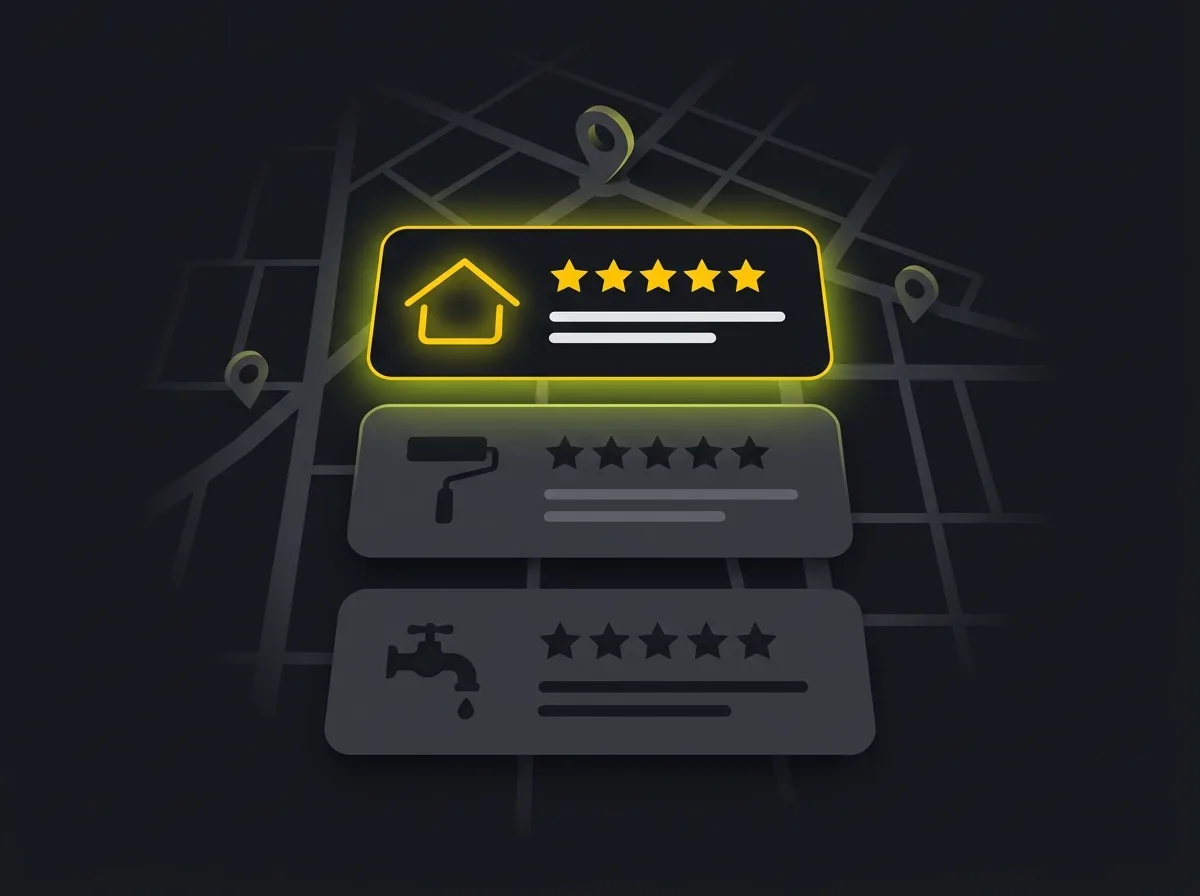
The core channel at this stage is Google Business Profile plus reviews plus a simple website that loads quickly and tells people what you do, where you work, and how to contact you. Getting local SEO that wins the map pack right at this stage compounds for years. A well-maintained GBP, with regular photo uploads, a response to every review, and accurate service-area data, is the highest-return marketing activity available to a sole trader in the home improvement sector.
The secondary channel is one strong local partnership. A recommendation from a trusted estate agent, solicitor, or building surveyor is worth more than three months of Facebook ads. Identify who already talks to your customers and build one relationship at a time.
What to ignore at stage one: paid social (Meta Ads), large content programmes, brand investment. The money and time go nowhere useful when your organic footprint does not yet exist.
Trade accreditations matter here, and they are often underused. FENSA registration for window installers, Gas Safe Register for heating engineers, TrustMark for general home improvement work, NICEIC for electrical contractors. These are not just badges; they are trust signals that convert hesitant buyers at the quote stage. They also feature in AI-generated recommendations when homeowners ask ChatGPT or Perplexity which type of installer they should look for, which is an increasingly common search pattern.
The most common mistake at stage one is spending three months building a brand identity that nobody has searched for yet. You do not need a new logo, a brand strategy document, or a photography shoot. You need your GBP completed, five more reviews on Google, and a working phone number on your website.
Stage two: £250k to £1m, from referrals to a repeatable lead engine
The business is growing. Word of mouth has taken you from zero to a solid turnover, and you are probably getting more enquiries than you can always handle. Then a quiet quarter arrives, or a couple of loyal referrers move away, and suddenly the pipeline is thin. Sound familiar?
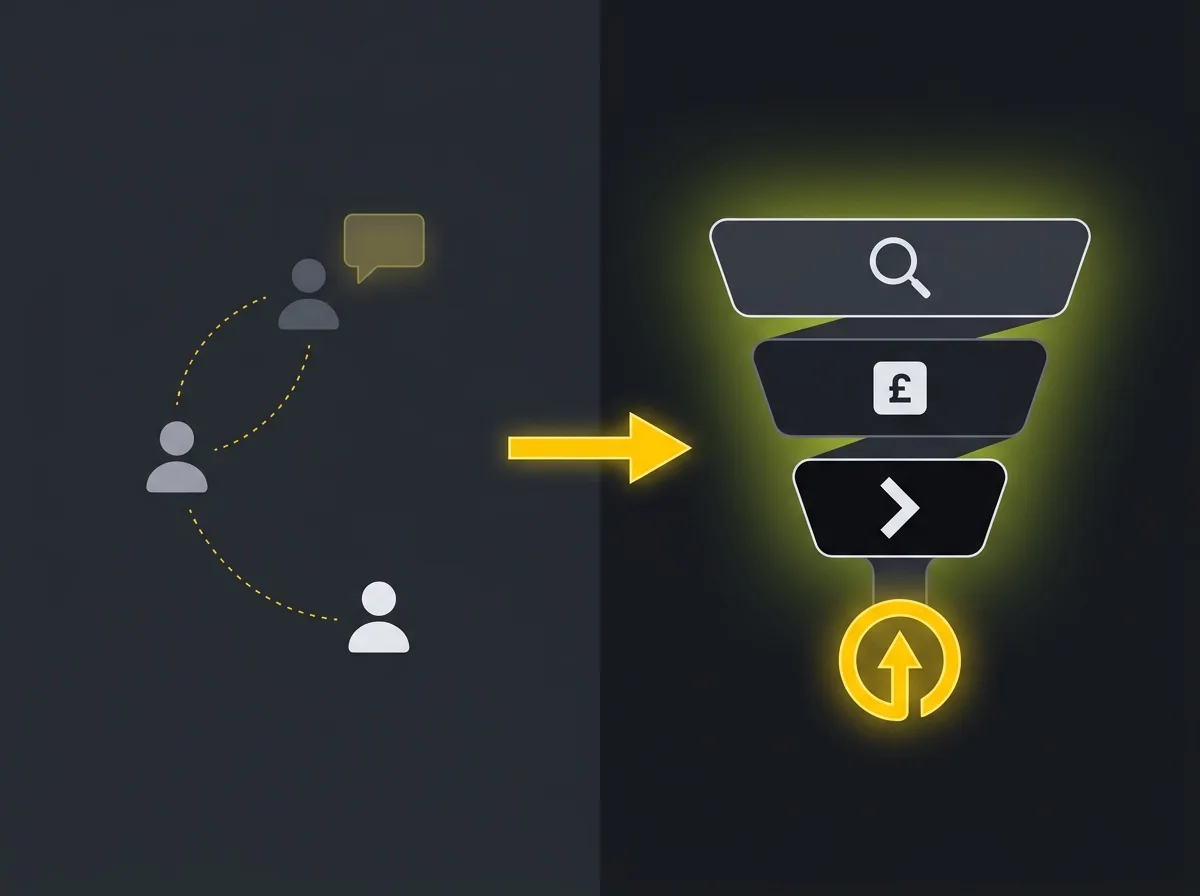
That is the signal that word of mouth has plateaued and you need something that generates leads independently of who happens to recommend you. At this stage the owner also cannot keep up with the marketing themselves. You are busy doing the actual work. Something gives, and it is usually the marketing. That is exactly when the quiet quarters start.
The core channel at stage two is SEO targeting the highest-intent service queries, combined with paid search on those same terms to fill the gap while organic rankings build. If you are a bathroom installer in Edinburgh, you want to rank for "bathroom renovation Edinburgh" and appear in the Google Local Service Ads unit at the top of the page. You want to be the answer when someone in your service area is ready to spend.
SEO that actually feeds the diary compounds in a way that paid directories do not. A Bark.co.uk lead costs money every time. An organic ranking keeps delivering without paying per enquiry once you have earned the position. Paid search (Google Ads) fills the gap in the short term and tells you which queries convert, which then informs your SEO priorities and where to concentrate your content effort.
The secondary channel is a structured review and referral programme. Not "hope customers leave reviews." A systematic process: ask at the end of every job, provide a direct link to your Google Business Profile, follow up once if they have not responded. Reviews on Checkatrade, Trustpilot, and Google all matter, and they are what AI models draw on when a homeowner asks for a local recommendation in your trade.
The website also needs to actually convert at this stage. Getting traffic to a site that loads slowly, has no clear next step, and does not reassure the visitor that you are credible is the most common waste of SEO spend in this sector. A website built to convert is what makes the channel investment pay back rather than just producing traffic reports.
What to ignore at stage two: organic social, awards entries, anything PR-shaped. These are not wrong in principle; they are just a poor use of resource at this stage.
The most common mistake at stage two is hiring a generalist marketing manager or a content writer before any specialist channel is producing reliably. A generalist cannot replace the depth needed to rank locally against established competitors who have been investing in SEO for several years. Buy in the specialist skills first. Get one channel working. Then think about building a team around it.
Trust signals matter more as the ticket size grows. At this stage you are starting to pitch for higher-value bathroom installations, kitchen renovations, and extension projects. FENSA certification, Gas Safe registration, TrustMark accreditation: these are increasingly important to buyers at that end of the market, and they appear in the structured information that AI models evaluate when deciding who to recommend.
Stage three: £1m to £3m, the integration problem

You are running multiple channels. There is an SEO supplier, a Google Ads agency, maybe a social media person, and someone handling your emails. Each of those channels is reporting good numbers. But the leads are not growing at the rate the spend suggests they should.
This is the integration problem. Nobody mentions it until you are already inside it.
The channels that worked separately stop working well together. PPC eats branded search clicks that organic SEO was already winning for free. Social media drives traffic that does not convert because the landing pages were built for direct-search visitors who already know what they want. Nobody owns the full picture. Every supplier is accountable for their own channel metrics but not for the result you actually care about, which is qualified leads at a defensible cost per enquiry.
The core channel work at stage three is not adding another channel. It is fixing attribution. GA4 set up properly, call tracking integrated, a CRM capturing where enquiries actually came from. When you can see which channels are genuinely producing and which are generating metrics without leads, the spend decisions become obvious. Without that, you are guessing, and you will keep guessing regardless of how many monthly reports land in your inbox.
The secondary channel at this stage is brand-led organic content. At a turnover over £1m, you are competing on trust as much as price. Buyers of a £30,000 extension or a £15,000 bathroom renovation research extensively before they call. Content that demonstrates genuine expertise, backed by images of real completed projects, is what closes that trust gap. Listing on Houzz, maintaining an active project portfolio, appearing in local architectural or design publications: these are not stage-one activities, but they earn their place here.
What to ignore at stage three: chasing new channels. When growth slows, the instinct is to try something new. The diagnosis is almost always wrong. Fix the integration first. You do not usually need another channel; you need to stop losing the leads you are already generating.
The most common mistake at stage three is switching agencies every twelve months because no single supplier owns the full result. You switch SEO agencies because leads are down, but the real problem is a GA4 configuration error that has been misattributing half your organic traffic to direct for eighteen months. The most valuable thing you can do at this stage is get the search visibility hub working as a joined-up system, rather than a collection of parallel supplier relationships where nobody is accountable for the total number.
Stage four: £3m and up, the brand-and-data problem
At this stage, you have enough traffic to test seriously and enough competition that brand starts to matter more than channel mix. The businesses competing with you are also spending on SEO and Google Ads. The differentiation that matters now is whether customers trust you over the alternatives, and whether AI models recommend you when they recommend anyone at all.
The core channel at stage four is brand-led search and AI search visibility. You want to own your branded queries. You want to appear when a customer searches your category in your region, whether they are using Google, asking ChatGPT, or reading recommendations on Perplexity. You want to be the source cited in AI answers about home improvement in your service area.
The secondary channel is CRO (conversion rate optimisation), lifecycle marketing, and adjacent trade partnerships. You have the traffic. The question is how much of it you are converting, how many of those customers you retain, and how many adjacent jobs you capture from the same households. These are high-margin channels once the pipeline is established.
What to ignore at stage four: any channel that is not measurably contributing to leads or brand recall. At this stage you have the data to know. Use it without sentiment.
The most common mistake at stage four is investing in awareness campaigns without a CRO programme to catch the traffic those campaigns generate. A display campaign driving tens of thousands of impressions to a site converting at one percent is doing a fraction of the job it could do if the site converted at three or four. Fix conversion before you invest in awareness at scale.
AI search visibility becomes a brand-defence priority here. Competitors who get cited in AI answers first will be hard to displace. A well-structured approach to AI search visibility for service businesses is what makes sure your expertise is the kind being recommended, not your nearest rival's.
Where AI search changes the picture at every stage
Most guides on home improvement marketing treat AI search as something to worry about once you are big enough. That is wrong.
AI search changes the picture at every stage. It just changes differently depending on where you are.
At stage one, it changes how local discovery works. When a homeowner asks ChatGPT "who's a good window installer near me in Stirling," they may get a named recommendation without ever opening a map. Those recommendations draw on a mix of structured data, reviews, and web presence. A sole trader with a well-maintained GBP, a Checkatrade profile with recent reviews, and a simple website that clearly states their service area is in a much stronger position than one with none of those. The foundational work is the same; it just matters in more places than it used to.
At stage two, AI search changes whether your website gets cited in answers about your service category. When someone asks Claude or Perplexity "what should I look for in a bathroom installer in the UK," the response draws on content that makes specific, verifiable claims: what good installation looks like, which accreditations to check (FENSA, Gas Safe, NICEIC, TrustMark), what the typical stages of a project involve. A website with specific, structured content is what gets cited. A brochure site with five pages and a contact form does not.
At stage three, the integration problem extends to AI. Most businesses at this stage are not tracking AI-sourced traffic at all. Think with Google has been documenting the shift in how consumers research high-consideration purchases, and AI-assisted research is now a mainstream part of that journey for home improvement buyers. If you are not seeing it in your data, the most likely explanation is that your attribution is not set up to capture it, not that it is not happening.
At stage four, AI search is a brand-defence channel. The businesses that dominate AI-generated recommendations in a category are the ones with the clearest content authority and the most consistent information about what they do and where. Our own analysis shows that AI search traffic converts at 5x the rate of traditional search, which makes the visibility stakes at every stage considerably higher than most businesses assume.
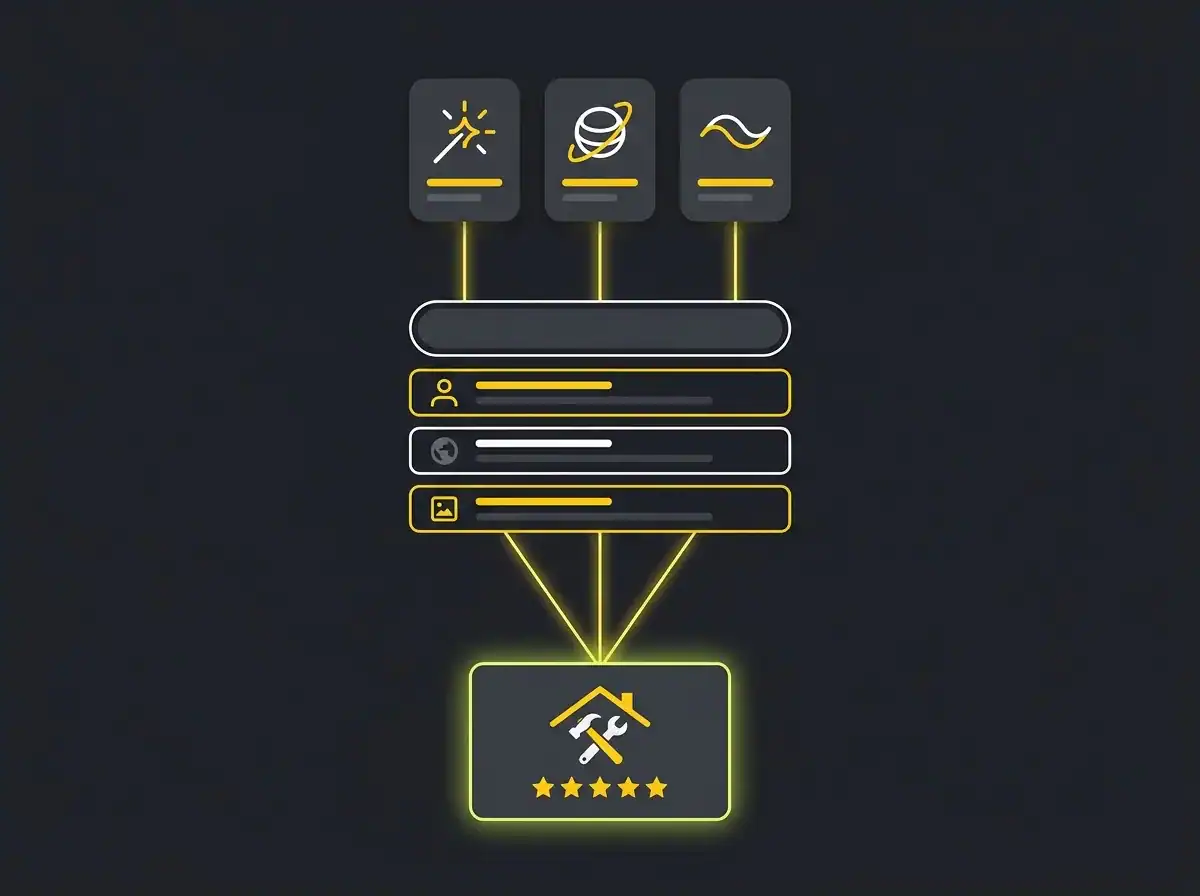
The point is not to treat AI search as a separate strategy. The structural moves at every stage, a strong GBP, specific content, clear accreditations, joined-up tracking, are also the moves that make you visible in AI search. You are not doing two different things. You are doing the same things well enough that they work everywhere.
The marketing mistakes that scale with you, and the ones that don't
Some mistakes are stage-specific and become irrelevant as you grow. Others follow you and get more expensive every year you leave them unaddressed.
Mistakes that do not scale with you:
-
Doing brand work at stage one before anyone is searching for you. Irrelevant at £200k, genuinely important at £1m.
-
Relying entirely on Bark.co.uk or Checkatrade for leads past the early years. These platforms own the customer relationship. You do not.
-
Trying to grow on Meta Ads alone. Paid social can work for home improvement, but as a primary lead channel it rarely does at any meaningful volume.
Mistakes that scale with you, and get more expensive as they do:
-
Weak tracking. The less precisely you can attribute leads to channels, the more you will overspend on things that are not working and underspend on things that are. This problem grows in proportion to your budget.
-
No CRO work. A low conversion rate on your website is the same percentage problem at £300k as it is at £3m. The number it represents in lost revenue is not.
-
No clear picture of your ideal customer. The installers who grow fastest tend to have made a deliberate choice about who they serve and who they turn away. Marketing that tries to appeal to everyone, from a £5,000 conservatory job to a £100,000 extension, usually converts fewer of both than a more focused message would.
The strategy is not just what you add as you grow. It is what you drop as you move from one stage to the next.
Where to start if you've already lost a year on the wrong thing
If you are reading this and recognising that the last twelve months were spent on things that do not match your current stage, that is a fixable situation. It is also a very common one.
The reset has three steps.
First, identify your stage. Which of the four revenue bands describes where your business is right now? That is the anchor for every decision that follows.
Second, identify the one channel that fits that stage. Not two channels simultaneously. One. Get it producing before you add anything alongside it.
Third, fix your tracking before you increase your spend. If you cannot say with reasonable confidence where your current leads are coming from, a bigger budget will not fix that problem. It will just cost more to keep guessing.
What we do for home improvement businesses at Creative Tweed is start with the numbers. Before recommending a channel or talking about strategy, we look at what the traffic potential actually is in your specific service area, for your specific service types, with realistic assumptions about what organic positions you could reach. The Traffic Projection Report is how we do that first conversation.
Free resource: Traffic Projection Report
A projection of what your organic traffic could realistically reach, built around your specific service area, your target keywords, and real search data. It tells you what each growth stage looks like in your own numbers, not a generalised estimate from a sector benchmark. If you have been asking yourself whether the spend is worth it, this is where to start.
Marketing strategy is a stage problem before it is a channel problem. Get the stage right, and most of the channel decisions make themselves.