
You've set aside £600 to try Google Ads. Before your first advert appears, the setup screen is asking where you want to advertise, what counts as a result, and how much freedom Google should have.
You wanted more enquiries. Apparently, you also need an afternoon to work out what you've agreed to.
Those choices deserve attention. An advert can describe your business perfectly and still spend money reaching people you cannot serve.
The short answer: Google Ads can work for a small UK business when customers already search for what you sell, your margins support the acquisition cost, and you can measure enquiries or sales. There is no single reliable UK click price or universal starting budget. A £500 to £1,000 monthly test is a planning option, subject to local forecasts. Start narrowly, check tracking before launch, and judge qualified enquiries and customers against total cost.
That is the useful starting point for Google Ads for small business: decide what a worthwhile customer costs before choosing how many clicks to buy.
Would you pay to have this conversation?
Imagine you run an electrical business covering one part of Birmingham. Someone nearby searches for an electrician to replace a consumer unit. You offer that service, have room in the diary, and can explain why they should choose you.
That is a sensible conversation to consider paying for.
Now imagine the searcher wants an apprenticeship, lives outside your service area, or needs a service you don't provide. The click still costs money. Your chances of winning useful work are rather different.
Start there.
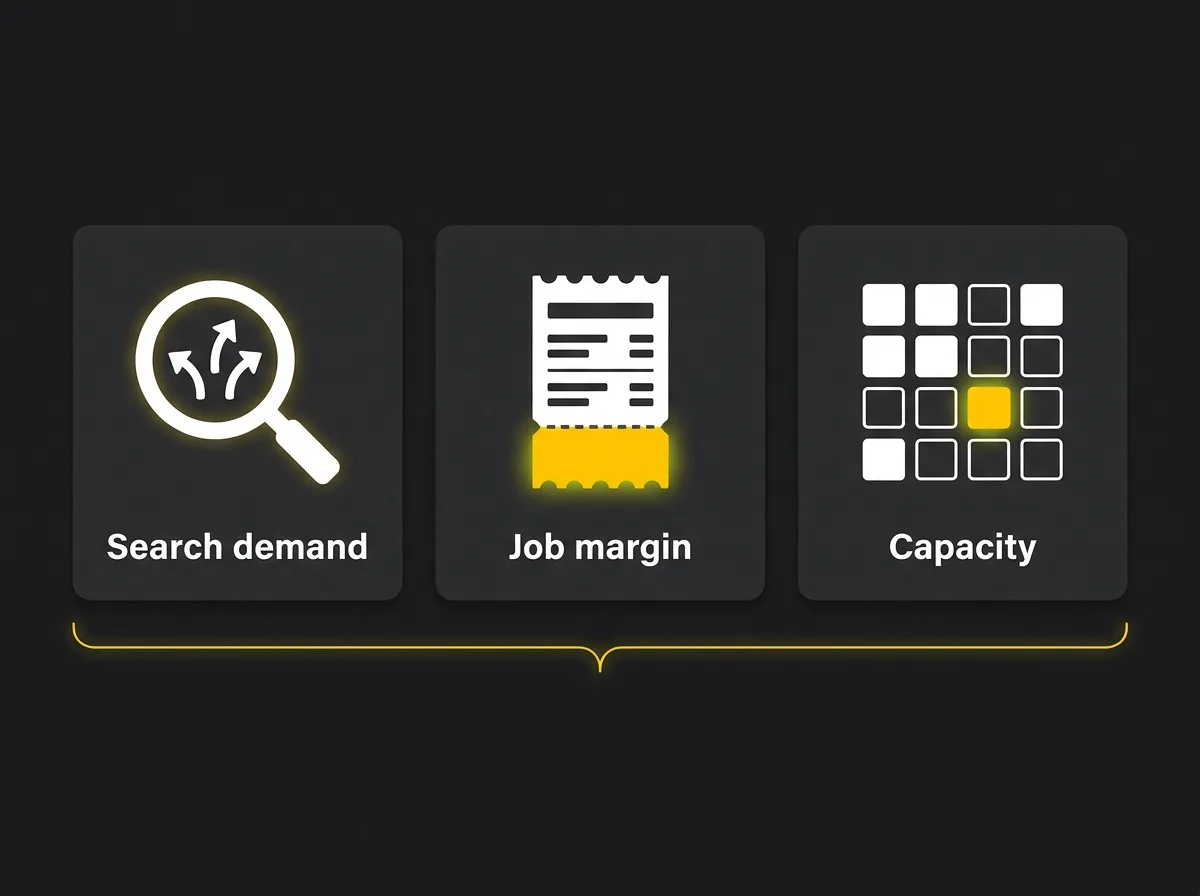
Search advertising captures existing demand. It is particularly useful when people know the problem they need solved and can describe it in a search.
If you sell something unfamiliar, customers may need an explanation before they know what to look for. Referrals, partnerships, demonstrations or other advertising channels could deserve the first investment.
Margin matters just as much as demand. A profitable contract can support an acquisition cost that would swallow the entire return from a small, one-off purchase.
Capacity belongs in the calculation too. Buying enquiries while nobody answers the phone is an expensive way to collect missed calls.
Before launching, you should be able to answer three questions:
-
What specific service or product are we advertising, and who is likely to search for it?
-
How much can we afford to spend to win a customer after allowing for delivery costs?
-
Who will handle the enquiry, and how will we record whether it becomes business?
If the answers are vague, spend time fixing them first.
Your website also needs to explain the offer and make the next step straightforward. Advertising won't supply missing evidence, repair a broken form or make an unclear service sound convincing.
Paid search belongs within your wider search visibility and traffic decisions. For some businesses, improving an existing site or investing in SEO services will make better use of the next pound.
Organic visibility takes work and time. Paid search can test demand sooner, but the media spend continues for as long as you want those paid visits.
The useful cost figure starts with your margin
There is no fixed tariff for Google Ads in the UK. Your cost per click, usually shortened to CPC, depends on the searches you target and the auctions you enter.
A national average cannot tell you what it will cost to reach your customers in your town.
Use Google's Keyword Planner to investigate relevant searches and generate forecasts for your intended market. Set the location carefully. Forecasts are estimates, and a suggested bid range is not a promised click price.
The distinction matters.
Legal, finance and retail searches should not share a budget assumption simply because all three businesses are small. Even within one trade, different services can have very different economics.
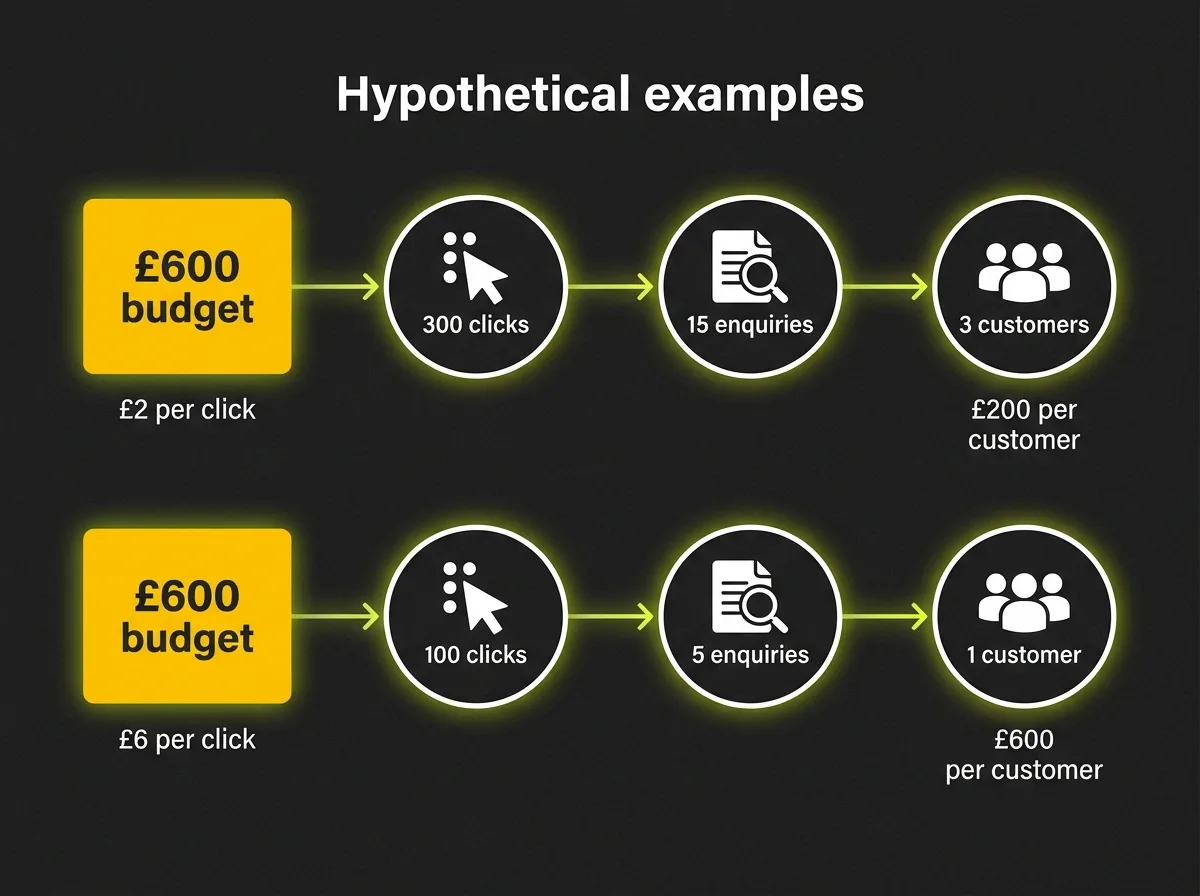
A hypothetical £600 test.
At an assumed £2 per click, £600 buys 300 clicks. If 5% become enquiries, that produces 15 enquiries at £40 each.
If three of those enquiries become customers, the advertising cost per customer is £200.
Now change the assumed click price to £6. The same £600 buys 100 clicks. With the same enquiry and sales rates, you would expect five enquiries and one customer, costing £600 to acquire.
These are worked examples, not UK benchmarks. Their purpose is to show why the click price alone tells you so little.
You need the rest of the calculation.
A £500 to £1,000 monthly media budget can be a starting test envelope, provided forecasts suggest it will generate useful evidence. It is neither a required minimum nor a guarantee of enough data.
If that budget would buy very few relevant visits, narrow the service or geography. Otherwise you could spend a month discovering that the sample was too small to decide anything.
Allow for the costs around the adverts.
Media spend pays Google. Landing-page work, tracking setup and campaign management are separate costs, whether you pay someone or contribute your own time.
Ask freelancers and agencies to separate initial setup, ongoing management and any page or tracking work. A monthly quote means little until you know what it includes.
Request fees in pounds, identify any percentage-of-spend charge, and check whether quoted figures include VAT where applicable. Avoid comparing one all-inclusive proposal with another that covers management alone.
Also understand the daily budget. Under Google's budget guidance, most campaigns can spend up to twice the average daily budget on a particular day. With an unchanged budget, the usual monthly charging limit is 30.4 times that daily amount.
That can explain an alarming-looking Tuesday. It still deserves checking.
Choose the campaign around the purchase
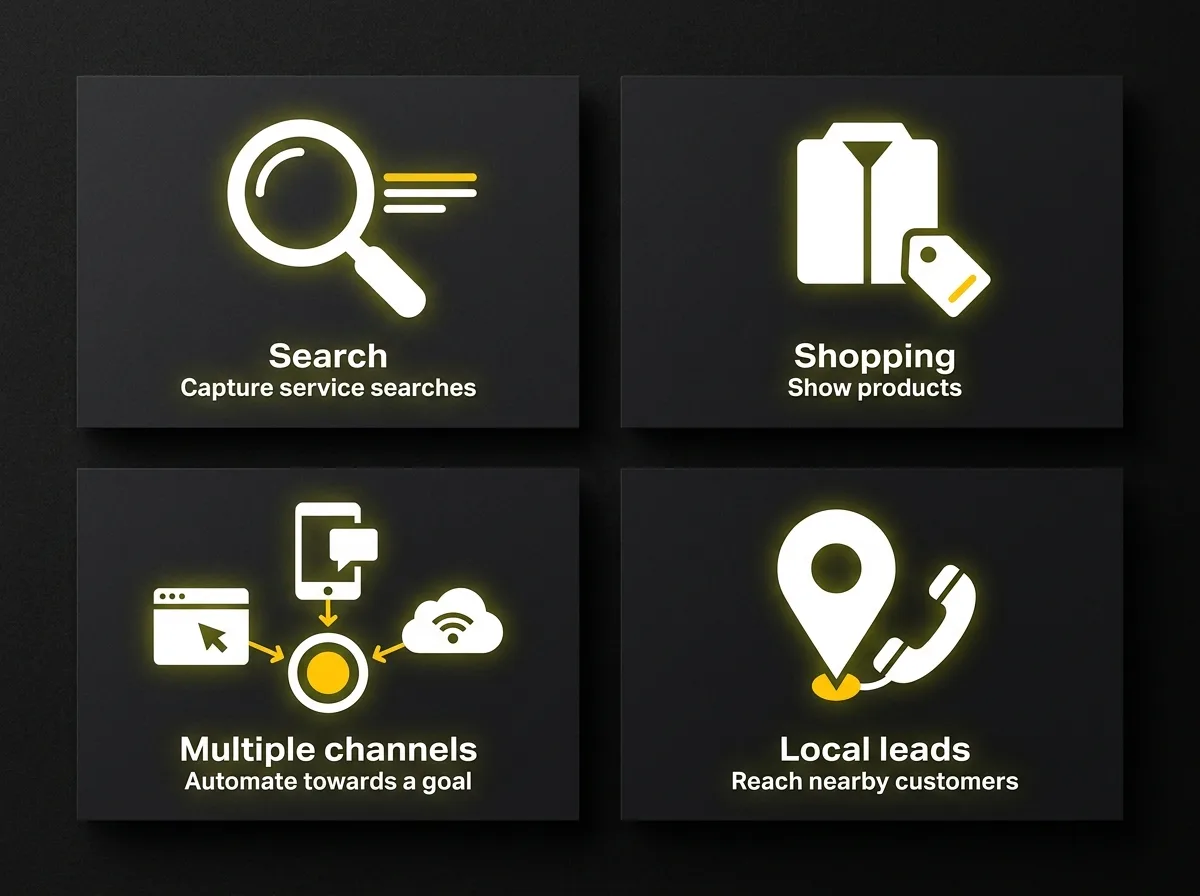
For a service business testing paid search, a tightly focused Search campaign is often the clearest starting point. It lets you advertise against searches related to a defined service.
Someone searching for commercial boiler servicing is giving you a useful clue about what they need. That makes a more understandable first test than spreading a small budget across several advertising environments.
Keep the question narrow.
Search campaigns.
Group closely related searches around one offer and write adverts that answer that need. Keep different services separate enough to see which ones generate worthwhile enquiries.
You don't need a campaign for every possible variation. You need a structure you can understand and review.
Performance Max.
Performance Max uses Google's automation to advertise across multiple channels. Google's Performance Max documentation explains how campaign assets, feeds and goals inform delivery across available inventory.
It can be useful, particularly when the business has reliable sales data, suitable creative material and clear goals. It also asks you to delegate more decisions about where advertising appears.
For a small service business without dependable tracking, that makes diagnosis harder. If results disappoint, there are more moving parts to investigate.
Performance Max does not require a product feed for every business. An online shop using it to advertise products does need an accurate Merchant Center feed for those product listings.
Shopping and online retail.
If you sell products online, Shopping deserves consideration. Product titles, prices, availability and feed accuracy become central to the campaign.
The first decision is therefore different from a local service business advertising a quotation or appointment. Don't borrow a campaign plan from a business with a completely different purchase journey.
Local Services Ads and Google Business Profile.
For eligible businesses and locations, Local Services Ads offer another route to enquiries. Google's Local Services lead guidance describes charging for valid leads, with specific rules governing what qualifies.
Check UK eligibility and current charging terms for your business before planning around it. A charged lead still needs to become a profitable job.
Your Google Business Profile is a separate asset. Accurate services, opening hours and useful reviews support local SEO whether you advertise or not.
You can improve that presence before committing to paid clicks.
Make these decisions before the first click
The account setup is where your business decisions become spending instructions. Give it the same attention you would give a supplier agreement.
A recommendation on a screen cannot know that your team refuses work beyond a particular postcode.
You do.
1. Decide where you can actually deliver.
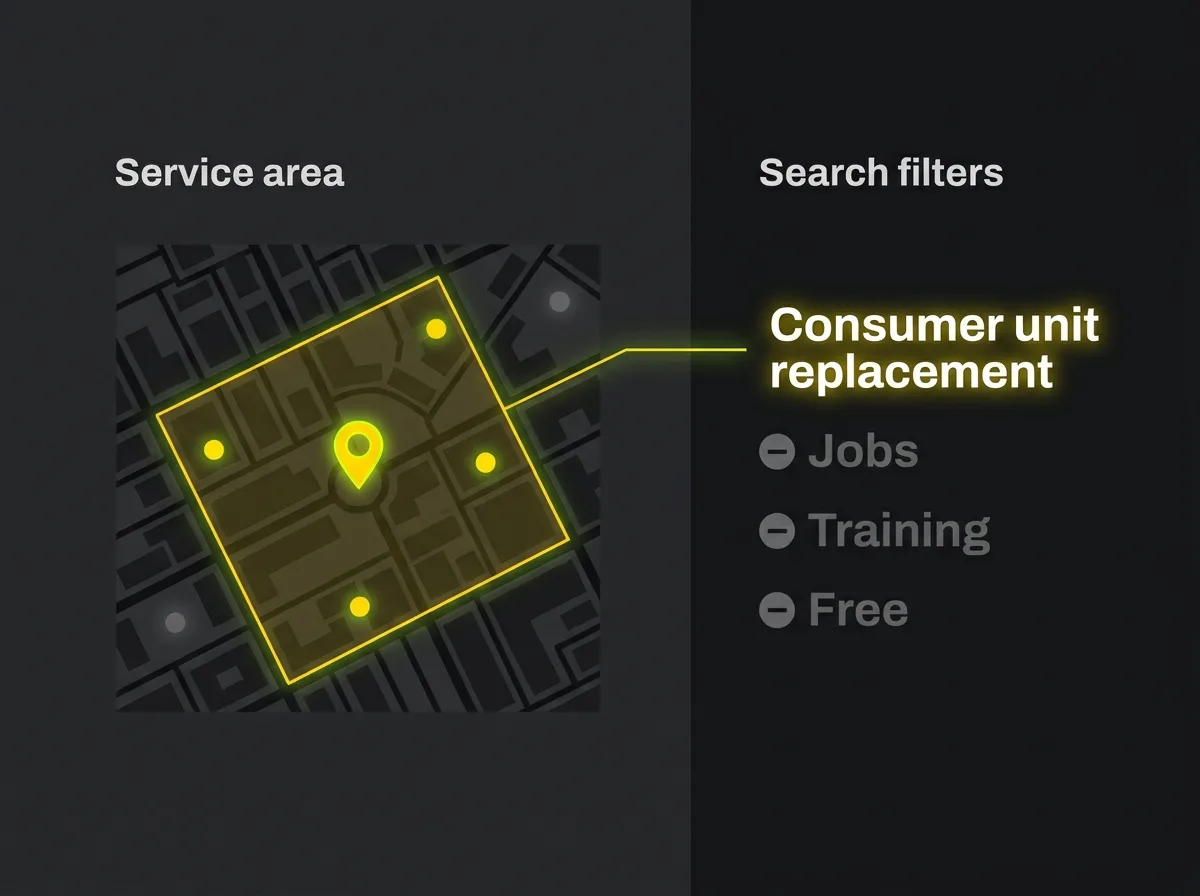
Choose the towns, postcodes or radius that reflect your service area. Then inspect the location options beneath the headline selection.
Google's location targeting guidance explains that the default can include people who have shown interest in your chosen area. That is different from targeting people in or regularly in it.
For a business serving nearby customers, the presence option is often the more appropriate starting point. A hotel advertising to future visitors may need a different decision.
Location targeting uses signals and is imperfect. Review the resulting traffic rather than assuming a postcode selection settles everything.
2. Start with searches you can explain.
Phrase and exact match can help keep an initial Search test focused. Neither means you can ignore what people actually searched.
Broad match can be useful alongside suitable bidding and reliable conversion data. Its reach also makes it a poor substitute for deciding which customers you want.
Review the search terms report and compare queries with your offer. A keyword is your targeting instruction; a search term is what someone typed.
That difference is where wasted spending becomes visible.
3. Exclude the wrong conversations.
Negative keywords prevent advertising against unwanted searches. A service business might exclude searches about jobs, salaries, courses or DIY instructions.
Choose exclusions carefully. A recruitment business plainly needs different rules from an electrician.
Build an initial list, then update it from real searches. Don't exclude a phrase simply because one visitor failed to enquire.
4. Inspect networks and automatic changes.
Check whether your Search campaign includes Display Network delivery. For a controlled Search-only test, keep that additional distribution off where the option is available.
Review Search partners separately. Decide whether to include them and inspect their contribution rather than treating every source as identical.
Check auto-applied recommendations too. Understand which categories, if any, are authorised to change the account without individual approval.
Google's suggestions are inputs to a decision. They are not your business plan.
5. Match the advert to the page.
A search for consumer unit replacement should reach a page about that service. Include coverage, qualifications, relevant evidence, likely next steps and an obvious enquiry route.
A homepage can work when it closely matches the offer. A specific service page is usually easier to make relevant when the business sells several things.
Submit the form yourself on a phone. Check the confirmation and make sure the enquiry reaches the right person.
6. Test measurement before launch.
Confirm that a genuine enquiry or purchase records correctly. Check for duplicate events and accidental conversions from button clicks or page visits.
An account can look busy while measuring the wrong thing. Best to discover that before paying for the activity.
Follow the enquiry all the way through
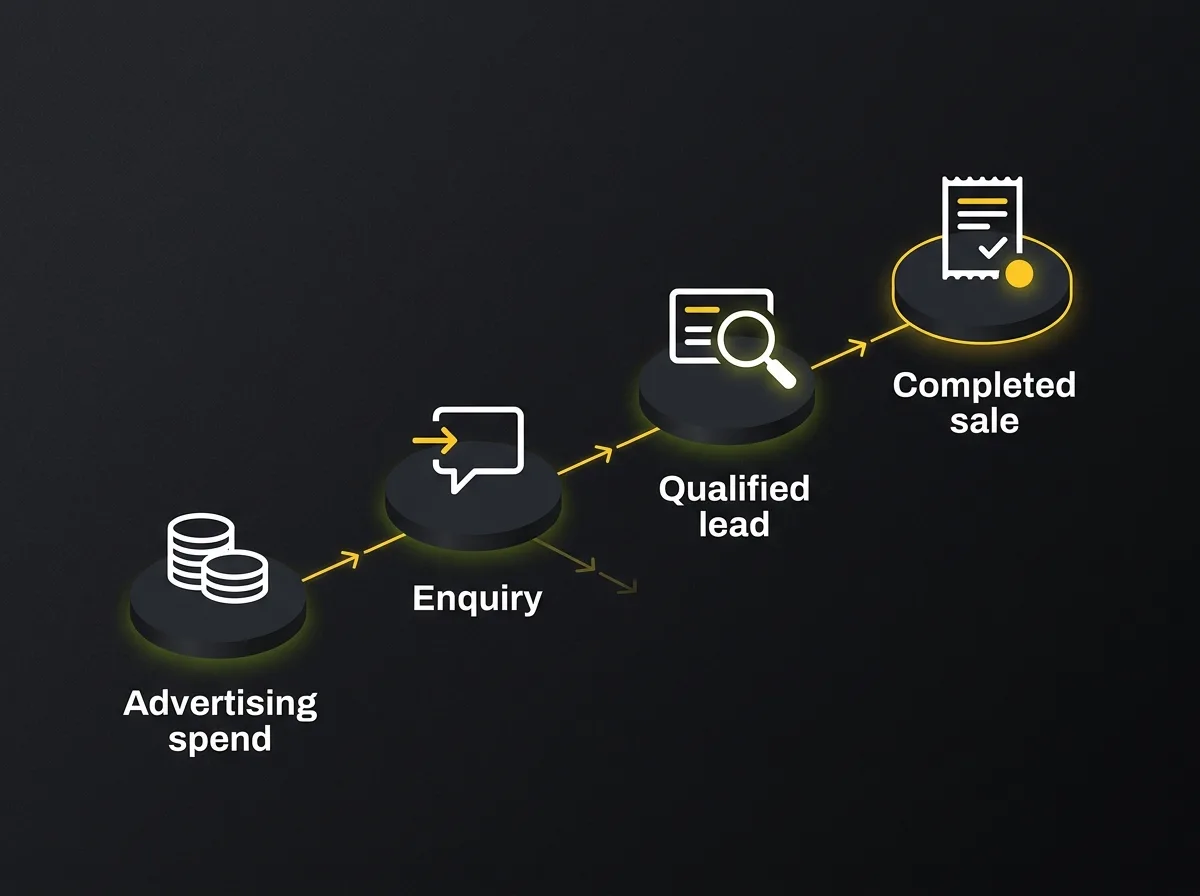
Conversion tracking records an action you have chosen to measure. GA4, Google's analytics platform, helps you understand website behaviour and traffic sources.
Neither automatically knows whether an enquiry was any good.
That part needs you.
For a service business, distinguish a submitted form from a qualified enquiry and a won customer. A student researching a project and a buyer requesting a quotation can trigger the same form event.
For an online shop, track completed purchases and accurate order values. Then consider margin, refunds and fulfilment costs before deciding whether reported revenue represents success.
Use meaningful business actions as the main campaign goals. Keep softer signals, such as viewing a contact page, separate from the results you want bidding to pursue.
Also check that importing a GA4 event and installing a Google Ads conversion action hasn't caused the same enquiry to count twice.
Keep two cost figures in view.
Cost per lead is advertising spend divided by recorded leads. Customer acquisition cost connects spending to people who actually buy.
Include management and other attributable campaign costs when assessing the business return. An account report showing media-only costs is useful, but it does not show the whole investment.
For phone-led businesses, consider call tracking that connects advertising with calls. Review whether calls concern suitable work and whether your team answers them.
A click on a telephone link does not prove a useful conversation happened.
A simple spreadsheet can be enough initially. Record the enquiry date, source where known, service requested, qualification and outcome.
The discipline matters more than the software.
Judge on evidence, with time for sales.
Check for faults immediately: broken pages, irrelevant searches, missing conversions and unsuitable locations should not receive a generous learning period.
Commercial performance takes longer to assess. A consultancy enquiry that takes weeks to become a contract cannot fairly be judged as a failed sale the next morning.
Set a review date and spending limit before launch. Consider the number of relevant visits, conversion delay and sales cycle together.
There is no universal rule that a campaign must run for three months. Equally, two quiet days rarely tell you whether the channel can work.
The mistakes hide in plausible-looking reports
A report can show improving numbers while the business gets very little from them. That is particularly easy when the campaign measures convenient actions instead of worthwhile outcomes.
Watch the definitions.
-
Cheap clicks with weak buying intent. A low CPC is little comfort when visitors want free advice and you sell a paid service. Review searches alongside enquiry quality.
-
Broad reach before clear evidence. Expanding locations, keywords and channels at once makes it harder to identify what helped. Change enough to learn, then review the result.
-
Performance Max with unclear goals. Automation needs a useful definition of success. Weak conversion signals, unsuitable landing pages and poor assets cannot be repaired by choosing a more automated campaign.
-
One budget divided into too many tests. Several campaigns receiving a handful of clicks each can leave you with more reports than conclusions. Start with a commercially important offer.
-
Optimising the report around existing demand. Searches for your business name may perform differently from searches by people who have never heard of you. Separate those results when assessing customer acquisition.
-
Ignoring the response after the enquiry. Slow replies, missed calls and vague quotations can waste the demand you have already paid to create.
Resist changing everything after a bad day. Keep a record of material changes so the next review has something firmer behind it than everyone's recollection.
Also resist leaving a demonstrably broken campaign running because someone said it needs time. Patience is useful once the basics work.
When doing it yourself stops being cheaper
Managing a small, focused Search campaign yourself can be sensible. You need time to understand the account, inspect searches, check spending and follow enquiries through to sales.
The setup is only the beginning.
If the campaign stays narrow and you can explain what each setting does, DIY may remain practical. Bringing in someone for an initial setup or independent review can also fill a specific gap.
The decision changes when management consumes time you need elsewhere. It also changes when spending rises, tracking becomes unreliable, or you cannot explain why performance has stalled.
Ask a prospective freelancer or agency what they would investigate first. A useful answer should mention the offer, customer economics, search demand, measurement and landing page.
Be wary if the conversation jumps straight to more budget.
You should own the Google Ads account and retain appropriate administrative access. Ask who owns the tracking setup, landing pages and creative assets, and what happens when the relationship ends.
Request reporting that separates advertising spend from management fees and shows qualified enquiries where possible. Clicks and impressions can explain activity; they cannot settle whether the work is paying back.
Our guide to how to evaluate a PPC agency covers account ownership and commercial questions in more detail. It focuses on online shops, but those checks also help service businesses.
As you plan, remember that customers may discover you through referrals, organic results and AI answers before eventually clicking an advert. Paid search is one part of that journey.
Frequently asked questions about Google Ads for small businesses
Is Google Ads worth it for a small business?
It can be when customers already search for your offer and the cost of winning them leaves sufficient margin. Business size alone does not decide this. Check demand, page quality, enquiry handling and measurement before launch. If you cannot connect spending with useful enquiries or sales, fix that gap before increasing the budget.
How much do Google Ads cost in the UK?
There is no fixed UK click price or required monthly spend. Costs vary by search, competition, location and campaign performance. Use local Keyword Planner forecasts to plan a test. A £500 to £1,000 monthly media budget is one planning option, not a benchmark. Allow separately for setup, tracking, landing pages and management.
Which Google Ads campaign type should I start with?
For many service businesses, a focused Search campaign is the clearest initial test because it targets expressed demand for a particular service. Retailers should also consider Shopping and their Merchant Center feed. Eligible local businesses can investigate Local Services Ads. Choose according to how customers buy and what you can measure.
Is Performance Max good for small budgets?
It can work, but a small budget leaves less room for unclear goals or poor measurement. Performance Max distributes advertising across multiple channels, so it can complicate an initial test. A service business may find focused Search easier to assess first. Reliable conversion data, suitable assets and clear commercial goals strengthen the case for testing it.
Should I hire an agency or manage Google Ads myself?
DIY can suit a narrow campaign when you have time for regular reviews and can verify the tracking. Consider help when account complexity, rising spend or unreliable measurement exceeds your capacity. Ask about ownership, reporting, fees and qualified enquiries. The right support should make the spending easier to understand and evaluate.
Worth checking before you commit.
Give the first pound a clear job
Before opening the account, write down the service you want to sell, the customers you want to reach and the acquisition cost you can afford.
Then check whether local search demand and your website support that plan. Choose a test budget with a defined limit, working tracking and someone responsible for reviewing the results.
That is a manageable first step.
At Creative Tweed, we look at search visibility alongside the page visitors reach and the evidence that an enquiry becomes business. Sometimes paid search deserves the first investment; sometimes another part needs attention sooner.
You should know why before committing.

Next step: Traffic Projection Report
If you are weighing up where to put a limited marketing budget, start with a clearer view of the opportunity. The Traffic Projection Report is a practical next step for considering realistic traffic potential before deciding what to spend. Bring your margin and sales targets to that decision, so the plan has a job beyond generating more clicks.