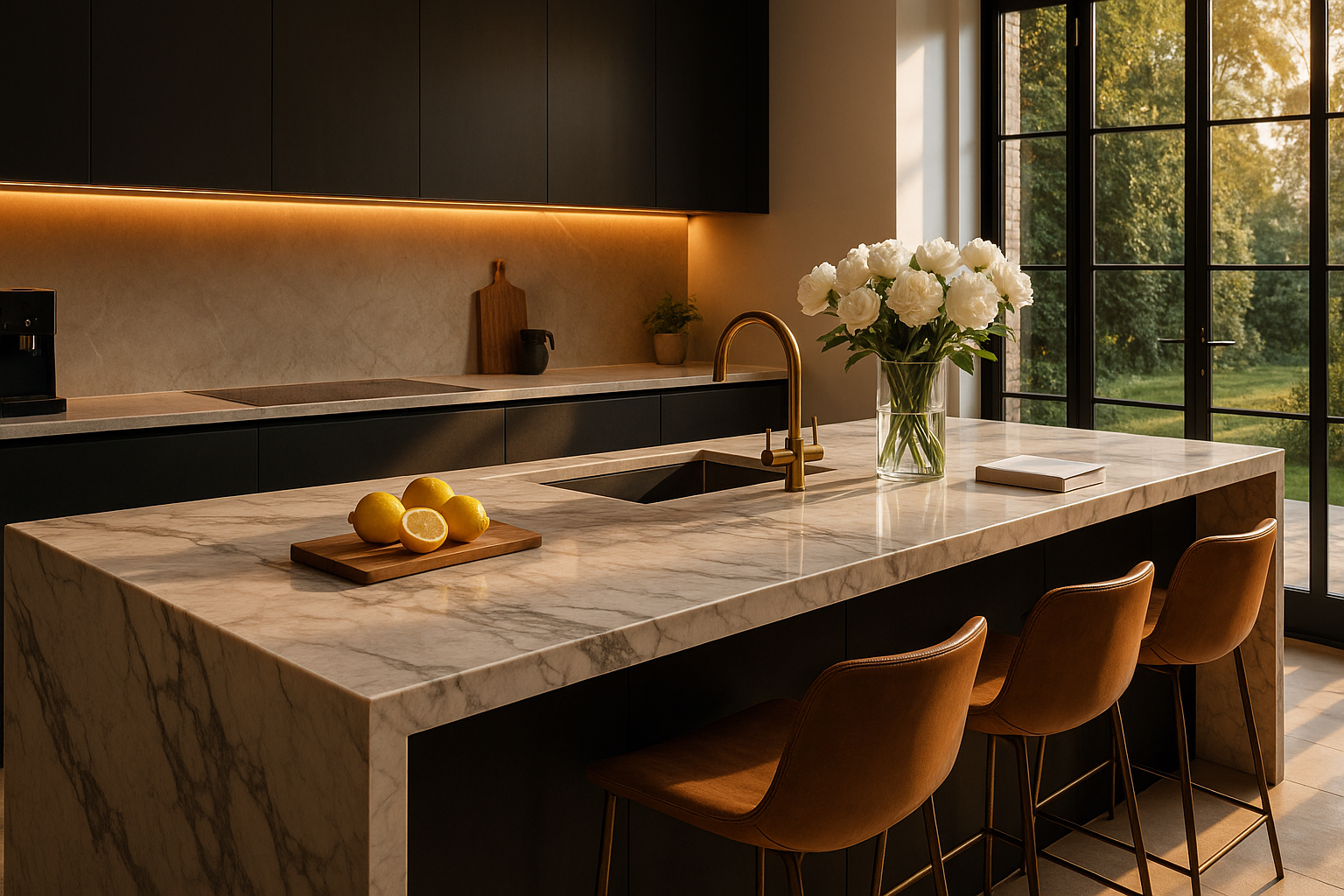
You have hundreds of project photos on a hard drive. Your installers do genuinely beautiful work. Your website gallery has twelve thumbnails from 2021, and at least three of them are blurry.
That is not a content problem. It is an order-of-operations problem.
Most digital marketing advice for kitchen companies skips straight to spend. More Google Ads, a new website, a social media retainer. Sometimes it produces more enquiries. More often, it produces enquiries from people who are simultaneously contacting three other showrooms, comparing prices, and who have no particular reason to choose yours. The result: a marketing budget that generates activity without appointments.
This guide is about a different sequence. One that starts with what your showroom already has, runs it through the four channels that actually move kitchen company pipeline, and ends with the metric that matters: booked, deposit-likely showroom appointments from buyers who already trust what they have seen.
TL;DR. Digital marketing for kitchen companies is the combination of local search visibility, project-led website content, paid social retargeting, and a structured enquiry-to-appointment funnel built around a 12 to 16 week consumer research window. The single most underused starting point for UK kitchen retailers is the project gallery already sitting on a hard drive. Publish it properly, tag it for search and AI discovery, distribute it across the right channels, and the rest of the programme follows naturally. One converted enquiry at £8k to £40k pays for months of the right marketing programme.
What digital marketing for kitchen companies actually means in 2026
Digital marketing for kitchen companies is the combination of local search visibility, project-led website content, paid social retargeting, and a structured enquiry-to-appointment funnel built around a 12 to 16 week consumer research window.
That definition does specific work. It sets the end point as a showroom appointment, not a form fill. It acknowledges the long research window rather than pretending a single ad click produces a kitchen sale. And it names four channels rather than listing every digital marketing tactic known to humanity and billing for all of them.
The shift from "lead generation" to "qualified showroom appointment" matters more than it looks. A lead is a name and an email address. A showroom appointment is a buyer who has spent weeks looking at kitchen photography, decided broadly what style they want, and chosen your showroom over others because of what they saw online first. The conversion infrastructure required for each is completely different. Most agencies are built for the first and charge as if they delivered the second.
The four channels work together rather than in isolation. Local search brings buyers in during their early research phase. Project-led organic content keeps you visible during the weeks they are narrowing their shortlist. Paid social retargeting brings back the people who visited but did not enquire. The appointment funnel turns enquiries into confirmed showroom slots. Pull one out and the whole programme loses momentum. For a broader picture of how search visibility and traffic work as a joined-up system rather than separate line items, that piece covers the strategic layer well.
The UK kitchen buying journey is longer than most agencies admit
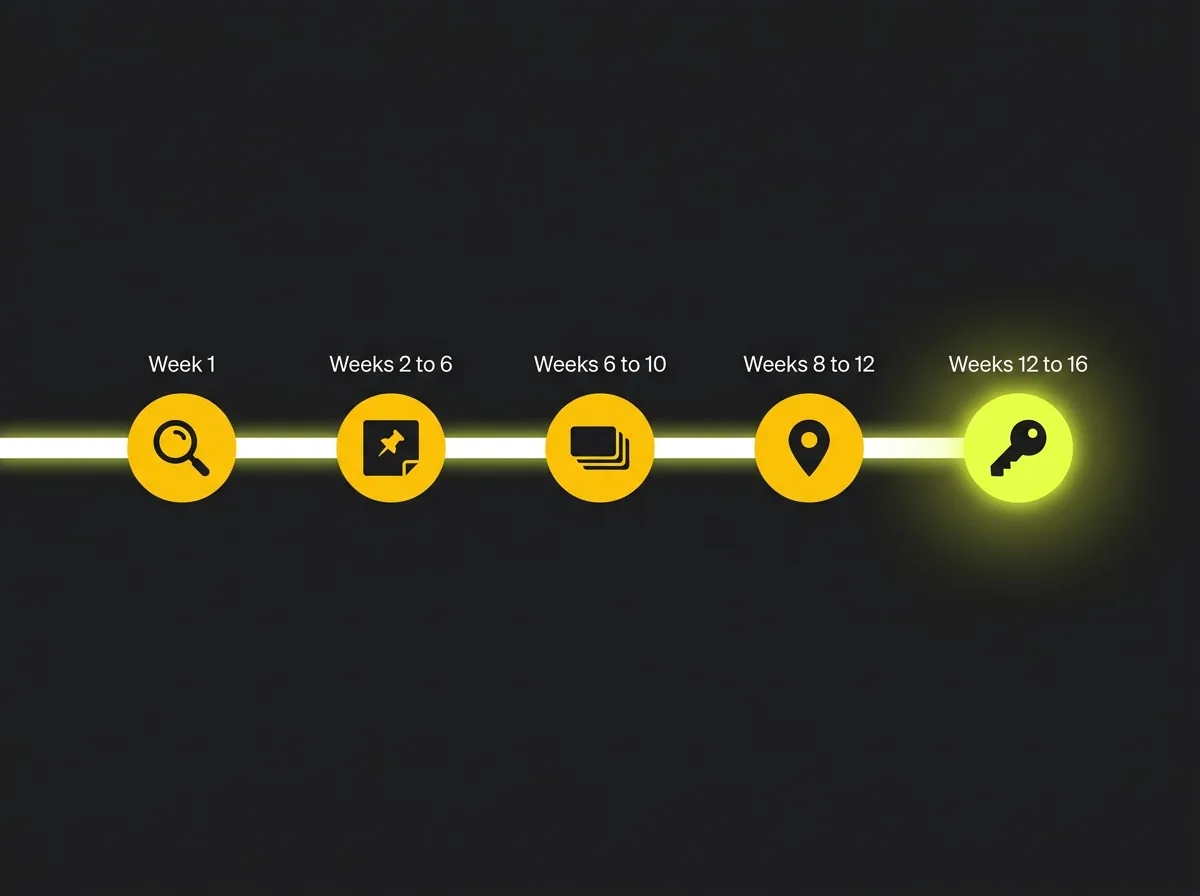
A UK kitchen buyer who is serious about replacing their kitchen typically starts searching online 12 to 16 weeks before they are ready to commit to a deposit. According to Houzz UK Kitchen Trends data, kitchen renovation projects involve substantial online research well before any showroom contact, with buyers saving inspiration images, comparing supplier websites, and shortlisting styles for weeks before they pick up the phone or complete a contact form.
This matters for digital marketing strategy in a specific way. A buyer in week two of their research is not going to see one Google Ad and book a showroom appointment. They are in discovery mode. They are saving kitchen inspiration, pinning layouts to Pinterest, and searching for things like "handleless kitchen ideas" or "kitchen island integrated hob." The search for "kitchen showroom near me" comes much later, usually around weeks eight to twelve, once they have a clearer picture of what they want and are ready to start narrowing their shortlist.
The implication is structural. If your marketing only activates for the buyer-ready phase, you are entering a relationship at week ten, competing against showrooms that have been in front of that buyer since week two. The content channels, particularly project pages and social, build the pre-existing familiarity that makes the week-ten search result in a click to your showroom. That familiarity is invisible in a short-term leads report. It is very visible in your appointment-to-deposit rate.
A single ad click does not produce a £15,000 kitchen sale. Retargeting plus content plus a well-run appointment funnel does. Any agency promising to "fill your calendar" from cold paid traffic alone is either working with an unusually short research cycle, or relying on brand recognition they did not build and cannot charge for.
Why your project gallery is the most underused asset in your marketing

Here is the audit result for a typical UK kitchen retailer. Four hundred project photos on a shared drive. Twelve of them on the website in a thumbnail grid. None on Google Business Profile. None in Google Image search. None on Pinterest. None structured in a way that would allow an AI tool to describe or cite the work. Almost none ranking for anything.
That is not unusual. It is the default. Which is precisely why fixing it is the single highest-return starting point for most kitchen companies.
A project gallery done properly is not a grid of thumbnails. It is one dedicated page per project. Each page tells the project story: the customer brief (open-plan family kitchen, budget around £22k, needed to work around a structural pillar), the decisions made during the design phase, the materials and finishes specified, the dimensions of the space, the time on site, and the finished result photographed properly. The page ends with a clear call to action pointing towards a showroom appointment or a design consultation.
Why does this structure matter for marketing? Three reasons.
First, it creates rankable, long-tail search content. A dedicated project page titled "Contemporary handleless kitchen in dark green with Silestone worktop, Birmingham" will rank for that search. A generic gallery thumbnail will not.
Second, it unlocks schema markup. ImageObject schema on your project photography helps Google serve your images as rich results in image search. LocalBusiness schema on your showroom pages confirms your location to AI tools. Product schema on your finish options creates the possibility of appearing in Google Shopping results for specific materials. These are not theoretical gains; they are measurable traffic improvements that compound over time.
Third, it builds AI citation potential. When a buyer asks ChatGPT "what does a period-appropriate kitchen in a Victorian terrace look like," the content that gets cited is specific, entity-rich, and named. A project page describing "a hand-painted Shaker kitchen in Farrow and Ball Lamp Room Gray with a marble-effect quartz worktop, installed in a Victorian terrace in Sheffield" is exactly the kind of real-world content AI models draw on. A thumbnail grid is not.
Good showroom website design that converts starts precisely here: building a project library that does real marketing work rather than sitting in a folder labelled "photos to sort."
Local search and Google Business Profile for kitchen showrooms

The map pack is where most UK kitchen showroom enquiries originate at the point of buyer readiness. When a buyer finally types "kitchen showrooms near me" or "kitchen company in [their town]," the three results that appear in the Google map pack collect the majority of clicks. Showrooms not in that pack are effectively invisible at the exact moment the buyer is most ready to contact someone.
Getting into the map pack requires consistent attention to a handful of signals. Review velocity matters: a showroom with 120 Google reviews and a steady incoming stream will typically outrank a competitor with 40 reviews regardless of the quality of the physical showroom. GBP categories should be specific and correct (Kitchen Renovation, Kitchen Installation) rather than generic catch-alls. The services list should be populated. And GBP posts should be published regularly, not in a burst of enthusiasm followed by three months of silence.
Here is where the project gallery earns its keep a second time. Every project page published to the website is also a Google Business Profile post ready to go. A 150-word summary of the project, one strong photograph, a link back to the full page. Published once a week, that cadence builds a GBP that looks active and authoritative to both Google's ranking signals and the buyer who visits your profile to verify you are still trading.
Town-specific queries are underexploited by most kitchen companies. "Kitchen showroom Guildford," "kitchen company Leeds," "kitchen fitters in Bristol" all have real, consistent search volume and are often less competitive than expected. A structured approach to local SEO for kitchen showrooms covers the full stack: GBP management, local citation building, town-specific landing pages, and map pack positioning across your catchment area.
Paid social retargeting that respects the long sales cycle
Meta Ads are powerful for kitchen companies, but not in the way most kitchen companies use them. Running cold prospecting campaigns to people who have never encountered your showroom, at a £15,000 average project value, across a 12-week research window, is an expensive way to generate enquiries that go nowhere. The right use of Meta Ads in kitchen retail is as a retargeting engine: staying visible to people who have already expressed interest.
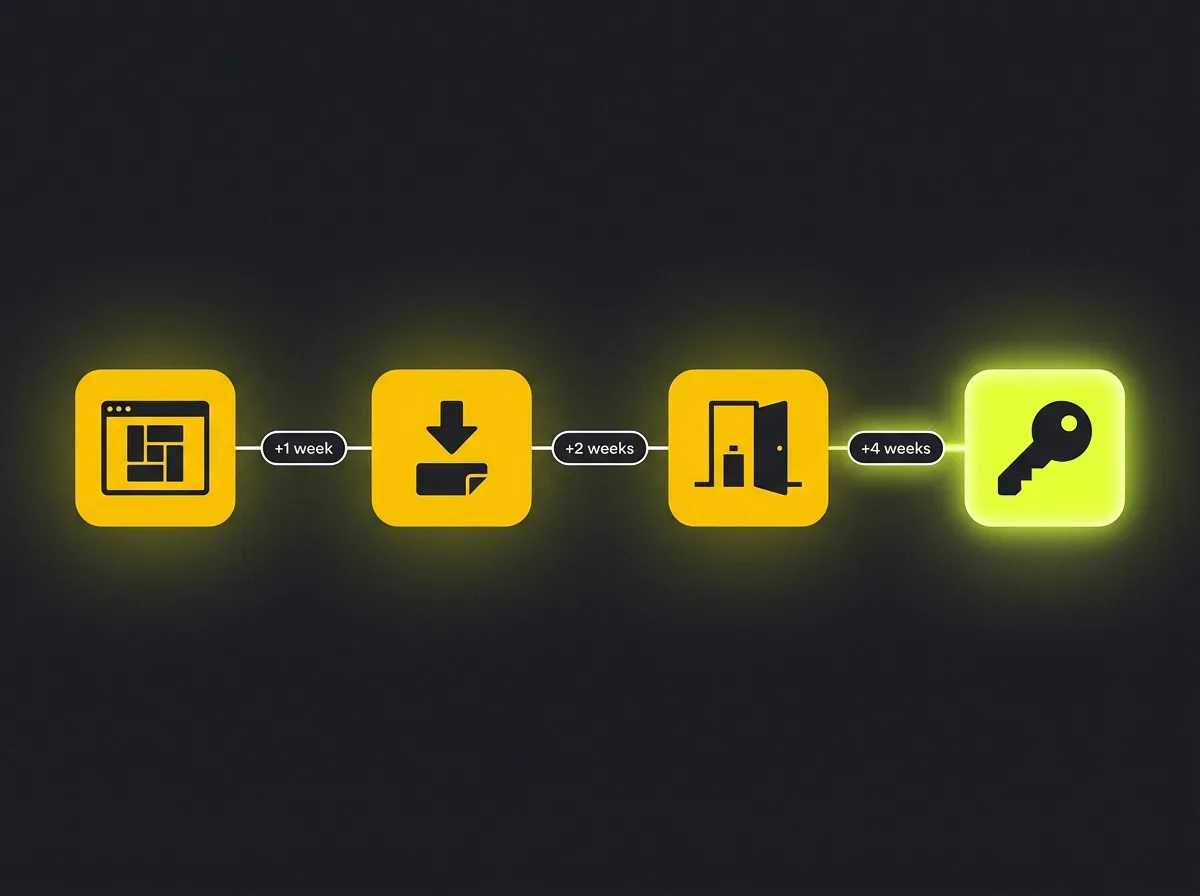
A four-touch retargeting sequence built around the buying cycle looks like this. First, a project gallery ad served to anyone who has visited your website in the past 30 days. Not a "call us now" ad. A beautiful project image, a short caption describing the brief, and a link to see the full page. Second, a brochure download or lookbook offer served to visitors who engaged with the gallery but did not enquire. Third, a showroom invitation ad timed roughly four weeks after initial engagement, with a specific offer such as a free design consultation. Fourth, a social proof sequence, testimonials and finished project photography, for anyone who visited the consultation booking page but did not convert.
Pinterest deserves a mention here because most UK kitchen retailers ignore it entirely. It is not Instagram. It is a visual search engine, and it is where buyers in weeks two to six of their research actively save kitchen ideas. A showroom that publishes its project images to Pinterest with proper titles, descriptions, and links back to the full project pages will reach buyers months before those buyers think to search for a showroom directly. The conversion rate at the point of eventual enquiry tends to be higher, because the buyer has been building familiarity for weeks.
A note on Google Ads Performance Max: treat it carefully for kitchen retail. Without firm audience exclusions and negative keyword lists, PMax tends to over-rotate towards broad, low-intent traffic that looks healthy in a dashboard but rarely produces showroom appointments. It is not useless, but it needs tight controls. For most kitchen companies, consistently building organic search visibility will deliver more predictable returns over a 12-month horizon.
How AI search is changing kitchen retailer discovery
KBSA research on consumer buying behaviour in the KBB sector shows how much of the research process now happens online before any showroom contact. That research behaviour is increasingly happening inside AI tools as well as Google. A buyer in 2026 is as likely to ask ChatGPT "what style of kitchen suits a large open-plan Victorian terrace" as they are to search it. Perplexity gets used for "best kitchen showrooms in Manchester." These are real queries from real kitchen buyers, and the businesses that get cited are the ones with structured, entity-rich content already available.
What gets cited by AI tools is specific content, not vague marketing pages. A project page describing "a period-appropriate Shaker kitchen installed in a mid-terraced Victorian house in Leeds, featuring hand-painted cabinetry and a Quartz worktop with an integrated Belfast sink" is the kind of content ChatGPT draws on when answering style questions. It is real, named, specific, and linked to a verifiable local business. Generic gallery pages with no descriptive text do not get cited.
This matters because AI search traffic converts at significantly higher rates than standard organic, since the buyer arriving from an AI recommendation has already been told your showroom is relevant to their brief. They are not comparison-shopping. They are verifying.
The content investment required to earn AI citation is exactly the same investment required to rank in Google and perform on Pinterest. The detailed project page is the asset that does all of it. Build it once; it works across every channel.
A monthly marketing rhythm a £2m to £6m kitchen company can run
You do not need a large internal marketing team to run this programme. One in-house person who owns content, and a specialist agency handling the technical side. Two hours a week between them is usually enough to keep the machine running.
A sustainable monthly cadence looks like this. Two new project pages published to the website, with proper photography, full project descriptions, and schema markup. One of them becomes a GBP post immediately. The other goes to Pinterest. Twelve GBP posts across the month in total, drawn from the project library: roughly three per week, mixing new project posts, review highlights, and behind-the-scenes content. One Pinterest batch session, publishing that month's project images to relevant boards with optimised descriptions. One retargeting refresh, rotating ad creative that has run for more than six weeks. One performance review, focused exclusively on the three metrics that matter.
On budget: UK kitchen retailers in the £2m to £6m revenue bracket typically invest between £1,500 and £6,000 per month on digital marketing. At the lower end, this covers local SEO, GBP management, and a modest retargeting spend. At the higher end, it includes a proper project content production process, comprehensive local search work, and a more structured paid social programme. The right number depends on the volume of projects you have available to photograph and the geographic area you are trying to dominate. The starting question is always "what does a booked showroom appointment cost us, and how many do we need each month," not a percentage of revenue.
What to measure (and what to ignore)
The number most kitchen companies track is enquiries, usually measured as form submissions or phone calls. Reasonable start. Wrong end point.
Kitchen companies make money from showroom appointments that convert to deposits, not from enquiries. The metrics that tell you whether your marketing is actually working:
-
Enquiry to appointment rate. What percentage of people who contact you go on to visit the showroom? Below 50% usually means the issue is in your follow-up sequence, not your marketing spend.
-
Appointment to deposit rate. What percentage of showroom appointments convert to a signed project? Below 40% suggests a conversion problem in the showroom, not online.
-
Cost per booked appointment. Total marketing spend divided by showroom appointments in a given month. The only paid metric that matters for a high-ticket, long-cycle product.
-
Project page assisted conversions. In GA4, check whether project pages appear as an assisted touchpoint before enquiries. This tells you directly whether your content is doing real marketing work.
-
Branded search lift. As the programme runs, you should see a gradual increase in people searching directly for your showroom by name. It shows up in Google Search Console and it is the long-term brand-building signal.
The minimum measurement stack is GA4, Google Search Console, and your showroom CRM or diary. GA4 tracks website behaviour. Search Console shows which queries drive traffic to your project pages. The CRM tells you whether enquiries are becoming appointments.
What to ignore: total website traffic, social media impressions, email open rates, and any ranking report that lists you in position three for a keyword nobody actually searches. Vanity numbers. Focus on the appointment.
Frequently asked questions about digital marketing for kitchen companies
How much should a UK kitchen company spend on digital marketing each month?
UK kitchen retailers typically invest between £1,500 and £6,000 per month, depending on scale and ambition. A showroom turning over £2m to £3m would reasonably start at the lower end, covering local SEO, Google Business Profile management, and a modest retargeting budget. A multi-location or wider-catchment showroom would sit towards the upper end. The right figure is always grounded in "what does a booked showroom appointment cost us and how many do we need monthly" rather than an industry percentage benchmark.
How long before we see enquiries from SEO?
Realistically, three to six months for meaningful, attributable results from local SEO and project page content. The first two months typically focus on the technical foundation and publishing the initial project library. Months three and four you will see movement in Google Business Profile impressions and project page organic traffic. A measurable increase in showroom appointment enquiries attributable to organic search usually becomes visible around month five or six. Paid retargeting tends to show results faster, within four to six weeks, but it works best once the organic content is in place to build retargeting audiences from.
Do paid ads work for kitchen showrooms?
Yes, but the format matters. Cold prospecting campaigns on Google Search or Meta, aimed at people with no prior awareness of your showroom, typically produce weak enquiries at high cost for a product with this research cycle. Retargeting campaigns against people who have already visited your project pages or downloaded your brochure work well, because the audience already has familiarity. Google Ads can also perform effectively for high-intent local queries like "kitchen showroom near me" and "kitchen designers [town name]," which are typically searched by buyers already several weeks into their research.
What about TikTok and Instagram Reels?
Both can build brand awareness, and Instagram in particular is part of how many buyers discover kitchen styles and shortlist showrooms. The honest caveat is that short-form video requires consistent production effort and a longer attribution window than most showroom owners are comfortable with. If you have the resource to produce quality video content regularly, Instagram Reels with proper geotags and kitchen-specific hashtags can reach early-stage buyers. If resource is limited, the project pages, GBP programme, and retargeting sequence above will consistently outperform a sporadic Reels presence in terms of actual showroom appointments generated.
Should we hire an agency or build an in-house team?
For most kitchen companies in the £2m to £6m bracket, the right model is one in-house marketing coordinator combined with a specialist agency. The in-house person owns project photography logistics, content publishing, and CRM follow-up. The agency handles local SEO, GBP management, paid social retargeting, and performance reporting. A purely in-house setup tends to struggle with the technical SEO and analytics side. A purely agency setup tends to disconnect from the project output coming through the showroom week to week. The hybrid model with clear ownership on each side is usually the most cost-effective.
How do we measure return on marketing spend?
Track cost per booked showroom appointment, then multiply appointments by your average conversion rate and average project value. If the programme costs £3,000 per month, produces eight booked appointments, and five of those convert at an average of £18,000, the return is straightforward. Set this up in a simple monthly reporting document alongside your GA4 and Google Search Console data, and you will have more clarity on marketing ROI than most UK kitchen companies currently do. KBSA research on sector buying behaviour provides useful benchmarks when setting realistic conversion rate expectations for the first time.
Where to start
You do not need a new agency. You need a new order of operations.
The version of digital marketing for kitchen companies that consistently fails looks like this: spend on ads, collect form fills, watch the appointments not materialise, blame the market. The version that works starts earlier and differently. Build the project gallery properly. Distribute it across the four channels. Build the appointment funnel that connects interest to a booked slot. Then add paid spend to amplify what is already converting.
If you want to see what that looks like in practice for your specific situation, the right starting point is a Traffic Projection Report. It maps your current search visibility against the keywords your buyers are actually using, shows where your local competitors are ranking and where the gap is, and gives you a realistic forecast of what a properly run programme could deliver in organic traffic and showroom enquiries over 12 months. No commitment, no sales pitch.
Get your free Traffic Projection Report
Most kitchen companies who go through it find two things. The opportunity is larger than expected. And the starting point is simpler than they thought, usually the project library already sitting on a hard drive, waiting for someone to do something useful with it.