You add a new service to the business. Before anyone has agreed who will buy it, someone has bought a domain and started discussing a logo.
Now the new service has a name, a colour palette and a LinkedIn page. Explaining how it relates to the business you have spent years building takes slightly longer.
That feels backwards.
Imagine a 15-person accountancy firm adding business advisory services. Existing clients already ask for advice, and the same partners will deliver it. Does that really need another brand? Perhaps. But a new name should solve a customer problem before it creates an internal project.
Search for brand architecture strategy and you will find diagrams of multinational groups. Useful if you own a portfolio of global consumer products. Less helpful when your marketing department is one person who also organises the Christmas lunch.
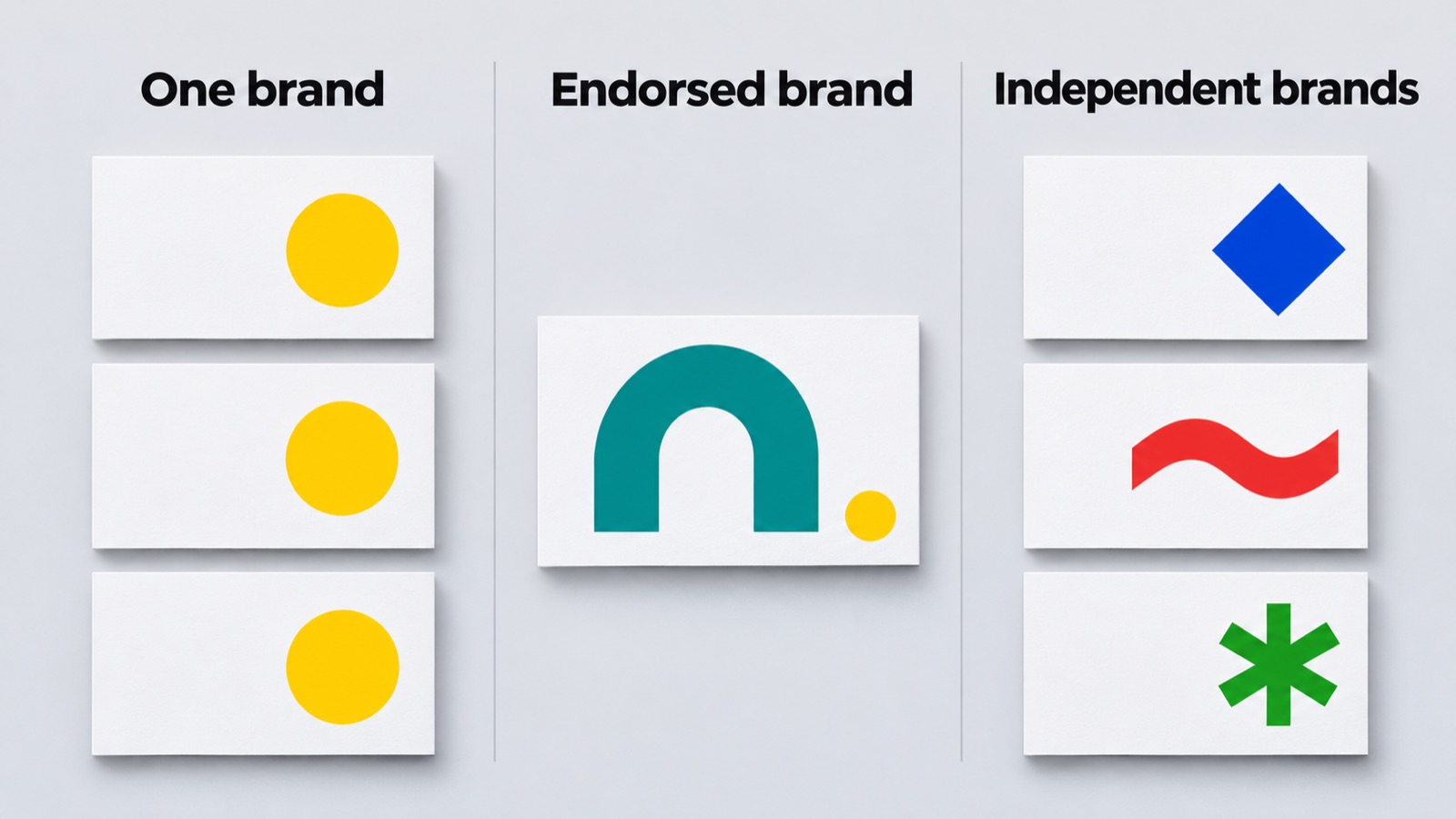
Your decision is more immediate: keep everything under one name, give the new offering a distinct identity with a visible connection, or build something independent.
Each can work. Each creates different obligations for your website, sales conversations and marketing budget. The sensible choice starts with those obligations, before anyone opens a design file.
Before you name it, decide what customers need to understand
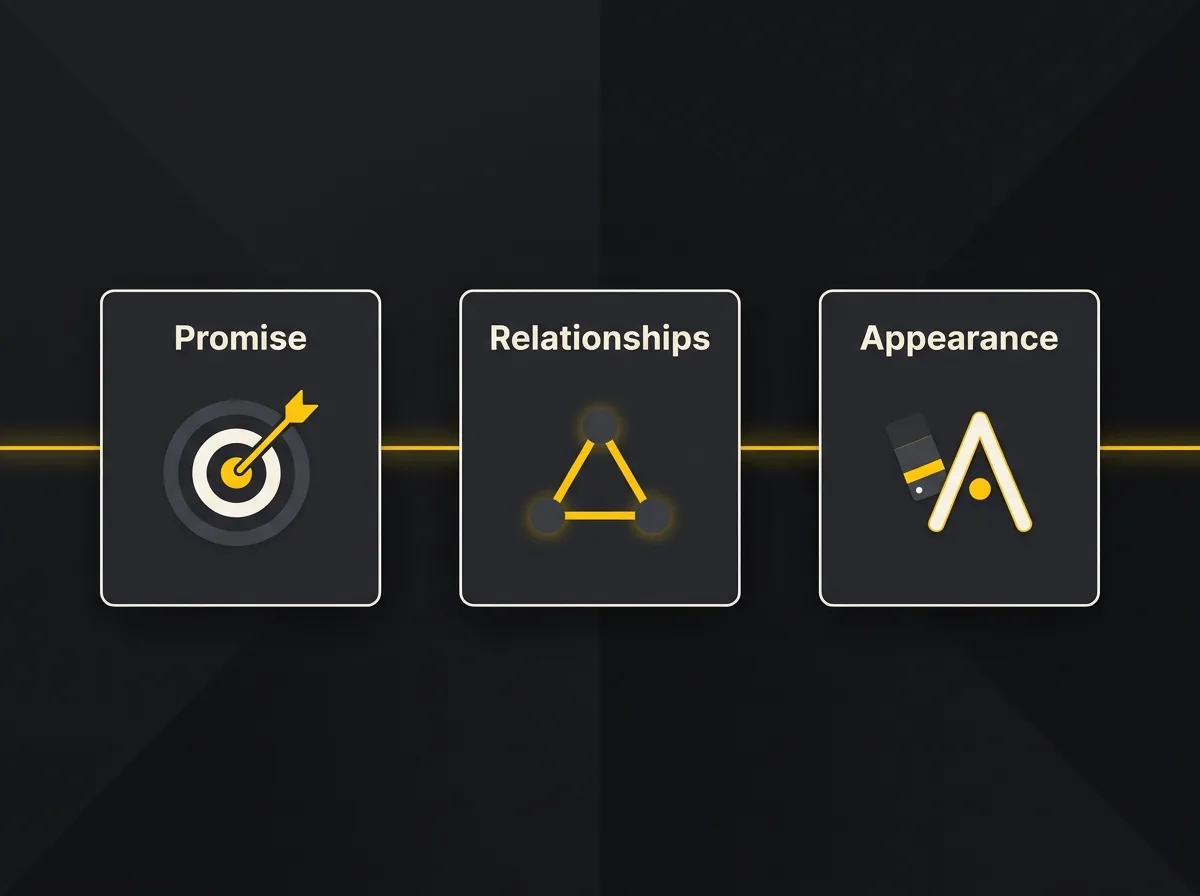
Brand architecture strategy decides how your business name, service names, products and sub-brands relate, and how clearly customers see those connections. It establishes which name carries the main promise, where an existing reputation supports a new offer, and when an offer needs its own identity. For a growing business, the practical aim is simple: help customers understand what you sell, why it belongs together, and who they are trusting.
That is the relationship question.
Brand strategy addresses a different question: who should choose you, and why? Visual identity makes those choices recognisable through typography, colour, imagery and design.
The three affect each other, but they are not interchangeable. Changing a logo will not resolve a confusing relationship between two businesses. Creating a second brand will not clarify an offer nobody understands.
Take our illustrative accountancy firm. Its tax, payroll and advisory services might all belong under one business name, with clear descriptions underneath.
Customers can understand the difference without learning another company name. The firm can still give advisory work a dedicated page, a stronger proposition and relevant proof.
That distinction matters because internal departments often feel more different than they look from outside. Your advisory team may have separate targets and meetings. Your client may simply want the accountant they trust to help with a bigger decision.
Build around that view first.
You should be able to draw the proposed relationship on one sheet of paper and explain it without pointing at the organisational chart. If it needs a lengthy introduction, the structure probably needs more work.
Three models, with three different bills attached
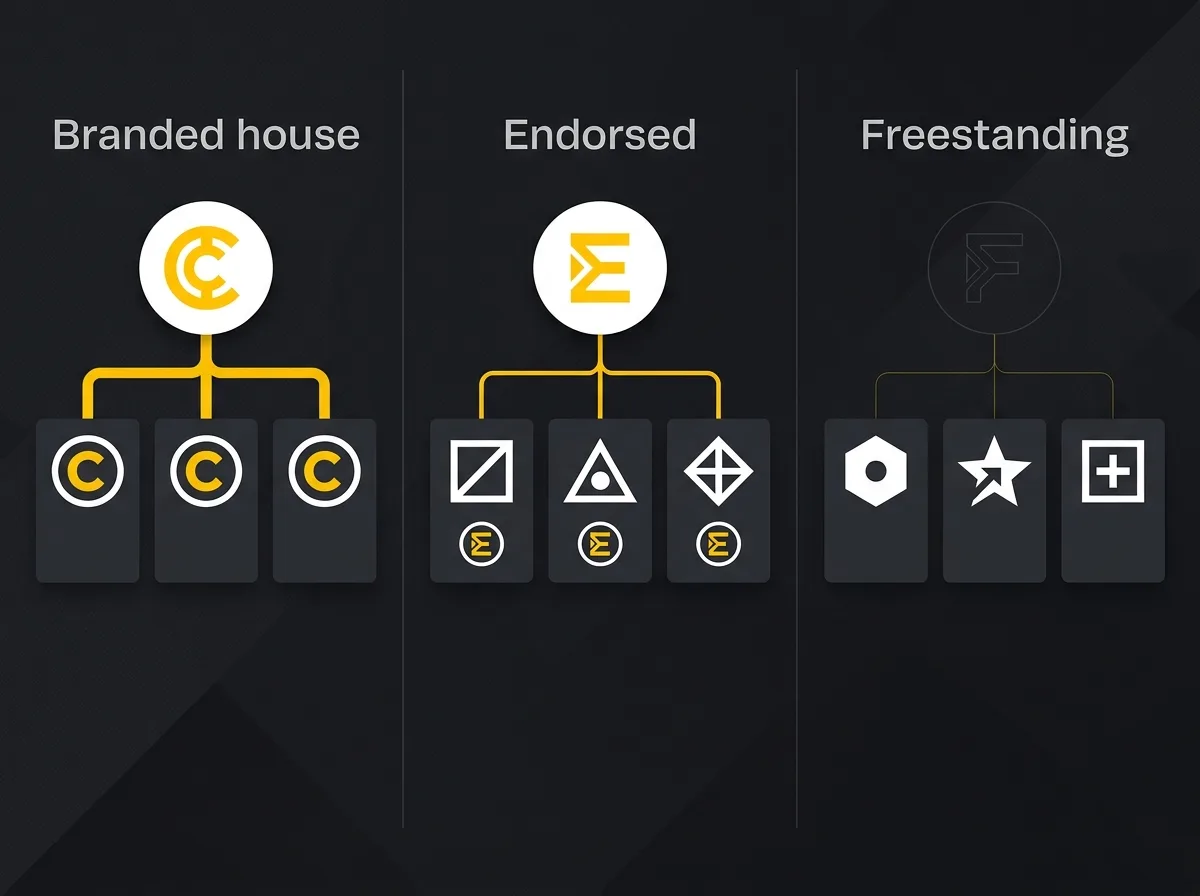
The main brand architecture models describe how prominently the parent appears. Real businesses mix them, but understanding the basic choices helps you avoid building a complicated hybrid by accident.
Keep the customer in view.
Monolithic: let one name do the work
A monolithic structure, also called a branded house, puts one main brand across the offering. Service names explain what you do rather than introducing separate identities.
For an illustrative design studio, that could mean one studio name covering branding, websites and ongoing marketing. Each service needs a clear explanation. None automatically needs its own logo.
The advantage is concentrated recognition. Someone pleased with your website work encounters a familiar name when they need help with their brand.
You still need proof that you can deliver the additional service. Familiarity earns consideration; it does not replace competence.
Virgin is a familiar UK example of a shared name extending across very different categories. It also shows why copying a famous brand's structure needs care. An established name can carry expectations a small business has not yet earned.
For an SME, the strongest case is usually simpler: related services, overlapping buyers and a credible shared promise.
The trade-off is exposure. A poor experience with one service can affect confidence in the rest. And if the shared promise becomes so broad it says nothing, the structure needs attention.
Endorsed: a distinct offer with a visible backer
An endorsed brand leads with its own identity while making the parent relationship explicit. The customer sees both the particular offer and the organisation backing it.
Courtyard by Marriott makes the relationship visible in the name. You do not need to investigate its ownership to understand the connection.
For a small service business, imagine a consultancy launching a training programme. The programme has a distinct name and tone, followed by “by” and the consultancy name.
That can help when the programme has a different buying process or audience, while the consultancy's reputation remains useful.
The distinction must be real. “Smith Advisory” alongside “Smith Tax” might simply be descriptive services under a shared brand. Adding another word does not automatically create an endorsed structure.
Endorsement also needs rules. How prominently does the parent appear? Which name opens the sales conversation? Does the connection remain visible on booking pages and proposals?
Decide once, then repeat it.
Freestanding: every name earns its own recognition
A house of brands gives individual offerings their own identities, with limited emphasis on the corporate parent. Customers can understand and choose each brand independently.
Innocent is a useful corrective to a common example. It appears in Coca-Cola's own brand directory, but that ownership does not make “Innocent by Coca-Cola” its consumer-facing name.
Ownership and endorsement are different.
For an SME, separate identities may make sense after an acquisition, where an established name already has value. They can also help when offers have substantially different promises or routes to market.
But independence brings work. Each brand needs a convincing proposition, relevant proof and a way to attract demand.
Separate names do not require separate teams for everything. They do require enough attention to keep each promise credible. If one brand exists mainly as an unattended website, the structure has outgrown the resources.
Four questions worth answering before the naming meeting

Start with buying behaviour, reputation and capacity. A preference for a more exciting name can wait until those are clear.
Write the answers down.
1. Do the services share a buyer and a buying situation?
Look beyond job titles. The same business owner might buy both bookkeeping and succession advice, but approach them with different concerns, advisers and timescales.
Ask whether customers expect to find these services together. Review recent enquiries and sales conversations. If clients already request the new service from you, that is useful evidence for keeping the connection strong.
Different buyers do not automatically require different brands. They may need separate service pages, examples and sales materials within one coherent business.
2. Does the existing name help the new offer?
Test this with customers rather than relying entirely on internal opinion. Explain the proposed service under your existing name and ask what feels credible, unclear or surprising.
An established reputation for careful financial work could support advisory services. A reputation built around low prices might make a premium offer harder to explain.
Neither conclusion should rest on a partner saying, “It just doesn't feel like us.” Find the specific expectation that creates the difficulty.
3. Who will maintain the second identity?
List the ongoing work: website updates, case studies, campaigns, enquiries, sales documents and reporting. Put a person against each responsibility.
A second brand does not always need every social channel. It does need an intentional way to reach its buyers, with someone responsible for keeping it current.
If the answer is “the same person, somehow”, you have found a constraint. Give that constraint more weight than the presentation showing three attractive logo options.
4. Are the offers heading towards different futures?
A future sale, outside investment or independent management may justify clearer separation. An acquired business may also have customer relationships you should preserve.
However, a freestanding brand is not a complete exit plan. Contracts, systems, intellectual property and operations also affect how easily a business can separate.
For a service business growing related offers together, begin by testing a branded house. Use endorsement where a distinct offer benefits from a visible backer. Choose independence when there is a clear commercial reason and the capacity to support it.
A second logo can become a second unfinished business
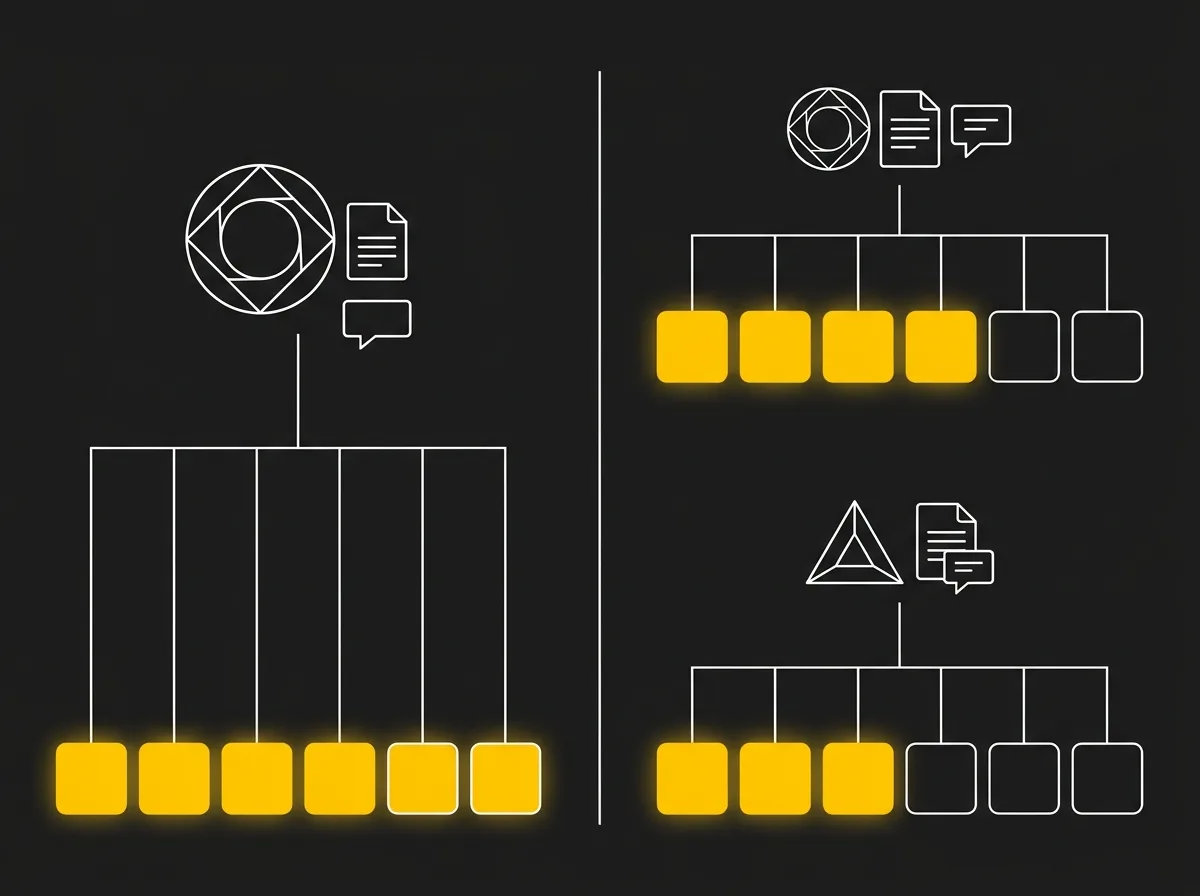
The temptation to split arrives early because launching a brand feels like progress. There is a name to approve, a website to unveil and something tangible to show the team.
Maintaining it is less photogenic.
Imagine our accountancy firm launches advisory under a new, unrelated name. Its strongest testimonials remain on the original website. Its partners' existing networks recognise the original firm. The new site has little evidence of its own.
Every introduction now needs an explanation of the connection. The structure has removed useful familiarity before the new business has earned a replacement.
The advisory offer may still need different messaging. But that could have been achieved through a dedicated section, relevant client questions and a clear description of the work.
Instead, the team has created another place requiring attention.
This is where the budget discussion needs to become specific. What will the second identity prevent you doing for the first? A new website may delay better service pages. Another campaign may consume the time needed to follow up existing enquiries.
The cost includes the work you postpone.
There is a distinction here: a strong parent reputation makes endorsement more useful. A freestanding brand, by contrast, must be viable without relying on that visible connection.
A weak parent brand therefore does not make separation impossible. It makes the investment question harder, because there is less recognition available to support either offer.
Before commissioning another identity, test a dedicated service page under the existing brand. Give it a clear proposition and relevant evidence. Watch the questions prospects ask and whether suitable enquiries follow.
That will not settle every case. It gives you evidence before you commit to a bigger change.
The structural decision should also inform brand identity work. Designers need to know which name leads and which relationships must remain visible. Otherwise, you are paying them to make an unresolved decision look finished.
Your brand diagram is not a website plan
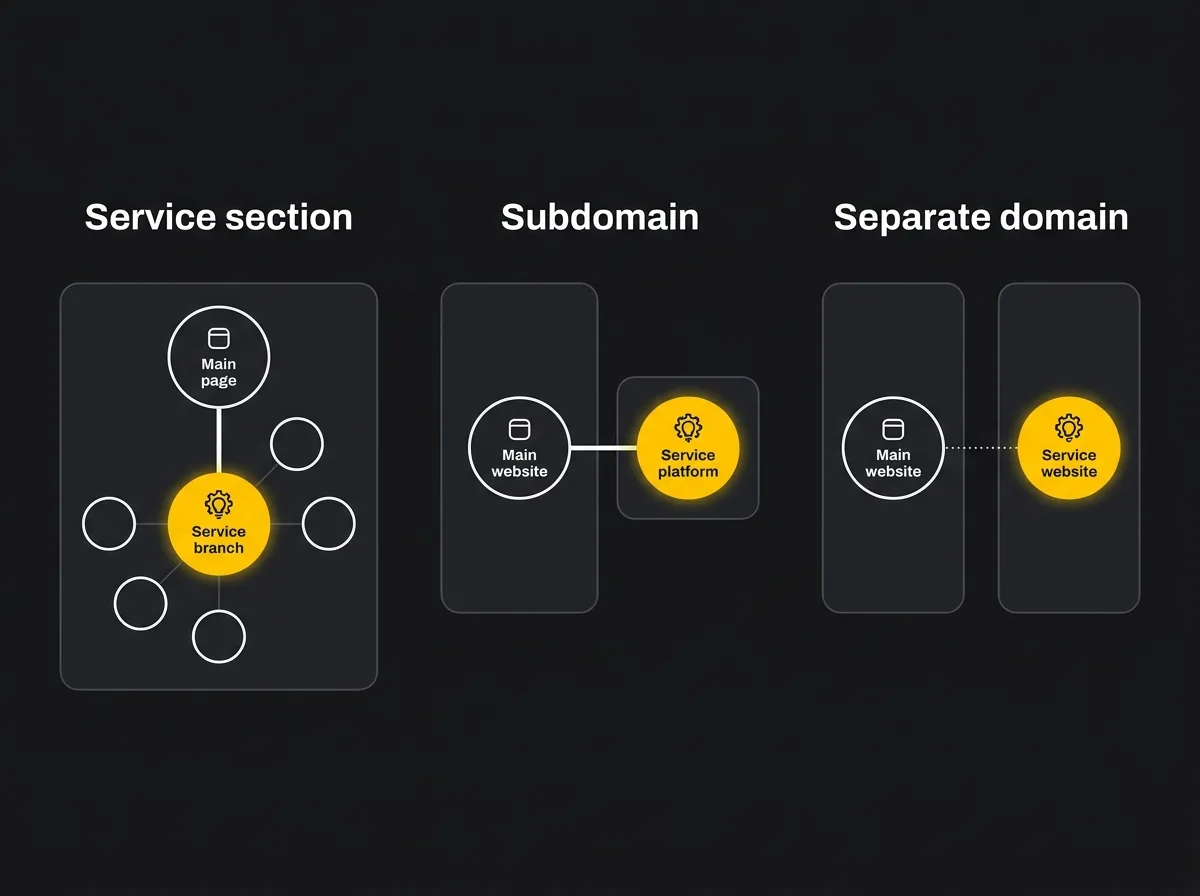
An endorsed offer can live on the main website. A separate legal company can use a shared website. A distinct name does not come with an automatic requirement for another domain.
Keep those decisions separate.
A section such as example.co.uk/advisory/ gives a related service its own destination while keeping navigation and maintenance together. You can tailor its message without asking visitors to understand another business first.
A subdomain, such as training.example.co.uk, may suit a learning platform or a separate publishing system. Choose it because it solves a practical requirement, rather than assuming it inherits all the main site's search benefits.
A separate domain creates another destination to maintain and promote. For a genuinely new offering, that includes earning visibility without assuming the existing website's rankings will carry across.
Moving existing content is a different situation. Relevant signals can transfer through a properly managed migration; there is no simple authority score that you divide between websites.
Google's site migration guidance recommends mapping old pages to their new destinations and using permanent redirects. It also warns that rankings can fluctuate while pages are recrawled and reindexed.
That creates a planning task. Identify the pages already bringing suitable enquiries before deciding which URLs to change. Preserve useful content, update internal links and check that enquiry tracking works on the destination.
Avoid sending every old service page to a generic new homepage. Someone searching for payroll help should arrive somewhere that still answers their payroll question.
The commercial test continues after the move. Monitor suitable enquiries and sales alongside search visibility. More traffic to a new brand is little comfort if prospects cannot work out who will deliver the service.
These are questions to resolve when specifying web design services, before the page designs begin. A beautiful site cannot compensate for sending the right buyer to the wrong business.
Sometimes the existing brand just needs room to grow
You may have a sound structure and an identity that still describes the business you were five years ago.
That is fixable.
Suppose the accountancy firm's homepage talks only about annual accounts. Its imagery and service descriptions give no indication of the advisory work clients already buy.
The problem might be the explanation. Broader positioning, clearer navigation and a more flexible visual identity could accommodate the new work without introducing another name.
A brand refresh makes sense when the audience and reputation remain useful, but the presentation has fallen behind.
An architecture review becomes more pressing when customers misunderstand who provides what, when established expectations actively obstruct the new offer, or when ownership and future plans require separation.
Look for evidence. Are prospects dismissing the service because of what your name represents? Or have they simply never seen it explained properly?
Those require different responses.
Do the relationship work before refreshing the visuals. Otherwise, you may approve a polished identity and discover later that it cannot accommodate the structure you need.
Equally, avoid treating every inconsistency as a strategic crisis. Three slightly different proposal templates may require one better template and someone to retire the old versions.
You do not need a new company name to fix the footer.
Make the relationship survive beyond launch day

Once you choose a model, document how people should use it. A diagram alone leaves too much room for interpretation.
Give someone ownership.
Your working guide should cover the approved names, which name leads, how endorsement appears, and a short explanation of the relationship. Include examples for the website, proposals, email signatures and social profiles.
Then audit what customers actually encounter. An updated homepage alongside an old proposal and a differently named invoice can undo the clarity you have just paid to create.
This is where brand consistency matters. The relationship needs to remain recognisable from first enquiry through to delivery.
Train the people who answer the phone and introduce the service. Ask them to explain it in their own words. If every person gives a different answer, revise the explanation before launching.
Implementation timing depends on the scope. Updating descriptions and templates may be a matter of weeks. Research, naming, identity development and a website migration can turn it into a project lasting months.
Treat that as planning guidance, not a delivery promise. Approvals, technical dependencies and the number of affected materials will determine the schedule.
Ask for costs in separate parts: strategic decisions, identity changes, website work, migration and ongoing maintenance. That makes proposals easier to compare and reveals whether an attractive launch price leaves important work outside the quote.
Success is clearer understanding and a maintainable structure. Look for fewer explanations in sales conversations, appropriate cross-selling and suitable enquiries reaching the right people.
A launch announcement is a milestone. It is not the result.
Frequently asked questions about brand architecture strategy
The practical details often decide whether a model will work.
These are worth settling early.
What is the difference between brand architecture and brand strategy?
Brand strategy establishes who you serve, what you promise and why customers should choose you. Brand architecture determines how the names and identities across your offering relate. Your strategy should guide the structure, while visual identity makes that structure recognisable.
When should a business create a sub-brand?
Consider one when an offer needs a distinct identity that clearer service descriptions cannot provide. That might reflect a different audience, buying experience or future direction. First establish what the existing name contributes and whether you can maintain the additional identity properly.
What is the difference between a branded house and a house of brands?
A branded house uses one main name across its offering. A house of brands gives individual offers separate identities, with less emphasis on the corporate parent. Endorsement sits between them: the offer leads with its own name while visibly acknowledging the organisation behind it.
Does splitting into two brands affect SEO?
It can, particularly if you move established pages or introduce another domain. The naming decision itself does not automatically change rankings. URL changes, redirects, content, links and maintenance determine the practical consequences. Map those requirements before treating a new website as part of the launch.
How long does a brand architecture change take?
A limited naming hierarchy and messaging update is a smaller project than research, a new identity and multiple website changes. Agree the decision process and implementation scope separately. Include time to update sales materials and explain the relationship to existing customers.
Before you buy the domain, draw the relationship
Start with one page showing your existing name, the proposed offer, its buyer and the promise connecting them. Add who will maintain its marketing.
Make the connection earn its place.
If the buyer and promise are shared, test keeping the services together. If the offer needs distinction and the parent adds confidence, consider endorsement. Reserve independence for a clear business reason supported by resources.
Make that decision before the logo brief.
Once the structure is clear, the next question is where suitable customers will come from. Assessing that opportunity helps you prioritise the website and search work that follows.

Next step: Traffic Projection Report
Explore the search opportunity for your business before committing to another website or dividing your marketing budget. A clearer view of potential demand helps you decide where the chosen brand structure needs support first.