You open your search report before a meeting. Rankings look respectable, website visits look less respectable, and someone wants to know whether this is “that Google AI thing”.
Google AI Mode is a Gemini-powered search experience that combines information from related searches into conversational answers with links to supporting websites.
That changes where a prospective customer gets their first explanation, comparison or supplier shortlist. Some of the work your website used to do can happen before anyone reaches it.
Awkward for the monthly report.
It also makes the real question more specific. Which searches bring you customers, and what happens when Google answers more of those questions itself?
The short version
Google AI Mode can answer questions that previously sent people to several websites. Informational content is particularly exposed, while supplier selection and local searches still create reasons to investigate businesses directly. Citations offer visibility, but neither citations nor rankings guarantee visits. Start by checking your important customer questions, comparing search performance with qualified enquiries, and improving pages that help buyers make decisions. Keep your existing SEO foundations. Treat published click-loss and conversion figures as findings from particular samples, rather than forecasts for your business. Diagnose the gap before commissioning more content.
One question can now produce several searches
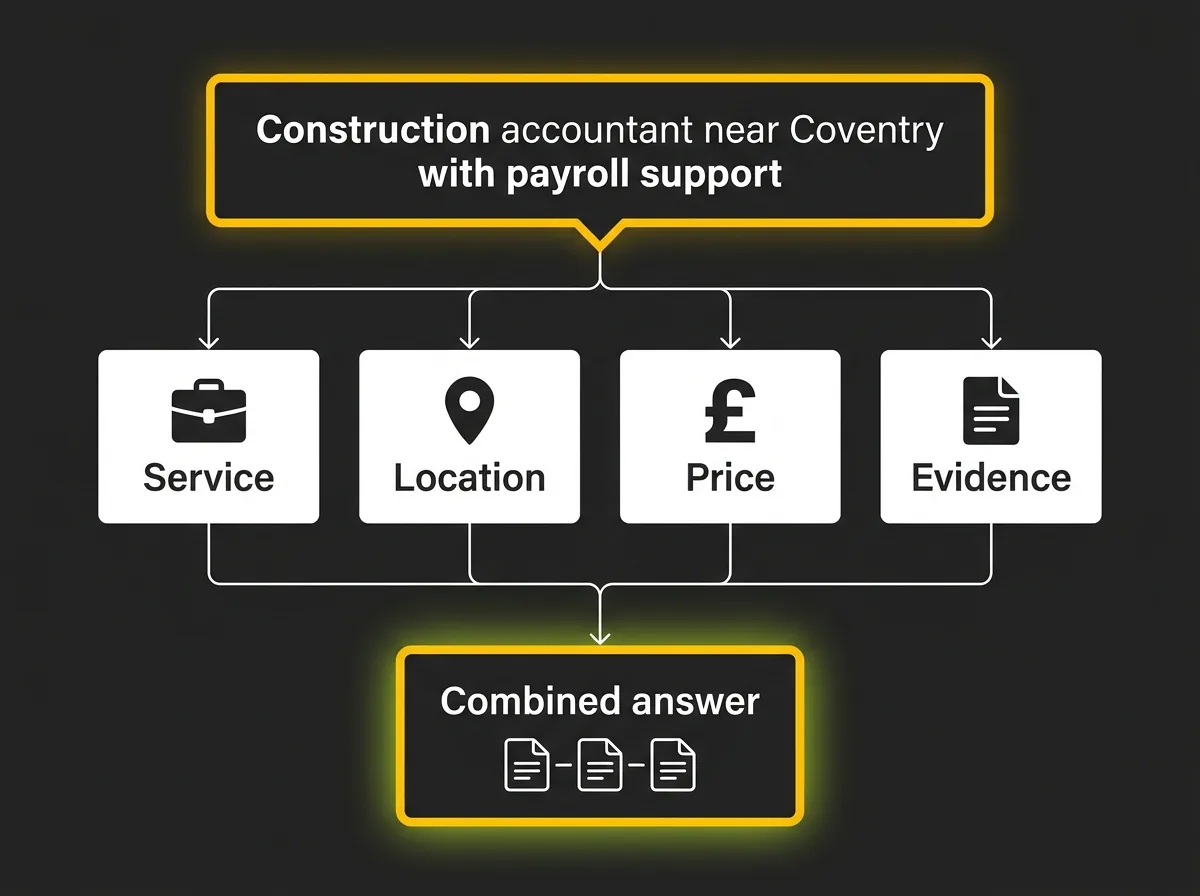
Imagine a business owner asking Google for an accountant who understands construction companies, works near Coventry and can help with payroll.
Previously, they might have made separate searches, opened several websites and assembled their own shortlist. AI Mode can attempt that research inside one conversation.
Google calls the underlying technique query fan-out. It breaks a question into related searches, retrieves information and uses it to build a response. Follow-up questions let the customer narrow their requirements without starting again.
The consequence is simple.
Your page might become useful because it answers one part of a longer question. A clear explanation of construction payroll could matter even when the customer's original wording was about choosing an accountant.
AI Overviews work differently as an experience. They appear within ordinary search results, offering a generated summary alongside the wider results page. AI Mode puts the conversation at the centre.
Both can use related searches. The distinction is not that one always runs a single search while the other runs several.
For a business owner, the practical difference is how much research the customer can complete before leaving Google. AI Mode gives them room to ask another question, compare an alternative and refine their choice.
Google's UK launch announcement dates the rollout to 28 July 2025. It introduced AI Mode through a Search tab and the Google app.
You do not need to follow every interface change. You do need to know whether those conversations include your business, and whether they describe it accurately.
Your exposure depends on what the customer needs next
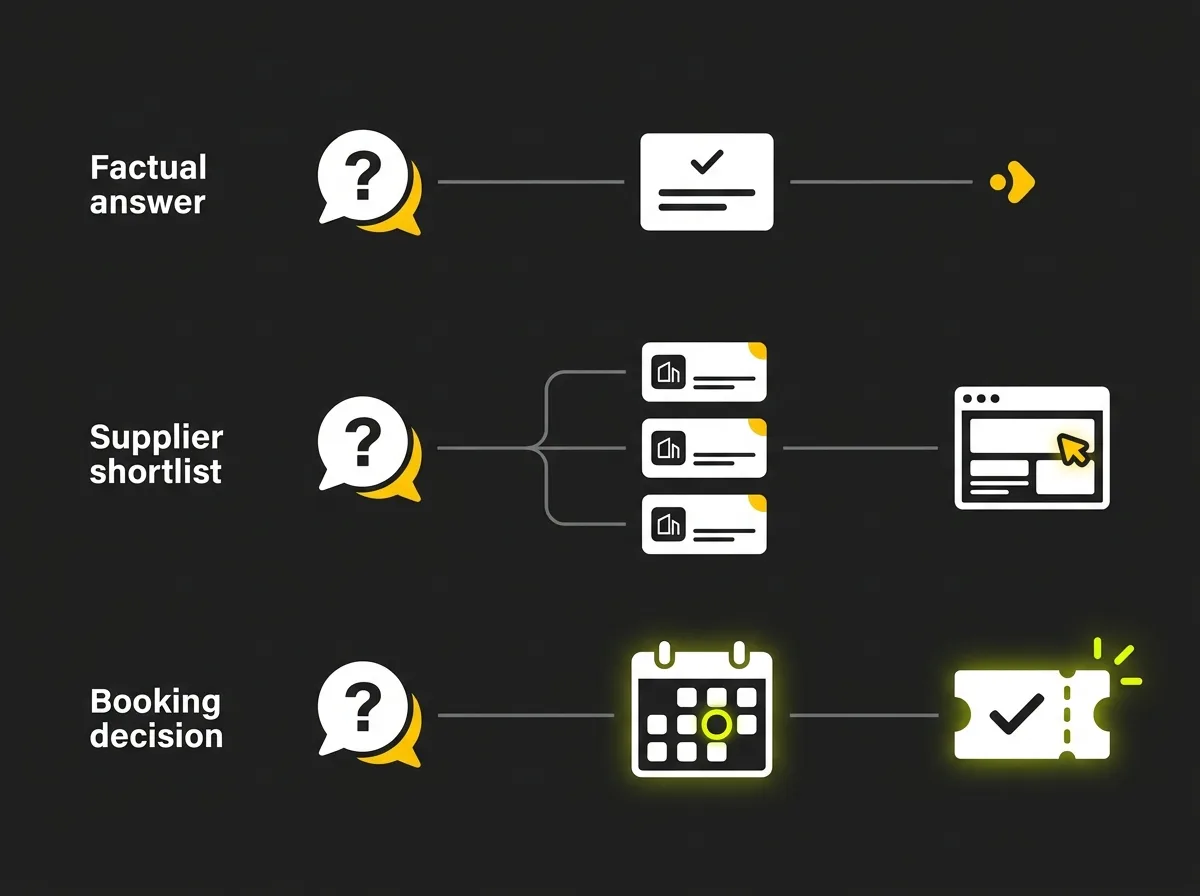
A website visit has different value depending on why it happened.
Someone looking up a definition may leave satisfied after two sentences. Someone choosing a firm to handle a business sale needs evidence, reassurance and a conversation before committing.
That difference matters more than an industry-wide traffic headline.
When the answer itself finishes the job
Informational searches are particularly exposed when a short answer satisfies the customer's need. Definitions, basic instructions and straightforward comparisons are obvious examples.
Consider an illustrative accountancy website with articles explaining payroll terms. Those articles may attract readers who need a quick explanation rather than professional help.
If Google supplies that explanation, the website may lose visits. The commercial damage depends on whether those readers previously became clients, joined an email list or returned later.
Check that history before deciding that every lost visit needs replacing.
Educational content still earns its place when it helps a prospective buyer understand a consequential decision. A detailed explanation of your approach, limitations and relevant experience offers more than a generic definition.
When the customer still needs to choose someone
Local and supplier searches retain reasons to investigate further. A customer may want to check availability, credentials, service coverage or whether the firm feels credible.
But local businesses are not protected from change. Google can influence the shortlist before a customer sees your homepage.
Whito's UK citation research found that businesses' own websites appeared as sources in 143 of 159 Google AI Mode answers, or 90%, in an August 2026 panel covering 20 towns and eight sectors.
That is a useful, bounded finding. It does not mean every business has a 90% chance of appearing, or that those citations generated visits.
It does show why abandoning your website would be a peculiar response to AI search.
For a local business, a sound local SEO approach should connect accurate business information, relevant service pages and credible evidence of the work you do.
When the customer is comparing a substantial purchase
Commercial questions sit between explanation and action. Someone asking how to choose a solicitor or which software suits a growing team may accept an initial AI shortlist, then investigate the options.
Product research can follow the same pattern. Google may handle early comparisons, while a buyer still wants current specifications, delivery information and a dependable place to purchase.
The boundary will move as search features change.
Start with your customers' tasks. A list of popular keywords tells you less than knowing which questions precede a profitable enquiry.
Fewer clicks can hurt, even when the remaining visitors are better
The click-loss concern has evidence behind it.
Semrush's early AI Mode study reported that only 6% to 8% of sessions in its clickstream sample led to an external domain. That left approximately 92% to 94% without an external click.
Its comparison figures included roughly 43% zero-click searches where an AI Overview appeared. Semrush explicitly cautioned that these figures came from separate studies with different methods and timeframes.
The distinction matters.
An early sample showing approximately 93% zero-click activity does not predict a 93% traffic loss for your website. It does not describe all Google searches, either.
Still, the direction of the business risk is clear: a customer can receive useful information without visiting its source.
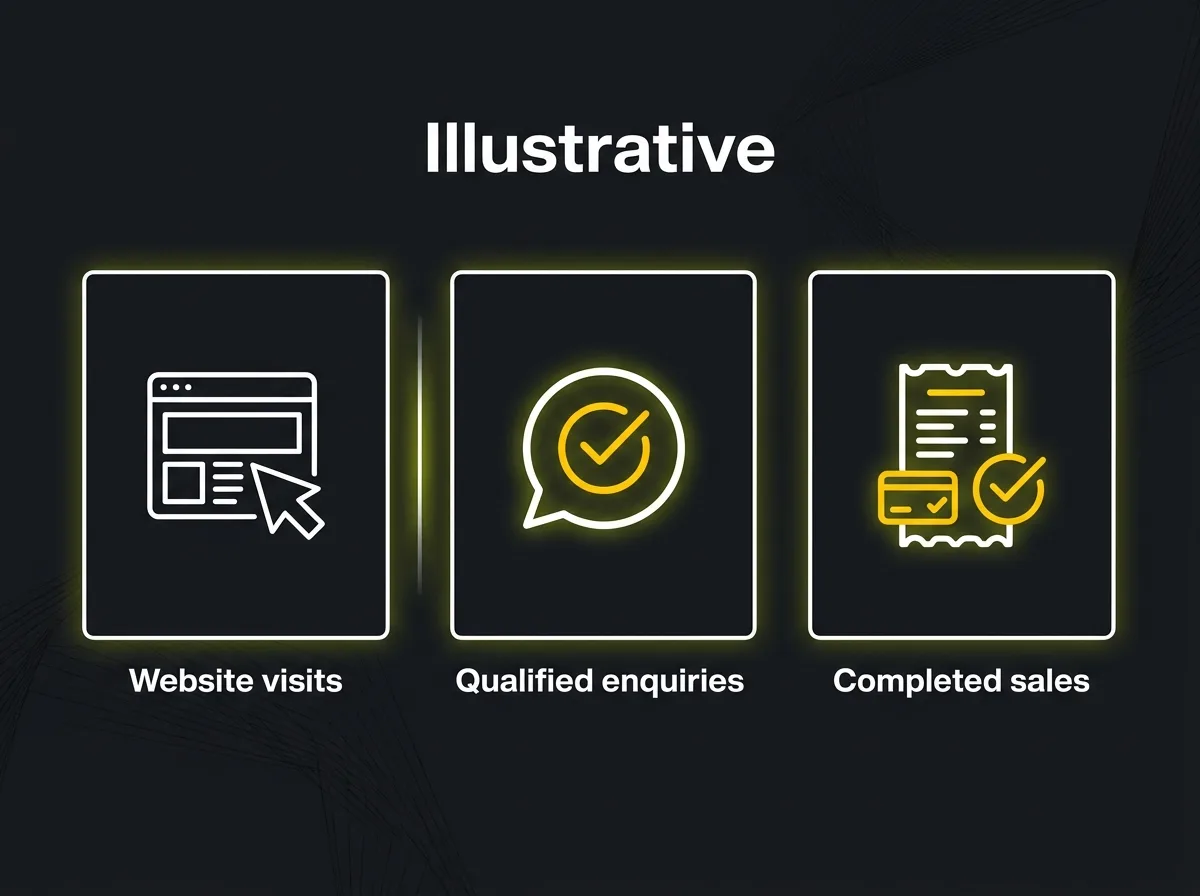
There is also a plausible opportunity. Someone who has already discussed their requirements with an AI tool may arrive knowing more about what they need. Your website then helps them verify the recommendation and decide whether to enquire.
Our article on AI search traffic conversion explores that pattern. It is a reason to examine visitor quality alongside volume.
It is not a dependable multiplier for Google AI Mode. Findings about ChatGPT, Perplexity or Claude referrals cannot automatically be applied to Google's search experience.
Better conversion rates also need enough visitors behind them. A smaller audience converting more readily can still produce fewer enquiries overall.
Your bank account notices.
Measure qualified enquiries, booked appointments, sales opportunities and revenue alongside visits. For longer buying cycles, record whether prospects mention an AI recommendation and whether those enquiries progress.
Treat that answer as additional evidence. People will not always remember where they first encountered you, and analytics will not capture every influence.
The commercial goal is to remain part of the customer's decision, then make the next step worthwhile when they reach your site.
Being cited starts with having something worth checking
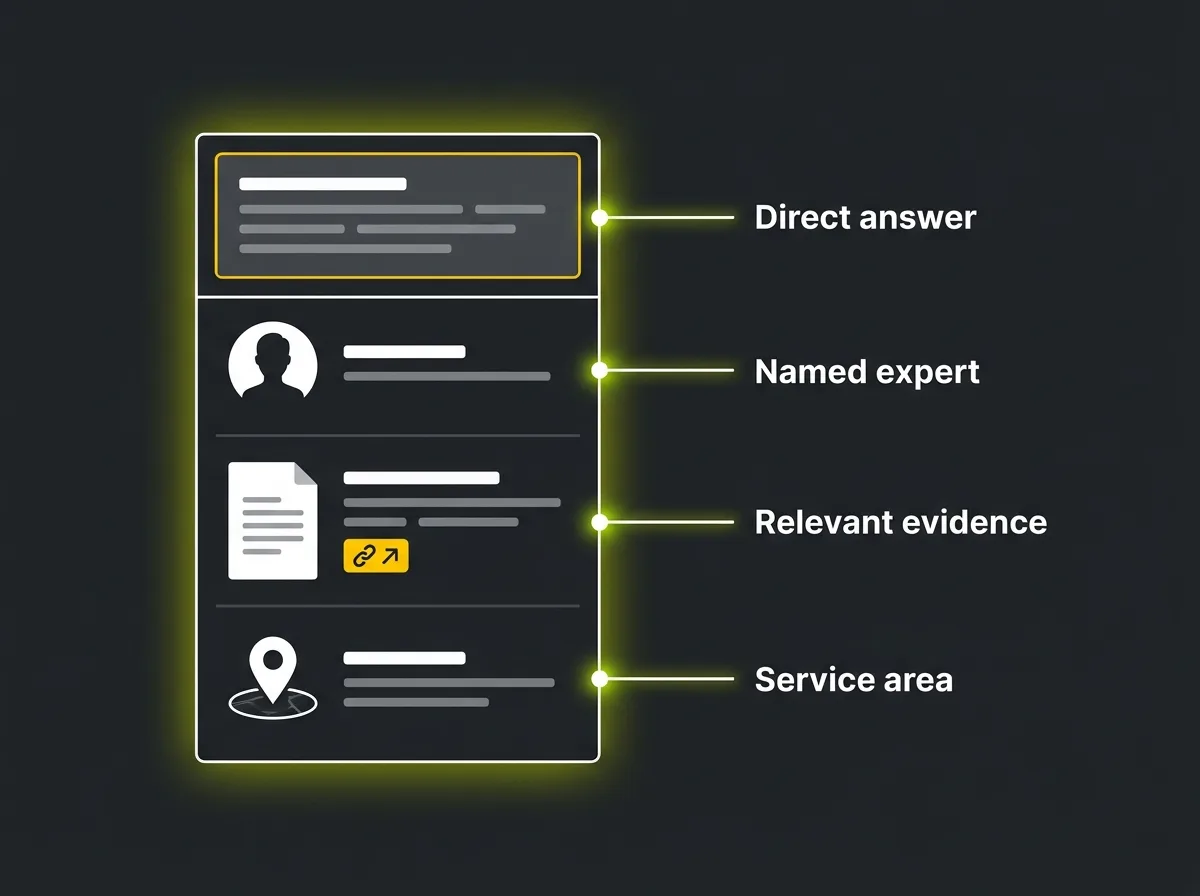
Google does not publish a simple formula that tells a business how to secure an AI Mode citation.
Be suspicious of anyone selling one.
Query fan-out creates opportunities for pages addressing specific parts of a customer question. It also makes a single traditional ranking an incomplete picture of visibility.
A page explaining exactly which projects you accept may help answer a suitability question. A service-area page may establish where you work. A properly evidenced comparison may help a buyer understand a trade-off.
These are useful reasons to improve content. They are not guarantees that Google will cite it.
Google's guidance for website owners says established SEO practices remain relevant and there are no special additional requirements for appearing in its AI features.
That makes the starting point familiar: accessible pages, clear information and content that genuinely helps the reader.
Give important answers space near the relevant heading. Explain your services in terms a buyer would recognise. Put qualifications, authorship and supporting evidence where readers can find them.
For example, an illustrative consultancy page saying “we support growing businesses” tells a prospective client very little. A page explaining the decisions it helps with, who carries out the work and when the service is unsuitable gives them something to assess.
Specificity helps humans first. That is a sensible editing test.
Independent reviews, professional listings and relevant third-party coverage can also help customers verify your business. Check whether they accurately describe what you do rather than chasing mentions wherever someone offers to publish them.
There is a limit to what you should infer from citation studies. A particular sample dominated by a forum, video platform or directory does not establish the best channel for every sector.
Likewise, a shrinking citation pool in one study would not prove that smaller firms can no longer appear. The queries, dates and definition of a citation matter.
Choose changes that improve the customer's decision even if the next AI answer looks different.
Diagnose the problem before rewriting the website
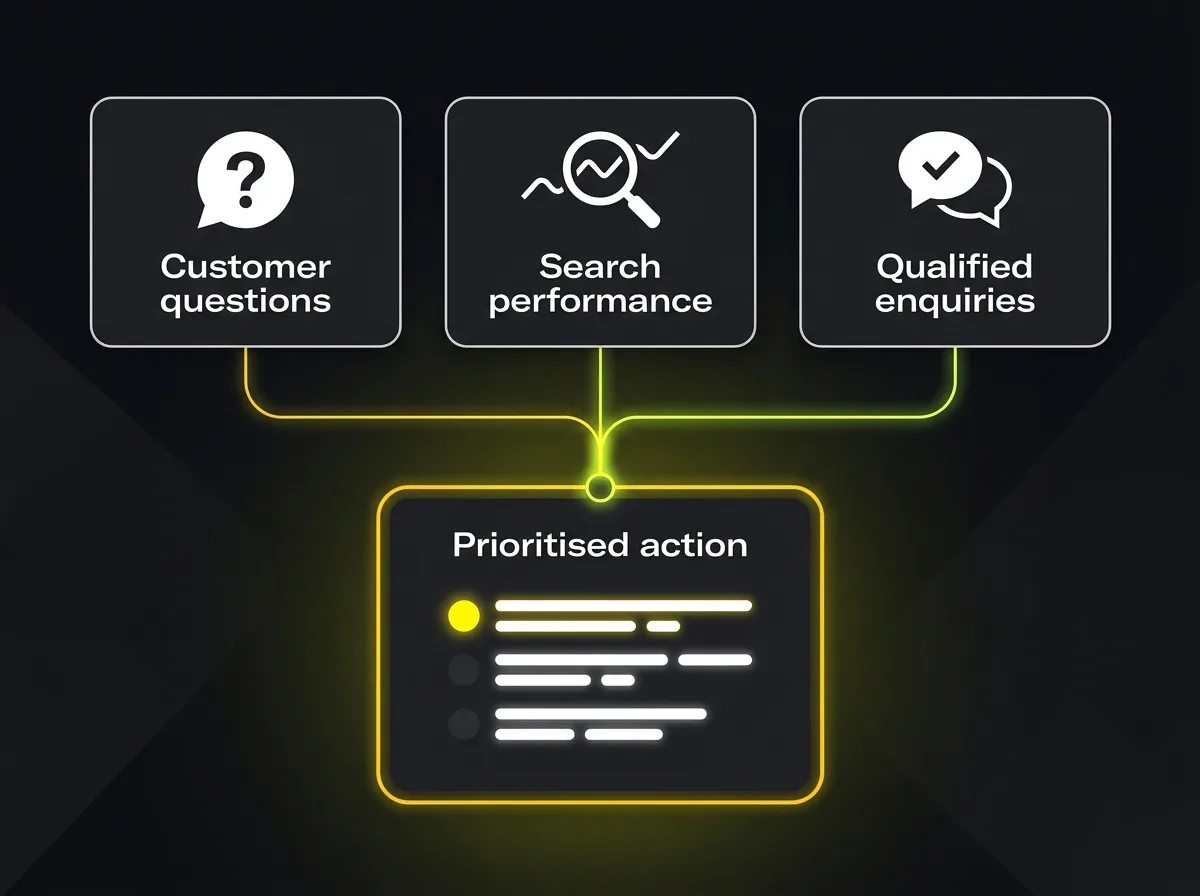
There is a sensible first round of work you can do in-house. It starts with a few questions and a record of what you find.
Keep it manageable.
1. Check five questions connected to real enquiries.
Choose questions a prospective customer would ask before buying. Include your service, a relevant location or business type, a comparison and a practical constraint.
For example: “Which accountant near Coventry works with construction firms and handles payroll?” is more revealing than searching only for your company name.
Record the question, date, businesses named, linked sources and any inaccurate claims. Distinguish a brand mention from a clickable citation.
Repeat the exercise over time using consistent conditions. One answer is a snapshot, and your own experience may differ from another person's.
If competitors appear and you do not, investigate what information supports their inclusion. Their service pages, listings or evidence may answer something yours leaves unclear.
2. Use the reporting now available, then check alternative explanations.
Search Console reporting has moved beyond the position described in many early AI Mode articles.
Google's generative AI performance report provides impressions from Search generative AI features, including AI Overviews and AI Mode. Google says these insights rolled out worldwide by 31 August 2026; low impression volumes can prevent the report appearing.
Use that evidence alongside your wider search performance. Compare relevant pages, UK traffic, device types and equivalent periods.
Rising impressions and falling click-through rates deserve investigation. They do not identify AI Mode as the cause on their own.
Check seasonality, changes in query mix, ranking movements, advertising, technical problems and tracking changes. If enquiries have dropped, test the enquiry form too. Occasionally the glamorous explanation loses to a broken button.
An impressions report also does not complete the commercial picture. Connect visibility trends with landing-page visits and qualified enquiries.
3. Improve two or three pages that matter commercially.
Choose pages supporting profitable services or recurring buying questions. Read each one as a prospective customer who has already received an AI summary.
Can you quickly tell what the business does, who it suits, where it operates and what evidence supports its claims?
Rewrite vague opening paragraphs. Move the main answer nearer the relevant question. Add useful subheadings and remove repetition that makes readers hunt for the point.
Where genuine questions recur, a concise FAQ can help. It should answer things people actually ask, including limitations and practical next steps.
Then check the conversion journey. A convincing explanation followed by an unclear contact form still loses the enquiry.
Your B2B SEO strategy should connect useful content to those commercial pages, so readers can move from understanding a problem to evaluating your service.
4. Correct local information wherever customers verify it.
For businesses serving particular areas, check your Google Business Profile, website and important sector listings.
Keep service details, contact information, opening hours and categories accurate. Use genuine photographs and respond appropriately to reviews.
Prioritise errors that could cause a customer to reject you or contact the wrong place. Do not assume that publishing frequent profile updates creates a guaranteed AI citation advantage.
Accuracy comes first.
5. Keep the work that already supports search visibility.
AI Mode adds another place to be considered. It does not make crawlability, relevant content, useful internal links or trustworthy service pages disposable.
If your existing SEO services are producing qualified enquiries, assess how the plan should adapt. Replacing everything because the interface changed is an expensive way to avoid diagnosis.
Review results after a meaningful period, allowing for your sales cycle. Content edits can be completed quickly; a reliable judgement about enquiries needs enough observations.
Record what changed and when. Otherwise, the next report becomes another meeting in which everyone has a theory.
6. Bring in help when the uncertainty affects spending decisions.
In-house checks may reveal a straightforward problem: unclear service information, outdated listings or a broken enquiry journey.
A broader problem needs a broader investigation. Repeated competitor visibility, sustained deterioration in commercial search performance and unclear attribution are reasons to seek structured analysis.
An AI search agency should explain what it will measure, what it can influence and how progress connects to your business.
Ask for a baseline, prioritised work and a reporting method. Be wary of guaranteed citations or forecasts based solely on someone else's conversion rate.
Frequently asked questions about Google AI Mode
The details matter. These are the distinctions most likely to change your next decision.
What is the difference between Google AI Mode and AI Overviews?
AI Overviews provide generated summaries within ordinary Google search results. AI Mode centres the experience on a conversational answer with follow-up questions and supporting links. Both can use related searches to assemble information. For businesses, the key difference is how much customer research can happen before a website visit.
How do I know if Google AI Mode is affecting my website traffic?
Compare Search Console's generative AI impressions with wider search trends, landing-page traffic and qualified enquiries. Check the same markets and equivalent periods. Falling click-through rates can justify investigation, but they do not prove AI Mode caused the decline. Check rankings, seasonality, technical issues and tracking before deciding what to change.
How do I get my business cited in Google AI Mode?
There is no guaranteed route to a citation. Maintain accessible, indexable pages that clearly explain your services and answer relevant customer questions. Support claims with real evidence and keep business information accurate. Test important queries repeatedly, record the sources used and improve gaps that also matter to prospective customers.
Does Google AI Mode affect local businesses differently?
Local searches often involve a decision that needs further action, such as checking availability or booking a service. That creates reasons to contact a business, but Google can influence the shortlist first. Accurate service information, a well-maintained Business Profile and credible reviews remain useful foundations for customers evaluating local providers.
Find out whether your business is part of the answer
You do not need another general warning that search is changing. You need to know which customer questions matter, whether your business appears and what would make the biggest practical difference.
Start there.
An audit should turn those questions into a baseline you can act on, connecting visibility with the pages and decisions that produce enquiries.
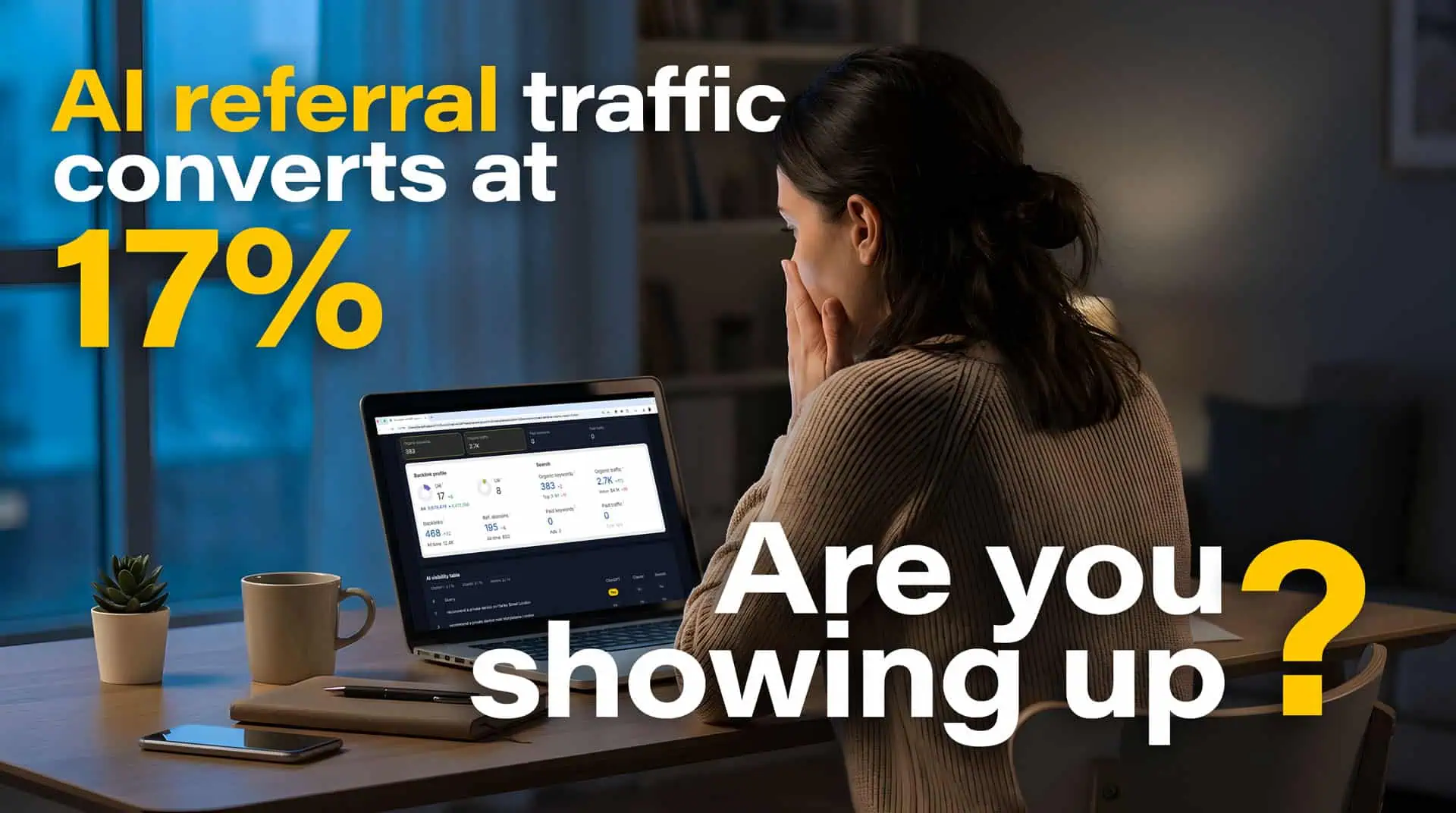
The AI Visibility Audit is a practical starting point for understanding your presence in AI search and identifying what to prioritise. Bring your important services, customer questions and competitors, so the next step follows evidence from your business.