
Most of what gets sold to small business owners as branding is a tax on indecision.
You have been quoted £50 on Fiverr and £9,000 by a studio, and you are no closer to knowing which one, if either, will bring in a single new customer. Everybody from your accountant to your sister-in-law has an opinion on your logo. Every agency you speak to has a different answer to the one question you actually want answered: where should I spend this money?
This post gives you a straight answer. What branding actually has to do for a small business, where spending money on it pays off, where it usually gets wasted, and in what order to spend it. If you already know you need a proper identity project, there is a section on brand identity work that earns its keep. But the honest answer for most owners reading this is that branding is not where your money should go first.
What branding really does for a small business
Strip the definition down. Branding for a small business is the smallest set of decisions about what you stand for and how you look that lets a customer recognise and remember you. Anything beyond that is optional.
It has four jobs to do. Recognition, so that a prospect who encountered you three months ago still knows who you are when they are ready to buy. Trust, so that a first-time customer gives you the benefit of the doubt before they have met you. Pricing power, so that you can charge a fair rate without lengthy explanation. And repeat business, because a customer who remembers you favourably comes back and tells others. That is it.
Branding does not generate leads on its own. It does not replace a website that converts, or a Google ranking that brings in traffic, or a product people actually want. It amplifies all of those things once they are already working.
The over-engineering trap is worth naming. Agencies will pitch full brand strategy to a business with 40 customers. You will see proposals for values workshops, tone of voice documents, brand archetypes, and messaging hierarchies. These things are not worthless in principle. They become worthless when a business is too small for any of them to change a single decision. A five-person company does not need a 60-page document to tell the team who they are. According to ONS Business Demography data, around 40% of UK businesses survive beyond five years. The ones that close were rarely undone by a weak logo.
The minimum viable brand
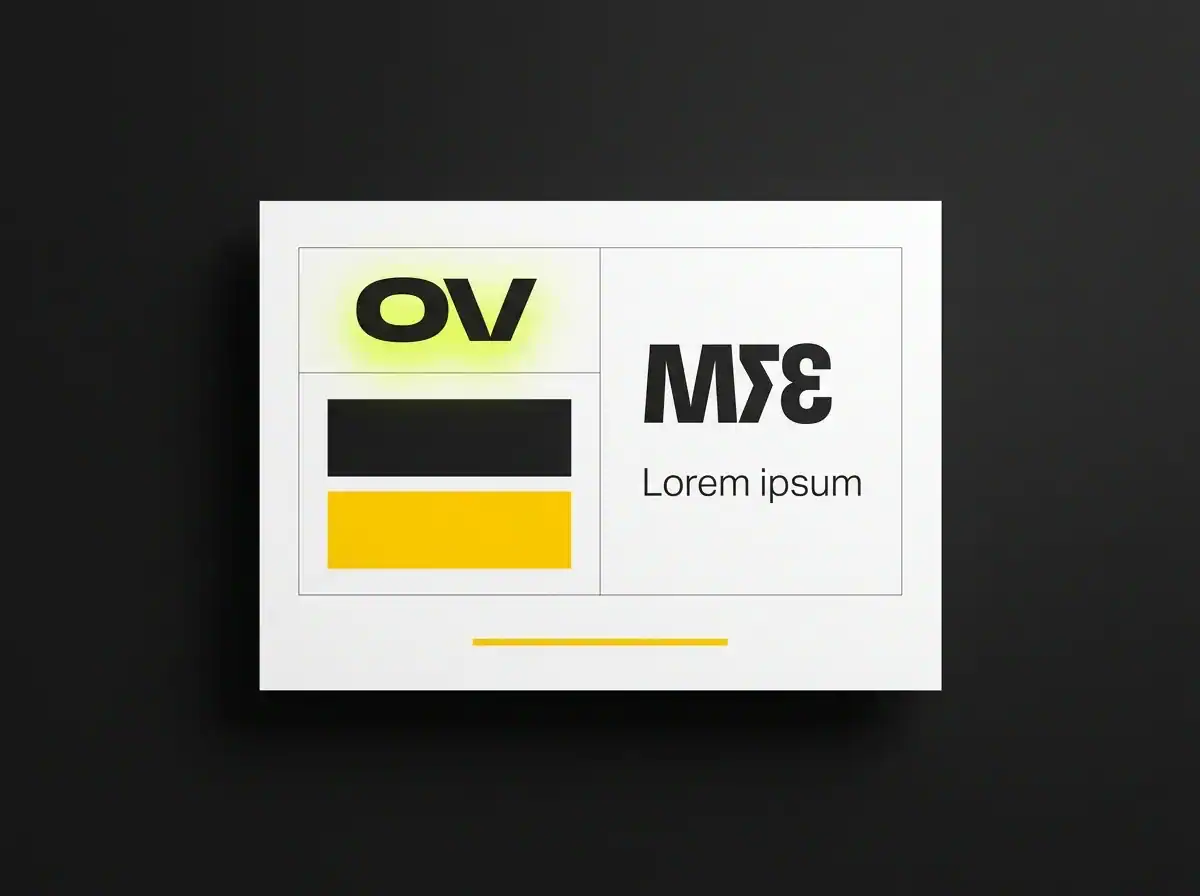
Here is the shortlist. A name that is searchable on Companies House and in Google without a competitor appearing above you. A wordmark or logo that does not embarrass you at A4 size and still works at 32 pixels as a favicon. Two or three colours that sit well together. One font pairing: a heading font and a body font. A one-line description of what you do and who for, specific enough to be useful ("We help UK solicitors automate client onboarding" beats "we are a legal technology company"). Three to five photographs that are not stock images.
That is genuinely enough to start. A business with these things consistently applied can build a credible website, send a proposal that looks considered, and appear on LinkedIn without apologising for how it looks. The person receiving any of it is not thinking about your typography. They are thinking about whether you can solve their problem.
What you do not need yet. You do not need a full brand book. Brand books are written for businesses large enough that new starters need a reference document, or where external agencies are producing material at volume without day-to-day oversight. Most businesses under 20 staff do not meet that bar. A single A4 reference sheet covering logo files, colours, and fonts does the same job at almost no cost. You do not need a custom typeface. You do not need an animated logo. You do not need a values workshop, unless the output of that workshop changes what you actually say and do the following week. It rarely does.
The question to ask before commissioning any of these is: will this change a decision we make tomorrow? If the answer is no, the budget is better spent elsewhere. When you are ready for proper brand identity work, the right moment is when you have genuinely outgrown the starter set above, not before you have built it.
Where branding spend pays off
Pricing power is the clearest return. A consistent brand, applied across your website, proposals, and communications, signals that you are serious about your work. Clients who see that consistency are less likely to push back on price, because the presentation implicitly says the rate is the rate.
Repeat business and referrals come second. Recognition is what makes a former client remember to recommend you at a networking lunch six months later. If your brand looks inconsistent, forgettable, or like it was assembled on a free Canva template at 11pm, you are invisible in that referral conversation.
The third payoff, particularly in B2B, is the cost of acquiring new customers. A brand that earns trust shortens the sales cycle. A prospect who has seen your name in several places with a consistent look and a clear message arrives at the first call already partially persuaded. That shortening is worth real money, especially when sales cycles stretch across weeks or months.
And the single highest-leverage place to apply all of this is the website is the brand asset that pays you back. Not the logo. Not the brand book. The website is the only brand asset that is open 24 hours a day, and it is the place where the brand either converts a visitor into an enquiry or quietly loses them.
Where branding spend gets wasted
A logo in isolation. This is the most common mistake in small business branding. A £3,000 logo with no website behind it is a £3,000 sticker. The logo does not pull people to your business. It identifies you once they have already arrived. Spend on the website first, then on the identity that lives inside it.
Brand books for two-staff businesses. A guidelines document running to 60 pages is an overhead, not an asset, when the only people who need to follow the brand are sitting five feet from each other. A one-page reference sheet covering logo files, colours, and fonts does the same job without the cost.
Brand values workshops that produce nothing actionable. These can feel productive in the room and leave no visible trace in how the business actually operates over the following year. If a session costs two days of your time and the output sits in a shared drive untouched from that day forward, that was not a brand investment. It was an expensive away day with a mood board at the end.
Founder photography too early. Good photography of a founder, a team, or a workspace is excellent when there is something worth photographing: a real workspace, a real product, a team that has been together for more than six months. Commissioned before any of those things are in place, it produces expensive images that will be out of date within a year.
Rebranding to fix a sales problem. This one deserves plain language. If you are not getting enough enquiries, a new logo will not fix that. Enquiries come from visibility and from a website that converts traffic into leads. The instinct to rebrand when sales are slow is understandable but the diagnosis is almost always wrong. If the business is not being found, you should spend here before you spend on branding.
The order to spend in
If you are starting from scratch, or working out what investment comes next, here is the honest order.
First, a website that converts. The single highest-leverage brand asset a small business owns. Not a brochure. A site that answers the visitor's two questions within eight seconds: what do you do, and can you solve my problem? Everything else depends on this working.
Second, search visibility and traffic. A website that nobody finds is a brochure in a filing cabinet. Search visibility through SEO and AI search channels is what gives the website an audience. There are around 5.5 million registered businesses in the UK competing for attention in the same searches. Without visibility, every other investment returns less than it should.
Third, the minimum viable brand. Once the website works and the traffic arrives, consistent visual identity across your site, your LinkedIn, your proposals, and your email signature compounds the trust you are already earning through useful content and search presence.
Fourth, brand polish. Photography, a proper brand book, a refined identity. These belong at step four because their value builds on top of the first three. Applied before them, they return a fraction of what they cost.
How AI search reads your brand in 2026
ChatGPT, Claude, and Perplexity are now part of how customers find businesses. In 2026, a meaningful share of B2B buyers will ask an AI tool a question like "who are the best project management consultants in the UK for a company our size?" before they open Google at all. They expect a recommendation, not ten blue links.
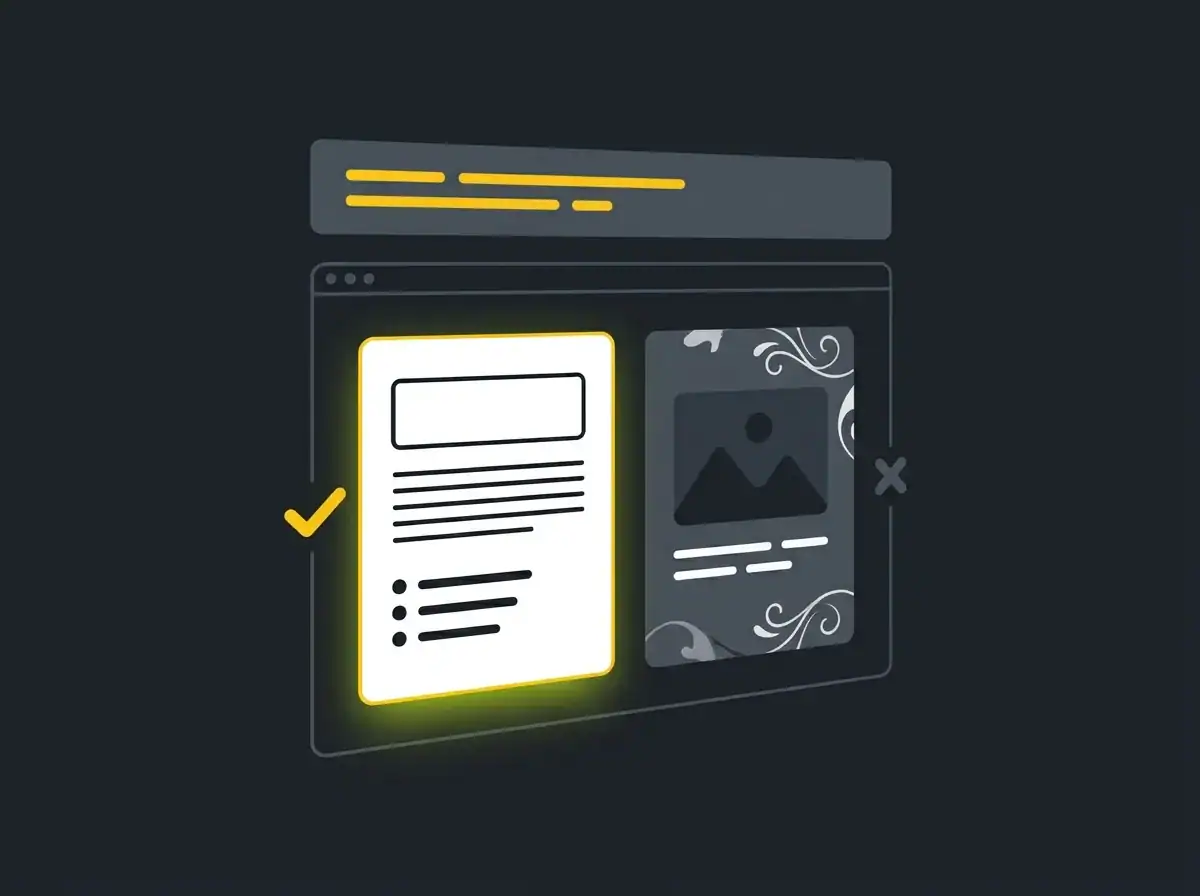
What AI tools recommend is not the most polished website. It is the website with the clearest, most substantive content: structured claims, named services, specific answers to the questions buyers are actually asking. A beautifully designed site with thin copy is invisible to an AI. A plain site with clear, specific, well-organised content gets cited. That is a significant shift in what your branding budget should be pointed at.
The implication for 2026 is direct: substance before surface. Content that answers real questions clearly, organised so AI tools can read and reference it, has a higher return right now than a refined colour palette. You can still have both. But if you have to choose between brand polish and content that makes your site worth recommending, the latter wins at this stage of the transition.
This is the same reason that AI traffic converts at significantly higher rates than traditional search: people arriving from an AI recommendation are already verifying, not still comparing. A brand that earns AI citations earns something more valuable than a good logo at this moment.
When a real rebrand actually is the right call
There are genuine cases where brand investment is exactly what a business needs. Four of them.
The product or audience has materially changed. A business that pivoted from SME clients to enterprise in the last two years but still looks like it serves SMEs is losing deals because of the mismatch. A rebrand in that scenario is not vanity. It is a commercial correction.
The current identity is actively losing trust. In regulated sectors, in professional services, in healthcare and finance, the way a business looks is read as a proxy for its competence. If prospects hesitate because the brand looks like it was put together over a weekend, the cost of not rebranding is now bigger than the cost of doing it properly.
You are about to invest in scale. If you are about to spend on paid media, a content programme, or building a sales team, every pound of that spend carries your brand. Building at scale on a weak identity reduces the return on everything else. Fix the foundation first.
You have simply outgrown the starter set. A logo that served a one-person consultancy for three years does not necessarily carry a ten-person agency pitching for enterprise contracts. That is not a vanity project. That is the starter set doing its job and being ready to be replaced.
Frequently asked questions
How do I brand my small business?
Start with the minimum viable set: a name, a simple logo that works at multiple sizes, two or three colours, one font pairing, and a one-line description of what you do and who for. Apply these consistently across your website and communications before spending on anything else. Photography, brand guidelines, and a refined identity are layer two. Build the foundation first, then polish it once the website and search visibility are working.
What are the 5 C's of branding?
The 5 C's are clarity, consistency, character, customer, and content. Clarity means your message is specific enough that a new contact understands what you do in one sentence. Consistency means your look and tone are recognisably the same at every touchpoint. Character means your brand has a point of view. Customer means everything is shaped around what the buyer cares about. Content means your brand shows up in useful, findable material. For most small businesses in the early stages, clarity and consistency deliver the most practical return.
What is the 3-7-27 rule of branding?
The 3-7-27 rule holds that it takes 3 seconds for someone to notice your brand, 7 interactions to recognise it, and 27 to remember it. The exact numbers are illustrative rather than clinically precise, but the principle is sound: recognition requires repetition. Showing up consistently across multiple touchpoints over time matters more than any single piece of exceptional creative work. That is why consistent application of a simple brand beats inconsistent application of an expensive one.
What are the 7 pillars of branding?
The 7 pillars are typically listed as purpose, perception, identity, values, voice, positioning, and experience. A large company will document and manage all seven formally. A small business does not need to. Focus on identity (how you look), voice (how you write and speak), and experience (what it is actually like to work with you). Get those three right and the others follow naturally as the business grows. Formalising all seven pillars before you have found your first hundred clients is work done in the wrong order.
Where to actually start
Most small business owners we speak to do not need a rebrand. They need to know whether their website can pull in traffic and convert it. A new logo will not answer that question.
The Traffic Projection Report is a free, no-meeting way to see what is realistic for your business in the next 12 months. It shows where your site currently stands, what search traffic it could realistically earn, and what that traffic is worth in enquiries. That is the number that tells you where your money goes first: visibility, then conversion, then brand polish once both of those are working.
Free resource: Traffic Projection Report
A free diagnostic showing what search traffic is realistic for your business over the next 12 months. No meeting required.
Branding matters. It is just rarely where a small business should spend first.