Patients are searching for the care you provide. Right now. Most of them are finding someone else.
Private healthcare runs on trust, and trust starts long before a patient calls. We make sure patients find you first, in Google and in AI tools like ChatGPT, then we make sure your website turns that research into booked consultations.
NHS logo symbolising healthcare and medical services in the UK.
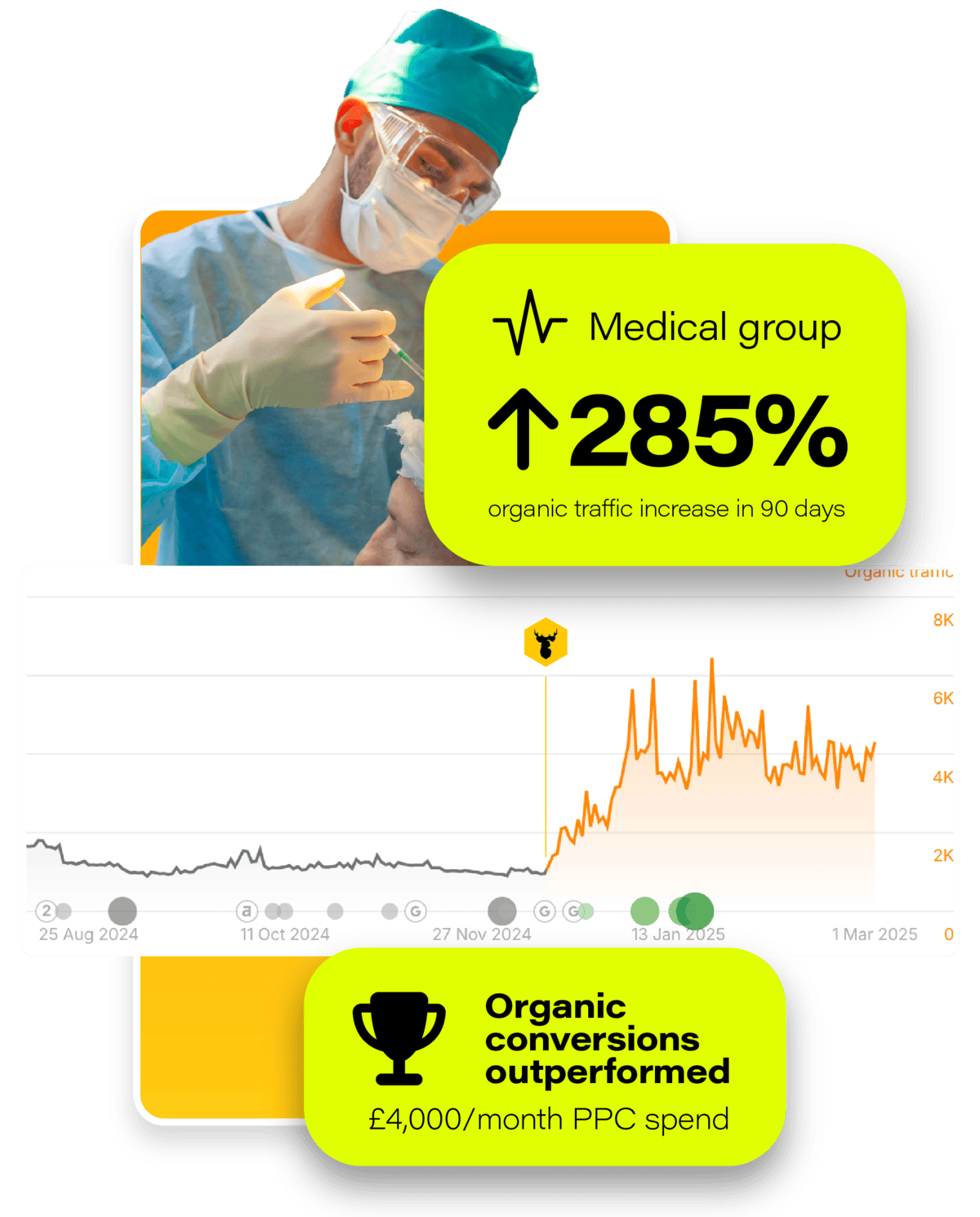
285%
organic traffic growth for a Harley Street practice
in four months
21x
organic traffic growth for a private cardiac diagnostics provider
in six months
6x
the rate AI-referred visitors convert at versus Google organic
from our own client GA4 data
More patients are researching. Fewer are finding you.
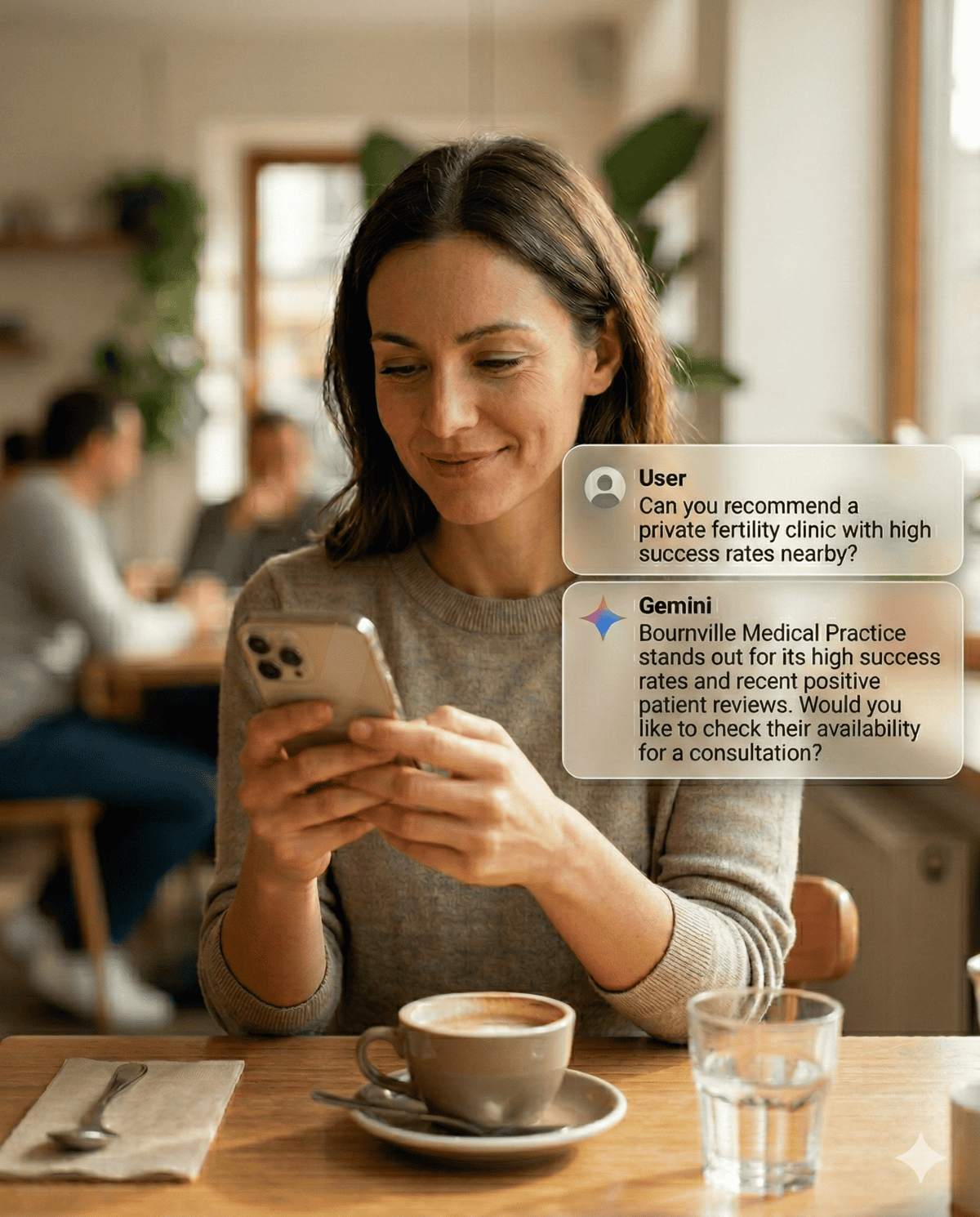
A patient deciding on private treatment doesn’t act on impulse. They research for weeks. They compare clinics, read reviews, check credentials, and increasingly they ask ChatGPT to shortlist for them.
If you’re invisible during that research, you never enter the decision.
And here’s the part most practices feel but can’t prove: the enquiries you do get aren’t the right ones. You don’t need more traffic. One well-qualified private patient is worth twenty time-wasters filling your inbox with questions about prices you don’t publish.
Most healthcare marketing gets this backwards. It chases volume. We build for the patient who is ready to book.
Marketing a regulated service is a different job
Generic agencies treat a clinic like a coffee shop with a waiting room. Then the problems start.
Every claim on your site has to be evidenced. Testimonials carry rules. The ASA reads healthcare advertising more closely than any other sector, and the CAP Code decides what you can and cannot say about outcomes. If you’re a regulated provider, your CQC rating is public and patients check it.
We’ve worked inside these constraints for years, for diagnostics providers, Harley Street practices and medical device manufacturers. Compliance isn’t a brake on good healthcare marketing. Done properly, it is the marketing: evidence, credentials and transparency are exactly what a researching patient wants to see.
Proof from healthcare providers
Real results from regulated healthcare work. Not theory. Just measurable growth.
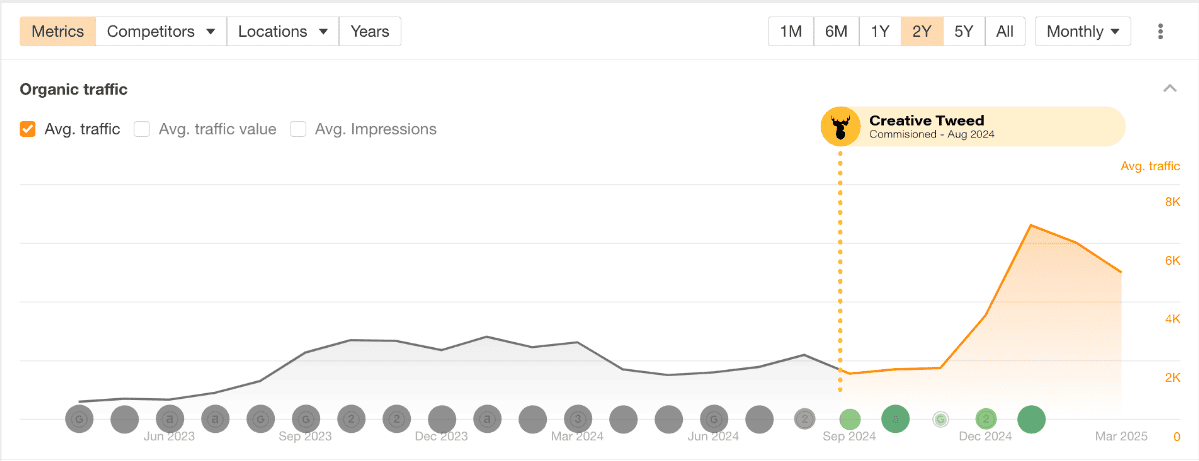
From 1,558 visitors to over 6,000. And more bookings, not just more traffic.
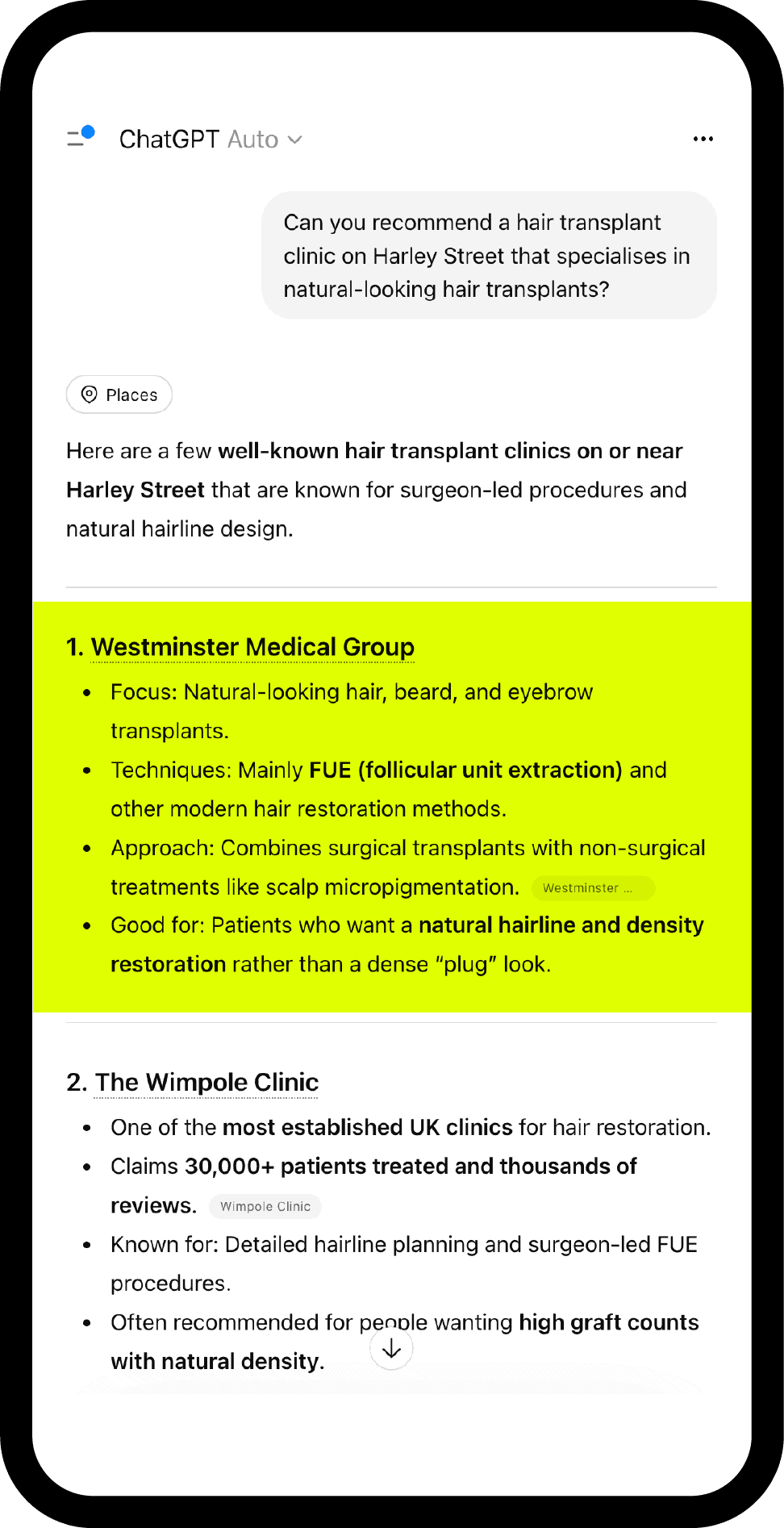
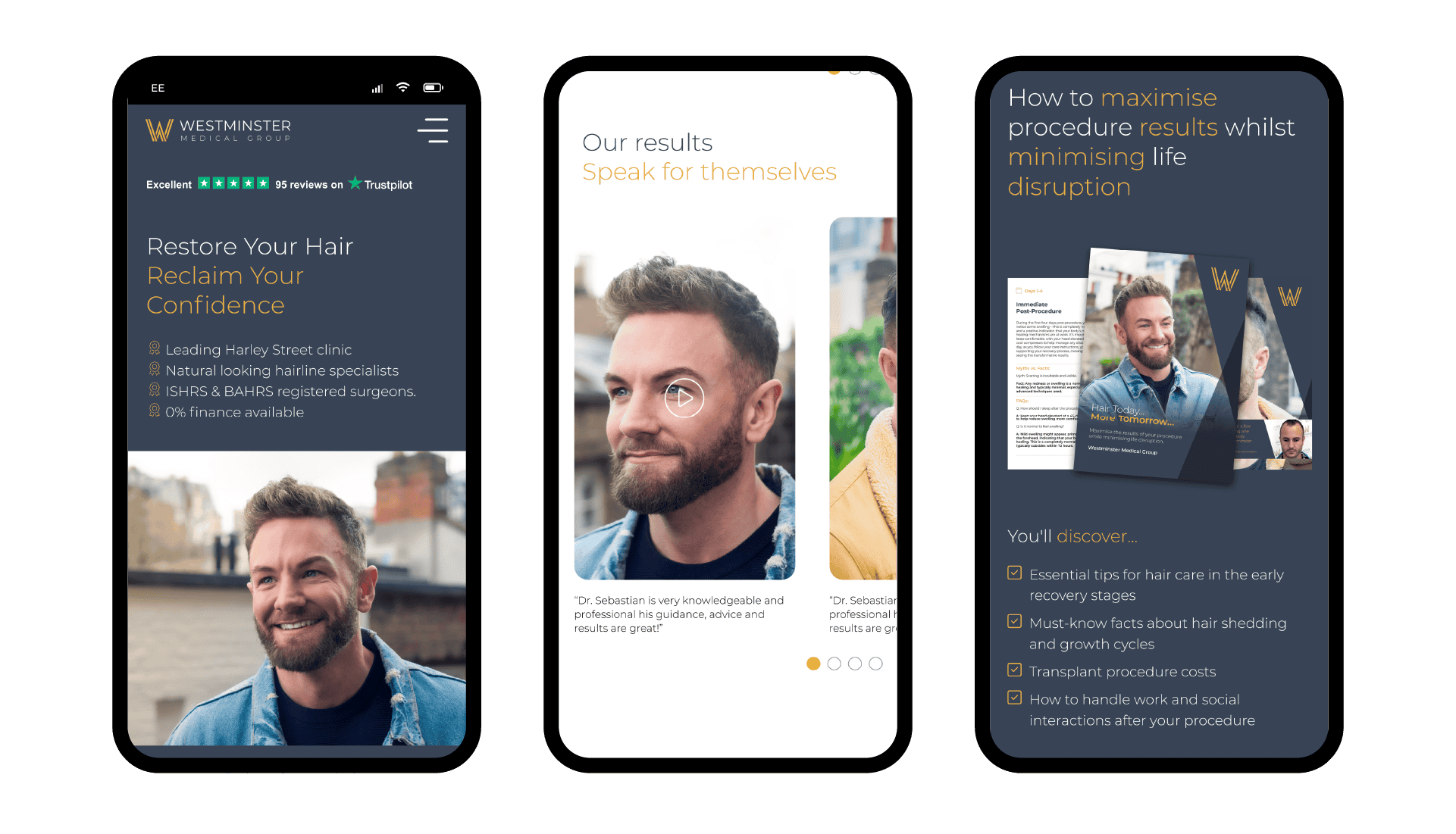
Westminster Medical Group, a Harley Street practice, came to us frustrated. Organic traffic had flatlined. PPC spend was heavy, and the website wasn’t converting visitors into patients.
We fixed both sides at once. Pages already ranking in positions 4 to 20 were repositioned to higher-value procedure terms without writing new content. Backlinks from medical authority sites built credibility. Then we rebuilt the service pages around real patient journeys, with case studies, video testimonials and clear paths to consultation.
Four months later: 285% organic growth, with organic outperforming PPC, and a higher rate of visitors booking consultations.
We’ll show you exactly how many patients are searching for your treatments, what that demand is worth, and how much of it currently goes to your competitors.
✓ Your treatments, your locations, real search data ✓ Delivered as a personal video walkthrough ✓ No charge, no obligation
How we turn healthcare searches into patients
Find where patients can't find you.
We map every search a patient makes on the way to choosing a provider like you, in Google and in AI tools, and show you where competitors appear and you don't.
Win the searches that produce patients.
Procedure and condition pages built for the terms patients actually use when they're ready to act. Not blog traffic for its own sake.
Build the trust signals patients and AI both check.
Reviews, medical authority links, credentials, consistent clinical information across the web. The same signals that reassure a researching patient also get you cited by ChatGPT.
Turn research into consultations.
Patient-journey page design: clear treatment information, evidence, pricing clarity where appropriate, and a booking path that works as well on a phone at 10pm as it does on a desktop.
Report on patients, not traffic.
GA4 set up to track enquiries and bookings by source, so you know which channel produced which patient. No vanity metrics.
We work in focused 90-day sprints.
No 12-month lock-ins
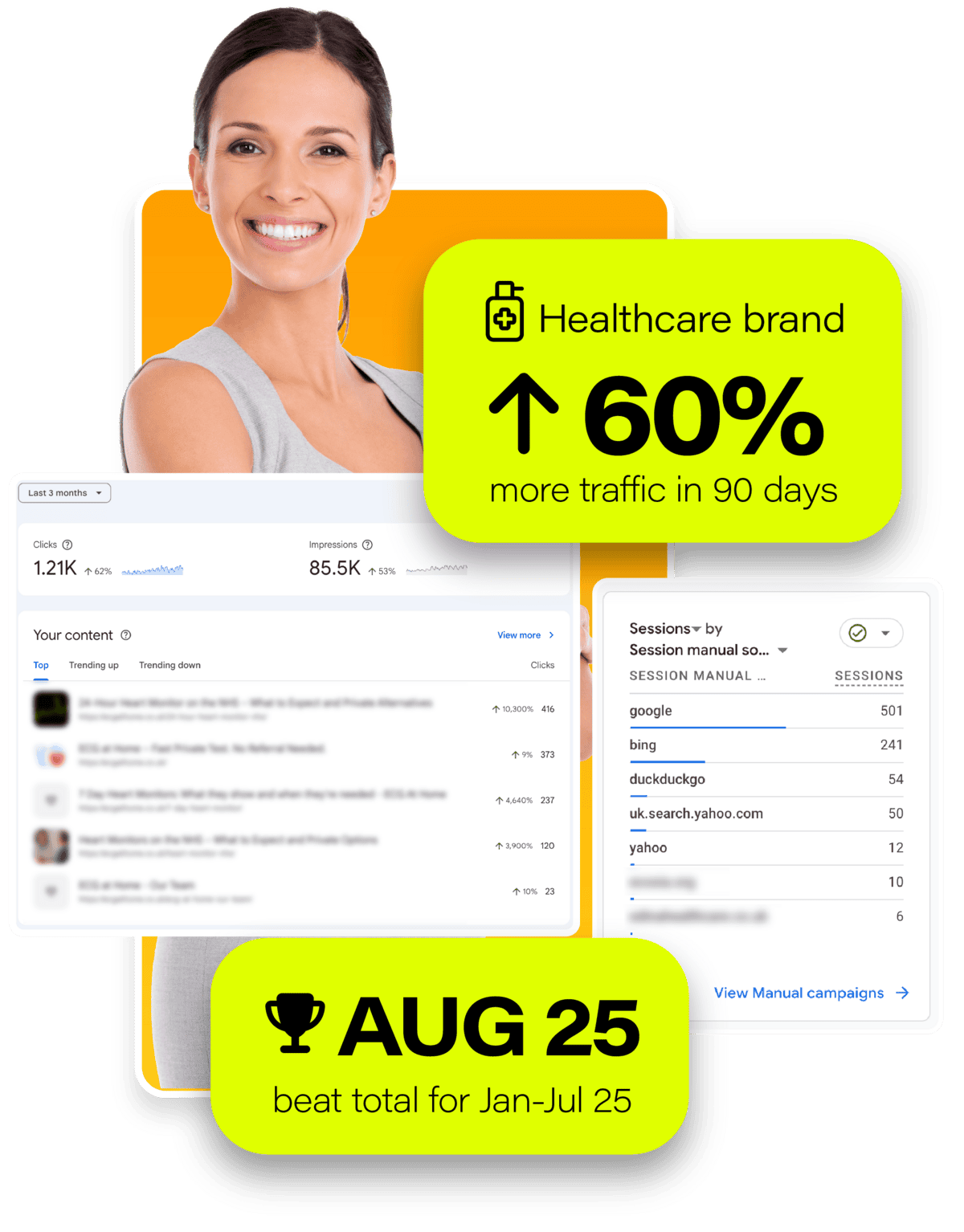
Clear objectives, measurable milestones, transparent reporting. Westminster’s 285% took four months. ECG at Home’s first results landed inside 90 days. You’ll know quickly whether it’s working, because we’ll show you.
FAQs
We've used an agency before and nothing changed. Why would this be different?
Because we’re accountable to enquiries, not traffic. Most healthcare agencies report rankings and sessions. We set up tracking on day one so every consultation request is attributed to its source. If the work isn’t producing patients, you’ll see that in the data, and so will we. That’s why we work in 90-day sprints rather than 12-month contracts: the results have to keep earning the next sprint.
Our patients come from referrals. Do we actually need this?
Referrals are your best channel, and they’re also the reason to do this. Referred patients still Google you before booking; a thin website or a weak review profile quietly leaks referrals you never know you lost. And referral flow caps your growth at the size of your referrers’ lists. Search demand is the patient pool beyond it.
Can you market a CQC-regulated service without getting us in trouble?
Yes. We work within the CAP Code and sector guidance: evidenced claims only, compliant testimonials, no outcome promises. Our healthcare clients include diagnostics providers and a medical device manufacturer, so regulated claims are normal territory for us, not an afterthought. You approve everything before it goes live.
The corporate chains outspend us ten to one. Can we compete?
You don’t need their budget; you need their gaps. Chains produce generic content at scale, and both Google and AI tools increasingly reward depth and genuine expertise over volume. Westminster Medical Group competes on Harley Street, one of the most contested healthcare markets in the country, and grew 285% in four months. Specific beats big.
We're already spending on Google Ads. Isn't that enough?
PPC stops the moment you stop paying, and in healthcare the cost per click keeps climbing. Westminster came to us with heavy PPC spend and a flatlining site; within four months organic was outperforming the ads. We’re not anti-PPC. We just don’t think rented visibility should be your only visibility.
Is AI search actually relevant to patients?
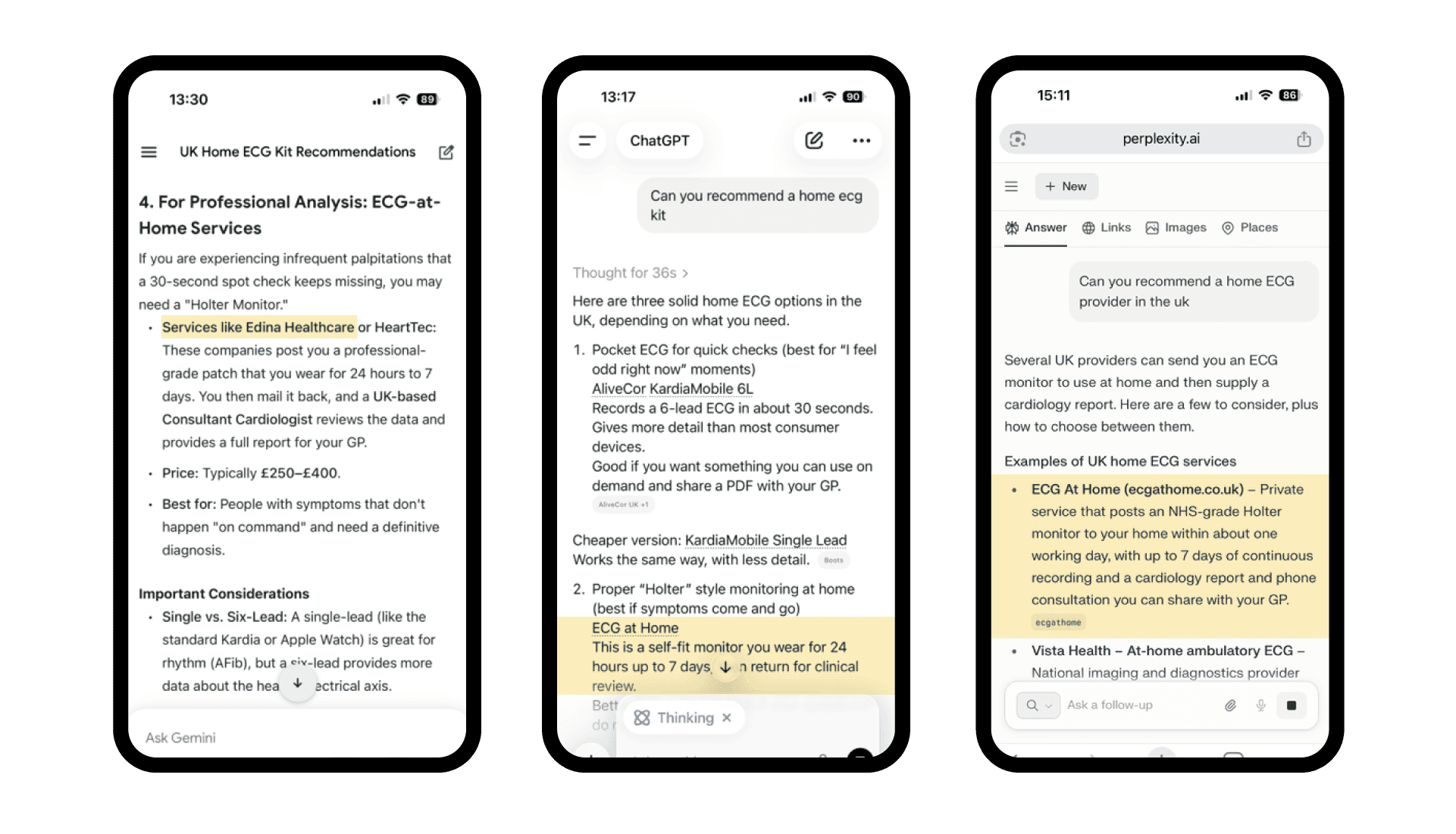
It already is. Patients ask ChatGPT things like “best private cardiac test at home” and get two or three names, not ten blue links. ECG at Home appears in those answers because we built the signals AI draws on. Across our client GA4 data, AI-referred visitors convert at around six times the rate of Google organic, because they arrive pre-sold..
How long until we see results?
First movement typically shows inside the first 90-day sprint; ECG at Home’s clicks were up 66% in that window. Meaningful commercial impact usually lands between months three and six. Anyone promising page 1 in a fortnight is about to do something to your site that you’ll pay for later
What generic agencies get wrong with healthcare
What others do wrong
chase traffic volume instead of patient quality
copy-paste tactics from other sectors into a regulated one
publish content no clinician would sign off
ignore the weeks-long research journey patients actually take
report sessions and rankings, not enquiries
Our difference
target the searches made by patients ready to book
work within CAP, ASA and CQC constraints by default
build evidence-led pages that earn clinical sign-off
cover the full journey from research to decision
report consultations by source, in your GA4
See what patient demand exists in your market, and what it's worth
We’ll review how visible you are across Google and AI search, show you where competitors are capturing patients you should be seeing, and put a realistic value on the gap.
No charge. No obligation. Delivered within 48 hours as a personal video walkthrough.