
A private clinic owner phoned us last year. Six years in business, solid results, genuinely good patient reviews. A competitor had opened nearby and was consistently winning the higher-value elective patients: the cosmetic procedures, the specialist consultations with long waiting lists, and the patients who were not comparing prices. The competitor charged slightly more. Their website was cleaner. Their photography was consistent across every touchpoint. Their branding read as premium at first glance.
He had assumed they must be spending significantly more on advertising.
They were not.
If you have ever looked at a nearby clinic and wondered why they attract more discerning patients at higher fees despite no obvious difference in clinical quality, branding is usually the answer. And it is more controllable than most clinic owners realise.
This guide covers what healthcare branding actually involves, why it carries unusual weight in private medicine, what good looks like for UK clinics right now, and how to tell whether yours is working for you or quietly working against you.
What healthcare branding actually is
Healthcare branding is not your logo. It is the complete identity system: name, logo, colour palette, typography, tone of voice, photography style, and every patient-facing touchpoint the clinic controls.
A working definition worth keeping: healthcare branding is the sum of every signal a patient receives about what your clinic stands for, how much you care, and whether the experience will be worth what they are paying. That includes the booking confirmation email, the hold music, the waiting room furniture, the typography on the door signage, and the way the receptionist answers the phone at 8:45 on a Monday morning.
The easiest thing to confuse is branding and marketing. They are not the same thing. Marketing is how you communicate; branding is the identity you are communicating. Most clinics that invest in marketing without investing in the brand underneath are putting a megaphone in front of something that has not yet earned amplification. If the brand is not working, more marketing makes the inconsistency louder and more visible. It does not fix it.
The biggest brand problem most private clinics have is not that their logo is ugly. It is because their brand is inconsistent. Different logo proportions on the website versus the printed stationery. Copy on the homepage that sounds nothing like the team who answers the phone. Photography that changes style every two years as different people handle the Instagram account. Patients cannot always articulate the source of their unease. They just feel something is slightly off. And in a context where they are deciding whether to hand over several hundred pounds and a measure of personal trust, slightly off is enough.
Why branding carries so much weight in healthcare
Patients don’t choose a clinic because they admire its branding.
Most never consciously think about branding at all.
What they’re really looking for is confidence.
Psychologists call these mental shortcuts heuristics – the quick judgements we all make when we don’t have enough information to compare two options properly.
Healthcare is one of the most uncertain decisions people make. Patients can’t meaningfully compare the clinical ability of two surgeons, dentists or dermatologists in the same way they can compare two televisions or two cars. They don’t have the expertise.
So instead of asking:
Who is clinically best?
Their brains ask easier questions:
Who feels most trustworthy?
Who looks organised?
Who seems likely to look after me?
Branding doesn’t replace clinical excellence. It becomes the evidence patients use when they have no other practical way to judge it.
Why private healthcare is where branding pays most
Every sector benefits from a coherent brand. Private healthcare benefits more than most. Here is why.
The NHS baseline
When a patient chooses to pay for private care, they are comparing the experience against what they would receive on the NHS. Their reference point for clinical competence is already high: NHS consultants are trained, regulated, and accountable. So clinical credibility alone is not the differentiator. What private healthcare is supposed to offer is a better experience: faster, more personalised, more attentive. If a clinic’s brand presentation does not match that expectation, the NHS route suddenly looks less unreasonable, even with NHS waiting list data showing millions of people waiting months for treatment. Patients weighing private care against an NHS queue are making a value judgement. The brand is a significant part of the evidence they use.
The premium pricing problem
A clinic charging 30-40% above local competitors cannot justify that premium on clinical grounds alone. All Care Quality Commission-registered clinics are competent: that is the regulatory floor, not a differentiator. Premium pricing needs something to hang on. Brand is what carries it. A well-built brand signals that the experience, the care, and the attention to detail will be proportionate to the price. Without that signal, the higher price just looks like a higher price.
Risk perception
A patient booking a cosmetic procedure, a fertility consultation, or private diagnostics is taking two kinds of risk simultaneously: financial and health-related. Strong branding reduces perceived risk. A polished, consistent, professional brand presence signals that the people running the clinic pay attention to detail. If they pay attention to detail in their communications and their waiting room and their booking emails, the patient’s brain extends a reasonable inference: they probably pay attention to detail in the clinical work too. The reverse inference is just as real. A clinic that looks inconsistent or underinvested asks the patient to extend more trust on less evidence.
The competitive landscape has changed. The UK private healthcare market has grown considerably since the early 2020s, driven partly by NHS pressures and partly by rising consumer expectations around health and wellbeing. Independent clinics are competing not only with each other but with Bupa, Nuffield Health, Spire, and other established groups with decades of brand equity behind them. For an independent practice to position itself as a credible alternative in that landscape, the brand has to carry weight. See our healthcare SEO guide for a fuller picture of how visibility and brand work together once the identity is in place.
The trust signals patients actually check before they book

Tebra’s 2025 Patient Perspectives Report found that 77% of patients read online reviews before choosing a healthcare provider. What people are doing when they read reviews is not just checking the rating. They are forming a brand impression, building up a picture of what the clinic is like to deal with before they ever make contact.
Google Business Profile
Star rating, review volume, recency, and how the clinic responds to difficult reviews. That last point matters more than most clinic owners realise. A considered, professional response to a critical review demonstrates empathy and accountability. An absent response or a defensive one suggests the clinic treats complaints as problems to be minimised rather than patients to be understood. That is a brand signal as much as a customer service one.
The website
Patients spend seconds making this judgement, and most of them make it on a phone. Does the site feel proportionate to what the clinic charges? Is it fast? Is it easy to navigate and clear about what the clinic does? Does the above-the-fold experience communicate who this practice is for and why they can be trusted? A tired website does not just lose bookings. It actively undermines the value of everything else the clinic does well, because it contradicts the quality signal the clinic is trying to send.
Photography
This is where many private clinics quietly give themselves away. Real photography of real clinicians in a real environment communicates investment and confidence. Generic stock imagery of a white coat and a stethoscope communicates that the clinic uses the same images as several hundred competitors. Patients cannot always explain why they feel less confident in a clinic using stock photography. They feel it anyway.
Tone of voice
Does the copy sound like people the patient would actually want to spend time with? Professional and warm, or dense and impersonal? Tone of voice is consistently the most neglected element of a healthcare brand, partly because clinic owners are clinicians rather than writers and partly because no one has ever sat down and written a tone of voice guide. The result is copy that reads like a medical brochure when patients want to feel spoken to by a person.
Consistency
The same brand present on Google, Instagram, the website, the booking confirmation, the reminder text, and the appointment letter. Inconsistency suggests disorganisation. In a context where patients are assessing whether to trust you with their health, that is a meaningful deterrent.
AI discovery
This channel is still emerging, but it is growing faster than most clinic owners realise. Patients increasingly phrase searches as questions in ChatGPT or Perplexity before opening Google: “best private dermatologist in Leeds”, “who does weight loss injections in Birmingham”. A clinic’s content footprint and brand presence online affects whether AI tools include them in those responses. AI search visibility is not yet the dominant channel for most local healthcare searches; it is the next trust signal to prepare for rather than the one to catch up on after competitors have already moved.
What good healthcare branding looks like
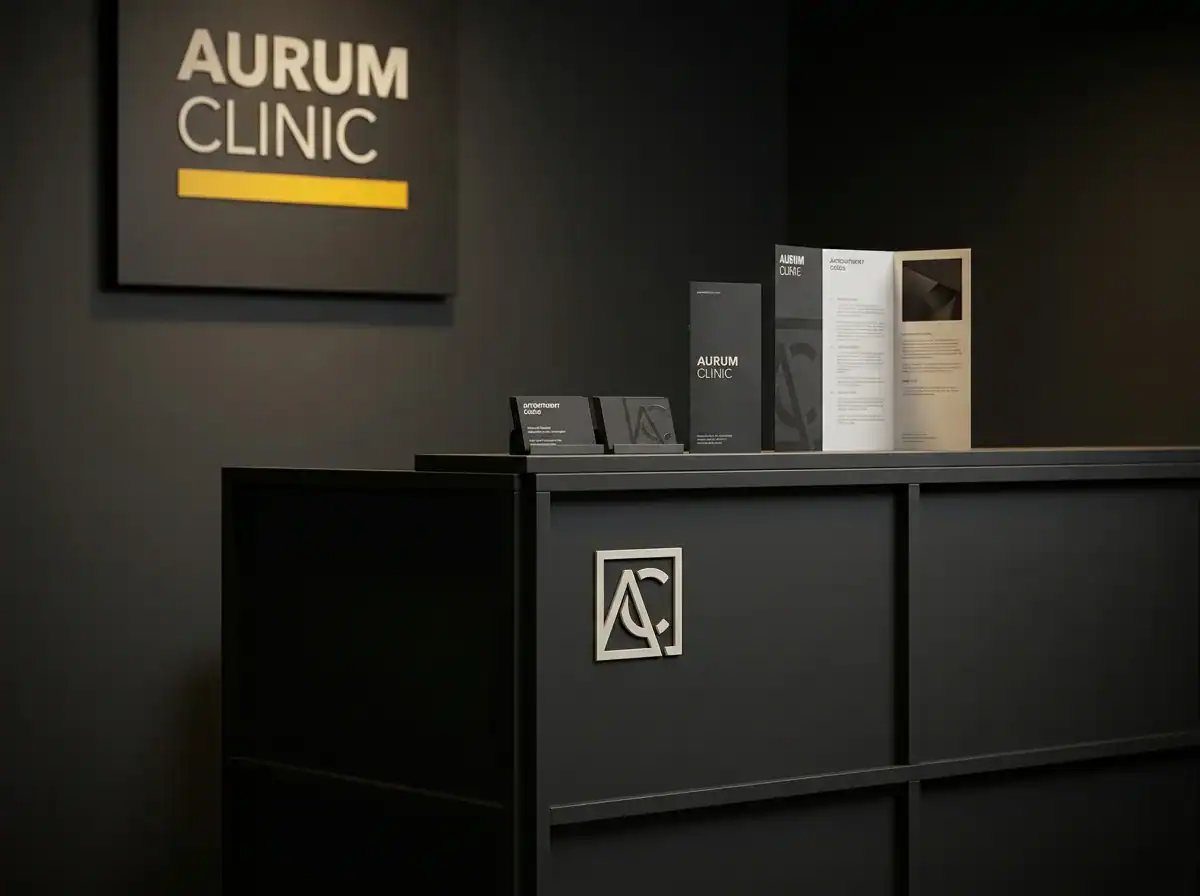
The clearest way to illustrate this is a comparison.
Clinic A has an inconsistent logo: different proportions across the website header, the printed stationery, and the waiting room wall. The homepage uses a stock photograph of a woman in a white coat that could belong to any of a hundred practices within 20 miles. The site was built in 2018 and has not had a structural update since. The copy reads like it was written by a committee and sent to legal for review. There are six Google reviews, all from two years ago, none of them responded to.
Clinic B has a cohesive identity. The logo works at business card size, the clinic door and on a 48-sheet poster if it needed. The colour palette is deliberate and held consistently across every touchpoint. The homepage has a photograph of the actual clinical team in the actual clinical space, shot with a consistent visual style. The copy is warm, specific, and sounds like a person wrote it. There are 43 Google reviews, spread across the last 18 months, each one responded to with something that sounds like a person rather than a complaints policy.
Same area. Similar specialities. Clinic B’s prices are higher.
Clinic B wins the appointment. Consistently.
This is the 3-second test. What does a patient infer about your price point and quality from the first view of your homepage, before they have read a word? Premium design signals premium experience. That is not superficial; it is how human trust operates under time pressure. When a patient is choosing between two practices they know nothing about, visual credibility is doing most of the decision-making.
The practical elements of a strong healthcare brand system: a logo that works at 24px in a mobile browser header and at A4 on a printed brochure. A colour palette chosen deliberately rather than stumbled into (clinical blues for authority and precision, greens for care and recovery, neutrals for premium positioning, but the choice must be intentional and applied consistently, not varied on a whim). Typography that is readable across screen and print without requiring a graphic designer to be present to interpret it. A one-page tone of voice guide that a new receptionist can read on their first day and actually use.
The branding mistakes most private clinics make
Starting with a logo designer rather than a strategy. The logo is an output of brand strategy, not the starting point for it. A clinic that opens with “we need a new logo” is often solving the wrong problem, or solving only the most visible part of a deeper inconsistency. The right starting point is clarity on who the ideal patient is, what the clinic charges relative to direct competitors, and what feeling the brand needs to create at first contact. The logo comes out of that thinking, not before it.
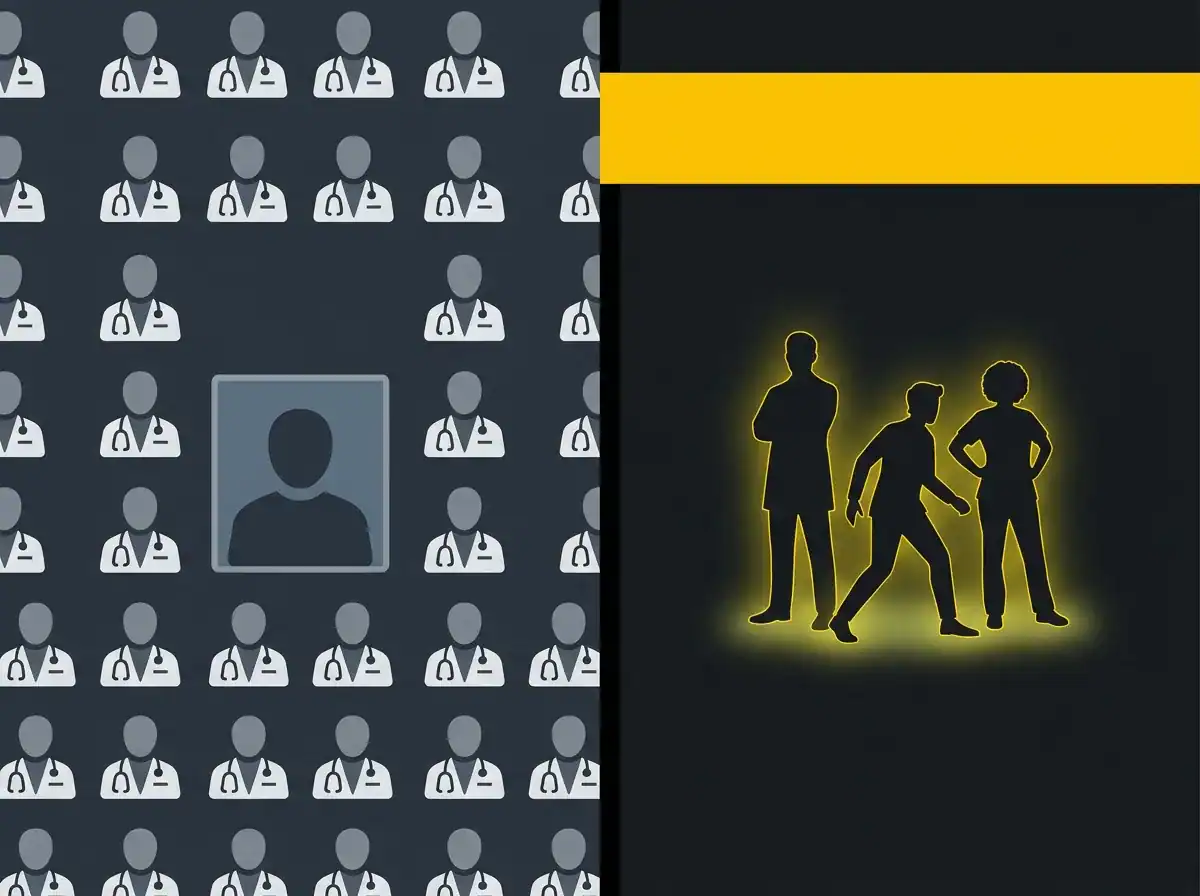
Stock photography that looks like every other clinic. Patients cannot always articulate why they distrust generic imagery, but they do. A woman in a white coat against a plain white background says the clinic did not invest in showing you who they actually are. That is an inference patients make in about a second. Real team, real space, consistent style. That is the standard.
Multiple voices across touchpoints. The website reads one way. The email confirmations sound like a different department. The Instagram captions sound like a different practice entirely. No written tone of voice guidance exists. The result is a brand experience that feels disorganised, even when the clinical care is excellent. Patients notice the gap between the two.
Mobile neglect. The majority of patients encounter a clinic’s brand for the first time on a phone. A website that works on a desktop but degrades on mobile, or that makes booking awkward on a small screen, sends a signal. The clinic has not thought carefully about the patient experience. That is a brand signal whether the clinic intended it or not.
Treating branding as a one-time project. Clinics invest in a rebrand, launch it with energy, then gradually let the system disintegrate. A new team member picks a slightly different shade of blue for the summer campaign because the brand guidelines are not accessible. A new strapline gets added without a consistency check. The team photography ages but nobody books a replacement shoot. Three years later the brand looks like a slow-motion return to what it was before.
Forgetting the offline experience. Waiting room decor, printed referral letters, the signage on the door, the way the phone is answered. Patients who arrive for a first appointment are still forming their brand impression. If the website is premium and the waiting room is dated, the disconnect is jarring. It asks the patient to hold two contradictory assessments of the same clinic simultaneously.
Rebrand vs refresh: how to know which you need

These are different decisions and they carry different costs and timescales. Conflating them is expensive.
A full rebrand is warranted when you are repositioning the clinic at a different price point or for a different patient audience; you are opening a second site or merging practices under a shared identity; the current brand is actively working against the clinic’s goals (a brand communicating budget cannot be refreshed into communicating premium; the architecture has to change); or the identity is so dated that no amount of surface refinement will restore confidence on first contact.
A refresh is warranted when the logo needs modernising or making work at digital sizes without losing the equity it carries with existing patients; the website is tired but the underlying identity is still sound; the team photography needs updating after staff changes; or a tone of voice guide simply never existed and needs writing now that the team has grown beyond the founding clinicians.
In practice, the right first step before committing to either path is a brand audit. This is worth considerably more than most clinic owners expect. It often reveals that the problem is narrower than feared, the solution less expensive, and the emotional attachment to certain brand elements more rational than it initially seemed. It can also reveal that a surface refresh is masking a deeper positioning issue that only a rebrand will address. Knowing which path you actually need before you pay for one of them saves budget, time, and the frustration of doing the work twice.
If you are heading into a rebrand or a meaningful refresh, having a clear brief significantly improves the outcome. Our guide to writing a design brief walks through the practical steps, including how to capture the clinical and commercial priorities alongside visual preferences. How to write a design brief is a free resource that applies directly to clinic branding projects.
Working with a healthcare branding agency

The quality of the brief determines the quality of the outcome, almost every time. The agencies that produce the most useful healthcare branding work are the ones that spend the most time asking questions before they start designing anything.
When you approach an agency, come with clarity on four things: who your ideal patient is (not just geographically but in terms of what they care about and what they are willing to pay for), what you charge relative to direct competitors, who those direct competitors actually are, and what feeling you want a patient to have in the first three seconds of encountering your brand. If you know those four things, the agency can start from a genuinely strategic position. If you do not, the creative work will be based on assumptions that may or may not be accurate, and the revisions will take longer than the original brief.
What to look for in an agency’s process: a strategy or discovery phase before any creative work begins. Evidence of professional services or healthcare sector work, not because a vertical specialist is mandatory, but because understanding patient trust dynamics and how premium positioning works in a clinical context is directly relevant to the brief. A willingness to challenge your assumptions rather than confirm them. Be cautious of any agency that leads with its portfolio before asking questions about your patients and your positioning. Portfolio demonstrates capability. Questions demonstrate process.
For practices ready to move forward, the healthcare branding agency page sets out how Creative Tweed approaches brand identity work: from patient insight through to a system that connects brand investment to search visibility and patient acquisition.
If you are weighing where to invest in brand or marketing, the most useful thing to know first is how your clinic currently appears when patients search for services like yours via AI tools. If someone asks ChatGPT or Perplexity for a private clinic recommendation in your speciality and your area, are you part of that answer? Most clinic owners have never checked, because most have never thought to.
Free audit: AI Visibility Audit
A clear picture of where your clinic stands in the channels patients are increasingly using to choose a provider. It is the logical starting point before committing budget to brand or marketing, because it shows you where the gaps are before you decide where to invest.
Frequently asked questions about healthcare branding
What is healthcare branding?
Healthcare branding is the complete identity system a private clinic uses to communicate who it is and what it stands for: name, logo, colour palette, typography, tone of voice, photography style, and the experience of every patient-facing touchpoint from the website to the waiting room to the booking confirmation email. It is distinct from healthcare marketing, which is how you communicate and distribute that identity. Branding is the identity itself.
How much does healthcare branding cost in the UK?
A logo and basic visual identity from a specialist agency typically starts from a few thousand pounds. A comprehensive rebrand covering brand strategy, visual identity, tone of voice, website, and print materials for an independent private clinic sits in the mid-to-high five figures. A refresh of an existing identity is considerably less. The right starting point is a brand audit to understand what you actually need before committing budget to a scope.
How long does a healthcare rebrand take?
A full rebrand, from initial discovery through to a new website live, typically takes three to six months for an independent clinic. A refresh of an existing identity can be considerably faster. The strategy and discovery phase is where most of the time is well spent: cutting it short to reach the design stage faster tends to produce revisions that take longer than the time saved.
What is the difference between healthcare branding and healthcare marketing?
Branding is the identity: who you are, what you stand for, and what it feels like to interact with your clinic. Marketing is how you communicate that identity and attract new patients. Most clinics that invest in marketing without investing in the brand underneath are amplifying something that has not yet been built to earn amplification. When the brand is weak or inconsistent, more marketing makes the inconsistency more visible, not less.
How do I choose a healthcare branding agency?
Look for a discovery or strategy phase before any creative work begins, evidence of professional services or healthcare sector experience, and a process that opens with questions about your patients and positioning before a portfolio is shown. The agency does not need to be a healthcare vertical specialist, but it does need to understand what builds patient trust and how a brand connects to local SEO for private practices and digital discoverability. For the website component specifically, capability in web design for clinics matters, but so does understanding how design choices affect patient conversion. Those two things are not always found in the same place.