
You open last month’s proposal to reuse it and notice the logo is different from the one on your website. The sales director’s version has a different blue. Nobody is entirely sure which file is right.
Meanwhile, the business has changed rather more than the stationery suggests. You sell bigger projects, employ more people and work with clients you would once have considered out of reach.
The website still introduces the company you were three years ago.
Sound familiar?
That mismatch is a useful starting point for a brand development strategy. You need to decide what has changed commercially before deciding what should change visually.
A startup needs enough clarity to launch. A growing business needs to test its promise against real customers. A larger team needs shared standards. An established company needs to recognise when those standards are preserving the wrong thing.
These four stages describe different jobs. Your business might need work in two at once, and its age tells you less than its current problems.
The aim is to spend money on the right job, with evidence for the decision.
What brand development strategy actually means
A brand development strategy is an ongoing plan for how your business becomes recognised, understood and chosen by the customers you want. It connects your audience, positioning, promise, identity and customer experience to commercial goals. For a UK SME, it starts with a credible foundation, develops through customer feedback, becomes more structured as the team grows, and changes when the business or its market requires it.
Start there.
Brand strategy supplies the decisions: who you serve, which problem you solve, why someone should choose you and what evidence supports that choice.
Brand identity expresses those decisions through your name, logo, colours, typography, imagery and writing. Both matter, but a handsome identity cannot settle a disagreement about who the business is for.
Imagine an accountancy firm that wants more established manufacturing clients. Its website leads with cheap tax returns, its proposals emphasise strategic advice, and its sales team talks about helping owners prepare for sale.
Those are three different invitations. Changing the font will leave the confusion intact.
A useful strategy gives the firm a reason to prioritise one invitation, then brings its materials and service experience into line.
This also explains why brand development continues after launch. You learn which customers value your work, which promises you can keep profitably, and which services deserve more attention.
The important distinction is between learning and drifting. Learning changes your approach for a reason. Drifting leaves the newest employee choosing your next colour palette because nobody can find the old one.
Stage 1: Build a foundation someone else can use
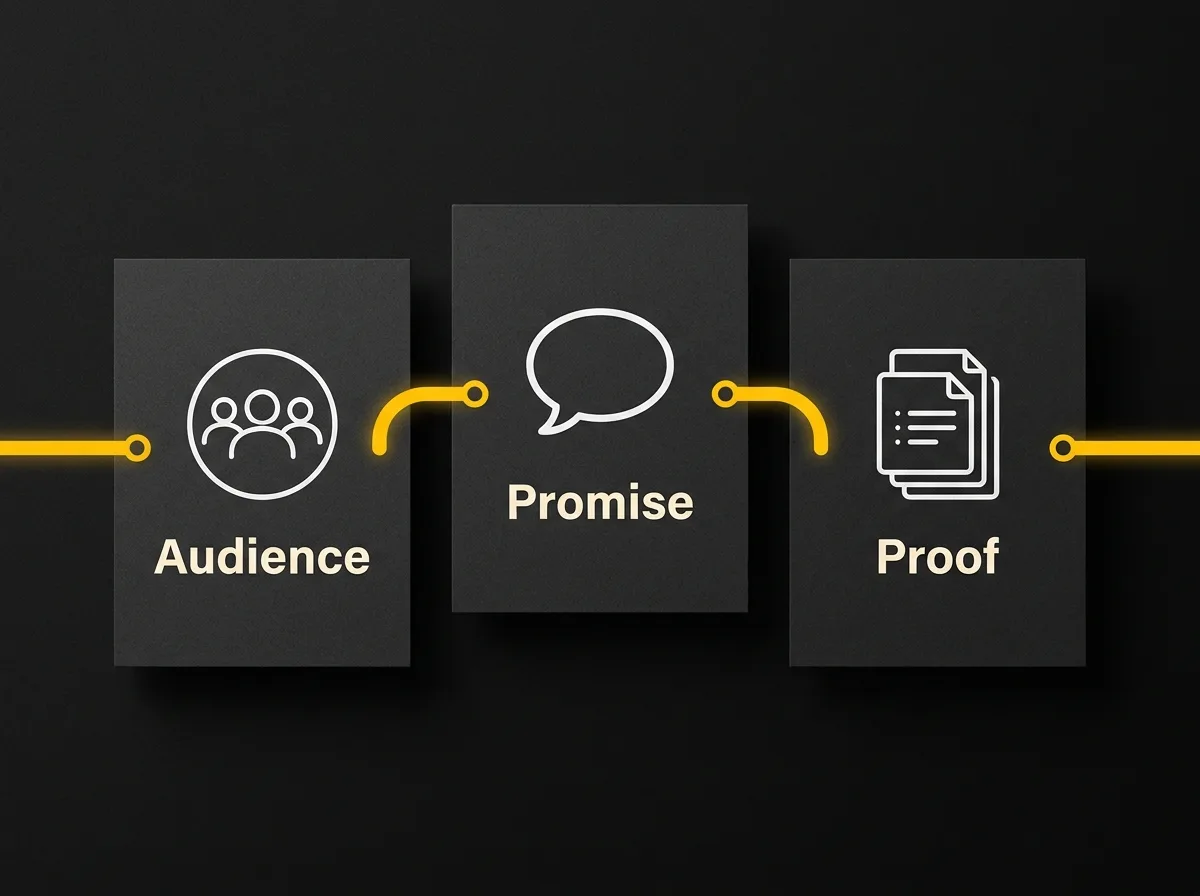
This stage is for a new business, often in its first year, or an established company that has never agreed its positioning. Trading history does not exempt you.
The usual temptation is to start with design because design produces something you can see. Audience decisions feel less satisfying than opening a file containing six possible logos.
But those decisions determine whether any of the six makes sense.
Start with a buying situation.
Describe the person you want to reach, the problem that prompts them to look for help, and what makes the purchase difficult. “SME owners” leaves too much unanswered.
For example, imagine a commercial maintenance company targeting facilities managers responsible for several sites. Their concern might be getting repairs completed without repeatedly chasing contractors or disrupting working premises.
That gives you something useful to build around. It informs the service promise, the evidence needed on the website and the questions a proposal must answer.
Write a promise you can prove.
“Quality service at competitive prices” could belong to almost any competitor. It offers no reason to remember you.
A more useful positioning statement identifies the customer, the problem, your approach and the evidence behind it. You might focus on a particular service process, response arrangement or type of expertise, provided the business can deliver it.
Proof comes first.
Do not promise a dedicated contact if customers regularly get passed between departments. Your brand will meet your operations eventually, usually through an irritated email.
Give values a practical meaning.
“Reliable” becomes useful when you explain the behaviour behind it. Do you confirm appointments? Explain delays before customers chase? Provide clear handover documents?
Likewise, tone of voice needs instructions someone can follow. “Warm and professional” is a starting point. Add examples showing how you explain a price increase, answer a complaint or describe a technical service.
Pull these decisions into a short working document covering:
-
Your priority audience and the buying situation you want to address.
-
Your promise, the reasons to believe it and the alternatives customers compare.
-
The behaviours and writing principles that make that promise credible.
-
The work, customers or claims you will deliberately avoid pursuing.
A page or two can be enough initially. The test is whether a designer can make decisions from it and a salesperson can use it without translating every sentence.
If you are choosing a new name, include availability checks before committing to signs and materials. The Intellectual Property Office’s trade mark search lets you look for similar existing UK trade marks.
A brand identity agency should turn your commercial decisions into a usable identity, with appropriate logo versions, typography, colours and examples of application.
Your marker for leaving Stage 1 is practical: you can explain who you help, why they should choose you and what supports that claim. Someone outside the founding team can explain it too.
Stage 2: Find out whether customers recognise the promise
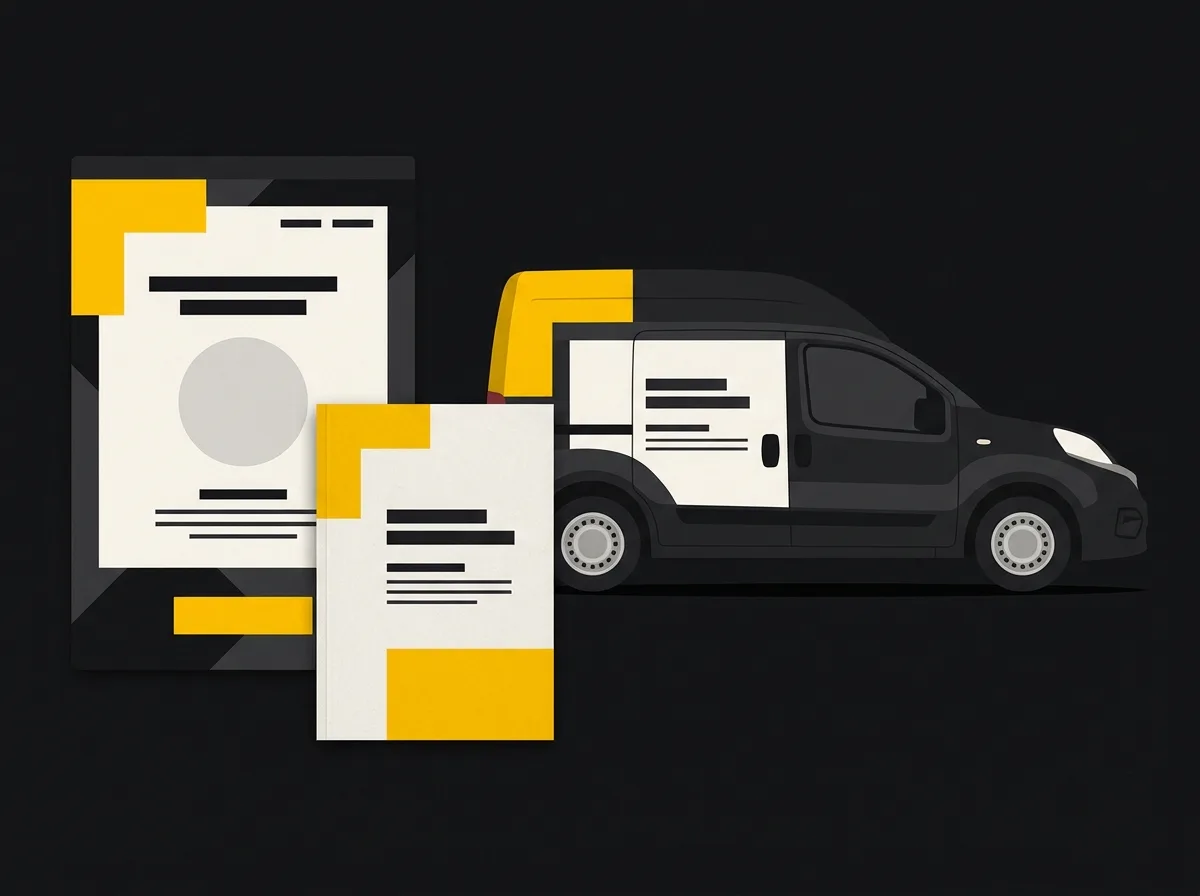
This stage is for a business with a working identity that is now meeting customers regularly. That might be during years one to three, or after launching a new offer.
A brand presentation shows your identity under controlled conditions. The real test involves a phone screen, an impatient buyer and a proposal someone edited at ten o’clock last night.
Reality gets a vote.
Begin with the route your best prospective customer takes. They might see a recommendation, visit your website, check a review, request information and receive a proposal.
Does each step describe the same business? More importantly, does each step help them make the next decision?
Test the enquiries you attract.
Record what people ask for, how well they fit your offer and why they approached you. A growing enquiry count can hide a positioning problem if most callers want work you no longer provide.
Ask recent customers what they thought you specialised in before speaking to you. Then ask what convinced them to make contact.
Their answers are more useful than asking whether they like your logo. People are remarkably polite about logos.
Test the website against the sales conversation.
Your homepage should help a visitor understand your offer, relevance and credibility. Service pages should answer the questions that arise before someone feels comfortable enquiring.
Imagine a consultancy selling substantial improvement projects. If the site offers only a broad list of capabilities, buyers must guess the scope, process and likely fit.
Better copy might explain the situations that prompt a project, who participates, what happens first and what evidence the consultancy can show.
This is where web design becomes part of brand development. Layout, navigation and enquiry forms determine whether visitors can use the promise you have carefully written.
Turn the identity into everyday materials.
Create the pieces your team actually needs: a proposal template, a service-page example, an email signature and relevant social or print layouts.
Keep the initial guidelines proportionate. Include approved logo files, colour references, fonts and a few examples of good writing. Explain what the copy must communicate, rather than simply saying it should sound confident.
The trade-off is restraint. You may have to postpone attractive secondary materials while fixing the pages and documents buyers use most.
Your marker for leaving Stage 2 is that suitable customers describe your business in language close to your intended positioning. Their experience after purchase should support it as well.
If those descriptions differ, investigate before declaring the strategy finished.
Stage 3: Stop growth turning into five different brands
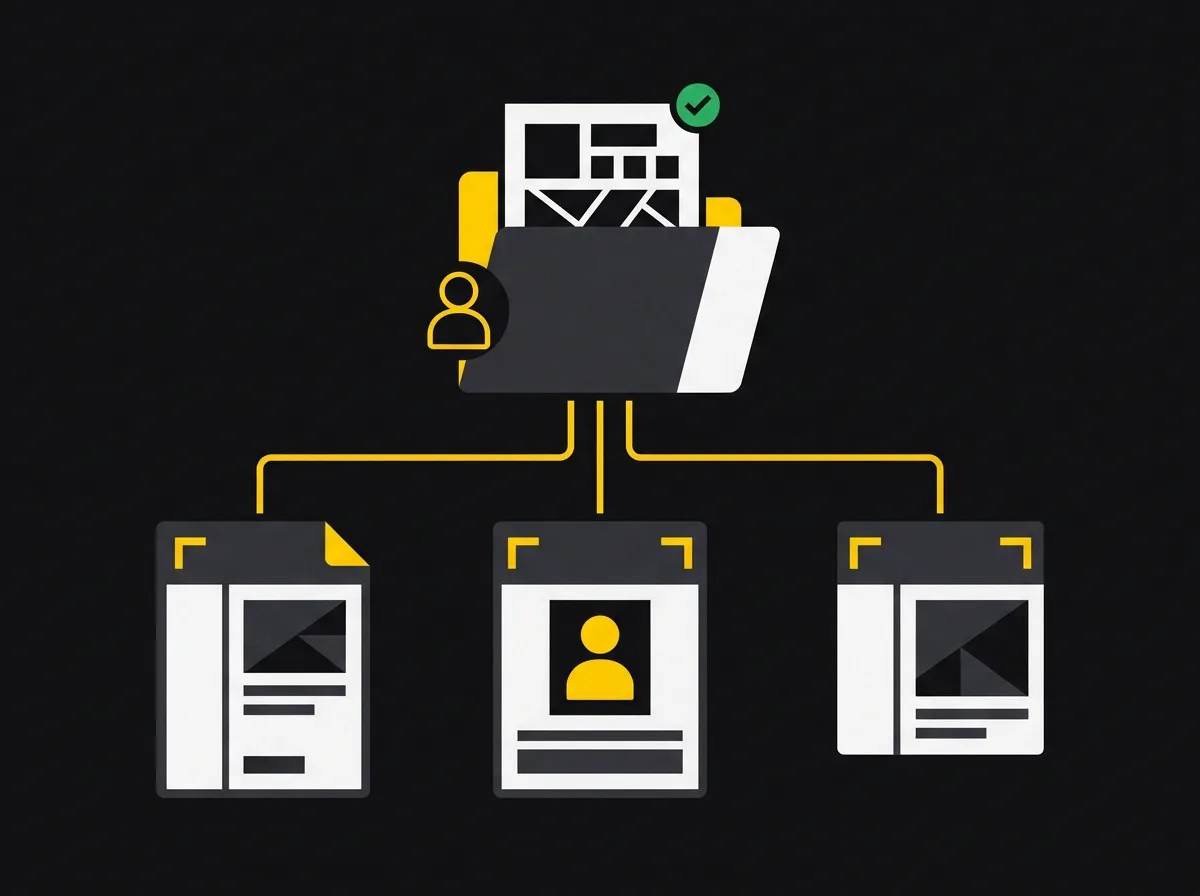
This stage is for a business adding people, services, locations or channels. Headcount matters less than how many people now create things in your name.
One person writes recruitment adverts. Another prepares sales presentations. A supplier handles vehicle graphics, while somebody enthusiastic has discovered a new font.
Nobody intends to change the brand. Collectively, they manage it rather well.
The problem usually has two parts: people interpret incomplete guidance differently, and new applications expose decisions the original identity never covered.
A full rebrand may be unnecessary. First establish whether the existing identity has been applied properly.
Give someone ownership.
Choose a person who can maintain standards, approve significant exceptions and retire outdated materials. They need enough authority to resolve disagreements and enough time to do the work.
Without that ownership, a shared folder becomes a museum of previous decisions. Everything is preserved; nothing is clearly current.
Set an approval process proportionate to the risk. Routine social posts should not need the same scrutiny as a new service name or a change to the company promise.
Document decisions people repeatedly get wrong.
At this stage, guidelines should cover logo placement, colour use, typography, imagery, writing and the relationship between services or sub-brands.
Show actual examples. Put an approved proposal opening beside a weaker version and explain the difference. Include a service description that is clear, alongside one that makes claims the business cannot support.
Specific examples reduce the amount of interpretation required. They also make onboarding less dependent on whether the founder happens to be available.
That saves time.
Make the approved choice easy.
Store current files somewhere obvious, archive old versions and give templates clear names. Explain which files are suitable for print, presentations and websites.
A shared drive may be sufficient. A larger asset library or template system can help when more teams and suppliers are involved, but the habit matters more than the software.
Ask someone unfamiliar with the folder to find the correct logo and prepare a basic document. Watch where they hesitate. Those are the gaps to fix.
Check the commercial effect without inventing precision.
Consistency helps buyers recognise you across separate encounters. It can also reduce internal rework and prevent contradictory descriptions of your services.
Those are useful benefits without attaching an unsupported revenue percentage.
Track measures you can observe: time spent correcting proposals, repeated customer misunderstandings, use of approved materials and the quality of enquiries for priority services.
Keep commercial results in context. If sales improve after a brand update, pricing, staffing, campaigns and market demand may also have contributed.
Your marker for a healthy Stage 3 is that a new colleague can produce a routine asset during their first week using the available guidance. They understand when to proceed and when to ask.
The founder should remain involved in important decisions. They should not need to inspect every email signature.
Stage 4: Decide what deserves to change
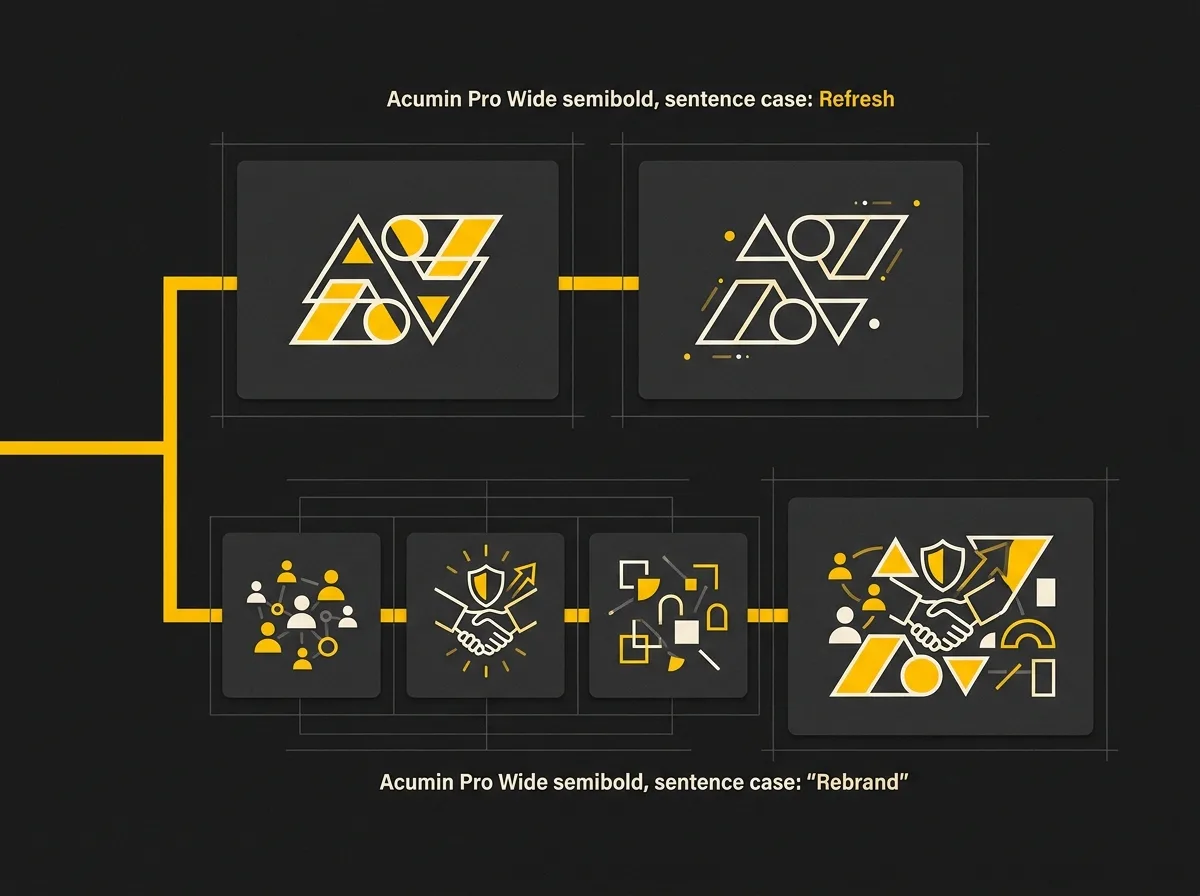
This stage is for an established business whose identity or positioning may no longer fit. Four years of trading is neither a deadline nor a diagnosis.
The stronger triggers are commercial: your audience has changed, a major service now drives the business, an acquisition has altered the offer, or buyers repeatedly misunderstand what you do.
Visual age can matter too. But first distinguish customer confusion from your own familiarity with an identity you see every day.
Boredom is weak evidence.
Choose a refresh when the underlying decisions still hold.
A refresh updates how the brand is expressed while retaining its established position and recognisable features.
It might involve refining the logo, improving typography, changing photography, clarifying copy and rebuilding templates. The purpose is to express the same business more effectively.
Imagine a regional engineering firm with strong recognition among procurement teams. Its offer remains relevant, but its website is difficult to navigate and its materials look inconsistent.
Preserving recognisable elements while improving presentation could be sensible. Replacing everything would create additional work without necessarily solving another problem.
Consider a rebrand when the promise needs rebuilding.
A strategic rebrand revisits the audience, positioning and offer before developing the identity. It may involve a name change, but it does not have to.
Imagine a business that began selling individual training courses and now provides long-term organisational consulting. Buyers still associate it with inexpensive one-day sessions.
The strategic question is whether that association can support the current offer. A new colour palette cannot answer it.
Research should establish what customers recognise, value and misunderstand. It should also identify what the company can credibly claim next.
Budget for implementation, not only design.
There is no useful universal SME rebrand price. A small set of digital materials and a multi-site rollout are different purchases.
Ask for costs to be separated into research and strategy, identity development, website work and implementation. Include signage, vehicles, documents, supplier artwork and staff time where relevant.
A lower design fee may still lead to a larger overall project if those applications are excluded.
The same applies to timing. A contained refresh may take weeks; a strategic rebrand with research, several decision-makers and a website rollout may take months.
Treat those as planning categories. Your supplier should explain the schedule, dependencies and approval stages for your actual scope.
Protect what already works.
List the elements customers recognise before changing them. Agree what success should look like and record a baseline for relevant measures, such as enquiry quality or customer understanding.
Plan the transition across customer communications, online profiles and physical materials. If URLs change, website redirects and tracking need attention too.
Sometimes the evidence points elsewhere. If customers understand and trust your brand, but a confusing enquiry form loses them, fix the form.
A mature brand deserves maintenance. It does not need a ceremonial replacement every few years.
How brand clarity helps people find and choose you
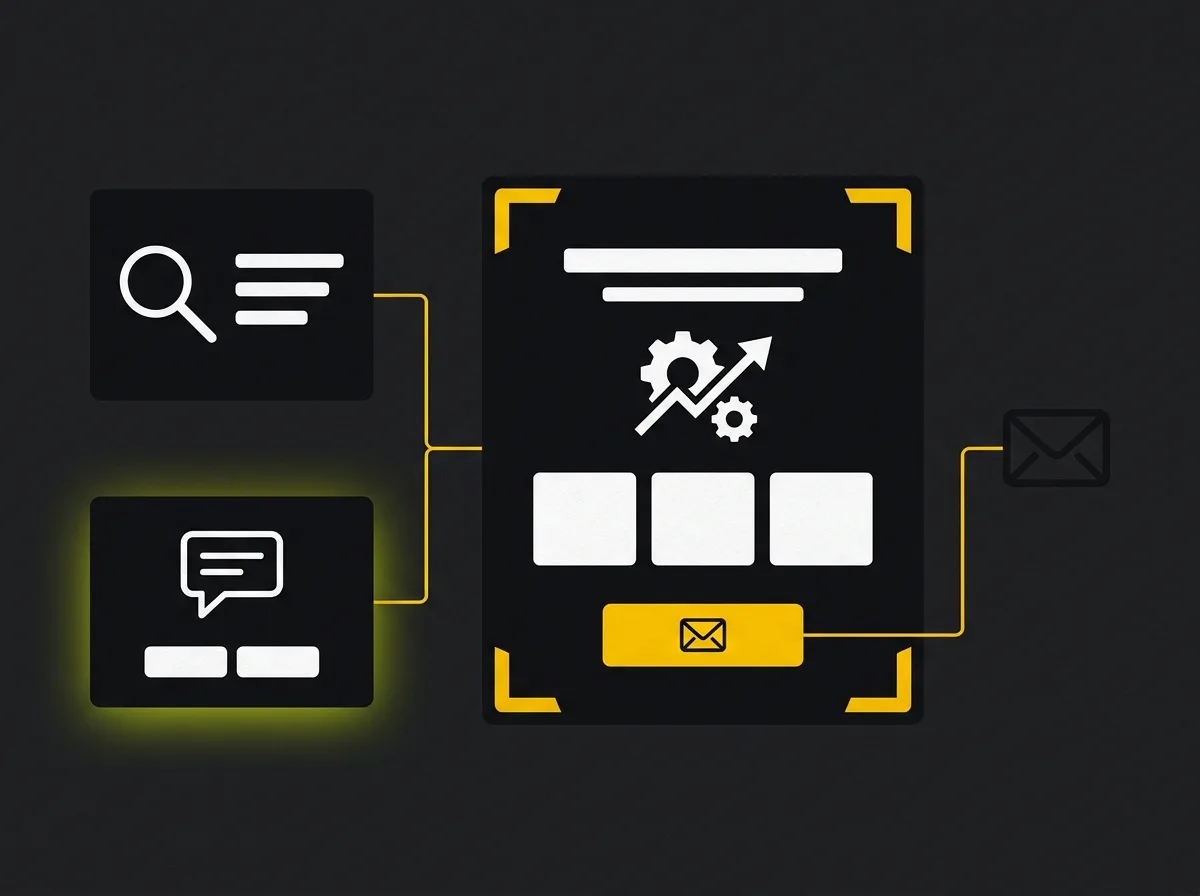
A prospective customer can encounter your business through a referral, a search result, a directory or an AI answer. Each encounter should give them a compatible explanation of who you are and what you do.
Clarity helps. It does not guarantee rankings.
For search, translate your positioning into useful pages covering your actual services and the questions buyers ask. Use clear names, relevant evidence and sensible links between related information.
Our guide to B2B SEO strategy explains the role of content in reaching those buyers. The brand decisions determine which audience and offer that content should support.
Technical access still matters. Beautifully presented pages cannot perform in search if search engines cannot properly access or understand them.
The AI search connection needs similar care. Google’s guidance on AI features points site owners towards established search practices, technical eligibility and helpful, reliable content.
It does not offer a shortcut based on a new identity or a few carefully repeated phrases.
Give people and search systems clear information about your business. Keep service descriptions and business details accurate, and support claims with evidence customers can inspect.
That makes brand work and SEO services complementary. One clarifies the offer; the other helps relevant people discover the pages explaining it.
Then measure what happens after arrival. Which pages attract suitable enquiries? Where do people struggle? What do sales conversations reveal that the website failed to explain?
More traffic is useful when the destination helps the right person take the next step.
Frequently asked questions about brand development strategy
How long does brand development take?
A defined project has an end date; brand development continues as the business learns and changes. A contained identity refresh can be planned in weeks, while strategic research and a wider rollout may require months. Agree the actual scope, approval process and implementation schedule before committing.
Scope decides.
How much does brand strategy cost for an SME?
The cost depends on the decisions you need help making and the research required to make them. Ask for strategy, design and rollout to be priced separately. Compare what each proposal includes, who does the work and what your team can use afterwards. An unsupported headline price gives you little basis for comparison.
What is the difference between a brand refresh and a rebrand?
A refresh improves the expression of a position that remains relevant. A rebrand revisits that position, potentially changing the audience, promise, name and identity. Start with what buyers need to understand differently, then choose the scope that addresses it.
When should a business update its brand strategy?
Review it when your audience, offer, market or business model changes materially. Repeated confusion about what you sell is another useful trigger. A regular review can catch drift, but it should not automatically commission new design. Keep what customers recognise and what still supports the business.
Can we develop our brand strategy in-house?
You can begin by agreeing your priority customers, analysing recent enquiries and documenting the promise your business can prove. External help becomes useful when internal views conflict, research needs independence or implementation exceeds your team’s capacity. Keep a named internal owner either way.
Where to go from here
Choose the stage that best describes your current problem. Then identify one decision that would make the business easier to understand or easier to choose.
That might mean agreeing your audience, fixing a service page, replacing conflicting templates or investigating whether your offer has outgrown its original positioning.
Start with evidence.
Before committing to a wider project, establish where your website’s traffic and search visibility stand. Keep that assessment separate from customer research: traffic figures can reveal opportunities, but they cannot settle your positioning for you.

The Traffic Projection Report is a starting point for considering traffic opportunities alongside your brand plans. Use it to help decide how clearer positioning and a stronger website could support the next stage of your business.