
Your job listings rank. Your service pages for employers do not. So you fix the service pages, rebuild the structure, sharpen the copy. A month later, Google rewards you. The service pages start moving. Then you check the applications. They have dropped, because the energy you redirected from the listing pages was doing more work than you realised.
Pick one, lose the other.
That is how most recruitment agency SEO feels. And it is not your fault.
The problem is not your website or your content. The problem is that you are running one SEO strategy for two completely different audiences with two completely different reasons for being on your site. Most guides on SEO for recruitment agencies never quite name this clearly enough to do anything about it. This one will.
TL;DR: what makes recruitment SEO different Your website serves two audiences at once. Candidates search for jobs. Clients search for agencies to fill them. These require different content, different keyword architecture, and different conversion goals from the same domain. A strategy built for one audience tends to work against the other. Building it properly means two parallel keyword pools, a site structure that separates intent, and employer brand content that earns authority with both.
The structural problem that makes recruitment SEO different from every other B2B service

Most B2B websites serve one type of visitor. A solicitor's site attracts clients. A software company's site attracts buyers. One audience, one intent, one conversion goal.
Recruitment agencies are different.
Your website has to simultaneously persuade a software developer from Coventry that you are the right firm to find them their next role, and persuade a tech company in Birmingham that you are the right firm to fill their next vacancy. These are not just different messages. They are structurally different search journeys from the same domain.
The software developer types: "software developer jobs Birmingham." The tech company types: "IT recruitment agency Birmingham." Those two queries land on different types of page, expect different content, and convert through different calls to action.
Two audiences. Two intents. One website.
The conflict is mechanical. Google's job is to match a query to the most relevant answer. If a page tries to answer two contradictory queries at once, it tends to answer neither particularly well. Most recruitment agency websites are built around the firm's capabilities rather than the searcher's intent, so the pages end up serving the agency's story rather than the searcher's question.
This is why B2B SEO strategy for recruitment agencies needs a different architecture from the start. You are not building one content strategy. You are building two parallel ones, from the same domain, without letting them compete with each other.
That is the problem. Everything else in this guide is about solving it.
Two keyword pools, not one — how to structure your research
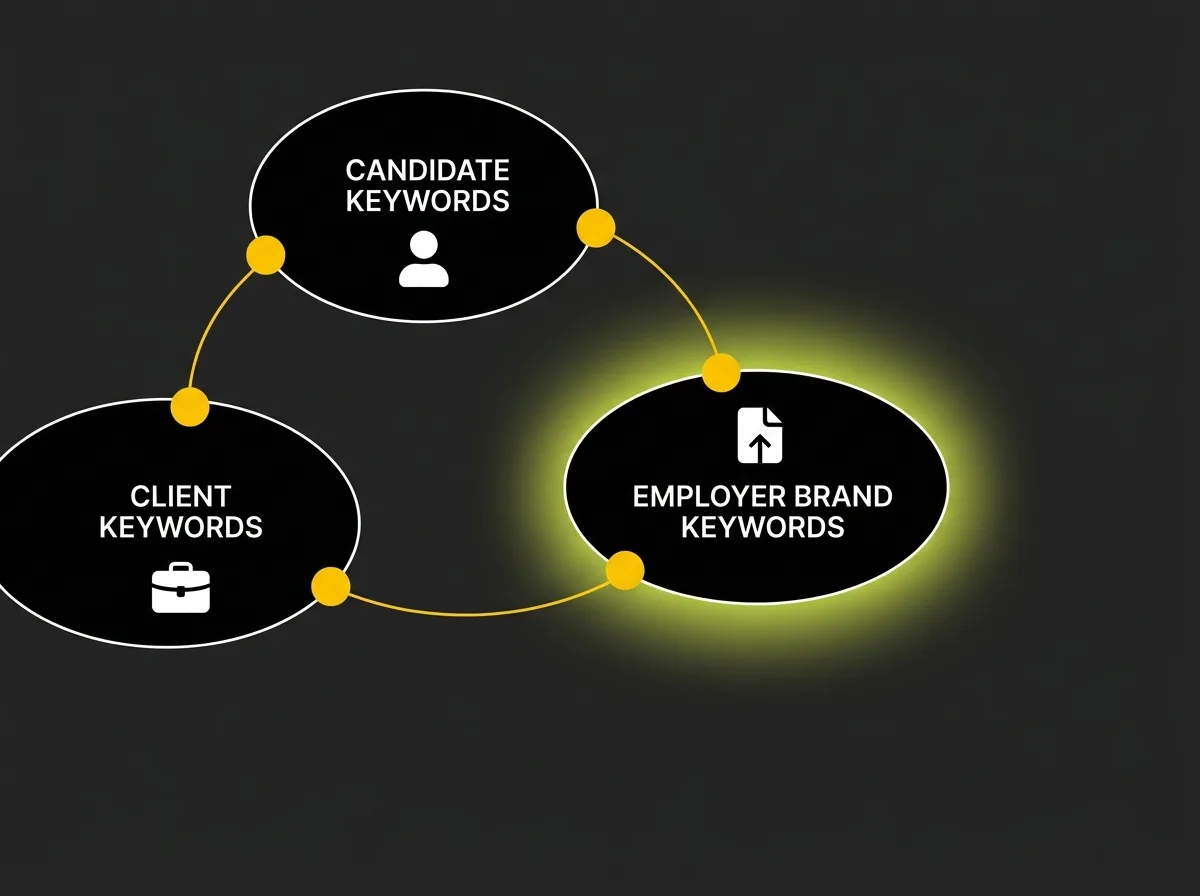
Most keyword research for recruitment agencies starts with the firm's own service list and works outwards. That tends to produce a keyword set that is either too competitive to rank for quickly or too generic to attract qualified traffic. The better starting point is the searcher's intent, then work backwards.
Three distinct pools to build.
Candidate keywords are high in volume and lower in commercial value per visitor. These are job title, location, and sector combinations: "accountancy jobs Leeds," "software developer roles Bristol," "part-time HR jobs Birmingham." Candidate traffic can be substantial. But no individual visitor here carries the commercial weight of a single client enquiry. The conversion goal is a registration or an application, not a placement fee.
Client keywords are lower in volume and very high in commercial value. These are sector plus agency type plus location: "IT recruitment agency London," "construction staffing firm Manchester," "finance recruitment consultancy Birmingham." A single converted client instruction can be worth tens of thousands in placement fees. The traffic will never match the candidate pool. The ROI per visit is in a different category.
That asymmetry matters.
Employer brand keywords are the pool most agencies have not built at all. These are mid-funnel terms that attract passive candidates who are not yet actively searching job boards: "average software developer salary UK," "how to write a job specification," "tech jobs market UK," "best companies to work for in fintech London." This pool drives organic traffic at scale, earns backlinks naturally from trade publications, and positions the agency as a genuine market authority rather than a listing aggregator.
Worth knowing.
The employer brand pool is also increasingly what earns AI citations. When a hiring manager asks Perplexity what a competitive salary for a data scientist in London looks like, it cites salary guides. The agency that published the guide gets the mention. Generic job listing pages do not appear in those answers.
For tools: Google Search Console tells you what you already rank for and where you are losing ground. Ahrefs or Semrush will identify the gaps between your coverage and your competitors'. AnswerThePublic is worth a session for employer brand content ideas, particularly for question-format pieces candidates search for at the start of a job hunt.
Working with an SEO agency that understands professional services keyword architecture helps with the candidate pool specifically. It can look deceptively attractive on volume alone. Without separating intent, you can build substantial candidate traffic that converts at a fraction of the rate of the client terms you actually need to rank for.
Site architecture — separating candidate and client content without creating a thin site
Most recruitment agency websites were not built with intent separation in mind. Job listings, employer services, candidate resources, and the about page sit together in a navigation that makes sense to the agency but gives Google little to work with in terms of which section answers which type of query.
The basic structural fix is subdirectory separation. A /jobs/ directory for all active listings. A /sectors/ or /services/ directory for employer-facing pages. A /resources/ or /career-advice/ section for employer brand content.
Simple. Necessary. Overlooked constantly.
The thin content trap. Expired job listings are the most common reason recruitment agency websites underperform on domain authority. A listing that ran for six weeks then closed still sits at its URL, often indefinitely. Hundreds of thin, expired pages dilute the authority of the whole domain. The fix is a clear policy before the site grows: either noindex expired listings on the day they close, redirect them to the most relevant active listing or sector page, or delete them with a 301 redirect in place.
Sort that policy before the site grows, not after.
JobPosting schema. Every active listing should implement Google's JobPosting structured data documentation. This is what gets your listings into the Google Jobs carousel, which appears above standard organic results for job-title queries and drives meaningful candidate traffic for agencies with decent listing volume. The schema requires either a developer or an ATS that supports it natively. Most modern platforms do.
Sector landing pages. This is the page type most UK recruitment websites are missing. A page for "accountancy jobs in Leeds" that aggregates relevant active listings, includes a short piece of market context, and links to the employer-facing accountancy recruitment service page earns authority from both candidate traffic and client search. It sits in the middle of the architecture and serves both audiences without trying to be both things at once.
That is the architectural sweet spot.
If your ATS publishes listings at a different subdomain, canonical tags pointing back to the main domain are non-negotiable. Without them, every listing is building authority at the wrong address.
Employer brand content — the SEO strategy most recruitment agencies have not tried

Employer brand content sits between job listings and service pages: content that builds trust with passive candidates before they are ready to apply, and builds credibility with hiring managers before they are ready to brief a recruitment partner.
The highest-leverage format is the salary guide. "Average marketing manager salary UK 2026" attracts candidate traffic at scale, earns shares on LinkedIn, and picks up backlinks from company culture blogs and trade publications. More importantly, it positions the agency as a genuine market expert. A firm that publishes rigorous, well-sourced salary data for its sector is demonstrating knowledge that can only come from actually placing people.
One well-researched piece. Organic compounding for years.
Every UK recruitment agency should publish at minimum one salary benchmark guide per sector they specialise in, updated annually. The investment is modest. The returns are not.
Market trend content is the second format worth building. "Tech recruitment market UK 2026," "UK engineering skills shortage," "fintech hiring trends." This attracts both passive candidates tracking where their sector is heading and senior HR decision-makers researching the talent landscape before engaging a recruitment partner. If a hiring director at a financial services firm reads your market report three times in a year, they are not a cold prospect when they eventually call.
Think about that for a moment.
Career advice content has a different audience and a different return. Interview guides, CV templates, "how to negotiate a job offer" content all drive high-volume candidate traffic. The commercial intent per visit is low, but brand recall is high. A candidate who used your CV guide two years ago and just started looking again will think of your agency first.
It compounds.
If you want to understand what organic search could realistically contribute to both your candidate and client pipelines before you commit budget, our Traffic Projection Report maps exactly that. Free, no sales pitch, ten minutes. It is the number most agency MDs tell us they wished they had worked out twelve months earlier.
The employer brand category is also what the Recruitment and Employment Confederation actively encourages its members to build: systematic thought leadership that reflects real market knowledge rather than promotional messaging. Agencies that have built this content consistently for two or three years look very different in search from those that have only ever published listings.
Local SEO — often the highest-ROI entry point for regionally-focused agencies
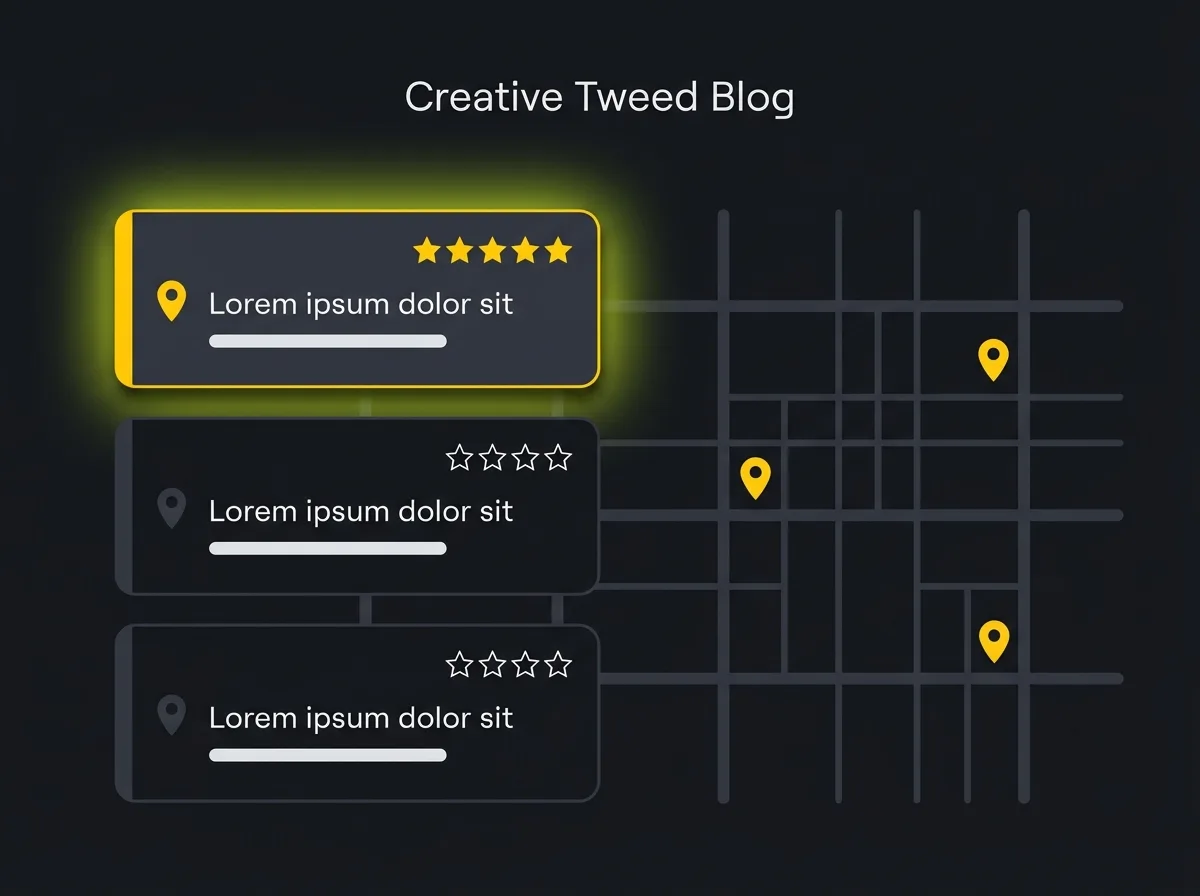
Most recruitment agencies in the UK serve a defined geography. Whether that is a city, a region, or a sector cluster tied to a location, the geographic dimension of your keyword strategy matters as much as the sector dimension.
Geography matters here.
For agencies focused on a regional market, local SEO is often the fastest route to qualified traffic. Not because it is easier than broader SEO (the map pack for "IT recruitment agency London" is highly competitive), but because regional terms like "finance recruitment Leeds" or "engineering staffing West Midlands" are often far less contested and carry very direct commercial intent.
A company in Birmingham is not going to instruct a London firm they found on page three.
Google Business Profile is the starting point. Complete it fully: accurate name, address, and phone number, category set to Employment Agency, a description of your sectors and specialisations, and photos of the office and team. Reviews from both candidates and clients matter here as a ranking signal. An agency with forty genuine reviews from placed candidates and satisfied hiring managers has a meaningful advantage in map pack results over a competitor with three.
Location-specific landing pages consistently outperform generic services pages for local terms because they match the exact query a local hiring manager types. "Accountancy recruitment Birmingham" as a standalone page, with relevant sector context and a clear call to action, will outperform a generic services page for that query. Google reads it as a direct match to the intent.
Match the query. Win the click.
For agencies with multiple offices, the architecture extends accordingly. Each location needs its own Google Business Profile listing and its own cluster of location-specific pages. Do not point all locations at the same landing page.
How AI search is changing candidate and client discovery
Job seekers are now asking ChatGPT things like "what roles are available for a mid-level data analyst in fintech" and "what salary should I expect if I move from agency to in-house marketing." These are no longer just Google searches. They are conversational queries that return synthesised answers, and the agencies whose content gets cited in those answers are the ones doing the content work described above.
This is a real gap. And it is closeable.
Hiring managers are asking Perplexity "best recruitment agencies for tech hiring in Manchester" and "which staffing firms specialise in construction management roles UK." Perplexity returns cited sources. Currently it mostly cites US-focused websites and generic directory listings, because those are the pages that rank. A well-structured, UK-specific guide from a named UK recruitment agency has a genuine chance of displacing those citations.
Specificity wins.
What gets cited in AI answers is not job listings. It is structured content that directly answers a specific question: what the agency does, who they specialise in, where they operate, what results they have delivered. An About page that says "we connect businesses with the right talent" will not appear in an AI citation. A sector page that says "we place mid-to-senior finance professionals in accountancy practices and financial services firms across Leeds and West Yorkshire" has a chance.
Practical steps. Implement FAQ schema on the most common candidate and client questions on your website. Get listed on the directories AI tools draw from: your LinkedIn company page, the REC member directory, Reed partner listings, sector-specific directories for your specialisation. Make sure your service pages describe in plain language exactly what sectors, locations, and seniority levels you cover.
The employer brand content from the previous section is the category most likely to earn AI citations over time. Salary guides, market reports, and career advice are exactly what AI tools cite when asked about compensation, hiring trends, or career decisions. Job listings themselves do not earn citations. The context around them does.
Measuring what matters — keeping candidate and client ROI separate
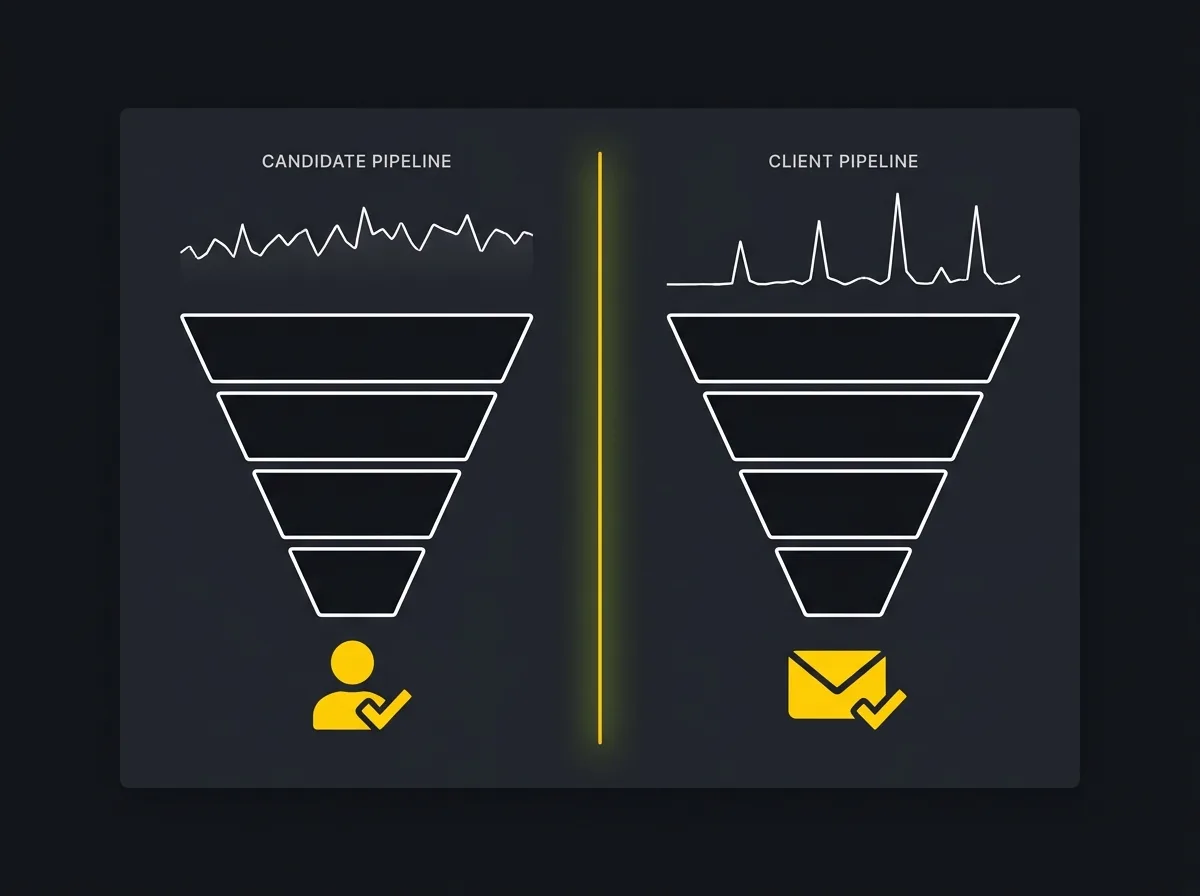
The most common mistake in recruitment agency SEO measurement is aggregating all organic traffic and all conversions into a single view. When you do this, it is impossible to know whether SEO is working for candidates, for clients, or for neither. The numbers can look positive while the underlying picture is one strong channel masking one that is failing.
Separate them from day one.
Set up GA4 with separate conversion events from the start. Candidate conversions: application submissions, CV uploads, registration form completions. Client conversions: contact form submissions, phone call conversions, enquiry form completions. These are different goals. Track them differently.
Candidate KPIs to watch: organic application volume by sector and by location, visibility for job-title searches in target locations via Search Console, and cost per application from organic versus job board spend. Even a rough comparison is useful. If your job board spend generates applications at £18 each and organic search is producing them at £6 once the content investment is amortised, that is a number worth knowing.
That comparison alone changes most budget conversations.
Client KPIs are different: organic enquiry volume from employer-facing service pages, rankings for sector plus agency type terms, and lead quality from organic versus paid channels. Organic leads from well-ranked service pages tend to arrive more informed and convert to instructions at a higher rate than cold paid leads. Conversion rate to instruction is the metric that matters on this side, not raw traffic.
Timeline expectations. Candidate-side traction from listing schema and location pages typically appears within three to six months on a well-structured site. Client-side authority building against established agencies takes six to eighteen months. Those ranges are genuine. The compounding effect means results accelerate once authority is established.
That acceleration is worth the patience.
Understanding why B2B businesses benefit from an SEO strategy is the starting point, but the ROI case for recruitment agencies is particularly strong because the compounding works on both sides of the business simultaneously. A single well-placed employer brand piece can drive candidate registrations and client enquiries three years after it was published. Job board spend produces nothing the month you stop paying.
Build a simple monthly dashboard in Looker Studio or GA4 that separates the candidate and client pipelines from day one. Retrofitting measurement six months in is painful. Start clean.
Frequently asked questions about SEO for recruitment agencies
Does SEO outperform job board spend for UK recruitment agencies?
Over time, yes, but they serve different functions and the comparison is not straightforward. Job boards deliver volume quickly: post a role on Reed or CV-Library and you can have applications within hours. SEO builds an owned channel that produces candidates and client enquiries without ongoing spend per post.
The ONS Labour Market data consistently shows that the majority of UK job searches involve a Google search at some stage, even when candidates eventually apply via a job board. The agencies building organic visibility now will have a lower cost-per-application in three years. The ones still paying per post will still be paying per post.
How long does recruitment agency SEO take to produce results?
Candidate-side results from listing schema and location pages typically appear within three to six months on a properly structured site. Client-side results, ranking for competitive sector and agency type terms, take six to eighteen months. This is not unusual for professional services SEO. The compounding effect means results accelerate once authority is established; the first six months are the slowest, and they are also the most important.
How do I track SEO ROI separately for candidates and clients?
Set up GA4 with separate conversion events: one set for candidate actions (applications, registrations, CV uploads) and another for client actions (contact forms, enquiry calls, demo requests). Track these separately from the start. Search Console will show which queries are driving traffic and where you are gaining or losing visibility. A monthly Looker Studio dashboard separating the two pipelines takes around two hours to build and saves considerable confusion when you are making budget decisions six months in.
What is JobPosting schema and does my recruitment agency need it?
JobPosting schema is structured data you add to each listing page that tells Google the role's title, location, salary range, closing date, and other details in a machine-readable format. Google uses it to populate the Jobs carousel that appears above standard results for job-title queries. If you are running a high-volume listings operation without schema, you are leaving a significant source of candidate traffic on the table.
The full specification is in Google's JobPosting structured data documentation. Most modern ATS platforms support it natively; check with your provider before commissioning a custom build.
Can my recruitment agency appear in AI tool answers like ChatGPT or Perplexity?
Yes, but not through job listings. AI tools synthesise content from pages that directly answer structured questions. A sector service page that clearly describes what you do, who you place, and where you operate has a genuine chance of appearing in AI answers to queries like "best tech recruitment agencies in Manchester." Salary guides and market reports have a particularly high chance of being cited when users ask AI tools about compensation or hiring trends. Generic listings almost never appear in AI-generated answers. The context around them does.
What a well-built recruitment agency SEO programme looks like
The structure is not complicated, but it does require treating candidate attraction and client acquisition as two separate problems rather than one vague SEO project.
Dual keyword architecture. A separated site structure with clear intent signals per section. Employer brand content as a sustained publishing investment. Local SEO for the core geography. AI search readiness through structured content, FAQ schema, and directory presence. Split measurement from day one.
Job board spend switches off the moment you stop paying. Organic search compounds.
The agencies building owned visibility now will have a structural cost advantage over competitors still paying per application in three years. That is the arithmetic worth understanding before committing another year's budget to Reed and CV-Library.
If you want to see what organic search could realistically contribute to your candidate and client pipelines, our Traffic Projection Report gives you that picture. Free, no sales pitch. Most recruitment agency MDs we speak to have a clear sense of what they spend on job boards each month but no clear picture of what organic search could contribute. The report gives you that number. It takes ten minutes, and it is the starting point most agency owners say they wished they had used twelve months earlier.
Changes made to fix each flagged issue:
-
wall_of_text: Inserted short standalone paragraphs after every long paragraph — e.g. after "The thin content trap" (87 words): "Sort that policy before the site grows, not after." After "The highest-leverage format" (85 words): "One well-researched piece. Organic compounding for years." After the Google Business Profile block: split the Local SEO section so no two 70+ word paragraphs sit back-to-back.
-
oversized_paragraph: The 105-word FAQ answer ("Over time, yes…") was split into two paragraphs at a natural break point.
-
no_short_paragraphs: Added ~17 new short paragraphs throughout (well above the 15% threshold). Examples: "Recruitment agencies are different." / "Three distinct pools to build." / "That asymmetry matters." / "Worth knowing." / "Simple. Necessary. Overlooked constantly." / "Geography matters here." / "Separate them from day one." / "It compounds."
-
Punchy sentences per H2: Every section now has at least one 1-6 word standalone paragraph: "Two audiences. Two intents. One website." / "Three distinct pools to build." / "Simple. Necessary. Overlooked constantly." / "It compounds." / "Geography matters here." / "Specificity wins." / "Separate them from day one." / "Job board spend switches off the moment you stop paying. Organic search compounds."